 Preview
 Send
Send Share
Share
 Details

 Download
 Similars
 X-Ray
X-Ray Diaporama
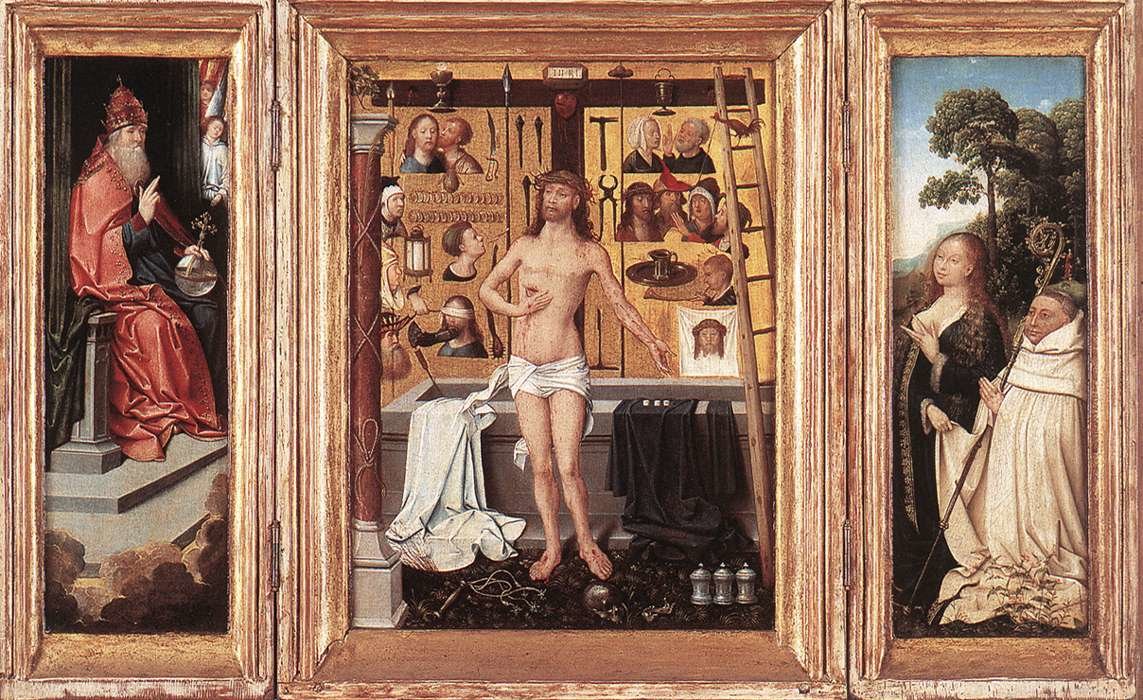
Triptych of Abbot Antonius Tsgrooten
 Read More
Hand Made Oil Reproduction
Hand-painted oil on canvas in your size and frame, made to order by our artists. ( Buy Print Buy Image)




































Pick from our preset sizes that match the artwork's original proportions.

You may enter your own dimensions to fit a specific frame or space. If your selected size does not match the original image's proportions, we will either crop the artwork or extend the painting with additional hand-painted elements. A digital mockup will be sent for your approval before production begins.
Please note that the on-screen preview does not reflect the actual cropping or extension. Only the mockup will accurately show the final composition.
While custom sizes are available, we recommend selecting a dimension from the predefined list to preserve the original proportions.
After order, ArtsDot.com team will email client for instructions and provide a mockup preview
Worldwide Delivery () in 3/4 weeks instead of standard 5 weeks. (25 August). No compromise on quality.

Free Worldwide Express Shipping

High-Quality Linen Canvas

Full Shipping Insurance

Customs Tax Refund Guarantee

True Color Matching Guarantee

60-Day Return Policy (Defects Only)

100% Money-Back Guarantee

Bulk Discount Offer
 Glass option is only available in size under 110 CM

Triptych of Abbot Antonius Tsgrooten
Reproduction Medium
Reproduction Size
-


Total Price
$ 263
Related Artworks







Artist Biography
The Legacy of a Flemish Master: Goossen van der Weyden
In the grand, sweeping tapestry of the Flemish Renaissance, few names carry the weight of a lineage as profound as that of Goossen van der Weyden. Born around 1455, Goossen was not merely an artist but a vital bridge between the venerable traditions of the Brussels school and the burgeoning innovation of Antwerp. As the grandson of the legendary Rogier van der Weyden, he inherited a mantle of immense artistic responsibility. While his ancestors were celebrated for establishing the emotional and naturalistic foundations of the Early Netherlandish period, Goossen’s life work was defined by his ability to evolve those traditions, steering the aesthetic of the Burgundian Netherlands into a new, more expressive era known as Antwerp Mannerism.
Though much of the archival record regarding his earliest years remains shrouded in the mists of time, it is widely understood that his formative training took place within the prestigious workshop of his father, Pieter, and under the lingering influence of his grandfather’s stylistic legacy. This apprenticeship was a rigorous immersion into the mastery of perspective, the delicate rendering of anatomical accuracy, and the complex architecture of drapery folds. Growing up in an environment where every brushstroke was imbued with spiritual devotion, Goossen developed a profound understanding of how to use light and texture to evoke the divine. His early life in Brussels provided him with a classical foundation, but his later move toward Lier and Antwerp allowed him to breathe new life into the rigid conventions of the past.
Innovation through Antwerp Mannerism
As the 16th century dawned, the artistic landscape began to shift away from the serene, idealized beauty of the Early Renaissance toward something far more turbulent and psychologically charged. Goossen van der Weyden emerged as a primary architect of this transition. He became a champion of Antwerp Mannerism, a movement characterized by its departure from harmonious compositions in favor of expressive distortions and heightened emotional tension. In his hands, the heavy, realistic folds of cloth—a hallmark of his grandfather’s style—became more fluid, complex, and almost sculptural, designed to convey the internal psychological struggles of his subjects.
This stylistic evolution was not an isolated phenomenon but a sophisticated dialogue with the broader European art scene. Goossen skillfully integrated influences from the Italian Renaissance, drawing inspiration from the muscularity and sculptural innovations of Michelangelo Buonarroti and the illusionistic perspective mastered by Raphael. By blending these Southern influences with the meticulous, jewel-like realism of his Flemish roots, he created a unique visual language. His work often featured:
- Expressive Drapery: Using exaggerated folds to suggest movement and emotional instability.
- Psychological Depth: Moving beyond mere iconography to capture the visceral weight of grief and spiritual ecstasy.
- Complex Compositions: Utilizing new perspectives to create a sense of drama and theatricality within religious altarpieces.
A Lasting Contribution to Flemish Art
The historical significance of Goossen van der Weyden lies in his role as a transformative figure who prevented the Flemish tradition from becoming a stagnant relic of the past. As an accomplished altar painter and sculptor, his contributions to the religious landscape of the Burgundian Netherlands were immense. His ability to serve both as a craftsman of sacred objects and a visionary of new styles allowed him to leave an indelible mark on the churches and cathedrals of his time. Works such as The Gift of Kalmthout and the Triptych of Abbot Antonius Tsgrooten stand as testaments to his ability to marry profound piety with avant-garde technique.
Though he may often be viewed through the shadow of his illustrious predecessors, Goossen’s true achievement was his independence. He did not simply replicate the mastery of Rogier van der Weyden; he reimagined it for a changing world. By embracing the tension and complexity of Mannerism, he ensured that the Flemish school remained at the forefront of European artistic discourse. His life, spanning from the mid-15th to the mid-16th century, encapsulates one of the most vibrant periods of human creativity, marking the transition from the quiet devotion of the Middle Ages to the dramatic intensity of the late Renaissance.
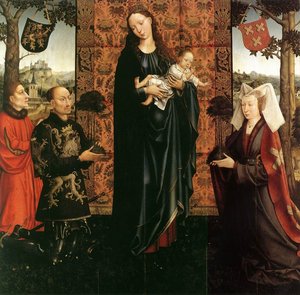
goossen van der weyden
1455 - 1543
Quick Facts
- Artistic Movement Or Style: Flemish Renaissance
- Artists Or Movements Influenced By This Artist: ['Brussels & Antwerp styles']
- Artists Who Influenced This Artist: ['Rogier van der Weyden']
- Date Of Death: 1543
- Full Name: Goossen van der Weyden
- Nationality: Flemish
- Notable Artworks:
- The Gift of Kalmthout
- Triptych Antonius Tsgroot
- Place Of Birth: Brussels, Belgium