 Preview
 Send
Send Share
Share
 Details

 Download
 Similars
 X-Ray
X-Ray Diaporama
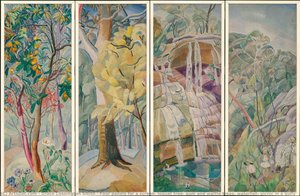
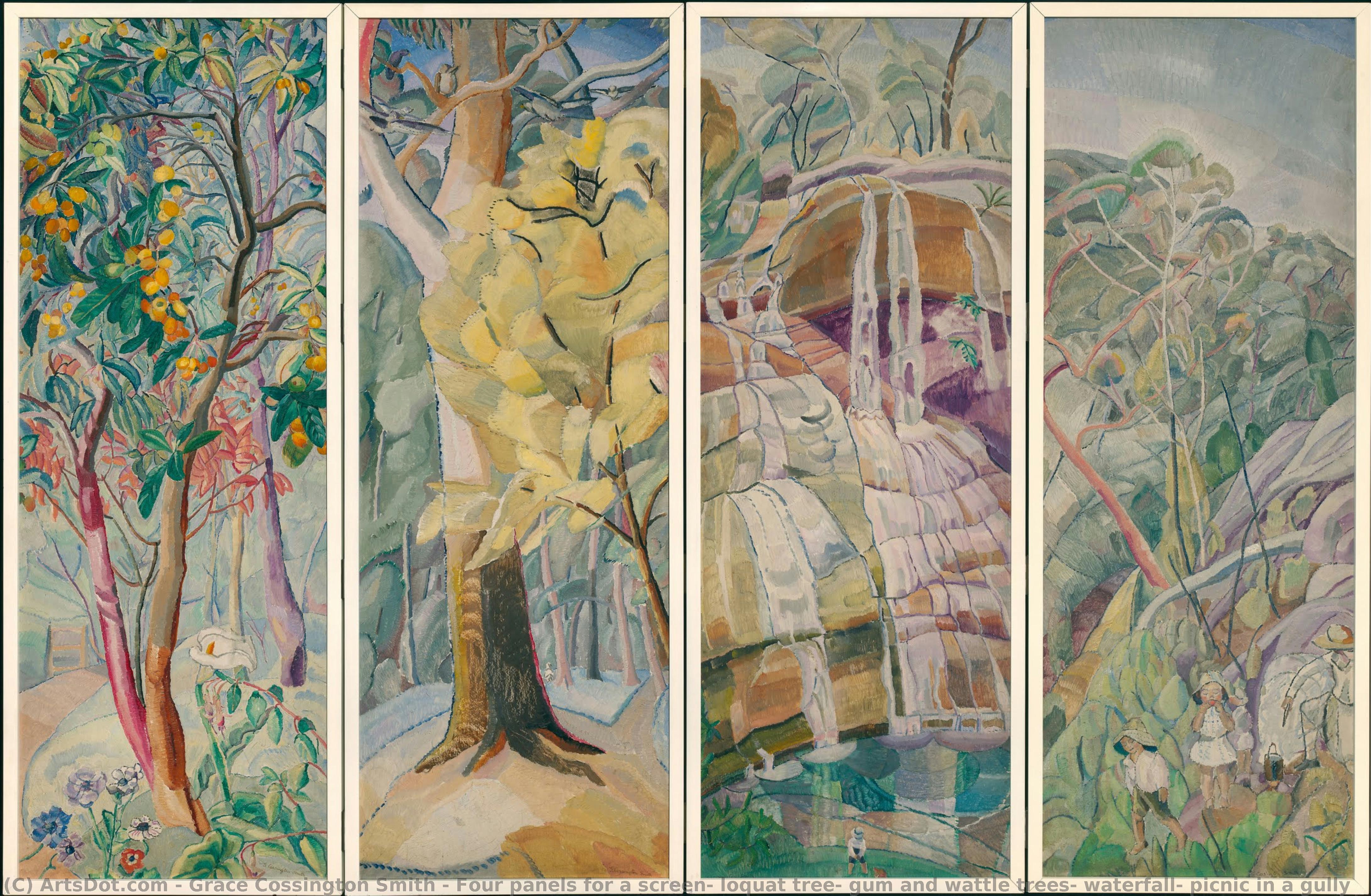
Four panels for a screen: loquat tree, gum and wattle trees, waterfall, picnic in a gully
 Painting
- Post-Impressionism
 1929
1929- Modern
 530.0 x 1442.0 cm
 National Gallery of Australia
 Read More
Giclée / Art Print
Museum-quality giclée or canvas print with fast production and flexible finish options. ( Buy Hand Made Painting Buy Image)




P118B $10

P118H $10

P118W $10

P438Z $10

P508JH $12

P508YH $12

P805H $10

P805Z $10

P919BZ $10

P919G $10

P919XJ $10

P959ZH $10

P968JZ $12

W106C $8

W218G $10

W218JH $8

W218Y $10

W307PJ $10

W316G $10

W316PJ $8

W316Y $10

W398PJ $8

W4111J $10

W500HY $15

W500JH $15

W692G $12

W849H $8

W940BG $15

W953PJ $8




Pick from our preset sizes that match the artwork's original proportions.

You may enter your own dimensions to fit a specific frame or space. If your selected size does not match the original image's proportions, we will either crop the artwork or extend the image with a mirrored or solid-fill edge. A digital mockup will be sent for your approval before production begins.
Please note that the on-screen preview does not reflect the actual cropping or extension. Only the mockup will accurately show the final composition.
While custom sizes are available, we recommend selecting a dimension from the predefined list to preserve the original proportions.
Worldwide Delivery () in 2 weeks instead of standard 4/5 weeks. (22 August)

Free Worldwide Express Shipping

High-Quality Linen Canvas

Full Shipping Insurance

Customs Tax Refund Guarantee

True Color Matching Guarantee

60-Day Return Policy (Defects Only)

100% Money-Back Guarantee

Bulk Discount Offer
 Glass option is only available in size under 110 CM

Four panels for a screen: loquat tree, gum and wattle trees, waterfall, picnic in a gully
Giclée / Art Print
Reproduction Size
-


Total Price
$ 63
Collectible Description
A Symphony of Light and Landscape
In the vast tapestry of Australian Modernism, few works capture the rhythmic pulse of nature as intimately as Grace Cossington Smith’s "Four Panels for a Screen: Loquat Tree, Gum and Wattle Trees, Waterfall, Picnic in a Gully." Created in 1929, this monumental work is not merely a painting but an immersive environmental experience. Spanning an extraordinary width, the four panels act as windows into a curated botanical dreamscape, where the artist’s personal garden and the rugged beauty of the Australian bush converge. Each panel serves as a distinct movement in a visual concerto, guiding the viewer from the heavy, sun-drenched fruit of a loquat tree through the vibrant, flowering gums, ultimately arriving at the tranquil, communal joy of a picnic set against the cascading spray of a waterfall.
The brilliance of this piece lies in its ability to transform a landscape into a sensory memory. As one moves their gaze across the panels, there is a palpable sense of temperature and atmosphere—the warmth of the sun hitting yellow fruit, the cool mist of the "Lovers’ Leap" waterfall, and the dappled light filtering through wattle blossoms. For the collector or interior designer, this work offers a rare opportunity to introduce a sense of expansive serenity into a space. It is a masterpiece of storytelling through scenery, where the boundaries between the domestic garden and the wild bushland are beautifully blurred.
Mastery of Post-Impressionist Technique
Grace Cossington Smith was a pioneer of the Post-Impressionist movement in Australia, and this screen stands as a testament to her revolutionary approach to color and form. Eschewing traditional smooth blending, Smith utilized her signature square brushstrokes to build texture and light. This technique creates a mosaic-like effect, where unblended, vibrant pigments sit side-by-side, allowing the viewer's eye to optically mix the colors. This method imbues the painting with a shimmering, kinetic energy; the wattle trees seem to vibrate with life, and the water in the third panel appears to dance under the light.
The artist’s use of color is both bold and emotive. She employs bright, luminous tones that capture the unique clarity of Australian light, yet she maintains a structural integrity through careful composition. The way she handles the transition from the dense foliage of the first panel to the open, airy atmosphere of the picnic scene demonstrates a sophisticated understanding of spatial depth. For those seeking a high-quality reproduction, these intricate details—the rhythmic application of paint and the luminous palette—are what make a hand-painted version of this work such a breathtaking centerpiece for any sophisticated interior.
A Legacy of Resilience and Beauty
The history of this magnificent screen is as poignant as its imagery. Originally commissioned by a collector in the United Kingdom, the work was initially met with rejection when the patron chose an alternative piece by the artist. This moment of professional heartbreak led Smith to vow against future commissions; however, the intrinsic beauty of these panels eventually found their rightful home within the National Gallery of Australia. This narrative of perseverance adds a layer of profound emotional depth to the work—it is a triumph of artistic vision over initial misfortune.
To possess a reproduction of this screen is to invite a piece of Australian art history into one's home. It represents more than just a depiction of flora and fauna; it embodies the joy of the Australian summer, the quiet contemplation of nature, and the enduring spirit of an artist who redefined how we see our world. Whether placed in a sunlit gallery or a contemporary living space, these four panels continue to inspire awe, offering a timeless escape into a lush, sun-dappled paradise.
Related Artworks
Artist Biography
**early life and artistic beginnings**
grace cossington smith, a pivotal figure in the history of australian modernist painting, was born on april 20, 1892, in neutral bay, sydney. she was the second of five children to london-born solicitor ernest smith and his wife grace, née fisher, daughter of the rector of cossington in leicestershire.**artistic education and influences**
from 1910 to 1911, smith studied drawing with antonio dattilo rubbo, a foundational influence on her early work. her subsequent travels to england (1912-1914) exposed her to the works of watteau in berlin and further solidified her interest in modernist theories upon her return to sydney.**pioneering post-impressionism in australia**
smith's the sock knitter (1915), arguably australia's first post-impressionist painting, marked a significant milestone in her career. adopting the middle name "cossington" in 1920, she continued to innovate with her characteristic square brush strokes and bright unblended colors.**notable works and exhibitions**
- kuringai avenue (1943), a vibrant example of her sydney landscapes.
- fruit in the window (1957), showcasing her mastery of still life compositions.
- the lacquer room (1936), arguably her most famous painting, exemplifying her unique style.
**explore more with ArtsDot.com**
- discover smith's pioneering spirit alongside other modernist artists on pop art and beyond: navigating contemporary styles with ArtsDot.com
- view her works, including the lacquer room (1936), in the context of australian modernism at grace cossington smith | ArtsDot.com
- learn more about her life and influences on wikiart.org, a comprehensive resource for art enthusiasts.
**conclusion**
grace cossington smith's trailblazing career not only introduced post-impressionism to australia but also left an indelible mark on the country's modernist landscape. her legacy, now accessible through various platforms, including ArtsDot.com, continues to inspire and educate art enthusiasts worldwide.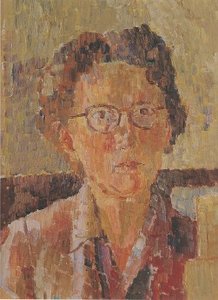
grace cossington smith
1892 - 1984 , Australia
Quick Facts
- Artistic Movement Or Style: Post-Impressionism
- Artists Or Movements Influenced By This Artist: Roland Wakelin
- Artists Who Influenced This Artist: Antonio Rattilo Rubbo
- Date Of Birth: April 20, 1892
- Date Of Death: 1984
- Full Name: Grace Cossington Smith
- Nationality: Australian
- Notable Artworks:
- The Sock Knitter
- Kuringai Avenue
- Fruit in the Window
- The Lacquer Room
- Place Of Birth: Neutral Bay, Australia
Related Articles

Cézanne's Masterpieces: 25 Iconic Artworks to Transform Your Space
Journey through 25 iconic artworks by Paul Cézanne – a master of Impressionism and Post-Impressionism. Explore his landscapes, still lifes, and the stories behind these timeless masterpieces. Discover museum-quality reproductions & curated decor at ArtsDot.com.
Beyond Light & Color: Impressionism vs. Post-Impressionism for the Discerning Collector
Explore the nuances of Impressionism & Post-Impressionism with . Expert insights for collectors on style, investment, and acquiring museum-quality reproductions.
Post-Impressionism's 10 Defining Masterpieces: Art for Your Home |
Journey through Post-Impressionism's 10 defining masterpieces – Van Gogh, Monet & more. Explore iconic paintings, art history & find museum-quality reproductions for your home at . Discover all masterpieces online!
Beyond Impressionism: Exploring the Emotional Depth of Post-Impressionist Painting
Explore the profound emotional depth & innovative techniques of Post-Impressionism with ArtsDot. Discover Cézanne, Van Gogh, Gauguin & more – and their lasting impact on modern art.
Impressionism's Masterpieces: 10 Paintings That Defined a Movement | ArtsDot
Journey through Impressionism's heart with 10 iconic paintings by Monet, Renoir & Degas. Explore light, color & the stories behind these masterpieces. Find museum-quality art reproductions and elevate your home decor on ArtsDot.com.