

 Preview
 Send
Send Share
Share
 Details

 Download
 Similars
 X-Ray
X-Ray Diaporama
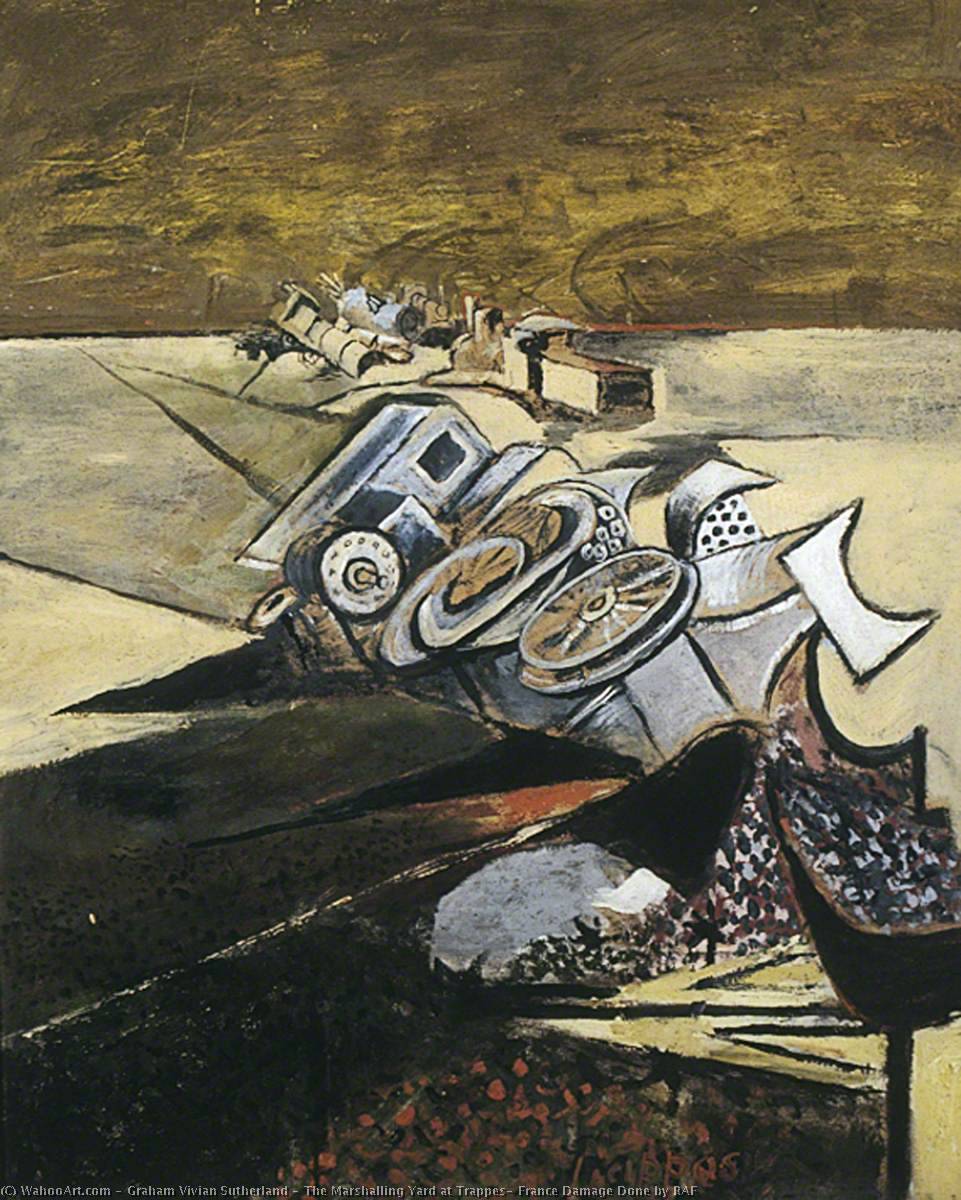
The Marshalling Yard at Trappes, France Damage Done by RAF
 Acrylic On Canvas
- WallArt
- Neo-Romantic Landscape
 1944
1944 128.0 x 105.0 cm
 Leeds Art Gallery
 Read More
Purchase a high-resolution, enhanced digital image, far superior to the online preview.
Each file is meticulously prepared by our in-house specialists using advanced tools and expert manual retouching. We ensure every image has exceptional clarity, precise color accuracy, and fine detail.
The final file is delivered via email within 72 hours, optimized for immediate use in professional, editorial, and print environments. This is the same quality trusted by top-tier design studios, publishers, and galleries.
Digital Image
Download a high-resolution file for personal display, printing, and creative projects. ( Buy Print Buy Hand Made Painting)
Included in Every Digital Image Order
Expert Digital Delivery, Guaranteed
When you choose ArtsDot.com, you're not just getting an image - you're receiving a professionally enhanced digital artwork, crafted with precision and backed by a satisfaction guarantee. Here's everything that comes with your order, automatically:

Fast Email Delivery
Your high-resolution digital image file will be emailed to you within 72 hours of ordering - ready for immediate use.

AI-Enhanced Digital File
Your artwork is professionally optimized using advanced AI tools and manual editing, ensuring maximum detail, clarity, and color accuracy.

Free Lifetime Re-Delivery
Accidentally deleted or lost your file? No worries - we'll resend it to you anytime, free of charge.

No Import Fees - Ever
Enjoy your artwork instantly with zero customs, duties, or delivery fees - digital downloads are always tax-free.

Color Accuracy Guarantee
We ensure your digital image reflects the original colors as closely as possible using professional tools and color management.

60-Day Satisfaction Guarantee
If you're not satisfied with your digital image, we'll revise it or refund 100% within 60 days - no questions asked.

100% Money-Back Guarantee
Not satisfied? Get a full refund within 60 days of receiving your digital file - no questions asked.

Bulk Order Discounts
Buy 3 images, save 10% - Buy 5, save 15% - Buy 10+, save 20%. Great for creative projects, galleries, and agencies.
Collectible Description
Graham Vivian Sutherland’s Haunting Vision of War
Graham Vivian Sutherland OM (1903–1980) stands as one of Britain's most celebrated Modern artists, forging an unparalleled path between the English tradition of painting by the light of nature and the daring explorations of European avant-garde movements like Surrealism and Expressionism. His distinctive style—characterized by a meticulous observation of the natural world imbued with unsettling psychological depth—established him as a pivotal figure in British art history. Sutherland’s prolific output spanned printmaking, tapestry design, glass art, and portraiture; however, it is his landscapes, particularly those depicting the windswept vistas of Pembrokeshire, Wales, that cemented his legacy as an artist who captured both beauty and unease simultaneously. ### The Painting: “The Marshalling Yard at Trappes, France” “The Marshalling Yard at Trappes, France,” completed in 1944, exemplifies Sutherland’s masterful blend of Romanticism and Surrealist influences. Executed on a substantial canvas measuring 128 x 105 cm (approximately 50 x 41 inches), the painting depicts a desolate scene following the devastating bombing raids conducted by RAF squadrons against German industrial targets during World War II. The central focus is an overturned truck, its wreckage strewn across the muddy ground—a stark symbol of destruction and vulnerability amidst the ravaged landscape. Scattered figures – soldiers and civilians alike – underscore the pervasive atmosphere of chaos and trauma that permeated France at the time. Sutherland’s meticulous attention to detail captures not merely the physical devastation but also a palpable sense of psychological disorientation, mirroring the anxieties of the era. ### Technique and Style: Neo-Romanticism Revisited Sutherland's technique is rooted in Neo-Romanticism, drawing inspiration from artists like Caspar David Friedrich and Turner. He employed oil paints on canvas with painstaking precision, layering textures and hues to convey a profound emotional response to his subject matter. Sutherland’s brushstrokes are deliberate and expressive, capturing the rugged contours of the terrain while simultaneously injecting an element of dreamlike distortion—a hallmark of Surrealist aesthetics. The muted palette – dominated by browns, greys, and ochres – contributes to the painting's somber mood, emphasizing the bleakness of wartime destruction. Sutherland’s masterful use of light and shadow further enhances the dramatic impact of the scene, guiding the viewer’s gaze across the canvas and amplifying the feeling of isolation and despair. ### Symbolism and Emotional Resonance Beyond its depiction of physical ruin, “The Marshalling Yard at Trappes” resonates with deeper symbolic meanings. The overturned truck represents not only material damage but also the collapse of order and stability—themes prevalent in Romantic art concerned with confronting mortality and grappling with existential anxieties. Sutherland’s portrayal of human figures underscores the enduring human spirit amidst adversity, highlighting resilience and vulnerability. The painting's unsettling stillness – juxtaposed against the implied violence of wartime – compels contemplation on themes of loss, trauma, and the fragility of existence. It serves as a poignant reminder of the horrors inflicted upon civilians during World War II and an enduring testament to Sutherland’s ability to transform observation into profound artistic expression. ### Legacy and Influence Graham Vivian Sutherland's contribution to British art is undeniable. His landscapes continue to inspire artists and viewers alike, capturing both the grandeur of nature and its capacity for confronting darkness. “The Marshalling Yard at Trappes,” alongside his other works—particularly his monumental tapestry depicting Coventry Cathedral—demonstrates Sutherland’s unwavering commitment to exploring psychological depth within visual representation. He remains a pivotal figure in shaping Modern British art, securing his place as an artist who dared to confront uncomfortable truths and elevate the beauty of the natural world into a vehicle for profound emotional engagement.Related Artworks

Artist Biography
The Visionary Landscapes of Graham Vivian Sutherland
Graham Vivian Sutherland, a titan of British Modernism, possessed the rare ability to transform the familiar contours of the natural world into something profoundly unsettling and deeply spiritual. Born in Streatham, London, in 1903, Sutherland’s journey was one of constant metamorphosis. While his early years were shaped by a classical education at Epsom College, his true calling emerged far from the legal circles of his family. His initial foray into the technical world of an apprenticeship at the Midland Railway Locomotive Works provided a foundation of precision that would later manifest in his intricate printmaking and textured oil paintings. As he transitioned to Goldsmiths' School of Art, Sutherland began to move away from traditional representation, finding himself drawn to the evocative power of engraving and etching.
The artist’s early aesthetic was deeply rooted in the romanticism of Samuel Palmer, yet he refused to remain anchored to the past. Instead, Sutherland acted as a bridge between the English pastoral tradition and the radical energy of European avant-garde movements. By absorbing the dreamlike logic of Surrealism and the raw emotionality of Expressionism, he developed a visual language that could capture both the physical landscape and the psychological state. His early prints, characterized by a sense of mystery and organic form, laid the groundwork for a career defined by an obsession with the "strangeness" of nature—a theme that would become his most enduring legacy.
Nature’s Shadow and the War Years
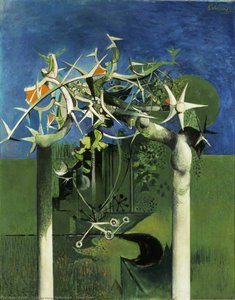
The 1940s marked a pivotal era in Sutherland's development, as his focus shifted from the delicate medium of printmaking to the visceral, impasto textures of oil painting. It was during this period that the rugged, windswept landscapes of Pembrokeshire became his primary muse. In works such as Thorn Tree, one can witness the artist’s mastery in blending botanical reality with surrealist distortion. He did not merely paint trees; he painted the tension, the struggle, and the skeletal architecture of life itself. This period saw him move toward a more abstract, yet deeply symbolic, way of seeing, where thorns, roots, and twisted branches served as metaphors for human vulnerability and resilience.
The Second World War brought a different, more somber dimension to his work. Serving as an official war artist, Sutherland turned his gaze toward the industrial and often haunting scenes of the British home front. His paintings from this era, such as Flying Bomb Depot The Caverns, are masterclasses in atmosphere. Through heavy textures and a palette that evokes both decay and dread, he captured the eerie desolation of wartime interiors. These works were not merely documentation; they were psychological portraits of an era marked by anxiety and the looming presence of destruction, reflecting the fractured reality of a world at war.
A Legacy of Symbolism and Grandeur
In the post-war years, Sutherland’s work ascended to new heights of spiritual and public significance. He began to integrate religious symbolism with his organic motifs, creating a powerful synthesis of the sacred and the natural. This culminated in one of his most monumental achievements: the design of the massive central tapestry for the new Coventry Cathedral, titled Christ in Glory in the Tetramorph. This work, which utilized his ability to manipulate form and color on a grand scale, stands as a testament to his role in the cultural reconstruction of post-war Britain.
Throughout his prolific career, Sutherland’s versatility allowed him to leave an indelible mark across multiple disciplines:
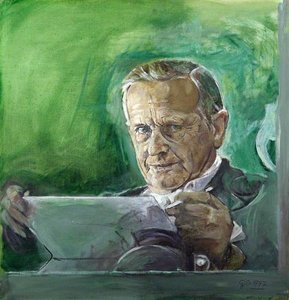
- Portraiture: His ability to capture the psychological depth of public figures, such as his dignified and melancholic Somerset Maugham.
- Printmaking: A lifelong dedication to the precision of etching and engraving that informed his sense of line and structure.
- Decorative Arts: His contributions to tapestry design and glass art, bringing modern abstraction into the realm of functional beauty.
Ultimately, Graham Sutherland remains a cornerstone of 20th-century art because he dared to look beneath the surface of the landscape. He found the surreal within the real and the divine within the organic. His legacy is not just found in museums, but in the way we perceive the hidden, often jagged, beauty of the world around us—a world where every thorn holds a story and every shadow contains a mystery.
Graham Vivian Sutherland
1903 - 1980 , United Kingdom
Quick Facts
- Artistic Movement Or Style: Surrealism
- Artists Or Movements Influenced By This Artist: ['Paul Nash']
- Artists Who Influenced This Artist:
- Samuel Palmer
- F.L. Griggs
- Date Of Birth: August 24, 1903
- Date Of Death: February 17, 1980
- Full Name: Graham Vivian Sutherland
- Nationality: British
- Notable Artworks:
- Flying Bomb Depot
- Entrance to a Lane
- Place Of Birth: London, England

