 Preview
 Send
Send Share
Share
 Details

 Download
 Similars
 X-Ray
X-Ray Diaporama
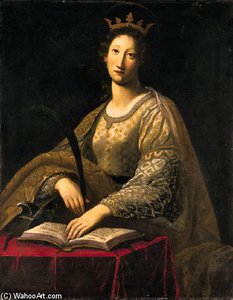
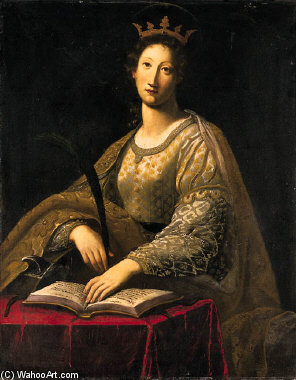
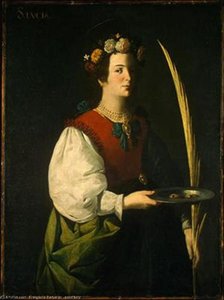
Saint Catherine Of Alexandria
 Read More
Giclée / Art Print
Museum-quality giclée or canvas print with fast production and flexible finish options. ( Buy Hand Made Painting Buy Image)




































Pick from our preset sizes that match the artwork's original proportions.

You may enter your own dimensions to fit a specific frame or space. If your selected size does not match the original image's proportions, we will either crop the artwork or extend the image with a mirrored or solid-fill edge. A digital mockup will be sent for your approval before production begins.
Please note that the on-screen preview does not reflect the actual cropping or extension. Only the mockup will accurately show the final composition.
While custom sizes are available, we recommend selecting a dimension from the predefined list to preserve the original proportions.
Worldwide Delivery () in 2 weeks instead of standard 4/5 weeks. (23 August)

Free Worldwide Express Shipping

High-Quality Linen Canvas

Full Shipping Insurance

Customs Tax Refund Guarantee

True Color Matching Guarantee

60-Day Return Policy (Defects Only)

100% Money-Back Guarantee

Bulk Discount Offer
 Glass option is only available in size under 110 CM

Saint Catherine Of Alexandria
Giclée / Art Print
Reproduction Size
-


Total Price
$ 63
Related Artworks
Artist Biography
The Florentine Legacy of Gregorio Pagani
In the vibrant, sun-drenched landscape of late 16th-century Florence, a period where the structured elegance of the High Renaissance began to yield to the restless, emotive energy of Mannerism, Gregorio Pagani emerged as a vital custodian of spiritual narrative. Born around 1558 into an artistic lineage that already breathed the air of creativity, Pagani was the son of the painter Francesco Pagani. This early immersion in the workshop traditions of Florence provided him with more than just technical foundations; it offered him a profound connection to the Florentine disegno—the disciplined art of drawing and structural integrity that would define his entire career.
Pagani’s artistic evolution was shaped by a sophisticated synthesis of styles, nurtured under the tutelage of two of the era's most influential masters. Through his studies with Santi di Tito, he inherited a commitment to meticulous realism and clarity, a quality that prevented his religious compositions from dissolving into mere abstraction. However, it was his subsequent time in the studio of Ludovico Cigoli that infused his work with a burgeoning sense of drama and expressive dynamism. This unique duality—the marriage of precise anatomical truth with a theatrical use of light and color—allowed Pagani to create works that were both intellectually grounded and emotionally resonant.
Mastery of the Sacred and the Lost Grandeur
The true essence of Pagani’s oeuvre lies in his ability to transform altarpieces and devotional scenes into windows of profound spiritual experience. He possessed a rare talent for capturing the quiet, luminous moments of the divine, most notably seen in his breathtaking nativity scenes. His work for the cathedral of Santa Maria del Fiore stands as a testament to his ability to utilize intricate detail and a radiant color palette to evoke the awe of the Nativity, drawing the viewer into a state of contemplative grace.
Yet, much of Pagani’s most ambitious legacy remains shrouded in the tragedy of history. His monumental painting for Santa Maria del Carmine, titled St. Helena Finding the Cross, was celebrated as a pinnacle of his creative power, showcasing a masterful command of composition and narrative tension. Tragically, this masterpiece was lost forever in the devastating fire that consumed the church in 1771. Today, we are left to reconstruct the grandeur of his vision through fragmentary sketches and preparatory drawings, which serve as hauntingly beautiful echoes of a lost Florentine splendor.
A Bridge Between Eras and Generations
Beyond his individual canvases, Pagani’s historical significance is cemented by his role as a pivotal educator and a bridge between the late Mannerist tradition and the approaching Baroque era. His studio became a crucible for the next generation of Florentine masters, most notably Cristofano Allori and Matteo Rosselli. In teaching Allori, Pagani passed on the essential tools of tonal gradation and emotional depth, helping to shape an artist who would eventually blend Florentine precision with the lushness of Venetian color.
The influence of Pagani can be traced through several key artistic developments:
- Technical Lineage: The transmission of disegno from the tradition of Santi di Tito to the burgeoning Baroque style.
- Stylistic Synthesis: The integration of Cigoli’s dramatic light with a more grounded, realistic approach to religious subjects.
- Pedagogical Impact: The mentorship of Cristofano Allori, whose work would carry Pagani's lessons into the new century.
Though his life was relatively short, ending in 1605, Gregorio Pagani left an indelible mark on the Florentine school. His ability to navigate the transition from the calculated elegance of Mannerism to a more palpable, psychological intensity ensures that he remains a figure of immense importance for anyone seeking to understand the soul of late Renaissance Italy.
Gregorio Pagani
1558 - 1605 , Italy
Quick Facts
- Artistic Movement Or Style: Late Mannerism
- Artists Or Movements Influenced By This Artist: ['Cristofano Allori']
- Artists Who Influenced This Artist:
- Santi di Tito
- Ludovico Cigoli
- Date Of Birth: Florence, Italy (1558)
- Date Of Death: 1605
- Full Name: Gregorio Pagani
- Nationality: Italian
- Notable Artworks:
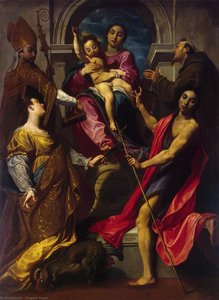
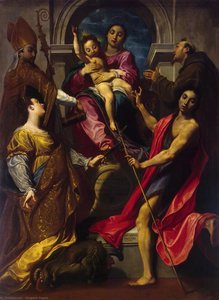
- Madonna and the Child with Saints
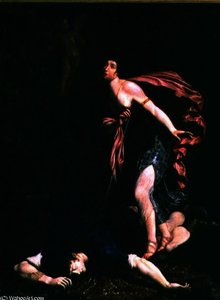
- Pyramus and Thisbe
- Saint Catherine Of Alexandria
- Place Of Birth: Florence