 Preview
 Send
Send Share
Share
 Details

 Download
 Similars
 X-Ray
X-Ray Diaporama
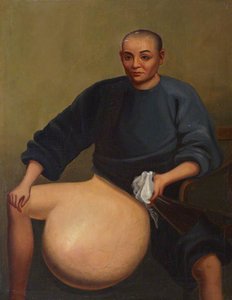
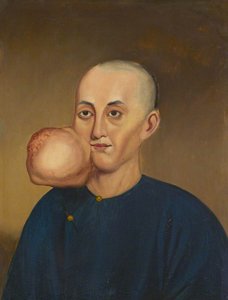
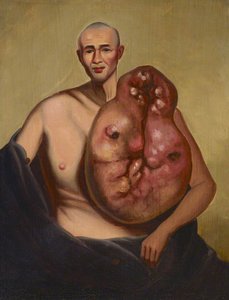
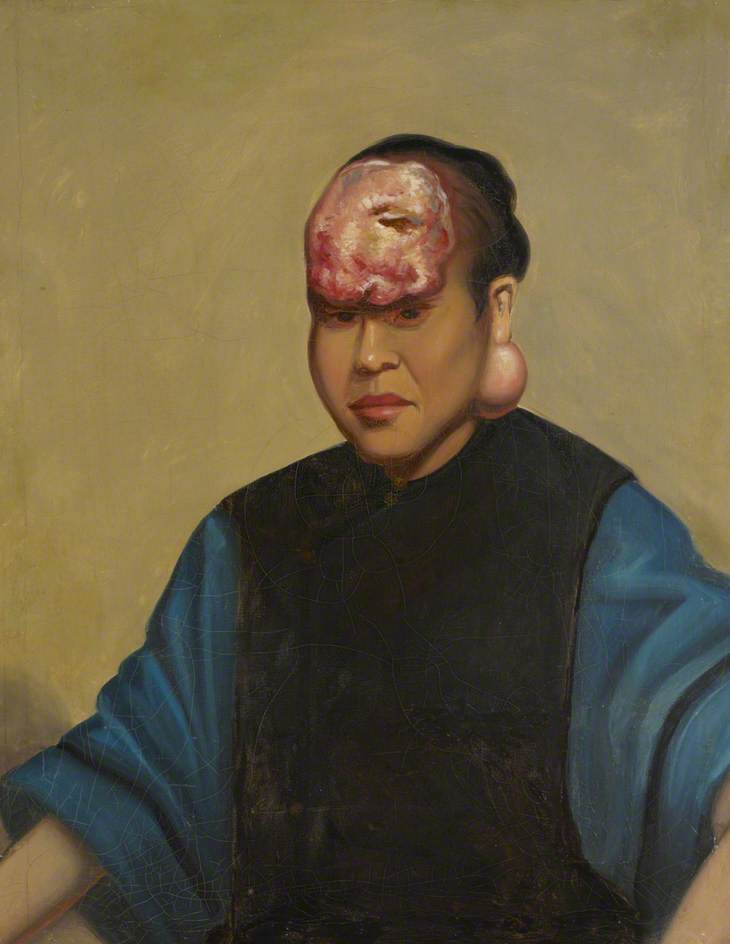
Case No.4849
 Contemporary Realism
 1838
1838 57.0 x 44.0 cm
 Gordon Museum
 Read More
Hand Made Oil Reproduction
Hand-painted oil on canvas in your size and frame, made to order by our artists. ( Buy Print Buy Image)




































Pick from our preset sizes that match the artwork's original proportions.

You may enter your own dimensions to fit a specific frame or space. If your selected size does not match the original image's proportions, we will either crop the artwork or extend the painting with additional hand-painted elements. A digital mockup will be sent for your approval before production begins.
Please note that the on-screen preview does not reflect the actual cropping or extension. Only the mockup will accurately show the final composition.
While custom sizes are available, we recommend selecting a dimension from the predefined list to preserve the original proportions.
After order, ArtsDot.com team will email client for instructions and provide a mockup preview
Worldwide Delivery () in 3/4 weeks instead of standard 5 weeks. (19 August). No compromise on quality.

Free Worldwide Express Shipping

High-Quality Linen Canvas

Full Shipping Insurance

Customs Tax Refund Guarantee

True Color Matching Guarantee

60-Day Return Policy (Defects Only)

100% Money-Back Guarantee

Bulk Discount Offer
 Glass option is only available in size under 110 CM

Case No.4849
Reproduction Medium
Reproduction Size
-


Total Price
$ 263
Related Artworks



Artist Biography
The Visionary of the Qing Dynasty: The Life and Legacy of Guan Qiaochang Lamqua
In the twilight of the Qing Dynasty, a period often characterized by rigid tradition and cultural isolation, there emerged an artist whose brush dared to bridge the gap between East and West. Guan Qiaochang Lamqua (1801–1860) was not merely a painter but a profound innovator who challenged the established boundaries of Chinese aesthetics. Born into a prosperous family in Shandong Province, Lamqua’s early artistic foundations were laid through the classical discipline of traditional ink painting, a craft he mastered under the watchful eye of his father, a distinguished scholar and artist. Yet, beneath this veneer of classical training lay a restless, inquisitive spirit that would eventually lead him toward a revolutionary embrace of European oil painting techniques.
The trajectory of Lamqua’s career was irrevocably altered during his formative years at Peking University. It was here that he encountered the profound influence of Jesuit missionaries, who introduced him to the burgeoning realism and anatomical precision of Western art. This encounter ignited a lifelong fascination with the physical reality of the human form. Unlike many of his contemporaries who sought beauty in idealized, ethereal figures, Lamqua pursued a scientific truth. He famously engaged in the meticulous study of human anatomy—a practice as controversial as it was daring for the era—dissecting cadavers to grasp the intricate complexities of musculature and bone structure. This dedication to anatomical accuracy allowed him to translate the weight and texture of life onto canvas with an unprecedented level of realism.
A Master of Light, Shadow, and Human Suffering
Lamqua’s body of work is defined by a haunting ability to capture the intersection of physical deformity and psychological depth. He became a master of chiaroscuro, utilizing dramatic contrasts between light and shadow to sculpt faces out of the darkness, lending his portraits an almost tactile, three-dimensional presence. His fascination with the macabre and the visceral is perhaps most poignantly expressed in his celebrated oil paintings, which often serve as windows into the human condition's more difficult realities.
His most iconic contributions to the art world include works that explore themes of hardship and transformation:
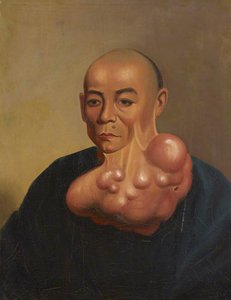
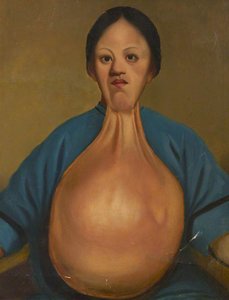
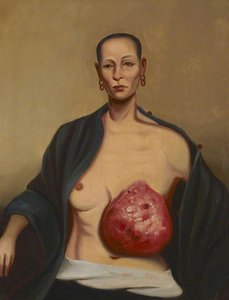
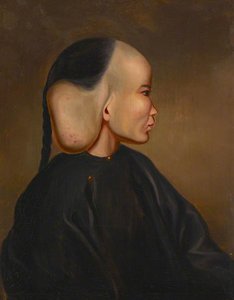
- Case No.1675 (1836): A masterpiece of symbolic depth, this unsettling portrait depicts a man afflicted with a tumor. Through masterful lighting, Lamqua captures not just the physical contours of the ailment but the profound psychological torment of the subject, creating a work that is both beautiful and deeply disturbing.
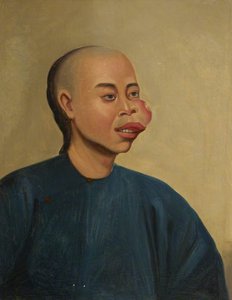
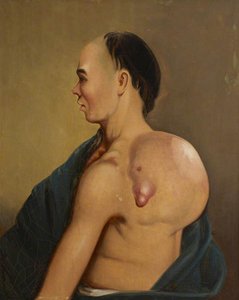
- Case No.4849 (1838): A hauntingly realistic exploration of human vulnerability, this piece continues his investigation into the visceral realities of the flesh, showcasing his unparalleled skill in rendering texture and emotion.
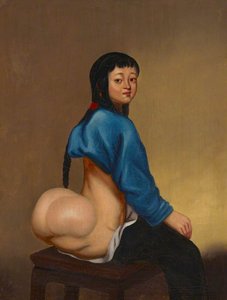
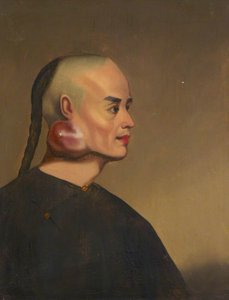
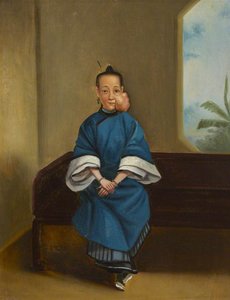
- Case No.3438 (1837): This work exemplifies his use of dramatic lighting to highlight anatomical precision, serving as a poignant testament to the artist's ability to find gravity and meaning within moments of intense suffering.
Historical Significance and Artistic Innovation
The historical importance of Guan Qiaochang Lamqua lies in his role as a cultural conduit. At a time when the boundaries between Chinese ink traditions and Western oil techniques were strictly delineated, Lamqua synthesized them into a singular, visionary language. He did not simply copy Western styles; he adapted them to express a unique perspective that resonated with the complexities of 19th-century China. His work represents a rare moment of artistic hybridization, where the scientific rigor of European realism met the profound symbolic traditions of the East.
Today, Lamqua remains an enigmatic figure whose portraits continue to captivate modern scholars and collectors. His legacy is found in his courage to look closely at the world—even its most unsettling aspects—and his ability to find a haunting, sculptural beauty within the shadows of human existence. Through his innovative use of medium and his unflinching gaze, he forever altered the landscape of Chinese portraiture, leaving behind a body of work that stands as a testament to the power of artistic evolution.
guan qiaochang lamqua
1801 - 1860
Quick Facts
- Artistic Movement Or Style: Realism
- Artists Or Movements Influenced By This Artist: ['']
- Artists Who Influenced This Artist: ['']
- Date Of Birth: 1801
- Date Of Death: 1860
- Full Name: Guan Qiaochang Lamqua
- Nationality: Chinese
- Notable Artworks:
- Case No.4849
- Case No.1675
- Case No.3438
- Place Of Birth: China
Related Articles

The Enduring Legacy of Oil on Canvas: Technique, History & Aesthetic Impact
Explore the rich history & techniques of oil painting – from Renaissance masters to Impressionism. Discover pigments, layering methods, and why this timeless medium endures. Expert insights for artists & art enthusiasts.

Oil on Canvas: A Historical & Technical Exploration of a Timeless Artistic Medium
Explore the rich history & enduring techniques of oil painting on canvas. Discover the science behind its longevity, conservation practices, and contemporary relevance. Expert insights for art enthusiasts.
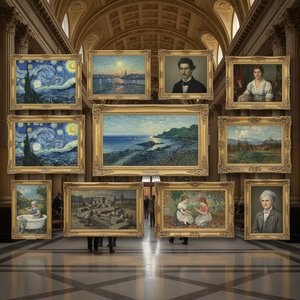
19th Century Masterpieces: 10 Paintings That Defined an Era | ArtsDot
Journey through 19th century art with ArtsDot! Explore 10 iconic paintings – from Monet & Renoir to Courbet – and discover the stories behind Romanticism, Realism & Impressionism. Find museum-quality reproductions for your home decor. Explore the full collection online!

The Enduring Power of Painting: A Historical & Contemporary Exploration of Form and Emotion
Explore the rich history & enduring techniques of oil painting with ArtsDot. Discover masterpieces, learn about art collecting, and find authentic handmade reproductions crafted by skilled artists.

The Enduring Legacy of Oil on Canvas: Technique, History & Contemporary Practice
Explore the rich history & enduring techniques of oil painting on canvas. Discover the science behind its longevity, conservation practices, and contemporary relevance. Expert insights for art enthusiasts.