 Preview
 Send
Send Share
Share
 Details

 Download
 Similars
 X-Ray
X-Ray Diaporama
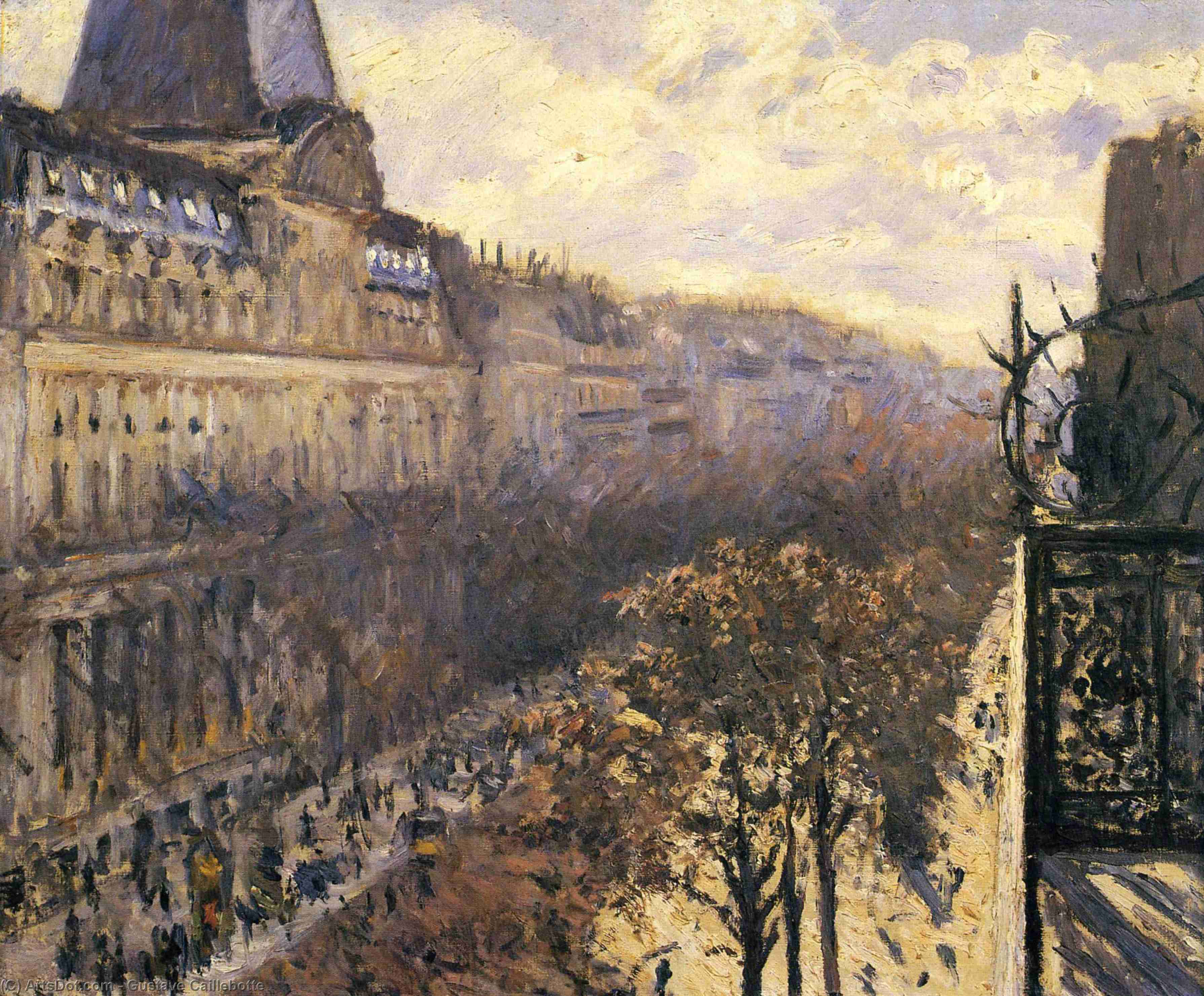
Boulevard des Italiens
 Acrylic
- WallArt
- Impressionistic Urban Landscape
 1880
1880 65.0 x 54.0 cm
 Read More
Hand Made Oil Reproduction
Hand-painted oil on canvas in your size and frame, made to order by our artists. ( Buy Print Buy Image)




P118B $10

P118H $10

P118W $10

P438Z $10

P508JH $12

P508YH $12

P805H $10

P805Z $10

P919BZ $10

P919G $10

P919XJ $10

P959ZH $10

P968JZ $12

W106C $8

W218G $10

W218JH $8

W218Y $10

W307PJ $10

W316G $10

W316PJ $8

W316Y $10

W398PJ $8

W4111J $10

W500HY $15

W500JH $15

W692G $12

W849H $8

W940BG $15

W953PJ $8




Pick from our preset sizes that match the artwork's original proportions.

You may enter your own dimensions to fit a specific frame or space. If your selected size does not match the original image's proportions, we will either crop the artwork or extend the painting with additional hand-painted elements. A digital mockup will be sent for your approval before production begins.
Please note that the on-screen preview does not reflect the actual cropping or extension. Only the mockup will accurately show the final composition.
While custom sizes are available, we recommend selecting a dimension from the predefined list to preserve the original proportions.
After order, ArtsDot.com team will email client for instructions and provide a mockup preview
Worldwide Delivery () in 3/4 weeks instead of standard 5 weeks. (16 August). No compromise on quality.

Free Worldwide Express Shipping

High-Quality Linen Canvas

Full Shipping Insurance

Customs Tax Refund Guarantee

True Color Matching Guarantee

60-Day Return Policy (Defects Only)

100% Money-Back Guarantee

Bulk Discount Offer
 Glass option is only available in size under 110 CM

Boulevard des Italiens
Reproduction Medium
Reproduction Size
-


Total Price
$ 263
Artwork Description
A Snapshot of Parisian Life: Gustave Caillebotte’s Boulevard des Italiens
The painting “Boulevard des Italiens” by Gustave Caillebotte isn't just a depiction of a Parisian street; it’s a crystallized moment in time—a testament to the dynamism and optimism characteristic of the Belle Époque. Executed in 1880, this canvas captures an ordinary scene elevated to artistic significance through Caillebotte’s meticulous observation and innovative approach to painting. It's a piece that speaks volumes about the social fabric of late nineteenth-century Paris and invites viewers to contemplate the beauty found within everyday life.Subject Matter and Composition
At its core, the artwork portrays a bustling boulevard lined with trees and buildings—a prominent thoroughfare commissioned during Napoleon III’s reign to showcase French grandeur and modernity. Caillebotte skillfully captures the energy of the street, populated by figures engaged in various activities: men strolling leisurely, women chatting animatedly, and children playing amongst the foliage. The artist's compositional choices are deliberate; he employs a slightly elevated viewpoint, offering a panoramic perspective that emphasizes the scale of the urban landscape while simultaneously creating a sense of intimacy as we observe these individuals interacting within it.Style and Technique: Impressionistic Precision
Caillebotte’s style aligns closely with Impressionism, though he distinguishes himself from many of his contemporaries by prioritizing technical precision alongside capturing fleeting impressions. Unlike Monet or Renoir who favored looser brushstrokes to convey atmosphere, Caillebotte meticulously rendered details—the texture of the trees, the reflections in the windows, and even the subtle nuances of light and shadow—demonstrating a mastery of oil paint that anticipates developments in Cubism. The artist’s use of broken color—applying pigment in small patches rather than blending it smoothly—creates a shimmering surface effect that vibrates with life and contributes to the overall illusionistic quality of the painting.Historical Context: The Belle Époque
“Boulevard des Italiens” exists within the “Belle Époque,” French for “beautiful era,” a period marked by unprecedented economic prosperity, technological advancements, and cultural flourishing. Napoleon III’s ambitious urban renewal projects—including the construction of this boulevard—reflected the confidence of the ruling monarchy in France's future. Furthermore, the painting captures the spirit of Parisian society at its height: a vibrant mix of artists, intellectuals, bourgeois families, and tourists eager to experience the glories of the city. It serves as an emblem of the era’s optimism and fascination with progress.Symbolism and Emotional Impact
Beyond its depiction of urban life, “Boulevard des Italiens” carries subtle symbolic weight. The presence of a clock on one of the buildings underscores the passage of time—a recurring motif in Caillebotte's oeuvre—and invites contemplation about mortality alongside beauty. More broadly, however, the painting evokes a feeling of serenity and observation. It’s not an emotionally charged scene; rather, it encourages viewers to appreciate the quiet grandeur of everyday existence and to find solace in the simple pleasures of Parisian life. The artwork remains remarkably relevant today as a reminder that beauty can be found in unexpected places and that capturing a moment in time—however ordinary—can yield profound artistic results.Related Artworks
Artist Biography
A Parisian of the New Age: The Life and Art of Gustave Caillebotte
Gustave Caillebotte, born into a prosperous Parisian family in 1848, was an artist uniquely positioned to capture the dramatic transformations reshaping his city. His father, Martial Caillebotte, inherited a successful textile business and served as a judge, providing Gustave with both financial security and a vantage point from which to observe the burgeoning modern world. While initially pursuing legal studies – earning degrees in law in 1868 and 1870 – Caillebotte’s true calling lay within the realm of art. He began serious training under Léon Bonnat, immersing himself in painting while simultaneously developing a keen interest in photography, an emerging medium that would profoundly influence his artistic vision. This early exposure to photographic principles—its framing, perspective, and capturing of fleeting moments—would become hallmarks of his distinctive style. Caillebotte wasn’t merely documenting change; he was actively engaging with the aesthetic possibilities it presented.Realism Infused with Impressionist Light
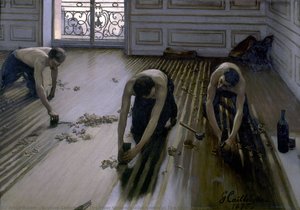
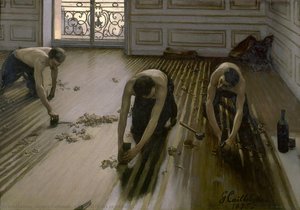
Caillebotte's artistic path diverged from strict academic tradition, yet he never fully embraced the purely optical explorations of many of his Impressionist contemporaries. He found kinship with artists like Edgar Degas and Giuseppe de Nittis, sharing a fascination with modern life but approaching it through a lens of meticulous realism. His early masterpiece, Les Raboteurs de Parquet (The Floor Scrapers), exhibited at the 1875 Salon, immediately established his reputation as a bold and unconventional painter. The work depicts three laborers painstakingly scraping a wooden floor, rendered with an unflinching honesty that shocked some viewers while captivating others. It wasn’t simply the subject matter—the working class rarely graced the canvases of high art—but also the composition: cropped, almost jarringly direct, and devoid of sentimental idealization. This commitment to portraying contemporary life without embellishment continued in works like The Iron Bridge, where he masterfully captured the industrial landscape of a rapidly changing Paris. However, Caillebotte wasn’t immune to the influence of Impressionism; his palette gradually lightened, and he began experimenting with broken brushstrokes and atmospheric effects, particularly evident in his stunning views of Parisian rooftops blanketed in snow, such as View of Rooftops (Snow).A Patron and a Pioneer: Navigating the Art World
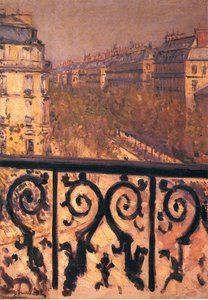
Beyond his own artistic endeavors, Caillebotte played a crucial role in supporting the Impressionist movement. His financial independence allowed him to become a significant patron, purchasing works by Monet, Renoir, Pissarro, Cézanne, Degas, and others at a time when their art was largely rejected by the official Salon. He wasn’t merely a collector; he actively championed these artists, organizing and financing several of the Impressionist exhibitions that defied conventional artistic norms. This dedication to fostering innovation extended to his own collection, which he bequeathed to the French state upon his death in 1894—a bequest initially met with resistance but ultimately forming the cornerstone of the Musée d’Orsay's renowned Impressionist holdings. Caillebotte’s unique perspective also manifested in his compositions; works like Boulevard vu d’en haut (Boulevard Seen from Above), painted in 1880, demonstrate a strikingly modern sensibility, employing an elevated viewpoint and dynamic cropping that anticipate the photographic perspectives of the 20th century. This innovative approach to composition, possibly influenced by Japanese prints and his own photographic experiments, set him apart as a true pioneer.Legacy and Rediscovery: A Modern Master Reclaimed
For decades following his death, Caillebotte’s work remained relatively obscure, overshadowed by the more celebrated figures of Impressionism. It wasn't until the late 20th century that a comprehensive reassessment of his art began to take place, fueled by scholarly research and major exhibitions. This rediscovery revealed an artist of remarkable technical skill, intellectual depth, and visionary insight. Caillebotte’s paintings are not simply depictions of modern life; they are profound meditations on the complexities of urban existence, the changing social landscape, and the evolving relationship between art and reality. His ability to seamlessly blend realism with Impressionist techniques, his innovative compositions, and his unwavering commitment to portraying the world around him have secured his place as a pivotal figure in 19th-century art. Today, Caillebotte’s works are celebrated for their unique perspective, their masterful execution, and their enduring relevance—a testament to an artist who dared to capture the spirit of a new age.Notable Works
- Les Raboteurs de Parquet (The Floor Scrapers) (1875): A groundbreaking work showcasing Caillebotte’s realism and unconventional composition.
- View of Rooftops (Snow) (1878): Demonstrates his use of high vantage points and atmospheric effects, influenced by photography and Japanese prints.
- Boulevard vu d’en haut (Boulevard Seen from Above) (1880): A strikingly modern composition with a dynamic perspective.
- Paris Street; Rainy Day (1877): Perhaps his most famous work, capturing the bustling energy of Parisian life in a unique and evocative manner.
- The Bezique Game(1881) : A captivating Impressionist painting of Parisian leisure.
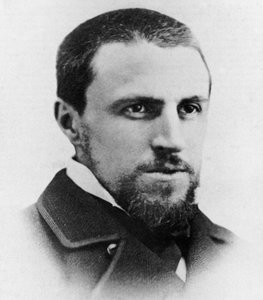
Gustave Caillebotte
1848 - 1894 , France
Quick Facts
- Artistic Movement Or Style: Realism, Impressionism
- Artists Or Movements Influenced By This Artist: Impressionism
- Artists Who Influenced This Artist:
- Edgar Degas
- Giuseppe de Nittis
- Date Of Birth: August 19, 1848
- Date Of Death: February 21, 1894
- Full Name: Gustave Caillebotte
- Nationality: French
- Notable Artworks:
- Les Raboteurs de Parquet
- View of rooftops (snow)
- Boulevard seen from above
- Place Of Birth: Paris, France
Related Articles
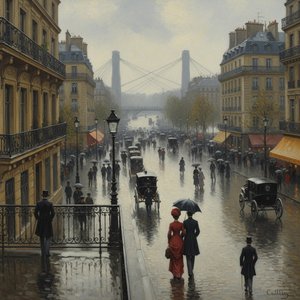
Gustave Caillebotte: Bridging Realism & Modernity in Parisian Life
Explore the life & art of Gustave Caillebotte, a pivotal figure bridging Realism & Impressionism. Discover his iconic Parisian scenes and lasting legacy with ArtsDot.
25 Klimt Masterpieces: A Journey Through Iconic Art & Decor
Delve into the world of Gustav Klimt with our top 25 masterpieces! Explore his iconic paintings – 'The Kiss,' 'Portrait of Adele,' and more. Discover museum-quality reproductions & curated decor ideas. Explore the full collection online at ArtsDot.com.

Beyond the Horizon: 10 Landscape Masterpieces for Your Home Decor
Journey through 10 breathtaking landscape paintings by Monet, Van Gogh & more! Explore iconic artworks, artistic techniques & find inspiration for your home decor. Museum-quality reproductions at ArtsDot.com. Discover all masterpieces on ArtsDot.com
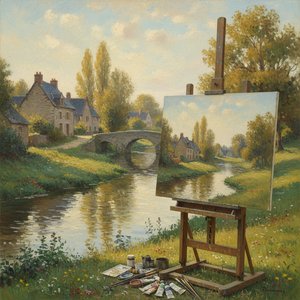
Gustave Loiseau: Capturing the Ephemeral Light of French Landscapes
Explore the captivating landscapes of Gustave Loiseau, a key Post-Impressionist painter. Discover his unique 'en treillis' technique and artistic legacy with our comprehensive guide.

Evocations of Place: A Historical Journey Through Landscape Art
Explore the rich history of landscape art with ArtsDot. Discover renowned artists, movements like Impressionism & Romanticism, and expert guidance for collecting timeless pieces. Find your perfect serene escape today!