 Preview
 Send
Send Share
Share
 Details

 Download
 Similars
 X-Ray
X-Ray Diaporama
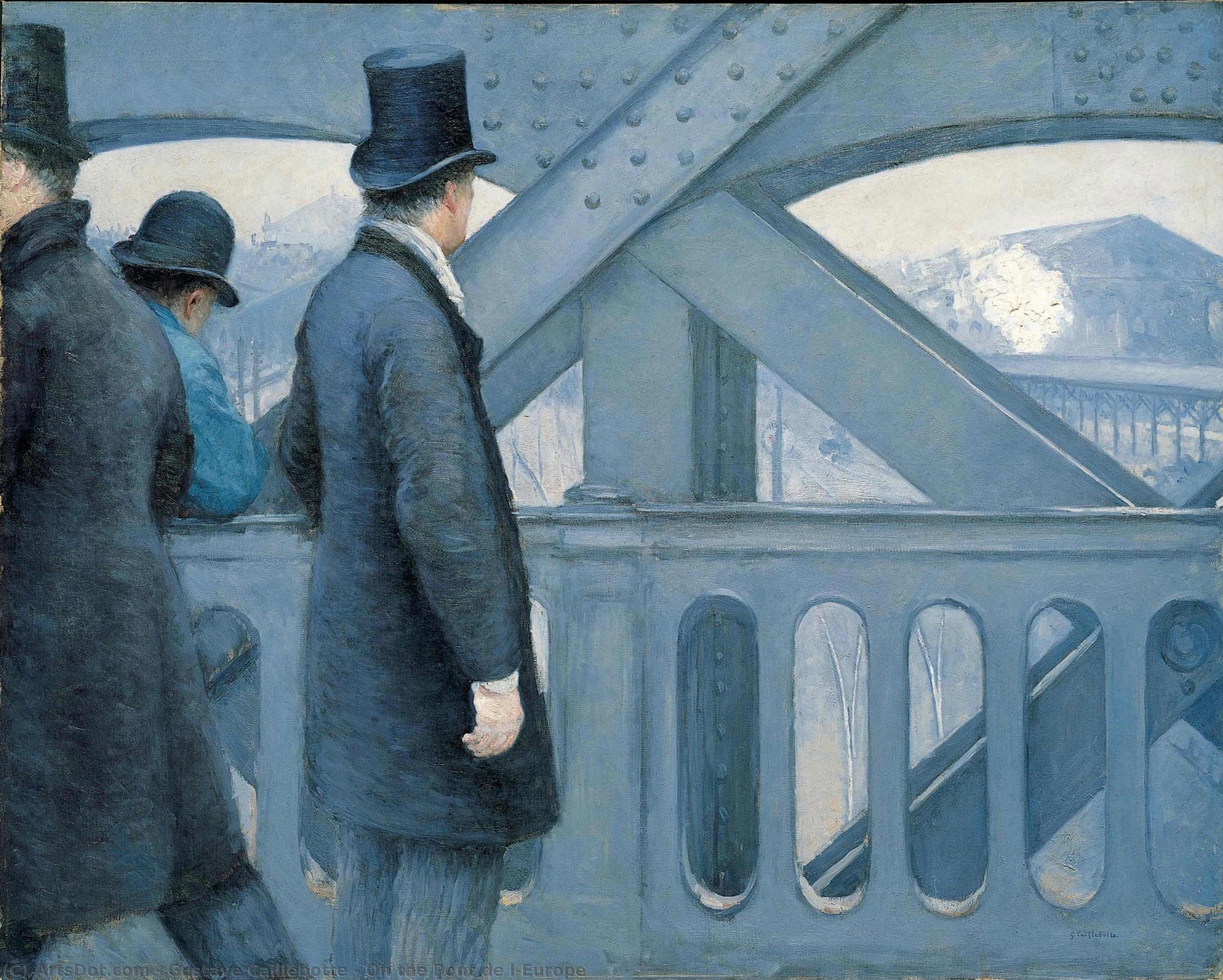
On the Pont de l’Europe
 Acrylic On Canvas
- WallArt
- Impressionist Painting
 1876
1876 105.0 x 130.0 cm
 Kimbell Art Museum
 Read More
Hand Made Oil Reproduction
Hand-painted oil on canvas in your size and frame, made to order by our artists. ( Buy Print Buy Image)




P118B $10

P118H $10

P118W $10

P438Z $10

P508JH $12

P508YH $12

P805H $10

P805Z $10

P919BZ $10

P919G $10

P919XJ $10

P959ZH $10

P968JZ $12

W106C $8

W218G $10

W218JH $8

W218Y $10

W307PJ $10

W316G $10

W316PJ $8

W316Y $10

W398PJ $8

W4111J $10

W500HY $15

W500JH $15

W692G $12

W849H $8

W940BG $15

W953PJ $8




Pick from our preset sizes that match the artwork's original proportions.

You may enter your own dimensions to fit a specific frame or space. If your selected size does not match the original image's proportions, we will either crop the artwork or extend the painting with additional hand-painted elements. A digital mockup will be sent for your approval before production begins.
Please note that the on-screen preview does not reflect the actual cropping or extension. Only the mockup will accurately show the final composition.
While custom sizes are available, we recommend selecting a dimension from the predefined list to preserve the original proportions.
After order, ArtsDot.com team will email client for instructions and provide a mockup preview
Worldwide Delivery () in 3/4 weeks instead of standard 5 weeks. (16 August). No compromise on quality.

Free Worldwide Express Shipping

High-Quality Linen Canvas

Full Shipping Insurance

Customs Tax Refund Guarantee

True Color Matching Guarantee

60-Day Return Policy (Defects Only)

100% Money-Back Guarantee

Bulk Discount Offer
 Glass option is only available in size under 110 CM

On the Pont de l’Europe
Reproduction Medium
Reproduction Size
-


Total Price
$ 263
Artwork Description
A Moment Frozen in Blue: The Story of *On the Pont de l’Europe*
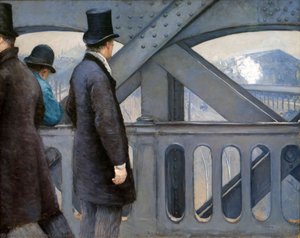
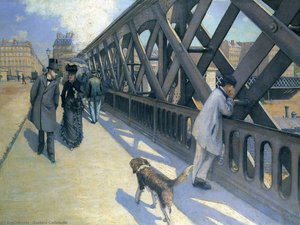
Gustave Caillebotte's *On the Pont de l’Europe*, painted in 1876, isn’t merely a depiction of a Parisian bridge; it’s a carefully constructed tableau capturing a specific moment in time and reflecting the evolving spirit of modern urban life. Far removed from the vibrant, sun-drenched scenes favored by Monet and Renoir, Caillebotte presents a strikingly subdued vision – a world rendered primarily in cool blues and greys, mirroring the chill of the Parisian winter. This deliberate restraint is key to understanding his artistic approach: he wasn’t interested in celebrating fleeting beauty but rather in observing and documenting the realities of contemporary society with a quiet, almost clinical precision.
The painting unfolds across the vast expanse of the Place de l'Europe, a bustling thoroughfare bridging six avenues named after European capitals. The imposing structure of the bridge itself – a complex network of ironwork and diagonal bracing – dominates the composition, acting as both a physical barrier and a symbolic representation of the rigid order imposed by industrialization. Caillebotte masterfully utilizes this geometric framework to create a sense of depth and perspective, drawing the viewer’s eye into the scene and highlighting the interplay between man-made structures and the human figures navigating them.
The Man in Blue: Symbolism and Social Commentary
Three primary figures anchor the composition. A couple strolls towards the viewer, their attire suggesting a comfortable, bourgeois lifestyle – a subtle commentary on the social stratification of Parisian society at the time. A working-class man stands further back, his gaze directed toward another figure, creating an intriguing dynamic of observation and perhaps even longing. The repeated identical clothing worn by the couple and the distant man speaks to a broader theme: the increasing standardization and uniformity of urban life under the influence of mass production – a visual metaphor for the prefabricated parapets and girders that defined the burgeoning industrial landscape.
The painting’s monochromatic palette, dominated by blues and greys, contributes significantly to its emotional impact. It evokes a sense of melancholy and isolation, reflecting the anonymity and detachment often associated with urban existence. Caillebotte's choice of color isn’t simply aesthetic; it’s a deliberate attempt to convey the coldness and impersonal nature of modern society – a stark contrast to the warmth and vibrancy of Impressionist landscapes.
Technique and Context: A Bridge Between Realism and Modernity
Caillebotte's technique is characterized by a remarkable control and precision, reminiscent of his early training under Léon Bonnat. However, he departs from traditional academic methods, employing loose brushstrokes and a flattened perspective that anticipates the techniques of later modern artists. His use of light and shadow is particularly noteworthy – subtle gradations create a sense of depth and atmosphere without resorting to dramatic contrasts.
Interestingly, *On the Pont de l’Europe* was painted during a period of significant transformation in Paris. The construction of the Gare Saint-Lazare train station, depicted by Monet in a series of paintings, symbolized the city's rapid modernization and its embrace of industrial progress. Caillebotte, a keen observer of these changes, captured this dynamic tension between tradition and modernity in his work. He was also an early patron of the Impressionists, offering them support and exhibiting their works alongside his own – a testament to his forward-thinking artistic vision.
A Legacy Preserved: Reproduction and Artistic Significance
Today, *On the Pont de l’Europe* resides in the Musée d’Orsay, Paris, a fitting tribute to its enduring artistic significance. ArtsDot offers meticulously crafted hand-painted reproductions of this iconic work, allowing art lovers worldwide to experience Caillebotte's vision firsthand. Whether displayed as a statement piece in a contemporary interior or studied for insights into 19th-century Parisian life, this painting continues to resonate with its powerful depiction of urban solitude and the complexities of modern society.
Related Artworks

Artist Biography
A Parisian of the New Age: The Life and Art of Gustave Caillebotte
Gustave Caillebotte, born into a prosperous Parisian family in 1848, was an artist uniquely positioned to capture the dramatic transformations reshaping his city. His father, Martial Caillebotte, inherited a successful textile business and served as a judge, providing Gustave with both financial security and a vantage point from which to observe the burgeoning modern world. While initially pursuing legal studies – earning degrees in law in 1868 and 1870 – Caillebotte’s true calling lay within the realm of art. He began serious training under Léon Bonnat, immersing himself in painting while simultaneously developing a keen interest in photography, an emerging medium that would profoundly influence his artistic vision. This early exposure to photographic principles—its framing, perspective, and capturing of fleeting moments—would become hallmarks of his distinctive style. Caillebotte wasn’t merely documenting change; he was actively engaging with the aesthetic possibilities it presented.Realism Infused with Impressionist Light
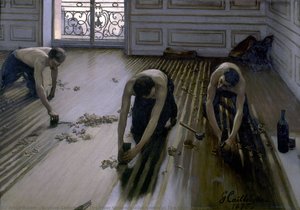
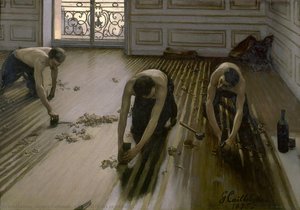
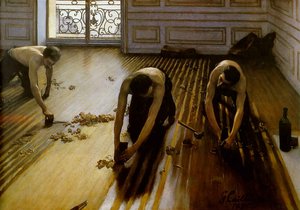
Caillebotte's artistic path diverged from strict academic tradition, yet he never fully embraced the purely optical explorations of many of his Impressionist contemporaries. He found kinship with artists like Edgar Degas and Giuseppe de Nittis, sharing a fascination with modern life but approaching it through a lens of meticulous realism. His early masterpiece, Les Raboteurs de Parquet (The Floor Scrapers), exhibited at the 1875 Salon, immediately established his reputation as a bold and unconventional painter. The work depicts three laborers painstakingly scraping a wooden floor, rendered with an unflinching honesty that shocked some viewers while captivating others. It wasn’t simply the subject matter—the working class rarely graced the canvases of high art—but also the composition: cropped, almost jarringly direct, and devoid of sentimental idealization. This commitment to portraying contemporary life without embellishment continued in works like The Iron Bridge, where he masterfully captured the industrial landscape of a rapidly changing Paris. However, Caillebotte wasn’t immune to the influence of Impressionism; his palette gradually lightened, and he began experimenting with broken brushstrokes and atmospheric effects, particularly evident in his stunning views of Parisian rooftops blanketed in snow, such as View of Rooftops (Snow).A Patron and a Pioneer: Navigating the Art World
Beyond his own artistic endeavors, Caillebotte played a crucial role in supporting the Impressionist movement. His financial independence allowed him to become a significant patron, purchasing works by Monet, Renoir, Pissarro, Cézanne, Degas, and others at a time when their art was largely rejected by the official Salon. He wasn’t merely a collector; he actively championed these artists, organizing and financing several of the Impressionist exhibitions that defied conventional artistic norms. This dedication to fostering innovation extended to his own collection, which he bequeathed to the French state upon his death in 1894—a bequest initially met with resistance but ultimately forming the cornerstone of the Musée d’Orsay's renowned Impressionist holdings. Caillebotte’s unique perspective also manifested in his compositions; works like Boulevard vu d’en haut (Boulevard Seen from Above), painted in 1880, demonstrate a strikingly modern sensibility, employing an elevated viewpoint and dynamic cropping that anticipate the photographic perspectives of the 20th century. This innovative approach to composition, possibly influenced by Japanese prints and his own photographic experiments, set him apart as a true pioneer.Legacy and Rediscovery: A Modern Master Reclaimed
For decades following his death, Caillebotte’s work remained relatively obscure, overshadowed by the more celebrated figures of Impressionism. It wasn't until the late 20th century that a comprehensive reassessment of his art began to take place, fueled by scholarly research and major exhibitions. This rediscovery revealed an artist of remarkable technical skill, intellectual depth, and visionary insight. Caillebotte’s paintings are not simply depictions of modern life; they are profound meditations on the complexities of urban existence, the changing social landscape, and the evolving relationship between art and reality. His ability to seamlessly blend realism with Impressionist techniques, his innovative compositions, and his unwavering commitment to portraying the world around him have secured his place as a pivotal figure in 19th-century art. Today, Caillebotte’s works are celebrated for their unique perspective, their masterful execution, and their enduring relevance—a testament to an artist who dared to capture the spirit of a new age.Notable Works
- Les Raboteurs de Parquet (The Floor Scrapers) (1875): A groundbreaking work showcasing Caillebotte’s realism and unconventional composition.
- View of Rooftops (Snow) (1878): Demonstrates his use of high vantage points and atmospheric effects, influenced by photography and Japanese prints.
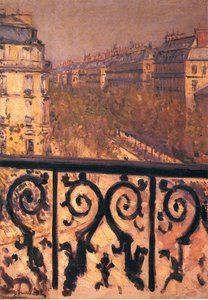
- Boulevard vu d’en haut (Boulevard Seen from Above) (1880): A strikingly modern composition with a dynamic perspective.
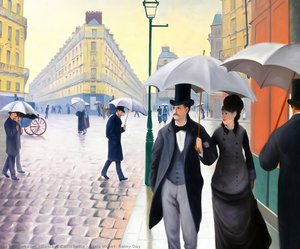
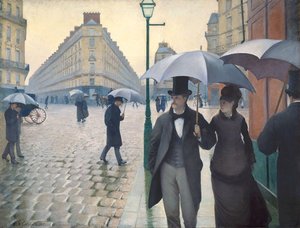
- Paris Street; Rainy Day (1877): Perhaps his most famous work, capturing the bustling energy of Parisian life in a unique and evocative manner.
- The Bezique Game(1881) : A captivating Impressionist painting of Parisian leisure.
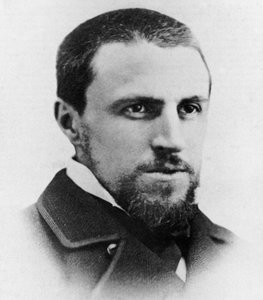
Gustave Caillebotte
1848 - 1894 , France
Quick Facts
- Artistic Movement Or Style: Realism, Impressionism
- Artists Or Movements Influenced By This Artist: Impressionism
- Artists Who Influenced This Artist:
- Edgar Degas
- Giuseppe de Nittis
- Date Of Birth: August 19, 1848
- Date Of Death: February 21, 1894
- Full Name: Gustave Caillebotte
- Nationality: French
- Notable Artworks:
- Les Raboteurs de Parquet
- View of rooftops (snow)
- Boulevard seen from above
- Place Of Birth: Paris, France
Related Articles

Demandes Commerciales
APS ofrece reproducciones de bellas artes y encargos personalizados desde 2004. Confían en nosotros corporaciones, hoteles y coleccionistas selectos para obras de arte de calidad museística, servicio discreto y soluciones artísticas completas. ¡Póngase en contacto con nosotros para obtener un presupuesto personalizado!

Goya's Masterpieces: Explore 25 Iconic Paintings & Art Prints | ArtsDot
Delve into the world of Francisco Goya with ArtsDot. Explore 25 iconic paintings – from 'The Third of May' to his haunting Black Paintings. Discover the stories, techniques & emotions behind these Spanish masterpieces. Find museum-quality art reproductions for your home at ArtsDot.com!

A riguardo di noi
Découvrez notre histoire ! Nous apportons l'art de classe mondiale dans votre vie grâce à une sélection experte, des créations personnalisées et des aperçus gratuits. Approuvé par les particuliers et les entreprises depuis 2000.

Cézanne's Masterpieces: 25 Iconic Artworks to Transform Your Space
Journey through 25 iconic artworks by Paul Cézanne – a master of Impressionism and Post-Impressionism. Explore his landscapes, still lifes, and the stories behind these timeless masterpieces. Discover museum-quality reproductions & curated decor at ArtsDot.com.
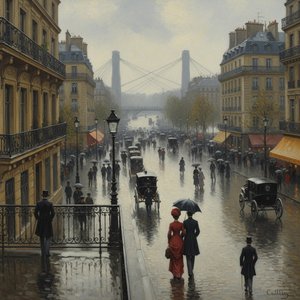
Gustave Caillebotte: Bridging Realism & Modernity in Parisian Life
Explore the life & art of Gustave Caillebotte, a pivotal figure bridging Realism & Impressionism. Discover his iconic Parisian scenes and lasting legacy with ArtsDot.