 Preview
 Send
Send Share
Share
 Details

 Download
 Similars
 X-Ray
X-Ray Diaporama
The Gardener
 Oil On Canvas
- WallArt
- Realism
 1877
1877- 19th Century
 60.0 x 73.0 cm
 Read More
Hand Made Oil Reproduction
Hand-painted oil on canvas in your size and frame, made to order by our artists. ( Buy Print Buy Image)




P118B $10

P118H $10

P118W $10

P438Z $10

P508JH $12

P508YH $12

P805H $10

P805Z $10

P919BZ $10

P919G $10

P919XJ $10

P959ZH $10

P968JZ $12

W106C $8

W218G $10

W218JH $8

W218Y $10

W307PJ $10

W316G $10

W316PJ $8

W316Y $10

W398PJ $8

W4111J $10

W500HY $15

W500JH $15

W692G $12

W849H $8

W940BG $15

W953PJ $8




Pick from our preset sizes that match the artwork's original proportions.

You may enter your own dimensions to fit a specific frame or space. If your selected size does not match the original image's proportions, we will either crop the artwork or extend the painting with additional hand-painted elements. A digital mockup will be sent for your approval before production begins.
Please note that the on-screen preview does not reflect the actual cropping or extension. Only the mockup will accurately show the final composition.
While custom sizes are available, we recommend selecting a dimension from the predefined list to preserve the original proportions.
After order, ArtsDot.com team will email client for instructions and provide a mockup preview
Worldwide Delivery () in 3/4 weeks instead of standard 5 weeks. (16 August). No compromise on quality.

Free Worldwide Express Shipping

High-Quality Linen Canvas

Full Shipping Insurance

Customs Tax Refund Guarantee

True Color Matching Guarantee

60-Day Return Policy (Defects Only)

100% Money-Back Guarantee

Bulk Discount Offer
 Glass option is only available in size under 110 CM

The Gardener
Reproduction Medium
Reproduction Size
-


Total Price
$ 263
Artwork Description
A Parisian Afternoon in Verdant Hues
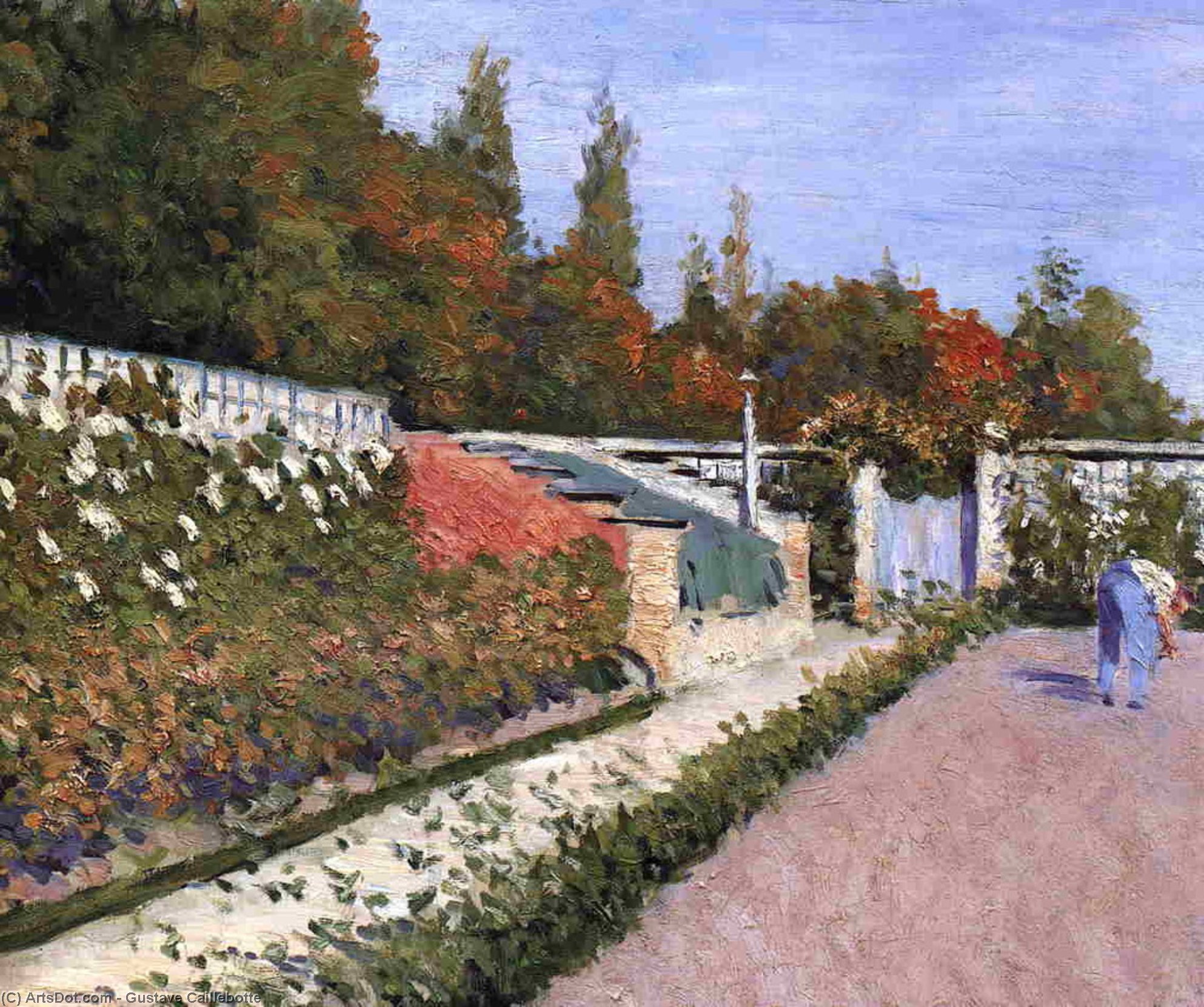
To gaze upon Gustave Caillebotte's depiction of The Gardener is to step directly into a sun-dappled moment of quiet industry within the heart of 19th-century Paris. This painting captures more than just a man tending his plants; it encapsulates a specific, almost nostalgic rhythm of urban life—the gentle coexistence between human endeavor and untamed nature. The composition draws the eye across the meticulously rendered scene: the sturdy line of the fence acting as a subtle divider, separating the ordered path from the lush, breathing expanse of the garden. One can almost smell the damp earth and freshly cut foliage emanating from the canvas.
The Artistry of Observation and Light
Caillebotte, ever the keen observer of modern Parisian existence, employs a technique that marries academic precision with an emerging sense of photographic immediacy. His handling of light is masterful; it filters through the various trees and shrubs, creating pockets of deep shadow contrasted by brilliant highlights on the leaves and the figures' clothing. The inclusion of the two benches suggests moments paused—places for contemplation amidst the labor. This attention to perspective, so characteristic of his work influenced by photography, gives the scene a palpable sense of depth, inviting the viewer to wander right alongside the gardener.
Historical Echoes: Life in Late 19th Century Paris
Painted in 1877, this work sits at a fascinating crossroads for Parisian art. While the city was undergoing rapid modernization—a transformation Caillebotte himself documented so keenly—this painting offers a pocket of enduring tranquility. It speaks to a time when public green spaces were becoming vital havens. The gardener, diligently focused on his task, becomes an archetype of quiet dedication, a figure rooted in tradition against the backdrop of a rapidly evolving metropolis.
Symbolism of Cultivation and Passage
The garden itself is rich with symbolism. It represents life nurtured, growth achieved through care, and the cyclical nature of time. The act of gardening is inherently meditative; it requires patience and an understanding of natural cycles. For the collector or decorator, this piece offers more than mere decoration; it suggests a philosophy—the beauty found in consistent, thoughtful maintenance, whether applied to a garden plot or to one's own life.
Bringing Parisian Serenity Home
Reproducing this scene allows you to anchor your interior space with an undeniable sense of cultured calm. Whether placed in a sunlit drawing-room or near a window overlooking greenery, the reproduction captures that perfect balance between human order and natural wildness. It is a piece that whispers stories of leisurely afternoons, making it a timeless addition for those who appreciate the subtle poetry found at the intersection of art, nature, and urban grace.
Related Artworks
Artist Biography
A Parisian of the New Age: The Life and Art of Gustave Caillebotte
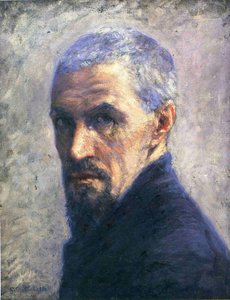
Gustave Caillebotte, born into a prosperous Parisian family in 1848, was an artist uniquely positioned to capture the dramatic transformations reshaping his city. His father, Martial Caillebotte, inherited a successful textile business and served as a judge, providing Gustave with both financial security and a vantage point from which to observe the burgeoning modern world. While initially pursuing legal studies – earning degrees in law in 1868 and 1870 – Caillebotte’s true calling lay within the realm of art. He began serious training under Léon Bonnat, immersing himself in painting while simultaneously developing a keen interest in photography, an emerging medium that would profoundly influence his artistic vision. This early exposure to photographic principles—its framing, perspective, and capturing of fleeting moments—would become hallmarks of his distinctive style. Caillebotte wasn’t merely documenting change; he was actively engaging with the aesthetic possibilities it presented.Realism Infused with Impressionist Light
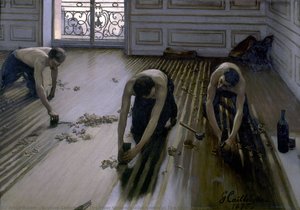
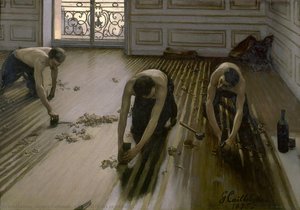
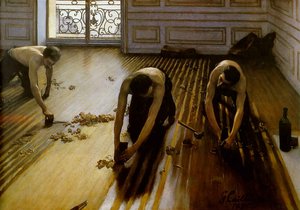
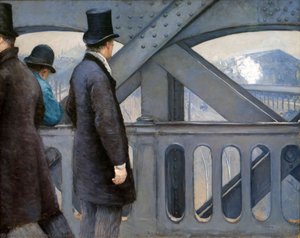
Caillebotte's artistic path diverged from strict academic tradition, yet he never fully embraced the purely optical explorations of many of his Impressionist contemporaries. He found kinship with artists like Edgar Degas and Giuseppe de Nittis, sharing a fascination with modern life but approaching it through a lens of meticulous realism. His early masterpiece, Les Raboteurs de Parquet (The Floor Scrapers), exhibited at the 1875 Salon, immediately established his reputation as a bold and unconventional painter. The work depicts three laborers painstakingly scraping a wooden floor, rendered with an unflinching honesty that shocked some viewers while captivating others. It wasn’t simply the subject matter—the working class rarely graced the canvases of high art—but also the composition: cropped, almost jarringly direct, and devoid of sentimental idealization. This commitment to portraying contemporary life without embellishment continued in works like The Iron Bridge, where he masterfully captured the industrial landscape of a rapidly changing Paris. However, Caillebotte wasn’t immune to the influence of Impressionism; his palette gradually lightened, and he began experimenting with broken brushstrokes and atmospheric effects, particularly evident in his stunning views of Parisian rooftops blanketed in snow, such as View of Rooftops (Snow).A Patron and a Pioneer: Navigating the Art World
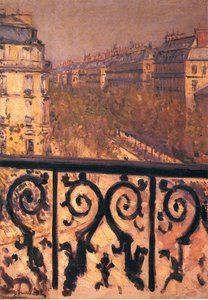
Beyond his own artistic endeavors, Caillebotte played a crucial role in supporting the Impressionist movement. His financial independence allowed him to become a significant patron, purchasing works by Monet, Renoir, Pissarro, Cézanne, Degas, and others at a time when their art was largely rejected by the official Salon. He wasn’t merely a collector; he actively championed these artists, organizing and financing several of the Impressionist exhibitions that defied conventional artistic norms. This dedication to fostering innovation extended to his own collection, which he bequeathed to the French state upon his death in 1894—a bequest initially met with resistance but ultimately forming the cornerstone of the Musée d’Orsay's renowned Impressionist holdings. Caillebotte’s unique perspective also manifested in his compositions; works like Boulevard vu d’en haut (Boulevard Seen from Above), painted in 1880, demonstrate a strikingly modern sensibility, employing an elevated viewpoint and dynamic cropping that anticipate the photographic perspectives of the 20th century. This innovative approach to composition, possibly influenced by Japanese prints and his own photographic experiments, set him apart as a true pioneer.Legacy and Rediscovery: A Modern Master Reclaimed
For decades following his death, Caillebotte’s work remained relatively obscure, overshadowed by the more celebrated figures of Impressionism. It wasn't until the late 20th century that a comprehensive reassessment of his art began to take place, fueled by scholarly research and major exhibitions. This rediscovery revealed an artist of remarkable technical skill, intellectual depth, and visionary insight. Caillebotte’s paintings are not simply depictions of modern life; they are profound meditations on the complexities of urban existence, the changing social landscape, and the evolving relationship between art and reality. His ability to seamlessly blend realism with Impressionist techniques, his innovative compositions, and his unwavering commitment to portraying the world around him have secured his place as a pivotal figure in 19th-century art. Today, Caillebotte’s works are celebrated for their unique perspective, their masterful execution, and their enduring relevance—a testament to an artist who dared to capture the spirit of a new age.Notable Works
- Les Raboteurs de Parquet (The Floor Scrapers) (1875): A groundbreaking work showcasing Caillebotte’s realism and unconventional composition.
- View of Rooftops (Snow) (1878): Demonstrates his use of high vantage points and atmospheric effects, influenced by photography and Japanese prints.
- Boulevard vu d’en haut (Boulevard Seen from Above) (1880): A strikingly modern composition with a dynamic perspective.
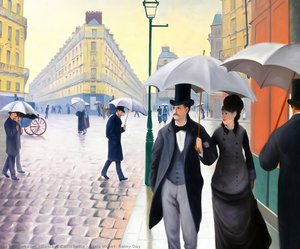
- Paris Street; Rainy Day (1877): Perhaps his most famous work, capturing the bustling energy of Parisian life in a unique and evocative manner.
- The Bezique Game(1881) : A captivating Impressionist painting of Parisian leisure.
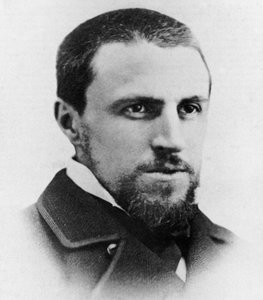
Gustave Caillebotte
1848 - 1894 , France
Quick Facts
- Artistic Movement Or Style: Realism, Impressionism
- Artists Or Movements Influenced By This Artist: Impressionism
- Artists Who Influenced This Artist:
- Edgar Degas
- Giuseppe de Nittis
- Date Of Birth: August 19, 1848
- Date Of Death: February 21, 1894
- Full Name: Gustave Caillebotte
- Nationality: French
- Notable Artworks:
- Les Raboteurs de Parquet
- View of rooftops (snow)
- Boulevard seen from above
- Place Of Birth: Paris, France
Related Articles

Evoking Nature's Sublime: A Comprehensive Exploration of 19th-Century Landscape Painting
Explore the captivating world of 19th-century landscape painting! Discover renowned artists like Friedrich & Monet, key movements, and find the perfect artwork to bring nature's serenity into your home. Expert insights at ArtsDot.
Cultivating Paradise: A Historical & Artistic Exploration of Gardens in Painting
Explore the rich history of gardens in painting! Discover masterpieces from Renaissance to Impressionism & beyond. Learn about symbolism, artists like Monet & Klimt, and find your perfect artwork at ArtsDot.
Romantic Realism's Finest: 10 Masterpieces for Your Home | ArtsDot
Explore 10 defining masterpieces of Romantic Realism! Discover Courbet, Millet & Daumier's powerful paintings—capturing emotion and social realities. Find museum-quality reproductions for your home at ArtsDot.com.
Gustave Caillebotte: Bridging Realism & Modernity in Parisian Life
Explore the life & art of Gustave Caillebotte, a pivotal figure bridging Realism & Impressionism. Discover his iconic Parisian scenes and lasting legacy with ArtsDot.

Beyond the Horizon: 10 Landscape Masterpieces for Your Home Decor
Journey through 10 breathtaking landscape paintings by Monet, Van Gogh & more! Explore iconic artworks, artistic techniques & find inspiration for your home decor. Museum-quality reproductions at ArtsDot.com. Discover all masterpieces on ArtsDot.com