 Preview
 Send
Send Share
Share
 Details

 Download
 Similars
 X-Ray
X-Ray Diaporama
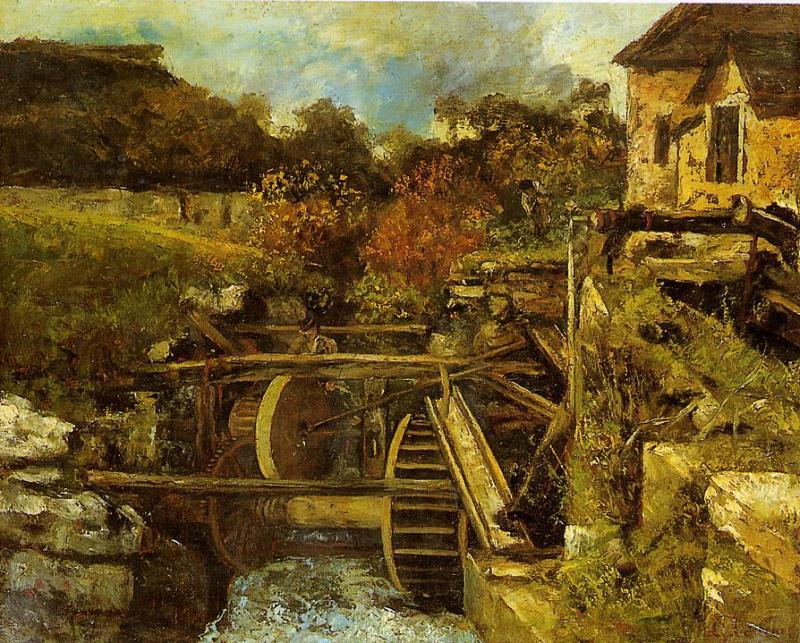
The Ornans Paper Mill


 Read More
Hand Made Oil Reproduction
Hand-painted oil on canvas in your size and frame, made to order by our artists. ( Buy Print Buy Image)




P118B $10

P118H $10

P118W $10

P438Z $10

P508JH $12

P508YH $12

P805H $10

P805Z $10

P919BZ $10

P919G $10

P919XJ $10

P959ZH $10

P968JZ $12

W106C $8

W218G $10

W218JH $8

W218Y $10

W307PJ $10

W316G $10

W316PJ $8

W316Y $10

W398PJ $8

W4111J $10

W500HY $15

W500JH $15

W692G $12

W849H $8

W940BG $15

W953PJ $8




Pick from our preset sizes that match the artwork's original proportions.

You may enter your own dimensions to fit a specific frame or space. If your selected size does not match the original image's proportions, we will either crop the artwork or extend the painting with additional hand-painted elements. A digital mockup will be sent for your approval before production begins.
Please note that the on-screen preview does not reflect the actual cropping or extension. Only the mockup will accurately show the final composition.
While custom sizes are available, we recommend selecting a dimension from the predefined list to preserve the original proportions.
After order, ArtsDot.com team will email client for instructions and provide a mockup preview
Worldwide Delivery () in 3/4 weeks instead of standard 5 weeks. (16 August). No compromise on quality.

Free Worldwide Express Shipping

High-Quality Linen Canvas

Full Shipping Insurance

Customs Tax Refund Guarantee

True Color Matching Guarantee

60-Day Return Policy (Defects Only)

100% Money-Back Guarantee

Bulk Discount Offer
 Glass option is only available in size under 110 CM

The Ornans Paper Mill
Reproduction Medium
Reproduction Size
-


Total Price
$ 263
Artwork Description
The Ornans Paper Mill: A Window into Realist Life
Gustave Courbet’s “The Ornans Paper Mill” isn't merely a depiction of a working mill; it’s a profound statement about the dignity and complexity of rural life in 19th-century France. Painted in 1865, this monumental canvas offers a rare glimpse into the everyday routines of the people who fueled the nation’s industrial growth – a subject rarely afforded such grand scale within the established conventions of academic art. Housed at the Musée Courbet in Ornans, the painting stands as a testament to Courbet's revolutionary approach to artistic representation and his unwavering commitment to portraying what he saw with unflinching honesty.
Courbet’s Realism movement was a deliberate rebellion against the prevailing Romantic ideals that dominated the art world. Rejecting idealized beauty and historical narratives, he sought to capture the essence of contemporary life – the gritty realities of labor, poverty, and community – without embellishment or judgment. “The Ornans Paper Mill” exemplifies this philosophy perfectly. The scene unfolds with a remarkable immediacy; we are confronted by the physical exertion of the workers, the rhythmic churning of the water wheel, and the quiet interactions amongst those who share this space. It’s a deliberate choice to present a working-class environment as worthy of artistic attention, challenging the established hierarchy of subjects within art.
A Study in Light, Texture, and Human Presence
Technically, “The Ornans Paper Mill” is a masterclass in observation and execution. Courbet employed a bold, almost brutalist approach to his brushstrokes, laying down thick impasto layers that capture the texture of the wood, water, and fabric with astonishing detail. The light plays a crucial role, bathing the scene in a diffused glow that suggests both the harshness of the industrial landscape and the warmth of human presence. Note the careful rendering of the figures – their postures, expressions, and clothing are meticulously observed, conveying a sense of lived experience rather than idealized forms.
The composition itself is carefully constructed to draw the viewer into the scene. The diagonal lines created by the river and the bridge lead our eye through the painting, while the placement of the figures – standing, working, resting – establishes a dynamic rhythm. Even the inclusion of the dog, seemingly casually observing the activity, adds to the sense of authenticity and everyday life. It’s not just a landscape; it's a tableau vivant—a snapshot of a moment in time.
Symbolism and Social Commentary
Beyond its technical brilliance, “The Ornans Paper Mill” carries significant symbolic weight. Courbet deliberately chose this subject – a humble industry often overlooked by artists – to elevate the status of the working class. By depicting these individuals with dignity and respect, he challenged the prevailing social prejudices of his time. The painting can be interpreted as a subtle critique of industrialization’s impact on rural communities and the lives of those who labored within it.
The presence of the bridge itself is noteworthy. It represents connection – not just to the mill but also to the broader community, highlighting the interdependence of individuals within this working environment. The figures are not isolated; they are part of a collective effort, bound together by their shared labor and circumstance. Furthermore, the painting’s scale—larger than life—forces the viewer to confront the reality of these lives in a way that smaller, more intimate portraits often fail to achieve.
A Legacy of Realism
“The Ornans Paper Mill” is far more than just a depiction of a water mill; it’s a cornerstone of the Realist movement and a pivotal work in Courbet's oeuvre. Its influence can be seen in the subsequent generations of artists who followed, including Impressionists and Cubists, all of whom were inspired by Courbet’s commitment to direct observation and his rejection of artistic conventions. Today, reproductions of this powerful painting continue to resonate with viewers, offering a poignant reminder of the lives and labor that shaped modern France – and a testament to the enduring power of art to capture the essence of human experience.
Related Artworks
Artist Biography
A Rebel’s Brush: The Life and Legacy of Gustave Courbet
Born in the quiet village of Ornans, France, in 1819, Jean Désiré Gustave Courbet emerged as a defiant force against the established artistic norms of his time. His story isn't simply one of paint and canvas; it’s a narrative woven with threads of social commentary, political conviction, and an unwavering commitment to portraying the world exactly as he saw it – unidealized, raw, and profoundly real. Growing up in a relatively prosperous bourgeois family, Courbet received encouragement from his mother to pursue his artistic inclinations, a nurturing that would ultimately fuel a revolution in the art world. His formal training began at the École des Beaux-Arts in Paris in 1839, but he quickly found himself chafing against the academic conventions and Romantic idealism prevalent there. While acknowledging influences like Eugène Delacroix and Théodore Géricault, Courbet forged his own path, one that prioritized observation over imagination and truth over tradition.The Birth of Realism: Challenging Artistic Conventions
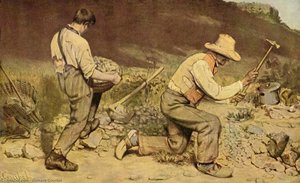
Courbet’s artistic development was marked by a deliberate rejection of the prevailing aesthetic standards. He wasn't interested in mythological narratives or heroic allegories; his gaze was fixed on the everyday lives of ordinary people, particularly those engaged in labor and rural existence. This commitment to depicting the world without embellishment – what would become known as Realism – initially met with scorn and derision from critics accustomed to more polished and idealized representations. Early works explored landscapes and portraits, but soon shifted towards scenes of working-class life, rendered on a monumental scale traditionally reserved for historical or religious paintings. This deliberate choice wasn’t merely stylistic; it was a statement about the inherent dignity and importance of these often-overlooked subjects. The Stone Breakers, completed in 1849 but tragically destroyed during World War II, exemplified this approach – a stark depiction of two laborers toiling away, their faces obscured by exhaustion and hardship. This painting, along with others like A Burial at Ornans (1850), challenged the very definition of what constituted “worthy” subject matter for high art.Major Works and Artistic Philosophy
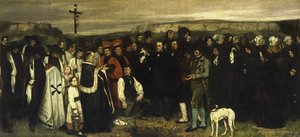
A Burial at Ornans, a colossal canvas depicting a provincial funeral, caused an uproar when it was exhibited in 1850-51. Its sheer size – typically reserved for grand historical paintings – combined with its unflinching realism and lack of emotional idealization shocked audiences. Courbet didn’t portray the mourners as noble or grief-stricken figures; he presented them as ordinary people, their faces etched with a mixture of sorrow, boredom, and resignation. This honesty was revolutionary. His artistic philosophy extended beyond subject matter to encompass technique. He favored a direct, impasto style – applying paint thickly onto the canvas – that emphasized the materiality of the medium itself. The Painter’s Studio (1855), an allegorical work reflecting his artistic beliefs and engagement with contemporary social issues, further solidified his reputation as a provocative and independent artist. His participation in the Salon des Refusés in 1863 – an exhibition of works rejected by the official Salon – cemented his status as a rebel and champion of artistic freedom. Even landscapes like View in the Forest of Fontainebleau (1855) were imbued with a sense of realism, capturing the natural beauty of the forest without romanticizing it.Legacy and Historical Significance
Gustave Courbet’s influence on subsequent art movements is undeniable. While he drew inspiration from earlier masters like Caravaggio for their dramatic realism and use of light and shadow, his impact extended far beyond mere imitation. He profoundly influenced the Impressionists and Post-Impressionists by liberating them from the constraints of traditional representation, encouraging them to explore new ways of seeing and depicting the world. His emphasis on social commentary paved the way for later socially engaged artists who used their work as a platform for political activism. Courbet wasn’t just a painter; he was a vocal advocate for artistic freedom and political change, actively participating in the tumultuous events of his time, including the Paris Commune of 1871 – an involvement that led to a period of exile in Switzerland. He died in 1877, leaving behind a body of work that continues to inspire and provoke audiences today.- Pioneer of Realism
- Challenged academic conventions
- Influenced Impressionism & Post-Impressionism
- Advocate for artistic freedom
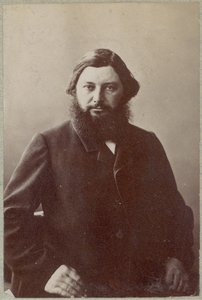
Gustave Courbet
1819 - 1877 , France
Quick Facts
- Artistic Movement Or Style: Realism
- Artists Or Movements Influenced By This Artist:
- Impressionism
- Post-Impressionism
- Artists Who Influenced This Artist:
- Delacroix
- Géricault
- Caravaggio
- Date Of Birth: July 31, 1819
- Date Of Death: April 29, 1877
- Full Name: Gustave Courbet
- Nationality: French
- Notable Artworks:
- The Stone Breakers
- A Burial at Ornans
- The Painter's Studio
- Place Of Birth: Ornans, France
Related Articles

Beyond the Horizon: 10 Landscape Masterpieces for Your Home Decor
Journey through 10 breathtaking landscape paintings by Monet, Van Gogh & more! Explore iconic artworks, artistic techniques & find inspiration for your home decor. Museum-quality reproductions at ArtsDot.com. Discover all masterpieces on ArtsDot.com
Romantic Realism's Finest: 10 Masterpieces for Your Home | ArtsDot
Explore 10 defining masterpieces of Romantic Realism! Discover Courbet, Millet & Daumier's powerful paintings—capturing emotion and social realities. Find museum-quality reproductions for your home at ArtsDot.com.
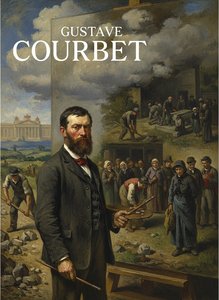
Gustave Courbet: Realism's Revolutionary Vision & the Social Canvas of 19th-Century France
Explore the revolutionary art of Gustave Courbet, pioneer of Realism. Discover his iconic paintings, social commentary, and lasting impact on 19th-century French art history. Expert analysis & insights.

Romantic Landscapes: 10 Masterpieces for Your Home | ArtsDot
Journey through 10 Romantic landscape masterpieces by Friedrich, Turner & Cole. Explore emotional art, sublime nature scenes & iconic 19th-century paintings. Find museum-quality reproductions for your home at ArtsDot.com – discover the full collection online!

John Constable's Masterpieces: Explore 25 Iconic Landscapes for Your Home
Journey through John Constable's 25 most celebrated landscapes. Explore Romanticism, Dedham Vale & his masterful use of light in iconic paintings like 'Hay Wain'. Find museum-quality art reproductions and elevate your home decor on ArtsDot.com.