

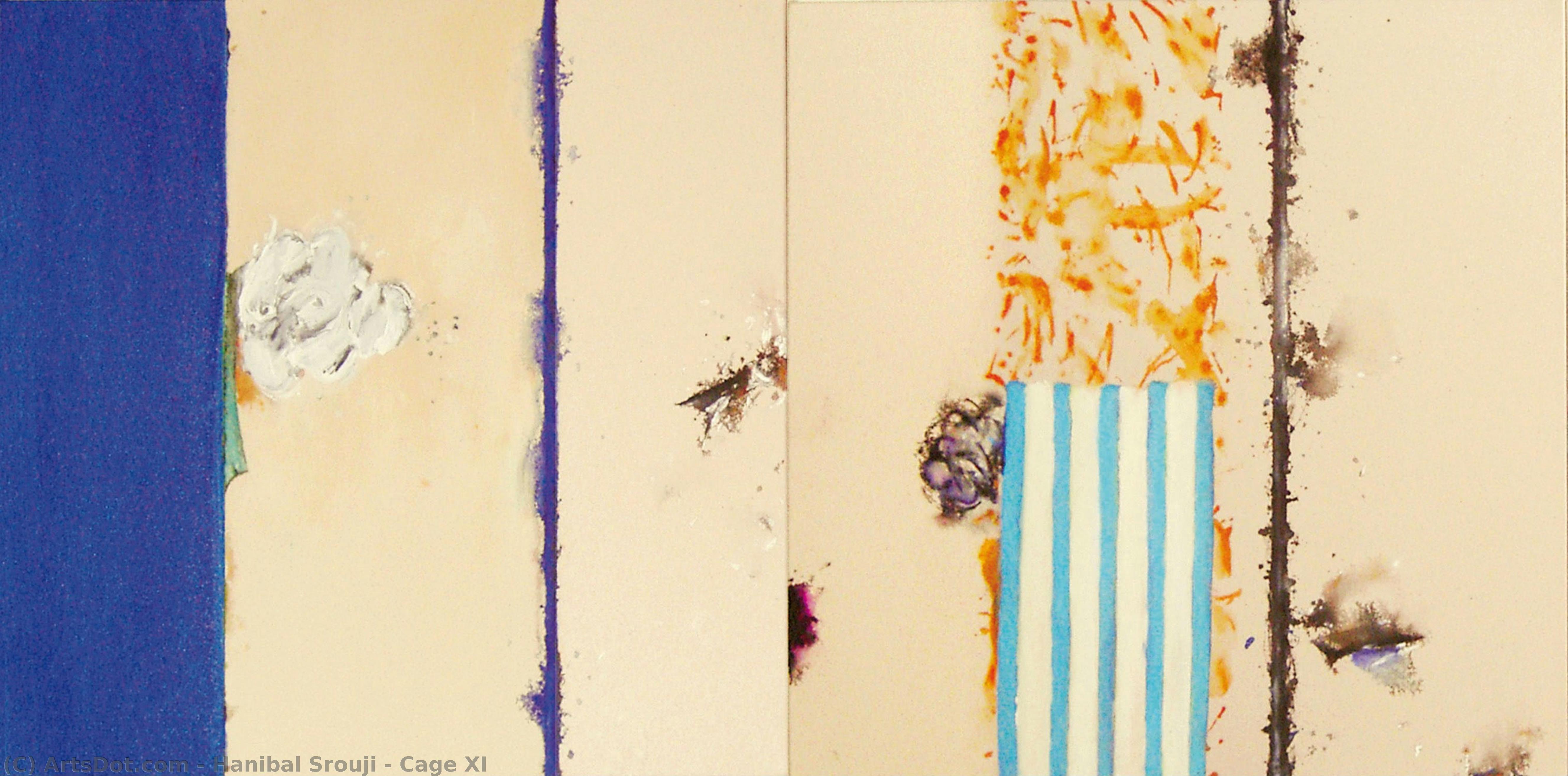
 Preview
 Send
Send Share
Share
 Details

 Download
 Similars
 X-Ray
X-Ray Diaporama
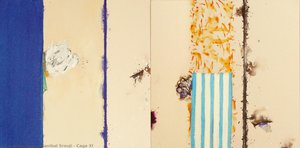
Cage XI


 Read More
Purchase a high-resolution, enhanced digital image, far superior to the online preview.
Each file is meticulously prepared by our in-house specialists using advanced tools and expert manual retouching. We ensure every image has exceptional clarity, precise color accuracy, and fine detail.
The final file is delivered via email within 72 hours, optimized for immediate use in professional, editorial, and print environments. This is the same quality trusted by top-tier design studios, publishers, and galleries.
Digital Image
Download a high-resolution file for personal display, printing, and creative projects. ( Buy Print Buy Hand Made Painting)
Included in Every Digital Image Order
Expert Digital Delivery, Guaranteed
When you choose ArtsDot.com, you're not just getting an image - you're receiving a professionally enhanced digital artwork, crafted with precision and backed by a satisfaction guarantee. Here's everything that comes with your order, automatically:

Fast Email Delivery
Your high-resolution digital image file will be emailed to you within 72 hours of ordering - ready for immediate use.

AI-Enhanced Digital File
Your artwork is professionally optimized using advanced AI tools and manual editing, ensuring maximum detail, clarity, and color accuracy.

Free Lifetime Re-Delivery
Accidentally deleted or lost your file? No worries - we'll resend it to you anytime, free of charge.

No Import Fees - Ever
Enjoy your artwork instantly with zero customs, duties, or delivery fees - digital downloads are always tax-free.

Color Accuracy Guarantee
We ensure your digital image reflects the original colors as closely as possible using professional tools and color management.

60-Day Satisfaction Guarantee
If you're not satisfied with your digital image, we'll revise it or refund 100% within 60 days - no questions asked.

100% Money-Back Guarantee
Not satisfied? Get a full refund within 60 days of receiving your digital file - no questions asked.

Bulk Order Discounts
Buy 3 images, save 10% - Buy 5, save 15% - Buy 10+, save 20%. Great for creative projects, galleries, and agencies.
Related Artworks
Artist Biography
The Scars of Memory: The Art of Hanibal Srouji
Born in 1957 amidst the vibrant yet turbulent landscape of Beirut, Lebanon, Hanibal Srourig has emerged as a profound voice in contemporary Middle Eastern art. His life and creative trajectory have been inextricably linked to the rhythms of conflict and displacement. The early years of his life were shadowed by the Lebanese Civil War, an era of profound upheaval that forced him into exile. Having served as a Red Cross volunteer in Southern Lebanon—an experience he has poignantly likened to the visceral horror of cinema—Srouji witnessed firsthand the physical and psychological fragmentation of his homeland. This period of displacement, which saw him flee by boat from Sidon to Cyprus before eventually finding refuge in Canada, instilled in his work a deep-seated preoccupation with themes of memory, exile, and the arduous journey toward healing.
Srouji’s academic foundation provided the structural discipline necessary to translate such raw emotion into formal expression. After studying Social Sciences at Vanier College in Montreal, he pursued Fine Arts at Concordia University, graduating in 1987. His intellectual pursuits were never confined to the studio; he drew deep inspiration from philosophy, literature, and music, allowing these diverse disciplines to inform the conceptual layers of his canvases. This multidisciplinary approach allowed him to move beyond mere representation, seeking instead to capture the temporalities between a nostalgic past, a precipitating present, and an uncertain future.
The Alchemy of Destruction: The Burning Hole Technique
Perhaps the most defining characteristic of Srouji’s oeuvre is his revolutionary burning hole technique. Developed through rigorous experimentation during workshops in America and Europe, including the prestigious Triangle Arts Trust, this method transcends traditional painting. Using a blow-torch to create small holes and intricate lines, Srouji physically alters the canvas, imbuing it with literal wounds. These apertures are not merely stylistic flourishes; they serve as powerful metaphors for the bullet-marked walls of crippled buildings in Beirut. Through this process, the artist transforms the act of destruction into an act of creation, where the physical scars on the canvas mirror the invisible scars left on the human psyche by war.
This technique allows his work to exist in a state of beautiful tension. While his paintings often appear abstract at first glance, they possess a tactile, visceral quality that speaks to the vulnerability of existence. His surfaces act as repositories for social phenomena, where the dispersion of material traces becomes a symbolic form of historical record. Whether he is exploring the verticality of bars in his Cage series—which can be read both as symbols of confinement and as the rhythmic lines of a musical composition—or evoking landscapes in his Terre/Mer (Land/Sea) series, the artist maintains a profound engagement with the concept of resilience.
Legacy and Recognition
The significance of Hanibal Srouji’s work lies in its ability to negotiate the terms of historical engagement without falling into mere pathos. He does not simply depict war; he embodies its aftermath through the very fabric of his medium. His career has been marked by several prestigious accolades that underscore his importance in the international art community, including:
- The Ahmed Asseleh Prize in Algiers (1999)
- Art Silver Medal (1997)
- Grand Prize at the 49th Saint-Cloud exhibition, Musée des Avelines (1997)
Beyond his contributions to the gallery space, Srouji has dedicated himself to the cultivation of future generations of artists through his teaching position at the Lebanese American University. His body of work remains a vital testament to the power of art as a necessity—a tool for confronting difficult truths and a vessel for reclaiming identity in the wake of devastation. Through his mastery of fire and pigment, Srouji continues to bridge the gap between the trauma of the past and the hope of a reconstructed future.
hanibal srouji
1957 - , Lebanon
Quick Facts
- Artistic Movement Or Style: Abstract Expressionism
- Artists Or Movements Influenced By This Artist: ['Ethiopian Healing Scrolls']
- Artists Who Influenced This Artist:
- Chopin
- Schubert
- Bach
- Date Of Birth: 1957
- Full Name: Hanibal Srouji
- Nationality: Lebanese
- Notable Artworks: ['Cage XI']
- Place Of Birth: Beirut, Lebanon

