

 Preview
 Send
Send Share
Share
 Details

 Download
 Similars
 X-Ray
X-Ray Diaporama
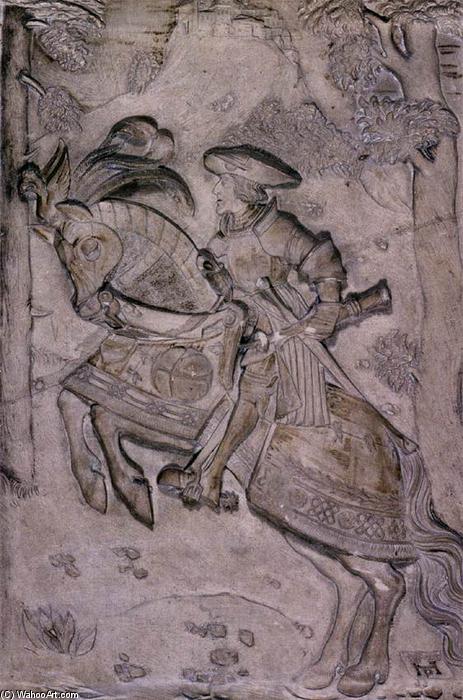
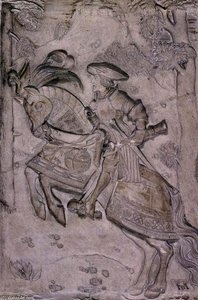
Charles V on Horseback
 1522
1522 19.0 x 13.0 cm
 Tiroler Landesmuseum Ferdinandeum
 Read More
Hand Made Oil Reproduction
Hand-painted oil on canvas in your size and frame, made to order by our artists. ( Buy Print Buy Image)




































Pick from our preset sizes that match the artwork's original proportions.

You may enter your own dimensions to fit a specific frame or space. If your selected size does not match the original image's proportions, we will either crop the artwork or extend the painting with additional hand-painted elements. A digital mockup will be sent for your approval before production begins.
Please note that the on-screen preview does not reflect the actual cropping or extension. Only the mockup will accurately show the final composition.
While custom sizes are available, we recommend selecting a dimension from the predefined list to preserve the original proportions.
After order, ArtsDot.com team will email client for instructions and provide a mockup preview
Worldwide Delivery () in 3/4 weeks instead of standard 5 weeks. (24 August). No compromise on quality.

Free Worldwide Express Shipping

High-Quality Linen Canvas

Full Shipping Insurance

Customs Tax Refund Guarantee

True Color Matching Guarantee

60-Day Return Policy (Defects Only)

100% Money-Back Guarantee

Bulk Discount Offer
 Glass option is only available in size under 110 CM

Charles V on Horseback
Reproduction Medium
Reproduction Size
-


Total Price
$ 263
Related Artworks
Artist Biography
The Sculptor of Spirit: The Legacy of Hans Daucher
In the heart of the German Renaissance, amidst the bustling workshops of Augsburg and the refined traditions of the Ulm School, lived a master whose hands breathed life into stone and wood. Hans Daucher (1486–1538) was not merely a craftsman; he was a sculptor of profound emotional depth, a man capable of translating the divine mysteries of the Christian faith into tangible, breathtaking forms. Born in Ulm, Germany, Daucher emerged from a lineage of artistic excellence, being the son of the esteemed sculptor Adolf Daucher. This familial bond provided more than just an inheritance of tools; it offered an immersion into a world where the transition from Late Gothic intricacy to the burgeoning humanism of the Renaissance was being carved into the very fabric of Southern German culture.
The early years of Daucher’s career were defined by a monumental collaboration that would cement his place in art history. Alongside his father, he worked on the colossal altarpiece for the St. Annenkirche in Annaberg-Buchholz. This was an undertaking of staggering ambition, involving the logistical feat of transporting materials from the Ore Mountains and integrating diverse elements such as Italian marble into a cohesive, spiritual narrative. The sheer scale of this project—estimated at a massive 370 talents—serves as a testament to the technical prowess and the vast organizational reach of the Daucher workshop. Through this work, Hans demonstrated an ability to harmonize the heavy, emotive traditions of the German Gothic with the new, classical elegance emerging from the south.
Mastery of Form and the Human Condition
As Daucher moved beyond the shadow of his father’s influence, his independent works revealed a sculptor deeply invested in the nuances of human suffering and grace. His hand was visible in the delicate decoration of the Fugger Chapel in Augsburg, where he executed the central Corpus Christi and the poignant Lamentation of Christ. In these pieces, one does not simply see religious iconography; one witnesses a masterclass in pathos. Daucher possessed a rare ability to render flowing drapery that seemed to catch the light of a cathedral window and facial expressions that captured the raw, vulnerable essence of grief and devotion. His work on the Lamentation, specifically the version housed in Notre-Dame-de-la-Nativité, remains a hauntingly beautiful example of his ability to evoke empathy through stone.
Beyond the grand altarpieces, Daucher’s versatility extended into the intimate and the ornamental. He was a man of diverse talents, functioning as a medal designer and a master of fine detail. His studio in Augsburg was a hive of intense intellectual and physical activity, featuring specialized areas for processing massive marble blocks alongside delicate stations for melting and casting medals. Perhaps most fascinating is the legend of his dedication to anatomical accuracy; it is said that Daucher utilized a basement filled with ice tubs to preserve specimens for dissection, ensuring that every muscle and sinew he carved was grounded in the profound reality of the human form. This scientific rigor, blended with spiritual fervor, allowed him to create works like the marble monument to the nobles of Hürnheim, which many scholars consider his true masterpiece.
A Lasting Impression on the German Renaissance
The historical significance of Hans Daucher lies in his role as a bridge between eras. He stood at the crossroads where the medieval preoccupation with symbolic religious narrative met the Renaissance obsession with naturalism and individual emotion. His ability to command both wood and stone, and to move seamlessly between the monumental scale of a town hall's decoration and the minute precision of a commemorative medal, marks him as one of the most complete artists of his age.
His contributions can be summarized through several defining artistic pillars:
- Technical Versatility: The seamless execution of works in both wood and various types of marble, including rare Italian imports.
- Emotional Naturalism: A signature style characterized by the use of pathos to bring biblical figures to life with human vulnerability.
- Architectural Integration: The ability to transform sacred and civic spaces, such as the Augsburg Rathaus and the Fugger Chapel, through intricate ornamentation.
- Scientific Dedication: An uncompromising commitment to anatomical truth, informed by his studies of the human body.
Though the era of the great Ulm School masters eventually gave way to new movements, the echoes of Hans Daucher’s chisel remain. His works continue to stand as silent, powerful witnesses to a time when art was the primary vessel for exploring the intersection of the earthly and the eternal.
Hans Daucher
1486 - 1538 , Germany
Quick Facts
- Artistic Movement Or Style: Renaissance Sculpture
- Artists Or Movements Influenced By This Artist: ['Georg Pencz']
- Artists Who Influenced This Artist: ['Adolf Daucher']
- Date Of Birth: ca. 1486
- Date Of Death: ca. 1538
- Full Name: Hans Daucher
- Nationality: German
- Notable Artworks:
- The Lamentation of Christ
- Charles V on Horseback
- Place Of Birth: Ulm, Germany

