

 Send
Send Share
Share
 Details

 Download
 Similars
 Diaporama
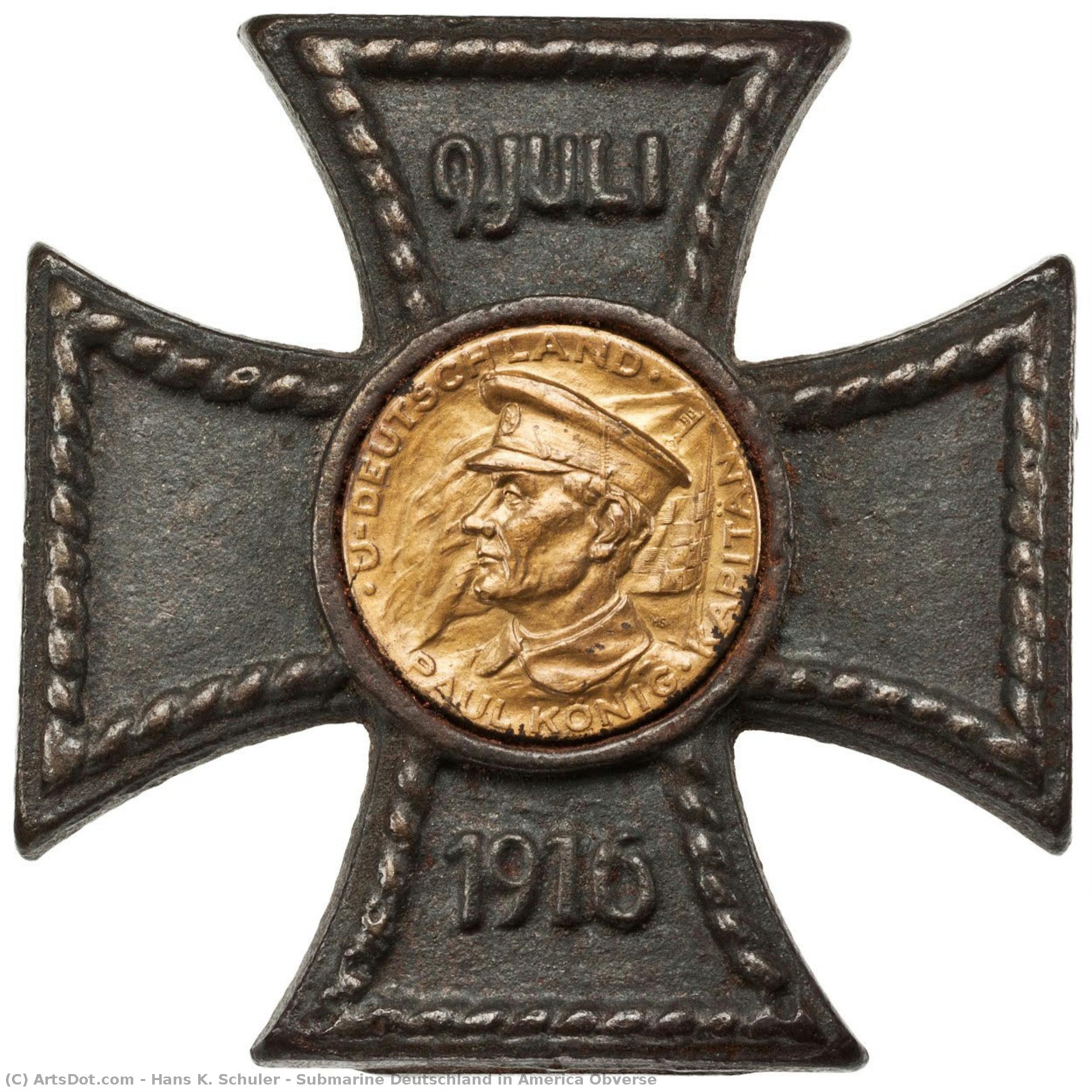
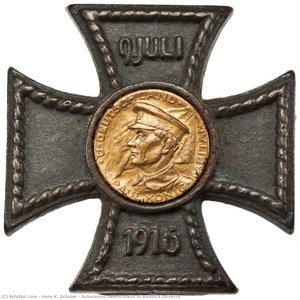
Submarine Deutschland in America Obverse
 Metal
Metal- Sculpture
 1916
1916- 19th Century
 7.0 x 7.0 cm
 American Numismatic Society
 Read More
Giclée / Art Print
Museum-quality giclée or canvas print with fast production and flexible finish options. ( Buy Hand Made Painting Buy Image)




































Pick from our preset sizes that match the artwork's original proportions.

You may enter your own dimensions to fit a specific frame or space. If your selected size does not match the original image's proportions, we will either crop the artwork or extend the image with a mirrored or solid-fill edge. A digital mockup will be sent for your approval before production begins.
Please note that the on-screen preview does not reflect the actual cropping or extension. Only the mockup will accurately show the final composition.
While custom sizes are available, we recommend selecting a dimension from the predefined list to preserve the original proportions.
Worldwide Delivery () in 2 weeks instead of standard 4/5 weeks. (21 August)

Free Worldwide Express Shipping

High-Quality Linen Canvas

Full Shipping Insurance

Customs Tax Refund Guarantee

True Color Matching Guarantee

60-Day Return Policy (Defects Only)

100% Money-Back Guarantee

Bulk Discount Offer
 Glass option is only available in size under 110 CM

Submarine Deutschland in America Obverse
Giclée / Art Print
Reproduction Size
-


Total Price
$ 63
Collectible Description
Related Artworks

Artist Biography
Early Life and Artistic Foundations
Hans K. Schuler, born in Alsace-Lorraine in 1874—a region then under German rule but steeped in French cultural heritage—embarked on a journey that would ultimately establish him as a pivotal figure in American sculpture. His early life was marked by emigration to the United States with his family while still young, an experience that likely instilled within him a sense of bridging cultures and forging a new identity. He found initial artistic grounding at the Maryland Institute College of Art (MICA) in Baltimore, where he honed his skills at the Rinehart School of Sculpture. This foundational training provided him with a solid technical base before he ventured across the Atlantic to further refine his artistry.
Schuler’s pursuit of excellence led him to Paris and the prestigious Académie Julian, where he studied under Raoul Verlet. It was here, amidst the vibrant artistic milieu of fin-de-siècle France, that his talent truly blossomed. The rigorous academic approach combined with the city's rich sculptural tradition proved transformative. In 1901, Schuler achieved a landmark feat—becoming the first American sculptor to win the coveted Salon Gold Medal. This recognition not only validated his burgeoning skill but also signaled a shift in the perception of American artistic capabilities on the international stage.
A Baltimore Renaissance and Monumental Vision
Returning to Baltimore, Schuler established a studio at 7 East Lafayette Avenue in 1906—a space that would become synonymous with his prolific output for decades. He dedicated himself to creating works of significant scale and ambition, primarily focusing on public monuments. This commitment reflected a desire to contribute meaningfully to the civic landscape and imbue it with artistic grandeur. His sculptures weren’t merely decorative; they were intended as powerful statements about history, ideals, and collective memory.
Schuler's work during this period is characterized by its allegorical nature and masterful handling of bronze. He became renowned for his ability to capture both the physical likeness and the inner spirit of his subjects. Among his most notable achievements are monuments honoring James Buchanan in Washington D.C.’s Meridian Hill Park—a unique tribute as it stands as the sole public memorial dedicated to that president—and imposing figures celebrating Johns Hopkins and Sidney Lanier in Baltimore’s Charles Street corridor. These bronzes, set within elaborate stone frameworks, exemplify Schuler's monumental vision.
Presidency of MICA and Artistic Leadership
Beyond his sculptural practice, Hans Schuler dedicated over a quarter-century to shaping the artistic landscape as president of the Maryland Institute College of Art, from 1925 to 1951. His leadership was instrumental in fostering a vibrant creative community and nurturing generations of aspiring artists. He wasn’t simply an administrator; he actively championed artistic innovation while upholding rigorous standards of technical proficiency.
Schuler's involvement extended beyond the walls of MICA, as he became a prominent member of the Charcoal Club of Baltimore—a prestigious organization that played a vital role in promoting the arts within the city. His commitment to both creating art and fostering artistic education solidified his position as a leading figure in the American art world.
Legacy and Enduring Influence
Hans K. Schuler’s impact resonates far beyond the monuments he created and the students he mentored. His sculptures grace numerous public spaces, museums—including the National Gallery of Art and the Walters Art Museum—and private collections across the country. He demonstrated a remarkable versatility, moving seamlessly between grand-scale public works and intimate, sensual free sculptures like his marble *Ariadne*, which reveals a depth of emotional expression.
The Schuler School of Fine Arts, founded in 1959 by his son, Hans C. Schuler, continues to carry forward the artistic legacy established by the elder Schuler. The Hans Schuler Studio and Residence—added to the National Register of Historic Places in 1985—stands as a testament to his enduring contribution to American art and architecture. His work represents a fascinating intersection of European academic tradition and American civic ideals, solidifying his place as a significant figure in early 20th-century sculpture.
hans k. schuler
1874 - 1951 , Germany
Quick Facts
- Artistic Movement Or Style: Monumental sculpture
- Date Of Birth: May 25, 1874
- Date Of Death: March 30, 1951
- Full Name: Hans K. Schuler
- Nationality: German-American
- Notable Artworks:
- Submarine Deutschland relief
- James Buchanan Memorial
- Johns Hopkins monument
- Place Of Birth: Alsace, Germany
Related Articles
German Expressionism's 10 Defining Masterpieces | Art for Your Home
Explore 10 defining German Expressionism masterpieces – from Munch's 'The Scream' to Kandinsky’s abstracts. Discover the artists, stories & bold colors behind this powerful art movement. Find museum-quality reproductions at ArtsDot.com.

Paul Klee's Masterpieces: Explore 25 Iconic Paintings & Prints | ArtsDot
Journey through Paul Klee's 25 most iconic paintings & prints. Explore his abstract style, Bauhaus influence, and vibrant color palettes. Find museum-quality art reproductions & decor ideas at ArtsDot.com. Discover all masterpieces online.
Kunsthistorisches Museum's Masterpieces: 25 Art Treasures for Your Home | ArtsDot
Journey through 25 iconic artworks at Vienna's Kunsthistorisches Museum! Explore masterpieces by Raphael, Rembrandt & Vermeer. Discover art history, techniques & find museum-quality reproductions for your home on ArtsDot.com.
Winslow Homer's Masterpieces: 25 Iconic Paintings & Their Enduring Legacy | ArtsDot
Explore 25 iconic Winslow Homer paintings – from dramatic seascapes to poignant genre scenes. Discover the stories behind American realism's master & find museum-quality reproductions for your home at ArtsDot.com.
Leonardo da Vinci's Masterpieces: Explore 25 Iconic Artworks for Your Home | ArtsDot
Journey through Leonardo da Vinci's genius with our curated selection of 25 iconic artworks. Explore the stories behind Mona Lisa, The Last Supper & more Renaissance masterpieces. Find museum-quality art reproductions for your home at ArtsDot.com.

