 Send
Send Share
Share
 Details

 Download
 Similars
 Diaporama
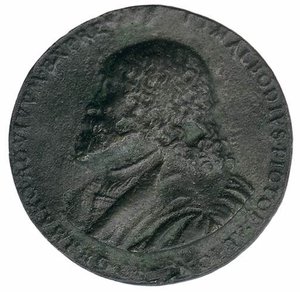
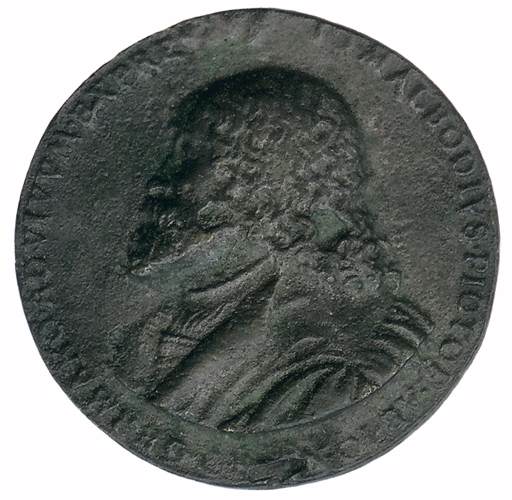
Portrait of Jan Gossart


 Read More
Hand Made Oil Reproduction
Hand-painted oil on canvas in your size and frame, made to order by our artists. ( Buy Print Buy Image)




































Pick from our preset sizes that match the artwork's original proportions.

You may enter your own dimensions to fit a specific frame or space. If your selected size does not match the original image's proportions, we will either crop the artwork or extend the painting with additional hand-painted elements. A digital mockup will be sent for your approval before production begins.
Please note that the on-screen preview does not reflect the actual cropping or extension. Only the mockup will accurately show the final composition.
While custom sizes are available, we recommend selecting a dimension from the predefined list to preserve the original proportions.
After order, ArtsDot.com team will email client for instructions and provide a mockup preview
Worldwide Delivery () in 3/4 weeks instead of standard 5 weeks. (22 August). No compromise on quality.

Free Worldwide Express Shipping

High-Quality Linen Canvas

Full Shipping Insurance

Customs Tax Refund Guarantee

True Color Matching Guarantee

60-Day Return Policy (Defects Only)

100% Money-Back Guarantee

Bulk Discount Offer
 Glass option is only available in size under 110 CM

Portrait of Jan Gossart
Reproduction Medium
Reproduction Size
-


Total Price
$ 263
Artwork Description
A Glimpse of Roman Authority: Hans Schwarz's Portrait of Jan Gossart
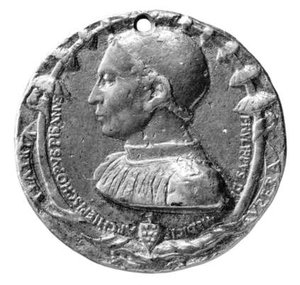
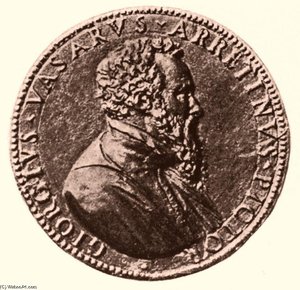
Hans Schwarz’s meticulously rendered reproduction of Jan Gossart’s “Portrait of Jan Gossart” offers more than just an image; it presents a tangible link to the artistic and political currents of 16th-century Europe. This circular medallion, dating back to 1520, is a captivating artifact – a miniature world brimming with symbolism and historical weight. The photograph itself, capturing the coin’s weathered surface, immediately evokes a sense of antiquity, hinting at centuries spent exposed to the elements and the passage of time. Schwarz's masterful technique faithfully recreates the object's worn texture, emphasizing its age and suggesting a history far richer than its apparent simplicity.
- The Embossed Portrait: At the heart of the piece lies the profile portrait itself, a figure facing left – a convention often associated with authority and solemnity. While the details are softened by time, the classical style of the embossing is undeniable, recalling the idealized representations favored during the Renaissance. The attention to detail—the contours of the face, the carefully rendered hair, and the folds of the clothing—speak to the skill and artistry employed in its creation.
- Latin Inscriptions: Encircling the portrait are Latin inscriptions, fragments of which include “REX” and “ROMANVS,” immediately connecting the piece to the Roman Empire. These words, likely intended for a commemorative purpose or as a symbol of imperial power, underscore the coin’s significance beyond a mere portrait. The use of Latin itself reflects the period's intellectual landscape, where classical learning remained profoundly influential.
- Material and Technique: Schwarz’s reproduction skillfully captures the dark coloration of the coin, likely due to oxidation and discoloration resulting from prolonged exposure. This patina adds another layer of visual interest and reinforces the object’s age. The craftsmanship suggests a high level of technical skill, typical of coins or medallions produced for significant figures or events.
Historical Context: A Token of Imperial Power
The “Portrait of Jan Gossart” was likely created as a commemorative token, possibly commissioned by a ruler or noble to honor a particular event or individual. The inclusion of Roman references – "REX" (King) and "ROMANVS" (Roman) – strongly suggests a connection to the legacy of the Roman Empire, a period that continued to exert considerable influence across Europe during the early 16th century. Coins bearing such inscriptions served not only as currency but also as powerful symbols of authority and legitimacy, reinforcing the ruler’s claim to power and connecting him to the grandeur of Rome.
- The Renaissance Ideal: The portrait's style aligns with the artistic trends of the Italian Renaissance, characterized by a renewed interest in classical antiquity. The emphasis on realism, proportion, and detail reflects this influence, demonstrating the enduring appeal of Roman art and culture.
- Medallions as Commemorative Objects: Medallions like this one were frequently produced to commemorate important events or figures, serving as tangible reminders of historical moments and achievements. They were often distributed as rewards, gifts, or tokens of allegiance, further solidifying their significance within the political and social landscape.
The Artist's Vision: Hans Schwarz’s Interpretation
Hans Schwarz’s meticulous reproduction elevates this ancient coin into a compelling work of art. His skill in capturing the object’s texture, coloration, and subtle details allows viewers to appreciate not only its historical significance but also the artistry involved in its creation. Schwarz's approach reflects a deep understanding of portraiture and an ability to translate complex visual information onto canvas with remarkable precision. The reproduction serves as a testament to both the original object’s enduring beauty and the artist’s talent for bringing it to life.
Symbolism and Emotional Impact
Beyond its historical context, the “Portrait of Jan Gossart” evokes a sense of mystery and intrigue. The worn appearance of the coin, the fragmented Latin inscriptions, and the enigmatic portrait combine to create an image that is both captivating and thought-provoking. It invites contemplation about power, authority, memory, and the enduring legacy of empires. This reproduction offers a unique opportunity to own a piece of history—a tangible connection to a world long past.
Related Artworks
Artist Biography
Lucian Freud: A Portrait of the Soul
Lucian Michael Freud (1922-2011) remains one of the most significant and intensely debated figures in 20th-century British art. His work, characterized by its unflinching realism, psychological depth, and often unsettling intimacy, continues to provoke and fascinate viewers decades after his death. More than simply a portrait painter, Freud crafted profound explorations of human vulnerability, challenging conventional notions of beauty and revealing the complexities hidden beneath seemingly familiar surfaces.
Born in Berlin during the turbulent years of the Weimar Republic, Freud’s early life was profoundly shaped by his family's Jewish heritage and the looming threat of Nazi persecution. His father, Ernst L. Freud, a renowned architect and the fourth son of Sigmund Freud, instilled in Lucian a deep appreciation for observation and meticulous detail. This familial connection to psychoanalysis subtly informed Freud’s artistic approach, encouraging him to delve into the subconscious motivations and emotional landscapes of his subjects. The family's emigration to London in 1933 provided a refuge but also marked a shift towards assimilation and a conscious effort to establish British identity.
Freud’s artistic journey began with an interest in Surrealism, influenced by the vibrant art scene of Paris during the interwar period. However, he quickly moved beyond this initial phase, developing his distinctive style through studies at Bryanston School and Dartington Hall. It was during this time that he encountered Cedric Morris, a key figure in the development of British modernism, who encouraged him to embrace a more direct and observational approach. His early works, such as “Portrait of Kitty” (1948-49), already hinted at the raw emotionality and intense physicality that would become hallmarks of his mature style. This period also saw him experimenting with various mediums, including etching and printmaking, honing his technical skills and exploring different ways to capture human form.
The 1922 Group and Early Influences
In the early 1950s, Freud became a central member of the elusive 1922 Group, a collective of artists who sought to establish an independent artistic voice outside the established institutions of Scotland. This group, comprised largely of former students of Edinburgh College of Art, was driven by a desire to challenge prevailing artistic conventions and explore new modes of representation. The 1922 Group’s commitment to direct observation and their rejection of academic traditions profoundly influenced Freud's development, encouraging him to prioritize the immediacy of experience over idealized representations.
- Key Members: Arthur Couling, William Crozier, William Gilles, William Geissler, David Gunn, George Wright Hall, William MacTaggart, John Maxwell and George Watson.
- Focus: Challenging established artistic norms and seeking an independent platform for their work.
- Exhibition Venue: The New Gallery in Samuel Peploe’s Shandwick Place studio.
Freud's early exposure to the works of artists like Cedric Morris, who himself was influenced by French modernism, provided a crucial foundation for his artistic development. The emphasis on capturing the essence of the subject through direct observation and intense engagement—a characteristic of the 1922 Group—laid the groundwork for Freud’s later explorations of human psychology and emotional vulnerability.
A Style Defined by Intimacy and Realism
Freud's mature style is instantly recognizable for its uncompromising realism, often bordering on unflinching honesty. He eschewed idealized beauty in favor of portraying his subjects with a remarkable degree of detail, capturing every wrinkle, imperfection, and fleeting expression. His portraits are not merely likenesses; they are intimate studies of character, revealing the sitter’s inner life through subtle shifts in posture, gaze, and gesture.
- Technique: Thickly impastoed paint applied directly to the canvas, creating a tactile surface that emphasizes the physicality of the subject.
- Subject Matter: Primarily portraits of friends, family members, and fellow artists—often depicted in domestic settings or engaged in everyday activities.
- Psychological Depth: Freud’s paintings are renowned for their psychological penetration, offering glimpses into the sitter's vulnerabilities, anxieties, and desires.
His most famous works, such as “Benefits Supervisor Sleeping” (1995), exemplify this approach, presenting a seemingly unremarkable subject—a woman sleeping in a welfare office—with an intensity that transforms the ordinary into the extraordinary. The painting’s unsettling realism and ambiguous narrative invite viewers to contemplate the complexities of human existence and the hidden realities beneath the surface.
Legacy and Critical Reception
Lucian Freud's work has been met with both critical acclaim and controversy throughout his career. While he achieved considerable success in Britain, his uncompromising style and often challenging subject matter have occasionally drawn criticism for their perceived lack of sentimentality or conventional beauty. However, his influence on subsequent generations of artists is undeniable, and his portraits continue to be exhibited and studied worldwide.
Freud’s legacy extends beyond the realm of painting; he redefined the possibilities of portraiture, demonstrating that art could be both deeply personal and profoundly insightful. His commitment to capturing the essence of human experience—warts and all—remains a testament to his artistic vision and enduring power.
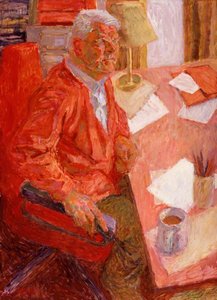
hans schwarz
1922 - 2003 , Austria
Quick Facts
- Artistic Movement Or Style: Figurative art, Portraiture
- Artists Or Movements Influenced By This Artist:
- School of London
- Surrealism
- Expressionism
- Artists Who Influenced This Artist:
- Cedric Morris
- David Hockney
- Date Of Birth: 8 December 1922
- Date Of Death: 20 July 2011
- Full Name: Lucian Michael Freud
- Nationality: British
- Notable Artworks:
- Benefits Supervisor Sleeping
- Portrait of Kitty
- Figure with Spread Leg
- Place Of Birth: Berlin, Germany
Related Articles

The Enduring Legacy of Bronze: A Historical & Artistic Exploration for the Collector
Explore the rich history & enduring appeal of bronze sculpture with expert insights for collectors at ArtsDot. Learn about casting techniques, iconic artists, collecting tips & contemporary interpretations.

Bronze Age to Modern Masters: 10 Sculptures That Redefined Art | ArtsDot
Journey through art history with 10 legendary bronze sculptures – from Michelangelo's David to Rodin’s Thinker. Explore the stories, techniques & timeless beauty of these masterpieces. Find museum-quality reproductions & elevate your home decor on ArtsDot.com.
The Enduring Legacy of Bronze: History, Technique & Artistic Expression for the Collector
Explore the rich history & enduring appeal of bronze sculpture with expert insights for collectors at ArtsDot. Learn about casting techniques, iconic artists, and collecting tips.
Jan Gossart: Bridging Netherlandish Realism & Renaissance Humanism – A Comprehensive Exploration
Explore the captivating world of Jan Gossart, a pivotal figure bridging Netherlandish realism & Renaissance humanism. Discover his masterpieces, patronage, and lasting influence – an essential guide for discerning art collectors.
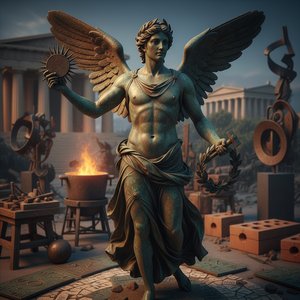
The Enduring Legacy of Bronze Sculpture: Technique, Symbolism & Cultural Impact
Explore the rich history & enduring appeal of bronze sculpture with expert insights for collectors. Learn about casting techniques, iconic artists, collecting tips & contemporary interpretations at ArtsDot.