 Preview
 Send
Send Share
Share
 Details

 Download
 Similars
 X-Ray
X-Ray Diaporama
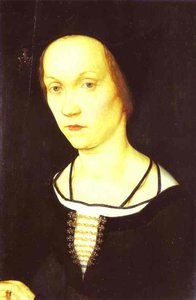
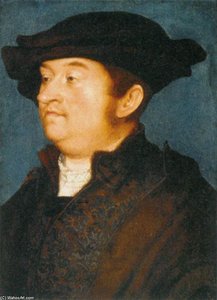
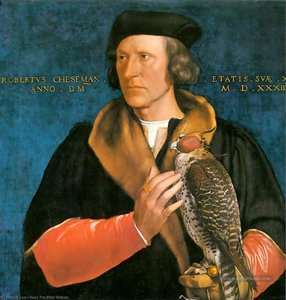
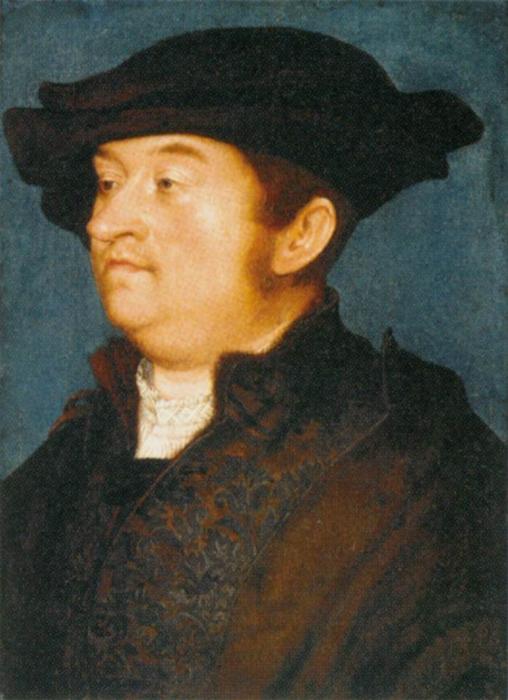
Portrait of a Man
 Acrylic On Canvas
- WallArt
- Northern Renaissance Realism
 1518
1518 24.0 x 17.0 cm
 Thyssen-Bornemisza Museum
 Read More
Hand Made Oil Reproduction
Hand-painted oil on canvas in your size and frame, made to order by our artists. ( Buy Print Buy Image)




P118B $10

P118H $10

P118W $10

P438Z $10

P508JH $12

P508YH $12

P805H $10

P805Z $10

P919BZ $10

P919G $10

P919XJ $10

P959ZH $10

P968JZ $12

W106C $8

W218G $10

W218JH $8

W218Y $10

W307PJ $10

W316G $10

W316PJ $8

W316Y $10

W398PJ $8

W4111J $10

W500HY $15

W500JH $15

W692G $12

W849H $8

W940BG $15

W953PJ $8




Pick from our preset sizes that match the artwork's original proportions.

You may enter your own dimensions to fit a specific frame or space. If your selected size does not match the original image's proportions, we will either crop the artwork or extend the painting with additional hand-painted elements. A digital mockup will be sent for your approval before production begins.
Please note that the on-screen preview does not reflect the actual cropping or extension. Only the mockup will accurately show the final composition.
While custom sizes are available, we recommend selecting a dimension from the predefined list to preserve the original proportions.
After order, ArtsDot.com team will email client for instructions and provide a mockup preview
Worldwide Delivery () in 3/4 weeks instead of standard 5 weeks. (17 August). No compromise on quality.

Free Worldwide Express Shipping

High-Quality Linen Canvas

Full Shipping Insurance

Customs Tax Refund Guarantee

True Color Matching Guarantee

60-Day Return Policy (Defects Only)

100% Money-Back Guarantee

Bulk Discount Offer
 Glass option is only available in size under 110 CM

Portrait of a Man
Reproduction Medium
Reproduction Size
-


Total Price
$ 263
Artwork Description
A Moment Frozen in Time: Hans Holbein’s Portrait of a Man
The Augsburg Master, Hans Holbein the Elder, stands as a cornerstone of Northern Renaissance art—a figure whose meticulous observation and profound understanding of human psychology cemented his legacy as one of the era's most influential painters. His “Portrait of a Man,” executed around 1520, resides within the Thyssen-Bornemisza Collection, offering an unparalleled glimpse into the artistic sensibilities of its time and demonstrating Holbein’s mastery of realism alongside subtle psychological exploration. This captivating artwork transcends mere representation; it embodies a carefully crafted narrative designed to convey both status and inner contemplation.The Anatomy of Detail: Technique and Style
Holbein's approach distinguishes itself from many contemporaries who favored idealized depictions. Instead, he painstakingly dissected the human form—a technique honed during his formative years in Basel—to achieve an astonishing level of anatomical accuracy. The portrait’s surface is rendered with oil paint on panel, utilizing layering and glazing techniques that imbue the image with luminous depth and subtle tonal variations. Notice the meticulous rendering of musculature beneath the skin, capturing the contours of bone and flesh with remarkable precision. This dedication to realism wasn't merely a stylistic choice; it reflected Holbein’s belief in representing the human body truthfully—a cornerstone of humanist thought prevalent during the Renaissance. The artist skillfully employs chiaroscuro – dramatic contrasts between light and shadow – to sculpt the figure’s form, emphasizing musculature and creating an illusion of three-dimensionality that draws the viewer's eye into the portrait’s core.A Window Into Tudor England: Historical Context
“Portrait of a Man” emerged during the tumultuous reign of Henry VIII—a period marked by religious upheaval and political maneuvering. Holbein, serving as court painter to Thomas Cromwell, skillfully captured the essence of aristocratic identity within this context. The subject’s attire – a dark velvet robe adorned with gold trim – speaks volumes about his wealth and social standing, mirroring the opulent tastes of Tudor England. Furthermore, the man's gaze—directed outwards, seemingly contemplating distant horizons—suggests introspection and intellectual curiosity—qualities valued by humanist thinkers who championed reason and observation as paths to understanding the human condition. The painting’s placement within the broader artistic landscape reflects the burgeoning interest in portraying individuals with psychological complexity – a departure from earlier conventions that prioritized symbolic representation over realistic portrayal.Symbolism Beyond Appearance: Facial Expression and Gesture
Beyond its technical brilliance and historical significance, “Portrait of a Man” possesses a profound emotional resonance. The subject’s expression—characterized by a furrowed brow and widened eyes—conveys surprise or shock—a subtle gesture that invites contemplation about the circumstances surrounding his gaze. This carefully considered facial expression is not merely decorative; it communicates an inner state—a reaction to something perceived beyond the frame of the painting. Holbein's masterful use of gesture reinforces this impression, subtly conveying a sense of dignified composure amidst apparent astonishment. The artist’s intention was to capture not just physical likeness but also psychological character—a feat achieved through astute observation and nuanced artistic interpretation.A Legacy Enduring Through Reproduction
Today, “Portrait of a Man” continues to inspire admiration for its unparalleled realism and psychological depth. High-quality reproductions offer art lovers the opportunity to experience Holbein’s vision firsthand—bringing this iconic masterpiece into homes and galleries worldwide. Owning a faithful rendition allows one to appreciate the enduring power of artistic innovation and the profound beauty found in capturing the complexities of human emotion—a testament to Hans Holbein the Elder's indelible contribution to the history of art.Related Artworks
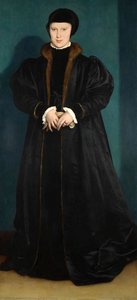
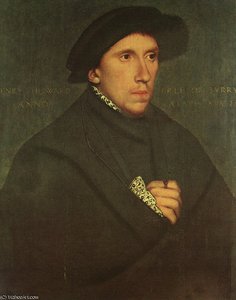
Artist Biography
The Augsburg Master: Hans Holbein the Elder and the Dawn of Renaissance Realism
Born around 1497 in the vibrant artistic hub of Augsburg, Germany—a correction to earlier attributions placing his origins in Italy—Hans Holbein the Elder emerged as a pivotal figure bridging the late Gothic tradition with the burgeoning innovations of the Northern Renaissance. His life unfolded during a period of immense religious and political upheaval, a context that subtly yet profoundly informed his artistic vision. Unlike many artists who gravitated towards the Italian peninsula for their training, Holbein honed his skills within the German artistic landscape, absorbing influences from masters like Albrecht Dürer while simultaneously developing a uniquely personal style. His early career blossomed in Basel, Switzerland, where he quickly established himself as a sought-after creator of religious imagery, intricate murals adorning public and private spaces, and beautifully detailed book illustrations. However, it was his burgeoning talent for portraiture that would ultimately define his legacy, capturing not merely likenesses but the very essence of his sitters.A Synthesis of Styles: Gothic Detail and Renaissance Humanism
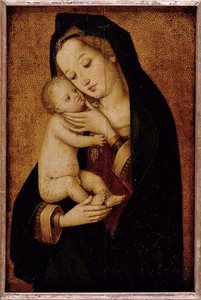
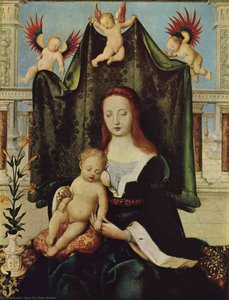
Holbein’s artistic approach wasn't one of radical departure, but rather a masterful synthesis. He didn’t abandon the meticulous detail and precise draftsmanship characteristic of the late Gothic period; instead, he infused it with the humanist ideals sweeping across Europe from Italy. The influence of Leonardo da Vinci and Sandro Botticelli is discernible in his work—not through direct imitation, but through an adoption of their emphasis on naturalism, psychological depth, and a refined understanding of anatomy. This fusion resulted in portraits that were remarkably lifelike, imbued with a sense of presence rarely seen before. He possessed an extraordinary ability to render textures – the sheen of silk, the weight of velvet, the subtle imperfections of skin – with breathtaking accuracy. Maria, das Kind liebkosend, created in 1499 and now residing at the Kunsthistorisches Museum in Vienna, exemplifies this early mastery; it’s a tender depiction brimming with emotional resonance achieved through delicate brushwork and an acute observation of human form. His title plate with St. Peter and St. Paul further demonstrates his skill, showcasing not only technical prowess but also a developing narrative sensibility within his compositions.Beyond Likeness: Capturing Character and Context
Holbein’s portraits weren't simply exercises in visual accuracy; they were insightful studies of character and social standing. He understood that clothing, jewelry, and even posture could reveal volumes about a person’s identity and position within society. He wasn’t merely painting *what* people looked like, but *who* they were—their ambitions, their anxieties, their place in the world. This ability to capture psychological depth set him apart from many of his contemporaries. While he produced religious works throughout his career, it was this focus on portraiture that cemented his reputation and ensured his lasting influence. His work provides invaluable glimpses into the lives of individuals during a period of significant transformation, offering historians and art enthusiasts alike a window into the 16th century’s complex social fabric.A Lasting Legacy: Influence and Rediscovery
Though overshadowed in some respects by his more famous son, Hans Holbein the Younger, the Elder's impact on art history is undeniable. His innovative blend of genres, coupled with his meticulous attention to detail and psychological insight, paved the way for future generations of portrait artists. Art historian Ellis Waterhouse rightly points out that even the portraits created by his son owe a debt to the foundational skills and aesthetic sensibilities instilled during his early training under his father’s guidance. Today, reproductions of Holbein's works—available through platforms like ArtsDot.com—allow art lovers worldwide to appreciate his genius. The opportunity to own a handmade oil painting reproduction of masterpieces such as Ambassadors (by the Younger Holbein) alongside explorations of the Elder’s contributions provides a richer understanding of the artistic lineage and the evolution of Renaissance portraiture. His legacy continues to be celebrated, reminding us of the power of art to not only reflect but also illuminate the human condition.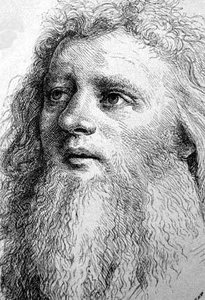
hans the elder holbein
1497 - 1543 , Italy
Quick Facts
- Artistic Movement Or Style: Northern Renaissance
- Artists Or Movements Influenced By This Artist: Northern Renaissance artists
- Artists Who Influenced This Artist:
- Leonardo da Vinci
- Sandro Botticelli
- Date Of Birth: c. 1497
- Date Of Death: 1543
- Full Name: Hans Holbein the Elder
- Nationality: German
- Notable Artworks:
- Maria, das Kind liebkosend
- Title plate with St. Peter & Paul
- Place Of Birth: Augsburg, Germany
Related Articles
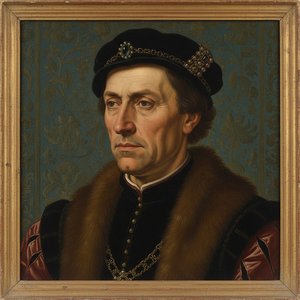
Hans Holbein the Younger: A Renaissance Portraitist's Mastery of Realism & Psychological Insight
Explore the life & art of Hans Holbein the Younger, a Renaissance master renowned for his strikingly realistic portraits and psychological insight. Discover iconic works like 'The Ambassadors' and delve into his lasting legacy.
Northern Renaissance Masters: 10 Artworks That Shaped History |
Journey through the Northern Renaissance! Explore 10 iconic paintings by Jan van Eyck, Dürer & Bosch. Discover their stories, techniques & lasting impact. Find museum-quality art reproductions & elevate your home decor on .
The Northern Awakening: Artistic Innovation & Cultural Transformation in the German Renaissance
Explore the artistic innovation of the German Renaissance! Discover Dürer, the Danube School & Reformation art. Learn about techniques, materials & lasting influence. Find museum-quality reproductions at ArtsDot.
German Expressionism's 10 Defining Masterpieces | Art for Your Home
Explore 10 defining German Expressionism masterpieces – from Munch's 'The Scream' to Kandinsky’s abstracts. Discover the artists, stories & bold colors behind this powerful art movement. Find museum-quality reproductions at ArtsDot.com.
Hans von Aachen: Mannerism's Courtly Visionary & Imperial Portraiture
Explore the captivating world of Hans von Aachen, a leading Mannerist painter renowned for his exquisite imperial portraits & mythological scenes. Discover his legacy and influence on 16th-century European art.