The Rise of Mannerism: A Rejection of Renaissance Harmony
Mannerism is a style in European art that emerged in the later years of the Italian High Renaissance around 1520, spreading by about 1530 and lasting until about the end of the 16th century in Italy, when the Baroque style largely replaced it. Northe...
The High Renaissance, with its emphasis on balance, idealized beauty, and classical proportion, cast a long shadow across the artistic landscape of Europe. Yet, by the early 16th century, a subtle but profound shift began to occur—a questioning of those very principles that had defined an era. This was the birth of Mannerism, a style characterized not by a rejection of skill, but by a deliberate departure from naturalism in favor of elegance, artifice, and often, a captivating sense of ambiguity. Artists no longer sought simply to *reproduce* reality; they aimed to *interpret* it, imbuing their works with personal expression, elongated forms, and complex compositions that challenged the viewer’s expectations. It was an aesthetic born from virtuosity – a demonstration of what could be achieved when freed from the constraints of strict imitation. The seeds of this movement were sown in Rome and Florence, quickly spreading throughout Europe, finding fertile ground amongst artists eager to explore new avenues of expression.
Aachen's Early Life & Italian Influences: Forging a Unique Style
Hans von Aachen, born in Cologne in 1552, emerged as one of the most significant exponents of Northern Mannerism. His artistic journey began within the tradition of Netherlandish Renaissance painting, but a pivotal sojourn to Italy between 1574 and 1587 proved transformative. Venice became his crucible, where he immersed himself in the vibrant art scene, absorbing influences from masters like Titian and Veronese. However, Aachen didn’t merely copy; he synthesized these Italian lessons with his inherent Northern sensibilities – a meticulous attention to detail, a fondness for rich color palettes, and an early fascination with the human form. This fusion resulted in a distinctive style marked by dramatic compositions, elegant figures, and a remarkable ability to depict textures and surfaces with breathtaking realism. His time in Italy also fostered a keen interest in erotic mythology, a theme that would become central to his oeuvre, particularly appealing to his most important patron, Emperor Rudolf II.
Patronage at the Habsburg Court: Rudolf II and Matthias as Connoisseurs
 hans müller von bulgenbach
Explore the poignant realism of Hans Müller von Bulgenbach's peasant scenes & landscapes. Witness German history through his powerful depictions of rural life & social unrest.
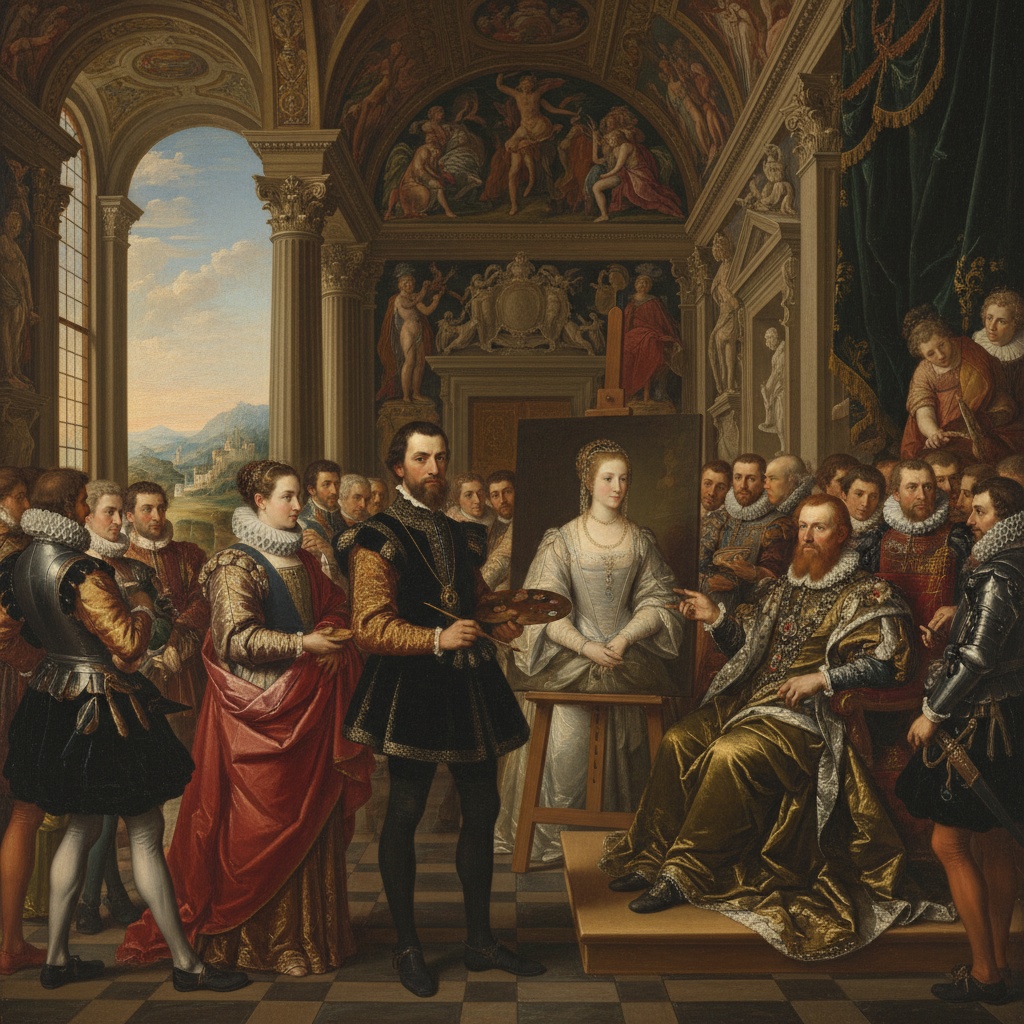
Aachen’s career trajectory was inextricably linked to the patronage of the powerful Habsburg dynasty. His return to Germany in 1587 led him to Munich, where he gained favor with Duke William V of Bavaria. However, it was his appointment as *Kammermaler* (court painter) to Emperor Rudolf II in 1592 that truly cemented his reputation and provided the platform for his most celebrated works. Rudolf II wasn’t simply a collector; he was an avid connoisseur, deeply involved in artistic matters and surrounded by a court brimming with intellectuals, alchemists, and artists. He fostered an environment of experimentation and encouraged artists to push boundaries. Later, Matthias, Rudolf's brother and successor, continued this tradition of patronage, commissioning portraits that reflected the imperial grandeur and symbolic weight of his reign. The Habsburg courts weren’t merely places where art was *displayed*; they were centers of artistic production, shaping tastes and influencing the direction of European painting.
Masterpieces of Imperial Portraiture: Power, Symbolism, and Detail
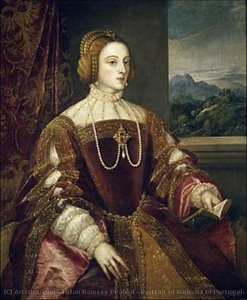
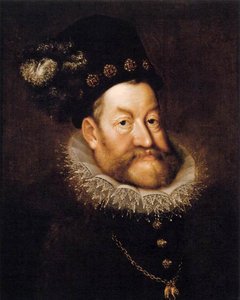
Aachen excelled in capturing the likenesses of his aristocratic patrons, but his portraits were far more than mere representations. They were carefully constructed statements of power, status, and lineage. Consider his portrait of Matthias, Holy Roman Emperor (1625), a stunning example of imperial symbolism rendered with exquisite detail. The rich fabrics, the elaborate jewelry, and the regal pose all convey a sense of authority and majesty. Aachen’s skill in depicting textures – the sheen of silk, the glint of gold, the subtle nuances of skin tone – elevates the portrait beyond simple representation. Similarly, his Emperor Rudolf II (1607) showcases not only the emperor's physical features but also his intellectual curiosity and refined taste. These portraits weren’t intended to be objective likenesses; they were carefully curated images designed to project a specific vision of imperial power.
Beyond Portraits: Mythological Subjects and Erotic Allegories
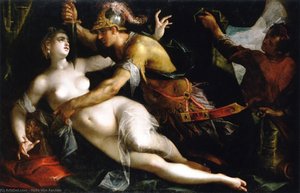
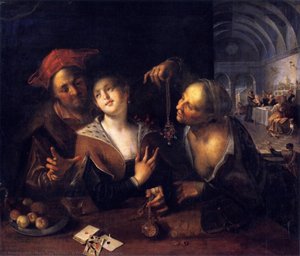 A Procuress with a Couple
Explore Hans von Aachen’s ‘A Procuress with a Couple’ – a Baroque masterpiece! Discover its intricate details, chiaroscuro & erotic mythology. View this 1605 oil on panel artwork.
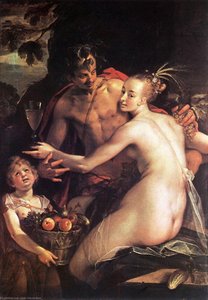
While celebrated for his portraiture, Aachen's artistic range extended far beyond the confines of courtly commissions. He possessed a remarkable talent for mythological subjects, often imbuing them with a sensuality that captivated his patrons. A Procuress with a Couple (1605), exemplifies this fascination. The painting is a masterclass in chiaroscuro and intricate detail, depicting a scene of illicit desire with both realism and allegorical depth. These works weren’t simply decorative; they were often laden with hidden meanings and subtle references to classical literature and philosophy. Aachen's skill in the depiction of nudes, particularly enjoyed by Rudolf II, demonstrates his mastery of anatomy and form. He frequently used himself and his wife as models, adding a personal touch to these intimate scenes. These paintings reveal a complex interplay between artistic virtuosity, intellectual curiosity, and the desires of a discerning clientele.
Aachen's Legacy & Influence on Northern European Art
Hans von Aachen’s impact on Northern European art was profound. He successfully bridged the gap between Netherlandish realism and Italian Mannerism, creating a unique style that influenced generations of artists. His emphasis on elegant compositions, dramatic lighting, and meticulous detail resonated with painters throughout Germany and beyond. While his work wasn't widely disseminated through engravings like some of his contemporaries, his influence spread through direct contact with other artists and the circulation of his paintings amongst aristocratic collectors. He paved the way for later Mannerist painters in Northern Europe, establishing a tradition of sophisticated portraiture and mythological scenes that continued to flourish well into the 17th century. Today, Aachen’s masterpieces stand as testaments to his artistic genius – captivating examples of courtly elegance, intellectual curiosity, and the enduring power of visual storytelling. Discover the beauty and artistry of Hans von Aachen with ArtsDot.com, where exceptional reproductions bring these historical treasures into your home.