 Preview
 Send
Send Share
Share
 Details

 Download
 Similars
 X-Ray
X-Ray Diaporama
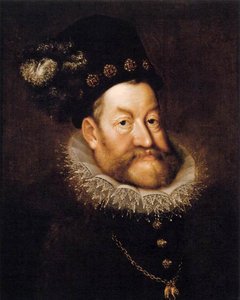
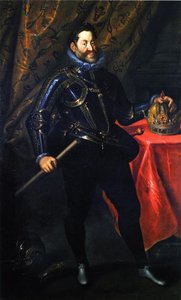
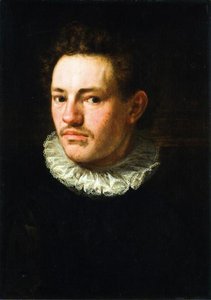
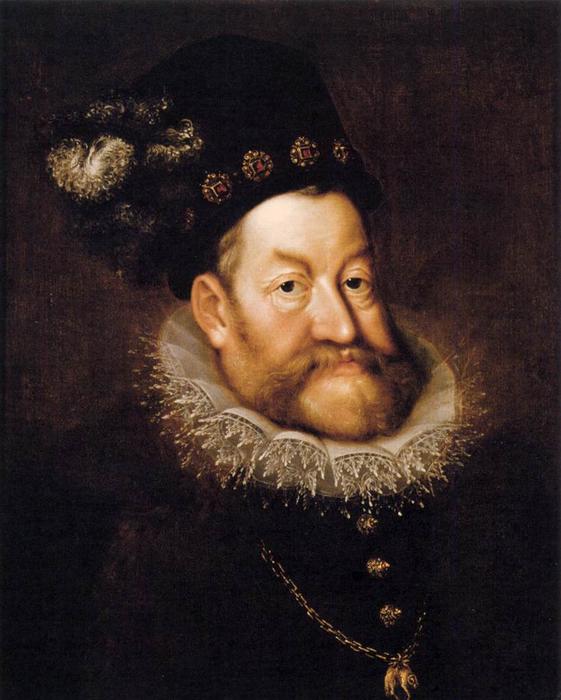
Portrait of Emperor Rudolf II
 Oil On Canvas
- WallArt
- Mannerism
 1590
1590- Early Modern
 60.0 x 48.0 cm
 Kunsthistorisches Museum
 Read More
Hand Made Oil Reproduction
Hand-painted oil on canvas in your size and frame, made to order by our artists. ( Buy Print Buy Image)




P118B $10

P118H $10

P118W $10

P438Z $10

P508JH $12

P508YH $12

P805H $10

P805Z $10

P919BZ $10

P919G $10

P919XJ $10

P959ZH $10

P968JZ $12

W106C $8

W218G $10

W218JH $8

W218Y $10

W307PJ $10

W316G $10

W316PJ $8

W316Y $10

W398PJ $8

W4111J $10

W500HY $15

W500JH $15

W692G $12

W849H $8

W940BG $15

W953PJ $8




Pick from our preset sizes that match the artwork's original proportions.

You may enter your own dimensions to fit a specific frame or space. If your selected size does not match the original image's proportions, we will either crop the artwork or extend the painting with additional hand-painted elements. A digital mockup will be sent for your approval before production begins.
Please note that the on-screen preview does not reflect the actual cropping or extension. Only the mockup will accurately show the final composition.
While custom sizes are available, we recommend selecting a dimension from the predefined list to preserve the original proportions.
After order, ArtsDot.com team will email client for instructions and provide a mockup preview
Worldwide Delivery () in 3/4 weeks instead of standard 5 weeks. (17 August). No compromise on quality.

Free Worldwide Express Shipping

High-Quality Linen Canvas

Full Shipping Insurance

Customs Tax Refund Guarantee

True Color Matching Guarantee

60-Day Return Policy (Defects Only)

100% Money-Back Guarantee

Bulk Discount Offer
 Glass option is only available in size under 110 CM

Portrait of Emperor Rudolf II
Reproduction Medium
Reproduction Size
-


Total Price
$ 263
Artwork Description
A Portrait Steeped in Habsburg Majesty: Hans Von Aachen’s Rudolf II
The Kunsthistorisches Museum in Vienna houses one of the most celebrated portraits of the Holy Roman Emperor Rudolf II – a masterpiece by Hans von Aachen, completed in 1590. Measuring 60 x 48 cm, this oil on canvas transcends mere likeness; it embodies the grandeur and intellectual fervor that characterized Rudolf’s reign and cemented Von Aachen's reputation as one of the foremost artists of his era. Examining its intricacies reveals not only a stunning depiction of imperial power but also a profound understanding of Mannerist aesthetics and humanist ideals.The Artist and His Vision
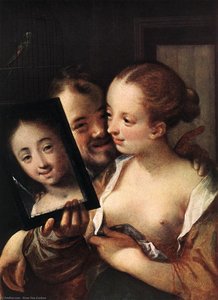
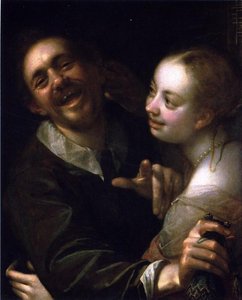
Hans von Aachen (1552 – 1615), born in Cologne, honed his artistic skills under the tutelage of Leonardus Sievenhoven, establishing himself as a pivotal figure within the burgeoning artistic landscape of Germany. Von Aachen’s distinctive style—characterized by vibrant colors, dramatic compositions, and elongated figures—was heavily influenced by El Greco's expressive dynamism. This stylistic choice wasn’t merely decorative; it reflected a broader preoccupation with conveying emotion and psychological depth – qualities prized in Renaissance portraiture but elevated to new heights during the Mannerist movement. His oeuvre includes iconic works like “Laughing Couple with a Money Purse” and “Portrait of Emperor Rudolf II,” showcased prominently on ArtsDot.com, demonstrating his mastery of capturing both physical appearance and inner character.A Window into Rudolf II’s Rule
The portrait captures Rudolf II in an arresting pose—seated confidently upon a throne, adorned with a crimson robe and a golden chain—a visual declaration of imperial authority. His gaze is direct, conveying determination and intellectual curiosity. The meticulous rendering of his facial features – the prominent beard, expressive eyes, and carefully sculpted mustache – speaks to Von Aachen’s exceptional skill in portraying individual likenesses. Beyond its aesthetic beauty, the painting serves as a tangible reminder of Rudolf II's ambitious patronage of the arts and sciences, reflecting his belief that art could elevate human understanding and inspire spiritual contemplation.Technique and Artistic Innovation
Von Aachen skillfully employed oil paint on canvas—a technique favored during the Renaissance but increasingly sophisticated by the late 16th century—to achieve remarkable textural detail and luminosity. The artist utilized chiaroscuro – dramatic contrasts between light and shadow – to sculpt Rudolf’s form, emphasizing musculature and creating a palpable sense of presence. Careful attention was paid to color palettes, utilizing rich hues that conveyed both regal splendor and psychological nuance. This masterful execution exemplifies the artistic standards of the time and underscores Von Aachen's commitment to pushing the boundaries of representational art.Symbolism and Legacy
The symbolism embedded within the portrait is equally compelling. The crown symbolizes Rudolf II’s divine right to rule, while the robe signifies his status as Emperor—a visual shorthand for power and prestige. Furthermore, the inclusion of a money purse subtly references Rudolf's considerable wealth and patronage of humanist scholarship – highlighting the emperor’s intellectual pursuits alongside his political ambitions. Today, reproductions of “Portrait of Emperor Rudolf II” continue to captivate audiences worldwide, offering an enduring testament to Von Aachen’s artistic genius and the indelible mark left by Rudolf II on European art history. Explore high-quality prints and canvases at ArtsDot.com – bringing a piece of Habsburg splendor into your home.Related Artworks

Artist Biography
early life and training
hans von aachen, a german painter, was born in 1552 in the city of cologne. little is known about his early life, but it is believed that he received his artistic training in the workshop of leonardus sievenhoven, a local painter.artistic style and influences
von aachen's work is characterized by the use of vivid colors and dramatic compositions, typical of the mannerist style. his paintings often featured elongated figures, intricate details, and a sense of tension, which was influenced by the works of el greco (domenikos theotokopoulos). some of his notable works include:- the crucifixion (1585), a painting showcasing his use of bold colors and dramatic lighting.
- the last judgment (1590), a work that demonstrates his ability to balance multiple figures in a single composition.
- portrait of an unknown lady (1595), a portrait that highlights his skill in capturing the subtleties of human expression.
notable collections and exhibitions
von aachen's works can be found in various museums, including:- gemäldegalerie alte meister, dresden, germany - featuring an extensive collection of european paintings from the 15th to the 18th centuries.
- museum ostdeutsche galerie, regensburg, germany - showcasing a unique collection of eastern german art.
legacy
hans von aachen passed away in 1615, leaving behind a legacy of intricate and emotionally charged paintings. his work continues to inspire artists and art enthusiasts alike, offering a unique glimpse into the world of mannerist art. discover more about hans von aachen's life and works on ArtsDot.com: [https://ArtsDot.com/@@/a@d3aquv](https://ArtsDot.com/@@/a@d3aquv) | discovering the museum ostdeutsche galerie (germany)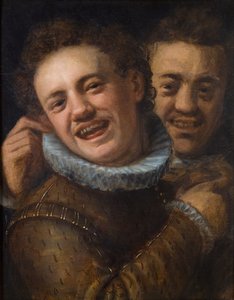
Hans von Aachen
1552 - 1615 , Germany
Quick Facts
- Artistic Movement Or Style: Mannerist Painting
- Artists Or Movements Influenced By This Artist: ['Renaissance Art']
- Artists Who Influenced This Artist: ['El Greco']
- Date Of Birth: 1552 Cologne, Germany
- Date Of Death: 1615
- Full Name: Hans von Aachen
- Nationality: German
- Notable Artworks:
- The Crucifixion
- The Last Judgment
- Portrait of an Unknown Lady
- Place Of Birth: Cologne
Related Articles
Hans von Aachen: Mannerism's Courtly Visionary & Imperial Portraiture
Explore the captivating world of Hans von Aachen, a leading Mannerist painter renowned for his exquisite imperial portraits & mythological scenes. Discover his legacy and influence on 16th-century European art.
Eugen von Blaas: Capturing Alpine Life & Sentiment in 19th-Century Austrian Painting
Discover the captivating world of Eugen von Blaas! Explore his exquisite 19th-century paintings capturing Venetian life & Alpine beauty. Learn about his Academic Classicism style and find museum-quality reproductions at ArtsDot.
Anton von Werner: Imperial Painter, Historical Witness & Shifting German Identity
Explore the life & work of Anton von Werner, Imperial Germany's leading painter. Discover his dramatic depictions of war, unification, and court life – a fascinating insight into 19th-century German history & art.
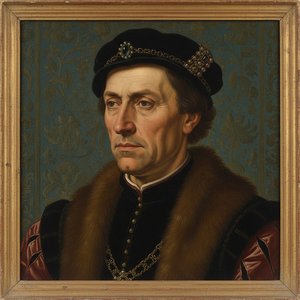
Hans Holbein the Younger: A Renaissance Portraitist's Mastery of Realism & Psychological Insight
Explore the life & art of Hans Holbein the Younger, a Renaissance master renowned for his strikingly realistic portraits and psychological insight. Discover iconic works like 'The Ambassadors' and delve into his lasting legacy.
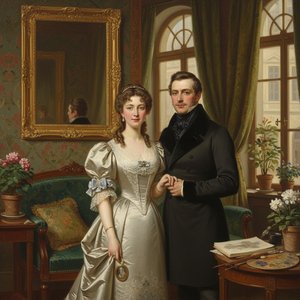
Friedrich von Amerling: Capturing Viennese Aristocracy & the Biedermeier Spirit
Explore the elegant portraits of Friedrich von Amerling, a master of Viennese Biedermeier art. Discover his life, style, and lasting influence on 19th-century Austrian painting. Find high-quality reproductions at ArtsDot.