 Preview
 Send
Send Share
Share
 Details

 Download
 Similars
 X-Ray
X-Ray Diaporama
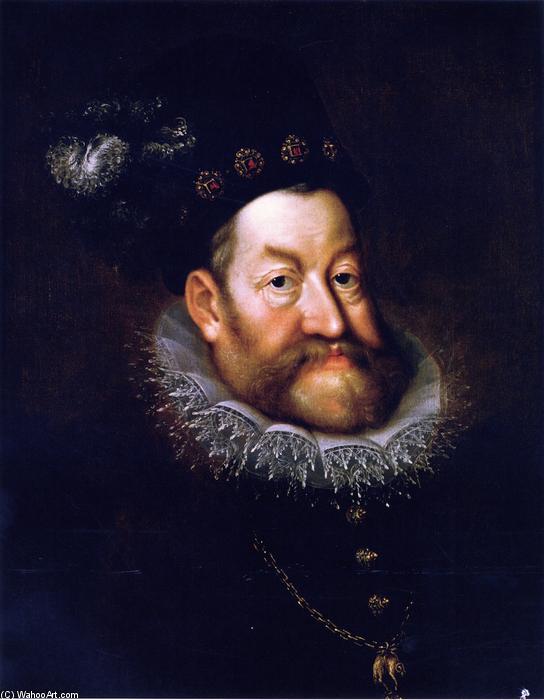
Emperor Rudolf II
 Oil On Canvas
- WallArt
- Northern Mannerism
 1607
1607 60.0 x 58.0 cm
 Kunsthistorisches Museum
 Read More
Hand Made Oil Reproduction
Hand-painted oil on canvas in your size and frame, made to order by our artists. ( Buy Print Buy Image)




P118B $10

P118H $10

P118W $10

P438Z $10

P508JH $12

P508YH $12

P805H $10

P805Z $10

P919BZ $10

P919G $10

P919XJ $10

P959ZH $10

P968JZ $12

W106C $8

W218G $10

W218JH $8

W218Y $10

W307PJ $10

W316G $10

W316PJ $8

W316Y $10

W398PJ $8

W4111J $10

W500HY $15

W500JH $15

W692G $12

W849H $8

W940BG $15

W953PJ $8




Pick from our preset sizes that match the artwork's original proportions.

You may enter your own dimensions to fit a specific frame or space. If your selected size does not match the original image's proportions, we will either crop the artwork or extend the painting with additional hand-painted elements. A digital mockup will be sent for your approval before production begins.
Please note that the on-screen preview does not reflect the actual cropping or extension. Only the mockup will accurately show the final composition.
While custom sizes are available, we recommend selecting a dimension from the predefined list to preserve the original proportions.
After order, ArtsDot.com team will email client for instructions and provide a mockup preview
Worldwide Delivery () in 3/4 weeks instead of standard 5 weeks. (17 August). No compromise on quality.

Free Worldwide Express Shipping

High-Quality Linen Canvas

Full Shipping Insurance

Customs Tax Refund Guarantee

True Color Matching Guarantee

60-Day Return Policy (Defects Only)

100% Money-Back Guarantee

Bulk Discount Offer
 Glass option is only available in size under 110 CM

Emperor Rudolf II
Reproduction Medium
Reproduction Size
-


Total Price
$ 263
Artwork Description
The Imperial Gaze: Hans von Aachen’s Portrait of Emperor Rudolf II
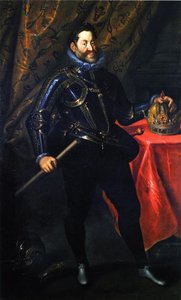
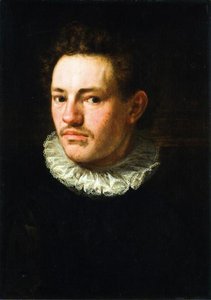
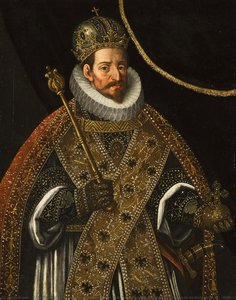
Hans von Aachen's “Portrait of Emperor Rudolf II,” painted in 1607, is more than just a likeness; it’s a carefully constructed tableau of power, intellect, and the burgeoning anxieties of a man grappling with his role as Holy Roman Emperor. This oil-on-canvas masterpiece, measuring 60 x 58 cm and currently residing within the Kunsthistorisches Museum in Vienna, offers a rare glimpse into the mind of Rudolf II, a ruler renowned for both his lavish patronage of the arts and his ultimately disastrous handling of European politics.
The painting immediately commands attention with its dramatic use of space and light. The Emperor is positioned centrally within a deep, almost impenetrable black background – a deliberate choice that serves to isolate him, elevating him to an almost mythical status. This darkness isn’t merely decorative; it speaks to the weight of his responsibilities, the isolation inherent in leadership, and perhaps even hints at the melancholy that would later define his reign. The focus is entirely on Rudolf's face – a study in controlled severity. His gaze, direct and unwavering, holds an air of contemplative power, suggesting both wisdom and a certain weariness.
A Mannerist Masterpiece: Style and Technique
Von Aachen’s style firmly places this portrait within the realm of Northern Mannerism, a movement characterized by its meticulous detail, elongated figures, and often unsettling psychological depth. He expertly employs the techniques of oil painting to achieve remarkable realism – the texture of the velvet robes, the intricate folds of the ruff collar, and the subtle nuances of Rudolf’s facial features are rendered with astonishing precision. Notice particularly the rendering of the beard and mustache; each strand appears meticulously painted, contributing to a sense of tangible presence.
The artist's use of glazing – layering thin washes of translucent paint over dried layers – creates an incredible luminosity, particularly in the highlights that catch the light on Rudolf’s face. This technique not only enhances the realism but also imbues the portrait with a subtle, almost ethereal quality. The composition itself is carefully balanced, utilizing strong lines to define the contours of the figure and creating a sense of solidity and structure. The restrained palette – dominated by deep reds, browns, and blacks – further emphasizes the formality and gravitas of the subject.
Rudolf II: A Complex Figure
Understanding the historical context surrounding Rudolf II is crucial to appreciating this portrait fully. He was a man of immense wealth and intellectual curiosity, a passionate collector of art, books, and scientific instruments – a veritable Renaissance man who ruled from Prague. However, his reign was marked by political instability, costly wars, and ultimately, the devastating Thirty Years’ War. His eccentricities and seclusion contributed to his inability to effectively govern, leading to widespread discontent and rebellion.
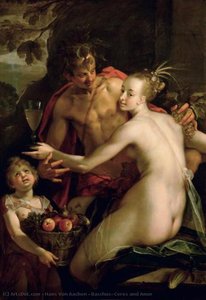
The portrait captures this duality – the outward appearance of imperial authority juxtaposed with an underlying sense of introspection and perhaps even unease. The elaborate ruff collar, a symbol of status and wealth, is offset by the Emperor’s somber expression. It's a visual representation of a man caught between his responsibilities as ruler and his own internal struggles. Interestingly, Rudolf II was particularly fond of eroticized mythological scenes in art, suggesting a hidden sensuality beneath his formal exterior – a theme subtly echoed in some of von Aachen’s other works.
Symbolism and Legacy
Beyond the immediate depiction of Emperor Rudolf II, the portrait is rich in symbolic meaning. The crown, prominently displayed, represents his authority and divine right to rule. The dark background can be interpreted as a metaphor for the challenges he faced – the shadows of war, political intrigue, and personal anxieties that surrounded him. Von Aachen’s meticulous attention to detail reflects the importance placed on appearances during the Renaissance, highlighting the need for rulers to project an image of strength and stability.
“Portrait of Emperor Rudolf II” remains a significant work of art, offering a compelling glimpse into the life and mind of one of Europe's most enigmatic figures. It’s a testament to Hans von Aachen’s skill as a painter and his ability to capture not just a likeness but also the essence of a complex historical personality. Reproductions of this captivating portrait continue to resonate with art lovers today, inviting us to contemplate the burdens of power and the enduring allure of the Renaissance ideal.
Related Artworks
Artist Biography
early life and training
hans von aachen, a german painter, was born in 1552 in the city of cologne. little is known about his early life, but it is believed that he received his artistic training in the workshop of leonardus sievenhoven, a local painter.artistic style and influences
von aachen's work is characterized by the use of vivid colors and dramatic compositions, typical of the mannerist style. his paintings often featured elongated figures, intricate details, and a sense of tension, which was influenced by the works of el greco (domenikos theotokopoulos). some of his notable works include:- the crucifixion (1585), a painting showcasing his use of bold colors and dramatic lighting.
- the last judgment (1590), a work that demonstrates his ability to balance multiple figures in a single composition.
- portrait of an unknown lady (1595), a portrait that highlights his skill in capturing the subtleties of human expression.
notable collections and exhibitions
von aachen's works can be found in various museums, including:- gemäldegalerie alte meister, dresden, germany - featuring an extensive collection of european paintings from the 15th to the 18th centuries.
- museum ostdeutsche galerie, regensburg, germany - showcasing a unique collection of eastern german art.
legacy
hans von aachen passed away in 1615, leaving behind a legacy of intricate and emotionally charged paintings. his work continues to inspire artists and art enthusiasts alike, offering a unique glimpse into the world of mannerist art. discover more about hans von aachen's life and works on ArtsDot.com: [https://ArtsDot.com/@@/a@d3aquv](https://ArtsDot.com/@@/a@d3aquv) | discovering the museum ostdeutsche galerie (germany)
Hans von Aachen
1552 - 1615 , Germany
Quick Facts
- Artistic Movement Or Style: Mannerist Painting
- Artists Or Movements Influenced By This Artist: ['Renaissance Art']
- Artists Who Influenced This Artist: ['El Greco']
- Date Of Birth: 1552 Cologne, Germany
- Date Of Death: 1615
- Full Name: Hans von Aachen
- Nationality: German
- Notable Artworks:
- The Crucifixion
- The Last Judgment
- Portrait of an Unknown Lady
- Place Of Birth: Cologne
Related Articles
Hans von Aachen: Mannerism's Courtly Visionary & Imperial Portraiture
Explore the captivating world of Hans von Aachen, a leading Mannerist painter renowned for his exquisite imperial portraits & mythological scenes. Discover his legacy and influence on 16th-century European art.
Eugen von Blaas: Capturing Alpine Life & Sentiment in 19th-Century Austrian Painting
Discover the captivating world of Eugen von Blaas! Explore his exquisite 19th-century paintings capturing Venetian life & Alpine beauty. Learn about his Academic Classicism style and find museum-quality reproductions at ArtsDot.
Anton von Werner: Imperial Painter, Historical Witness & Shifting German Identity
Explore the life & work of Anton von Werner, Imperial Germany's leading painter. Discover his dramatic depictions of war, unification, and court life – a fascinating insight into 19th-century German history & art.
Hans Holbein the Younger: A Renaissance Portraitist's Mastery of Realism & Psychological Insight
Explore the life & art of Hans Holbein the Younger, a Renaissance master renowned for his strikingly realistic portraits and psychological insight. Discover iconic works like 'The Ambassadors' and delve into his lasting legacy.
Friedrich von Amerling: Capturing Viennese Aristocracy & the Biedermeier Spirit
Explore the elegant portraits of Friedrich von Amerling, a master of Viennese Biedermeier art. Discover his life, style, and lasting influence on 19th-century Austrian painting. Find high-quality reproductions at ArtsDot.