 Preview
 Send
Send Share
Share
 Details

 Download
 Similars
 X-Ray
X-Ray Diaporama
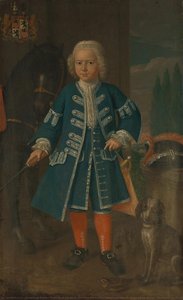
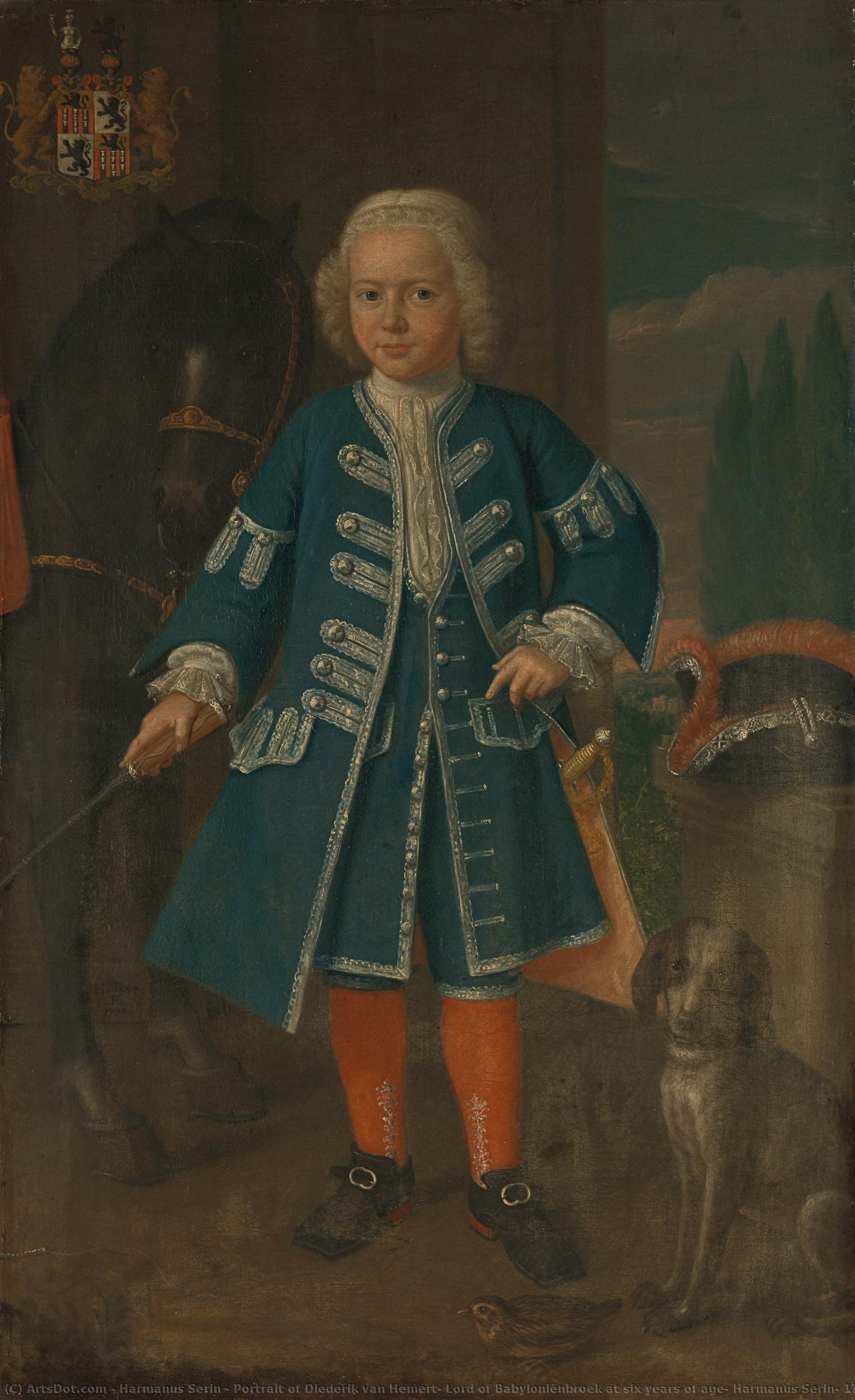
Portrait of Diederik van Hemert, Lord of Babyloniënbroek at six years of age, Harmanus Serin, 1735
 1735
1735 138.0 x 84.0 cm
 Read More
Giclée / Art Print
Museum-quality giclée or canvas print with fast production and flexible finish options. ( Buy Hand Made Painting Buy Image)




































Pick from our preset sizes that match the artwork's original proportions.

You may enter your own dimensions to fit a specific frame or space. If your selected size does not match the original image's proportions, we will either crop the artwork or extend the image with a mirrored or solid-fill edge. A digital mockup will be sent for your approval before production begins.
Please note that the on-screen preview does not reflect the actual cropping or extension. Only the mockup will accurately show the final composition.
While custom sizes are available, we recommend selecting a dimension from the predefined list to preserve the original proportions.
Worldwide Delivery () in 2 weeks instead of standard 4/5 weeks. (6 September)

Free Worldwide Express Shipping

High-Quality Linen Canvas

Full Shipping Insurance

Customs Tax Refund Guarantee

True Color Matching Guarantee

100-Day Return Policy (Defects Only)

100% Money-Back Guarantee

Bulk Discount Offer
 Glass option is only available in size under 110 CM

Portrait of Diederik van Hemert, Lord of Babyloniënbroek at six years of age, Harmanus Serin, 1735
Giclée / Art Print
Reproduction Size
-


Total Price
$ 63
Related Artworks






Artist Biography
A Chronicler in Canvas: The Life and Art of Harmanus Serin
Harmanus Serin, born in Antwerp around 1677 and passing away in The Hague in 1756, occupies a fascinating, if somewhat understated, position within the Dutch Golden Age’s lingering echoes. While not achieving the widespread renown of contemporaries like Rembrandt or Vermeer, Serin carved out a unique niche as both a portraitist and, crucially, as an early art biographer—a meticulous recorder of his era's artistic landscape. His life unfolded during a period of transition, bridging the opulence of the 17th century with the evolving tastes of the 18th, and this duality is reflected in his work. Serin’s initial training took place under Simon van der Does and Mattheus Terwesten, both established painters who instilled in him a solid foundation in technique and composition. He became a member of the Confrerie Pictura in 1711, signifying his acceptance into the artistic community, but it was his later administrative roles—regent and then director of the Hague Drawing School from 1720 to 1734—that reveal a dedication extending beyond mere brushstrokes.Portraiture and the Italianate Landscape
Serin’s artistic output primarily centered on two areas: portraiture, often depicting members of the Dutch regency, and Italianate landscapes. His portraits, while not groundbreaking in their innovation, demonstrate a keen observational skill and a sensitivity to character. He possessed an ability to capture the dignity and status of his sitters without resorting to excessive flattery or ostentation. The *Portrait of Diederik van Hemert, Lord of Babyloniënbroek at six years of age* (1735) exemplifies this approach—a restrained yet compelling depiction of youthful nobility. These portraits weren’t simply likenesses; they were statements of social standing and familial pride, commissioned by a clientele who valued both artistic quality and the symbolic weight of their image. His landscapes, conversely, reveal an attraction to the idealized beauty of Italy, a popular motif among Dutch artists seeking respite from the often-grey northern climate. These scenes, though not directly based on personal travel (as far as is known), reflect a broader cultural fascination with classical antiquity and the picturesque.The ‘Nieuw Schouburg’ – A Legacy of Biographical Detail
However, it is Serin's monumental undertaking, the *Nieuw Schouburg* ("New Theatre"), that truly sets him apart. This ambitious biographical dictionary of Dutch and Flemish artists was intended as a continuation of Karel van Mander’s earlier work, *Schilder-boeck*, and Houbraken’s *De groote schouburgh der Nederlantsche konstschilders en schilderessen*. Serin embarked on this project with a clear purpose: to provide a comprehensive and accurate record of artists' lives, styles, and achievements. He meticulously researched his subjects, gathering information from various sources—personal correspondence, archival documents, and interviews with contemporaries. What distinguishes the *Nieuw Schouburg* is not merely its breadth but also Serin’s critical approach. He openly acknowledged the shortcomings of previous biographers, particularly Houbraken's tendency towards sensationalism and personal bias. He began Volume I with painters from The Hague—Jan van Ravensteyn and Adriaen Hanneman—and proceeded chronologically, offering concise yet informative sketches up to 1680. Volume II continued the narrative, extending to 1700.Historical Significance and Enduring Influence
Serin’s significance lies not in revolutionizing artistic style but in preserving its history. The *Nieuw Schouburg* became an invaluable resource for subsequent art historians, providing a wealth of detail about artists who might otherwise have been lost to obscurity. His critical assessment of earlier biographical methods also paved the way for more rigorous and objective scholarship. While his own paintings may not command the same attention as those of his celebrated peers, they serve as tangible examples of the artistic milieu he so diligently documented. He lived through a period where the art market was evolving, patronage patterns were shifting, and new aesthetic sensibilities were emerging. His work reflects this transitional moment—a blend of traditional techniques and a growing awareness of contemporary trends. The discovery of paintings like those acquired by the Golden Age Gorinchem Foundation – Hubertus Snoeck’s portrait in 1736 – underscores his presence within regional artistic circles, demonstrating a wider reach than previously acknowledged. Harmanus Serin remains a vital figure for understanding the Dutch art world beyond the canonical masters—a chronicler who ensured that the stories of countless artists were not forgotten.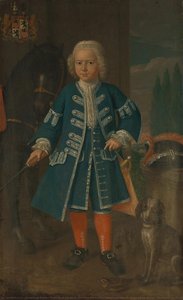
Quick Facts
- Artistic Movement Or Style: Italianate landscapes, portraiture
- Artists Who Influenced This Artist:
- Simon van der Does
- Mattheus Terwesten
- Date Of Birth: 1677-06
- Date Of Death: 1756-02-27
- Full Name: Harmanus Josephus Serin
- Nationality: Dutch
- Notable Artworks: ['Portrait of Diederik van Hemert (1735)']
- Place Of Birth: Antwerp, Belgium