 Preview
 Send
Send Share
Share
 Details

 Download
 Similars
 X-Ray
X-Ray Diaporama
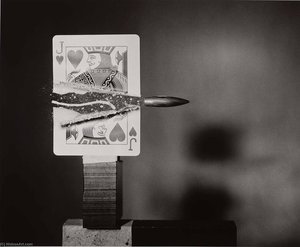
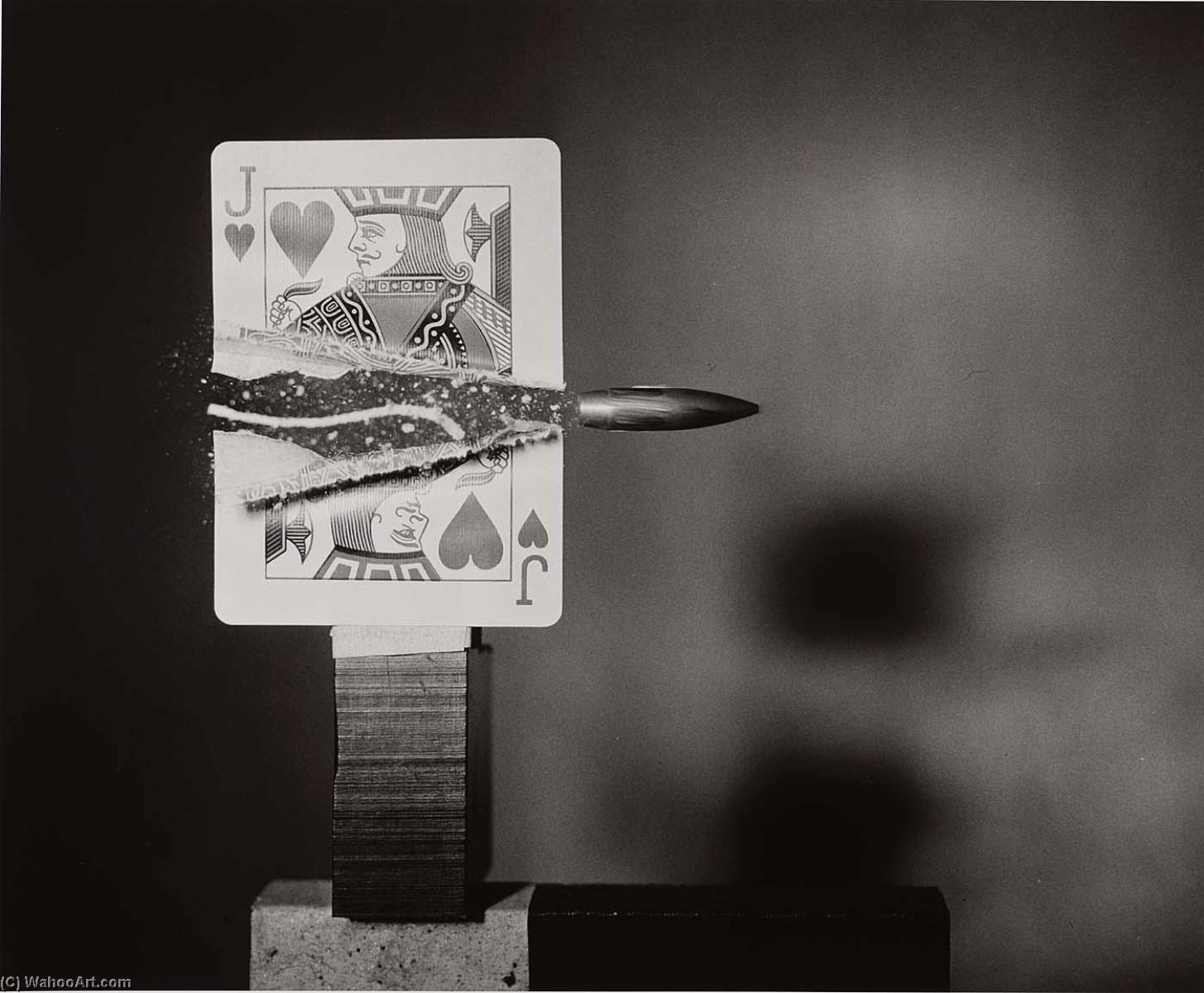
Bullet through Jack of Hearts
 Contemporary Realism
 1981
1981 51.0 x 61.0 cm
 Read More
Hand Made Oil Reproduction
Hand-painted oil on canvas in your size and frame, made to order by our artists. ( Buy Print Buy Image)




































Pick from our preset sizes that match the artwork's original proportions.

You may enter your own dimensions to fit a specific frame or space. If your selected size does not match the original image's proportions, we will either crop the artwork or extend the painting with additional hand-painted elements. A digital mockup will be sent for your approval before production begins.
Please note that the on-screen preview does not reflect the actual cropping or extension. Only the mockup will accurately show the final composition.
While custom sizes are available, we recommend selecting a dimension from the predefined list to preserve the original proportions.
After order, ArtsDot.com team will email client for instructions and provide a mockup preview
Worldwide Delivery () in 3/4 weeks instead of standard 5 weeks. (21 August). No compromise on quality.

Free Worldwide Express Shipping

High-Quality Linen Canvas

Full Shipping Insurance

Customs Tax Refund Guarantee

True Color Matching Guarantee

60-Day Return Policy (Defects Only)

100% Money-Back Guarantee

Bulk Discount Offer
 Glass option is only available in size under 110 CM

Bullet through Jack of Hearts
Reproduction Medium
Reproduction Size
-


Total Price
$ 288
Artwork Description
A Moment Frozen: Harold Edgerton's "Bullet through Jack of Hearts"
Harold Edgerton’s “Bullet through Jack of Hearts,” created in 1981, is far more than a photograph; it's a meticulously orchestrated exploration of time, force, and the fragility of existence. This iconic image, born from Edgerton’s pioneering work with high-speed photography, continues to captivate viewers with its stark beauty and profound symbolism.
The Science & Art of High-Speed Capture
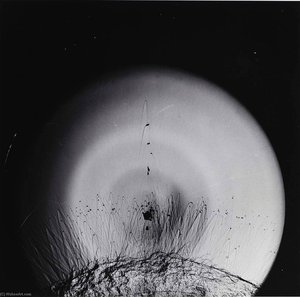
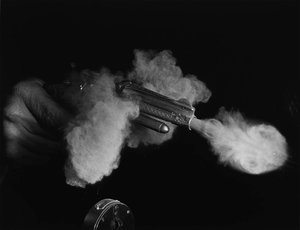
Edgerton was a renowned electrical engineer and inventor who revolutionized photography through his development of strobe lights. He wasn't solely an artist; he was a scientist pushing the boundaries of what could be captured visually. “Bullet through Jack of Hearts” is a direct result of this innovation. The photograph depicts a .32 caliber bullet piercing a playing card – specifically, the Jack of Hearts – suspended in mid-air. The incredible speed required to capture such an event necessitated Edgerton’s custom-built strobe system, allowing him to freeze motion imperceptible to the human eye. This wasn't simply about documenting an action; it was about revealing a hidden reality.
- Technique: High-speed photography utilizing multiple strobe lights precisely timed to illuminate the bullet's trajectory.
- Materials: Film (likely Kodachrome, given the era), specialized lighting equipment, and of course, a playing card and ammunition.
- Historical Context: The image emerged during the Cold War era, a period marked by anxieties surrounding violence and technological advancement. Edgerton's work often explored themes of motion and impact, reflecting a fascination with both scientific progress and its potential consequences.
Symbolism & Emotional Resonance
Beyond the technical brilliance, “Bullet through Jack of Hearts” carries significant symbolic weight. The Jack of Hearts, traditionally representing love, relationships, or emotions, is brutally disrupted by the bullet – a stark symbol of violence and destruction. The scattered fragments of paper visually represent the force of impact, emphasizing the vulnerability of even seemingly stable structures. The monochromatic palette amplifies the drama, stripping away distractions and focusing attention on the central event.
- Love & Loss: The Jack of Hearts represents affection and connection, shattered by a sudden act of violence.
- Fragility: The image highlights the precariousness of life and relationships in the face of unforeseen forces.
- Time & Eternity: Edgerton freezes a fleeting moment, transforming it into an eternal representation of impact and consequence.
A Timeless Masterpiece for Your Space
“Bullet through Jack of Hearts” is not merely a striking visual; it's a powerful commentary on the human condition. Its stark composition, dramatic lighting, and profound symbolism make it a compelling addition to any art collection or interior space. Whether displayed in a modern minimalist setting or a more traditional environment, this reproduction will undoubtedly spark conversation and inspire contemplation. The image’s enduring appeal lies in its ability to simultaneously fascinate with its scientific precision and resonate emotionally with viewers across generations.
Related Artworks

Artist Biography
Harold E Edgerton: Pioneer of High-Speed Photography and Sonic Exploration
Harold Eugene Edgerton (April 6, 1903 – January 4, 1990), affectionately known as “Papa Flash,” revolutionized scientific visualization and filmmaking with his groundbreaking innovations in strobe lighting and sonar technology. Born in Fremont, Nebraska, he possessed an innate curiosity about the natural world coupled with a brilliant aptitude for engineering—a combination that propelled him to become one of America’s foremost physicists and a celebrated artist whose images captivated audiences worldwide. His legacy extends beyond scientific breakthroughs; Edgerton fostered collaborations between art and science, demonstrating how creative exploration could illuminate fundamental truths about our universe.Early Life and Education
Edgerton's formative years were marked by intellectual stimulation within a family that valued education deeply. Growing up in Aurora, Nebraska, he absorbed the influence of his father, Frank Eugene Edgerton—a lawyer, journalist, and orator—who instilled in him a passion for communication and critical thinking. He excelled academically at Lincoln High School, earning a diploma with honors before embarking on his collegiate journey at the University of Nebraska–Lincoln where he earned a bachelor’s degree in electrical engineering in 1925 and became a member of Acacia fraternity. Continuing his studies at MIT, he pursued an SM (Master of Science) in Electrical Engineering in 1927, delving into the intricacies of synchronous motors—a foundational interest that would inform much of his subsequent research endeavors. He earned his ScD (Doctor of Science) degree from MIT in 1931, focusing on stroboscopic studies and cementing his position as a leading figure in experimental physics.The Strobe Revolution: Capturing Motion Like Never Before
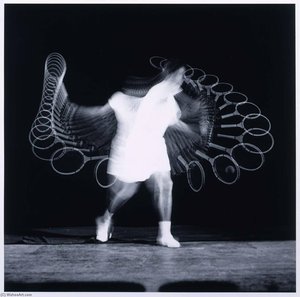
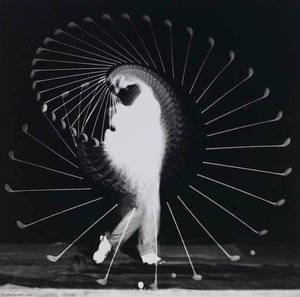
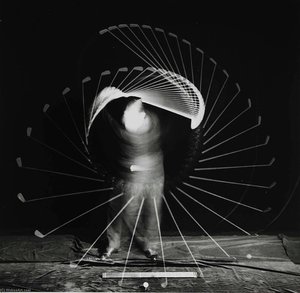
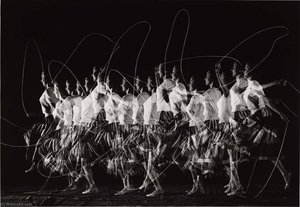
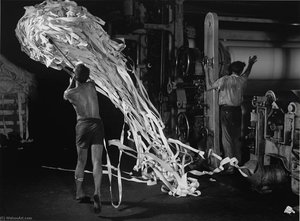
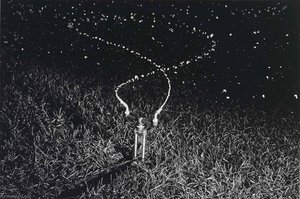
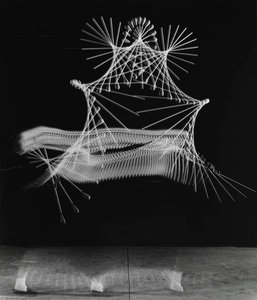
Edgerton’s most enduring contribution to science—and arguably art—was the transformation of the stroboscope from an obscure laboratory instrument into a ubiquitous tool for visualizing movement. Recognizing its potential beyond purely scientific applications, he tirelessly championed its use in filmmaking and visual arts. His meticulous experimentation with strobe lamps yielded remarkable results: capturing fleeting moments of action with unprecedented clarity – boxing matches, skipping ropes, and countless other dynamic scenes—revealing details invisible to the naked eye. He developed innovative techniques for manipulating light and creating stunning images that challenged conventional perceptions of reality. Edgerton’s pioneering work fundamentally altered how filmmakers approached storytelling, allowing them to convey movement in ways previously unimaginable.Sonar Exploration and Artistic Collaboration
Beyond his mastery of strobe lighting, Edgerton pursued ambitious projects in underwater acoustics—developing sonar technology for marine research and exploration. Collaborating closely with Jacques Cousteau, he spearheaded expeditions aimed at documenting the wonders of the ocean depths and furthering our understanding of marine ecosystems. His ingenuity extended beyond scientific instrumentation; he actively sought connections between artistic expression and scientific discovery. Notably, Edgerton’s fascination with sound inspired him to compose experimental music—a unique blend of classical and electronic styles—where he utilized sonification techniques to translate material structure into musical form. This endeavor exemplified his belief that art could illuminate scientific concepts and vice versa, resulting in a captivating fusion of disciplines.Iconic Images and Legacy
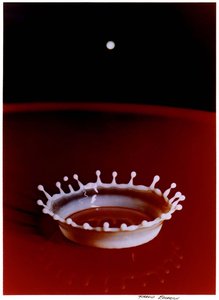
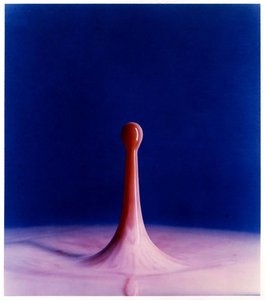
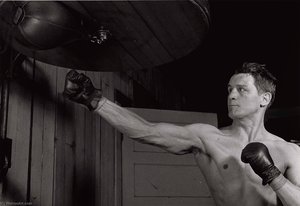
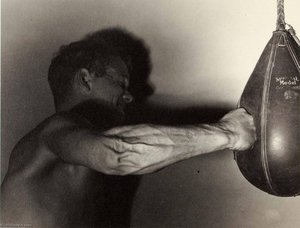
Harold Edgerton’s artistic output solidified his reputation as a visionary artist who seamlessly merged science and creativity. His masterpiece “Coronet,” depicting the explosive splash of milk—a feat of photographic artistry achieved through meticulous strobe timing—became an instant symbol of scientific innovation and aesthetic beauty. Similarly, "Boxer," a striking hyperrealistic photograph capturing the intense physicality of boxing, showcased Edgerton’s ability to convey emotion and dynamism with unparalleled precision. These images resonated deeply with audiences worldwide, establishing Edgerton as one of America's most celebrated photographers and cementing his place in art history. His unwavering dedication to scientific inquiry—coupled with his artistic spirit—left an indelible mark on both the scientific community and the broader cultural landscape. He died January 4, 1990, leaving behind a legacy of groundbreaking discoveries and inspiring collaborations that continue to inspire scientists and artists alike.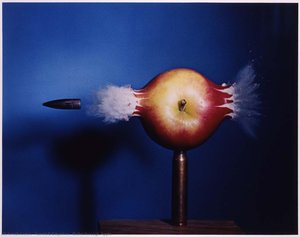
harold e edgerton
1903 - 1990
Quick Facts
- Artistic Movement Or Style: Hyperrealism
- Artists Or Movements Influenced By This Artist: ['Photography']
- Artists Who Influenced This Artist: ['Charles Stark Draper']
- Date Of Birth: April 6, 1903
- Date Of Death: January 4, 1990
- Full Name: Harold Eugene Edgerton
- Nationality: American
- Notable Artworks:
- Coronet
- Boxer
- Place Of Birth: Fremont, Nebraska
Related Articles

Dark Masterpieces: 10 Iconic Paintings Dominated by Black Tones |
Explore 10 iconic paintings dominated by black tones, from Rembrandt’s chiaroscuro to Goya's dark expressions. Discover the stories behind these masterpieces & find museum-quality art reproductions for your home at .

Monochrome Visions: Exploring the Aesthetic & Historical Significance of Black & White Photography
Explore the rich history & artistic power of black and white photography. From early techniques to iconic masters like Ansel Adams, discover why monochrome continues to captivate art lovers today. Expert insights for collectors.

Playful Masterpieces: Top 10 Artworks for a Joyful Home | ArtsDot
Find joy & inspiration! Explore 10 playful masterpieces by Monet, Matisse & more. Discover art history, vibrant colors & uplifting stories behind these iconic paintings. Museum-quality reproductions at ArtsDot.com – explore the full collection online!
Monochrome Masters: 10 Artworks That Define Color Intensity |
Explore 10 iconic monochrome artworks – from Yves Klein to Rothko – that masterfully showcase color intensity. Discover the stories behind these timeless paintings & find museum-quality reproductions for your home at .
Silent Narratives: Exploring the Enduring Appeal of Still Life Painting Across Centuries
Explore the rich history of still life painting with ArtsDot. Discover Dutch Masters, decode vanitas symbolism & learn about collecting timeless art. Expert insights and museum-quality reproductions.