 Preview
 Send
Send Share
Share
 Details

 Download
 Similars
 X-Ray
X-Ray Diaporama
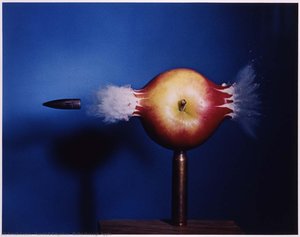
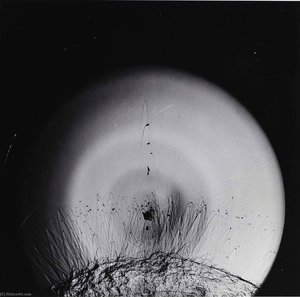
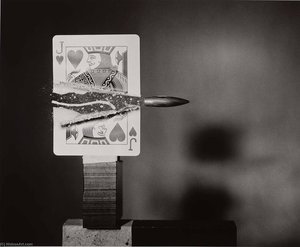
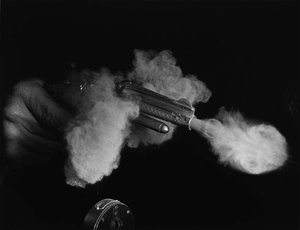
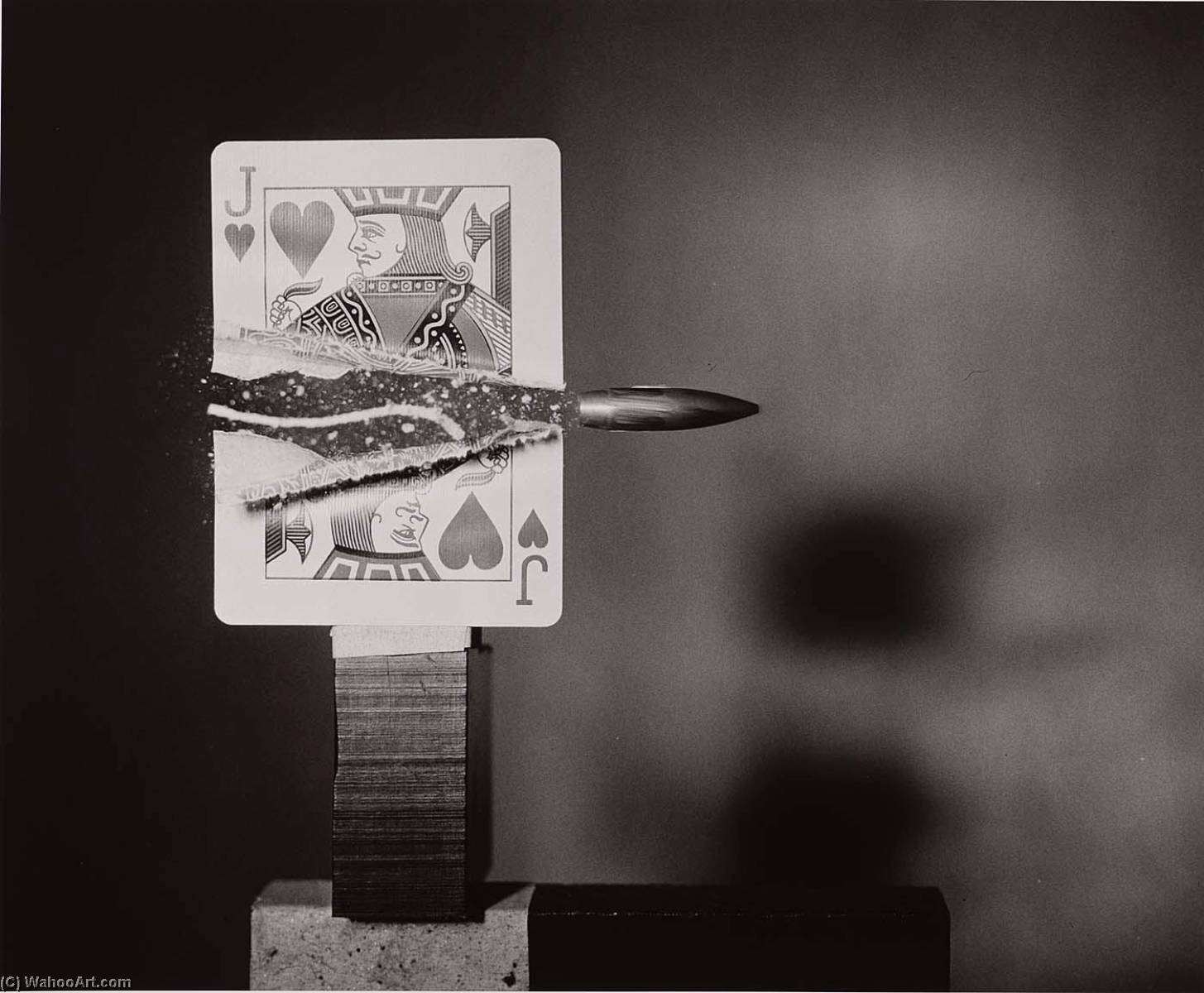
Bullet through Jack of Hearts
 Contemporary Realism
 1981
1981 51.0 x 61.0 cm
 Read More
Hand Made Oil Reproduction
Hand-painted oil on canvas in your size and frame, made to order by our artists. ( Buy Print Buy Image)




































Pick from our preset sizes that match the artwork's original proportions.

You may enter your own dimensions to fit a specific frame or space. If your selected size does not match the original image's proportions, we will either crop the artwork or extend the painting with additional hand-painted elements. A digital mockup will be sent for your approval before production begins.
Please note that the on-screen preview does not reflect the actual cropping or extension. Only the mockup will accurately show the final composition.
While custom sizes are available, we recommend selecting a dimension from the predefined list to preserve the original proportions.
After order, ArtsDot.com team will email client for instructions and provide a mockup preview
Worldwide Delivery () in 3/4 weeks instead of standard 5 weeks. (24 August). No compromise on quality.

Free Worldwide Express Shipping

High-Quality Linen Canvas

Full Shipping Insurance

Customs Tax Refund Guarantee

True Color Matching Guarantee

60-Day Return Policy (Defects Only)

100% Money-Back Guarantee

Bulk Discount Offer
 Glass option is only available in size under 110 CM

Bullet through Jack of Hearts
Reproduction Medium
Reproduction Size
-


Total Price
$ 288
Artwork Description
A Moment Frozen: Harold Edgerton's "Bullet through Jack of Hearts"
Harold Edgerton’s “Bullet through Jack of Hearts,” created in 1981, is far more than a photograph; it's a meticulously orchestrated exploration of time, force, and the fragility of existence. This iconic image, born from Edgerton’s pioneering work with high-speed photography, continues to captivate viewers with its stark beauty and profound symbolism.
The Science & Art of High-Speed Capture
Edgerton was a renowned electrical engineer and inventor who revolutionized photography through his development of strobe lights. He wasn't solely an artist; he was a scientist pushing the boundaries of what could be captured visually. “Bullet through Jack of Hearts” is a direct result of this innovation. The photograph depicts a .32 caliber bullet piercing a playing card – specifically, the Jack of Hearts – suspended in mid-air. The incredible speed required to capture such an event necessitated Edgerton’s custom-built strobe system, allowing him to freeze motion imperceptible to the human eye. This wasn't simply about documenting an action; it was about revealing a hidden reality.
- Technique: High-speed photography utilizing multiple strobe lights precisely timed to illuminate the bullet's trajectory.
- Materials: Film (likely Kodachrome, given the era), specialized lighting equipment, and of course, a playing card and ammunition.
- Historical Context: The image emerged during the Cold War era, a period marked by anxieties surrounding violence and technological advancement. Edgerton's work often explored themes of motion and impact, reflecting a fascination with both scientific progress and its potential consequences.
Symbolism & Emotional Resonance
Beyond the technical brilliance, “Bullet through Jack of Hearts” carries significant symbolic weight. The Jack of Hearts, traditionally representing love, relationships, or emotions, is brutally disrupted by the bullet – a stark symbol of violence and destruction. The scattered fragments of paper visually represent the force of impact, emphasizing the vulnerability of even seemingly stable structures. The monochromatic palette amplifies the drama, stripping away distractions and focusing attention on the central event.
- Love & Loss: The Jack of Hearts represents affection and connection, shattered by a sudden act of violence.
- Fragility: The image highlights the precariousness of life and relationships in the face of unforeseen forces.
- Time & Eternity: Edgerton freezes a fleeting moment, transforming it into an eternal representation of impact and consequence.
A Timeless Masterpiece for Your Space
“Bullet through Jack of Hearts” is not merely a striking visual; it's a powerful commentary on the human condition. Its stark composition, dramatic lighting, and profound symbolism make it a compelling addition to any art collection or interior space. Whether displayed in a modern minimalist setting or a more traditional environment, this reproduction will undoubtedly spark conversation and inspire contemplation. The image’s enduring appeal lies in its ability to simultaneously fascinate with its scientific precision and resonate emotionally with viewers across generations.
Related Artworks
Artist Biography
The Architect of Frozen Time: The Life and Legacy of Harold E. Edgerton
In the quiet intersection where rigorous scientific inquiry meets the profound beauty of visual art, few figures loom as large as Harold Eugene Edgerton. Affectionately remembered by many as “Papa Flash,” Edgerton was far more than a physicist or an engineer; he was a visionary who possessed the rare ability to peel back the veil of the invisible. Born in 1903 in Fremont, Nebraska, his journey began in a landscape of intellectual curiosity, shaped by a father whose mastery of language and oratory instilled in him a deep respect for communication. This early foundation would later manifest in his ability to communicate complex physical phenomena through the medium of light, turning the fleeting, imperceptible movements of our world into permanent, breathtaking icons of frozen motion.
Edgerton’s academic path was one of relentless pursuit and precision. After earning his bachelor’s degree in electrical engineering from the University of Nebraska–Lincoln in 1925, he moved toward the prestigious halls of the Massachusetts Institute of Technology (MIT). It was here, through his Master of Science and subsequent Doctor of Science degrees, that his fascination with synchronous motors and stroboscopic studies began to coalesce into a revolutionary methodology. He did not merely study light; he learned to command it. By refining the stroboscope from an obscure laboratory tool into a powerful instrument of illumination, he paved the way for a new era of photography—one where the camera could finally compete with the speed of thought and the velocity of nature.
The Alchemy of Light and Motion
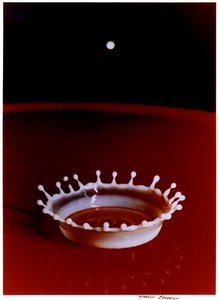
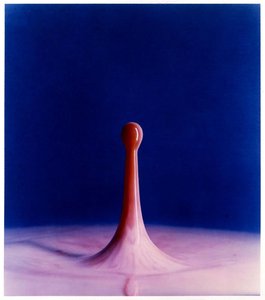
The true magic of Edgerton’s work lies in his mastery of high-speed photography, a technique that allowed him to capture what the human eye is biologically incapable of perceiving. Through his innovative use of strobe lighting, he transformed the chaotic energy of motion into structured, sculptural compositions. His lens did not just record reality; it reinterpreted it. In works such as "Coronet," created in 1957, we witness the sublime beauty of a single drop of milk colliding with a liquid surface, creating a delicate, crown-like shape that exists for only a fraction of a second. This piece remains one of the most significant achievements in photographic history, demonstrating how scientific precision can evoke deep emotional and aesthetic responses.
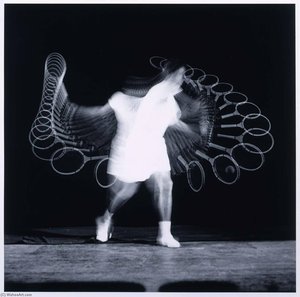
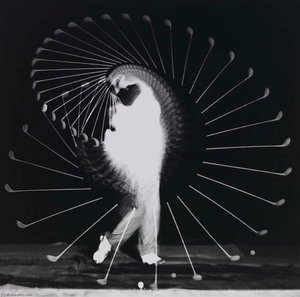
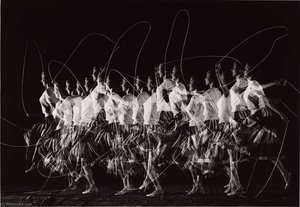
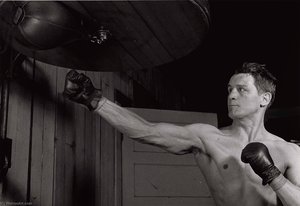
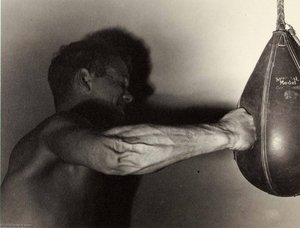
This ability to freeze time extended to the most dynamic of subjects. Whether it was the intense, muscular exertion captured in his "Boxer" series or the rhythmic, looping energy of "Moving Skip Rope," Edgerton’s images possess a hyper-realistic quality that feels both startlingly present and eternally still. His technical prowess allowed him to explore themes of:
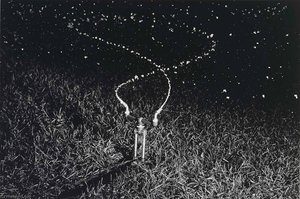
- The Fluidity of Nature: Capturing the intricate patterns of water splashes and droplets in works like "Water Sprinkler."
- Kinetic Energy: Revealing the hidden mechanics of physical movement, from sports to everyday gestures.
- Scientific Visualization: Using photography as a tool to document and explain complex physical processes through visual clarity.
A Lasting Impact on Science and Art
Beyond the frame of his photographs, Edgerton’s contributions to the world were vast and transformative. His research into sonar technology and deep-sea photography revolutionized our understanding of the ocean, even leading to collaborations with legendary explorers like Jacques Cousteau. His equipment played a pivotal role in searching for shipwrecks and exploring the mysteries of the deep, proving that his scientific mind was always tethered to a sense of wonder about the unknown. He bridged the gap between the laboratory and the gallery, demonstrating that the tools used to measure the universe are the very same tools used to celebrate its beauty.
As we reflect on the life of Harold E. Edgerton, we see a legacy defined by the illumination of the dark and the capture of the ephemeral. He taught us that there is an entire universe of motion occurring just beyond our perception, waiting for the right flash of light to bring it into view. His work remains a testament to the idea that science and art are not opposing forces, but rather two different languages describing the same magnificent reality. Through his eyes, the world was never just moving; it was dancing in a series of perfect, unforgettable moments.
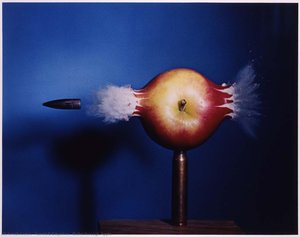
harold e edgerton
1903 - 1990
Quick Facts
- Artistic Movement Or Style: Hyperrealism
- Artists Or Movements Influenced By This Artist: ['Photography']
- Artists Who Influenced This Artist: ['Charles Stark Draper']
- Date Of Birth: April 6, 1903
- Date Of Death: January 4, 1990
- Full Name: Harold Eugene Edgerton
- Nationality: American
- Notable Artworks:
- Coronet
- Boxer
- Place Of Birth: Fremont, Nebraska
Related Articles

Dark Masterpieces: 10 Iconic Paintings Dominated by Black Tones |
Explore 10 iconic paintings dominated by black tones, from Rembrandt’s chiaroscuro to Goya's dark expressions. Discover the stories behind these masterpieces & find museum-quality art reproductions for your home at .

Monochrome Visions: Exploring the Aesthetic & Historical Significance of Black & White Photography
Explore the rich history & artistic power of black and white photography. From early techniques to iconic masters like Ansel Adams, discover why monochrome continues to captivate art lovers today. Expert insights for collectors.

Playful Masterpieces: Top 10 Artworks for a Joyful Home | ArtsDot
Find joy & inspiration! Explore 10 playful masterpieces by Monet, Matisse & more. Discover art history, vibrant colors & uplifting stories behind these iconic paintings. Museum-quality reproductions at ArtsDot.com – explore the full collection online!
Silent Narratives: Exploring the Enduring Appeal of Still Life Painting Across Centuries
Explore the rich history of still life painting with ArtsDot. Discover Dutch Masters, decode vanitas symbolism & learn about collecting timeless art. Expert insights and museum-quality reproductions.
Lamp Black & Masterpieces: 10 Paintings That Define Shadow & Light |
Delve into the captivating world of 'Lamp Black' tones with 10 iconic paintings by masters like Rembrandt & Caravaggio. Explore Baroque chiaroscuro, dramatic lighting & shadow in art history. Find museum-quality reproductions at