

 Preview
 Send
Send Share
Share
 Details

 Download
 Similars
 X-Ray
X-Ray Diaporama
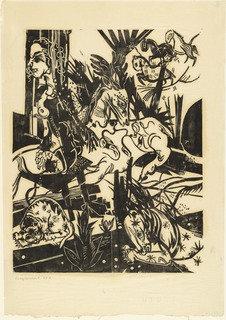
Seated Girl with Stag (Sitzendes Mädchen mit Hirsch)
 Expressionism
 1916
1916 43.0 x 30.0 cm
 Read More
Purchase a high-resolution, enhanced digital image, far superior to the online preview.
Each file is meticulously prepared by our in-house specialists using advanced tools and expert manual retouching. We ensure every image has exceptional clarity, precise color accuracy, and fine detail.
The final file is delivered via email within 72 hours, optimized for immediate use in professional, editorial, and print environments. This is the same quality trusted by top-tier design studios, publishers, and galleries.
Digital Image
Download a high-resolution file for personal display, printing, and creative projects. ( Buy Print Buy Hand Made Painting)
Included in Every Digital Image Order
Expert Digital Delivery, Guaranteed
When you choose ArtsDot.com, you're not just getting an image - you're receiving a professionally enhanced digital artwork, crafted with precision and backed by a satisfaction guarantee. Here's everything that comes with your order, automatically:

Fast Email Delivery
Your high-resolution digital image file will be emailed to you within 72 hours of ordering - ready for immediate use.

AI-Enhanced Digital File
Your artwork is professionally optimized using advanced AI tools and manual editing, ensuring maximum detail, clarity, and color accuracy.

Free Lifetime Re-Delivery
Accidentally deleted or lost your file? No worries - we'll resend it to you anytime, free of charge.

No Import Fees - Ever
Enjoy your artwork instantly with zero customs, duties, or delivery fees - digital downloads are always tax-free.

Color Accuracy Guarantee
We ensure your digital image reflects the original colors as closely as possible using professional tools and color management.

60-Day Satisfaction Guarantee
If you're not satisfied with your digital image, we'll revise it or refund 100% within 60 days - no questions asked.

100% Money-Back Guarantee
Not satisfied? Get a full refund within 60 days of receiving your digital file - no questions asked.

Bulk Order Discounts
Buy 3 images, save 10% - Buy 5, save 15% - Buy 10+, save 20%. Great for creative projects, galleries, and agencies.
Related Artworks
Artist Biography
Heinrich Campendonk: Weaver of Dreams and German Expressionism
Heinrich Mathias Ernst Campendonk, a name often whispered in the circles of early 20th-century art, was more than just a painter; he was a conjurer of visions, a translator of myth and emotion onto canvas and paper. Born in Krefeld, Germany, in 1889, into a family connected to the textile industry – a world of intricate patterns and vibrant hues – Campendonk’s artistic journey began not with formal training but with an apprenticeship, a grounding in craft that would later inform his deeply symbolic approach. His early years were shaped by Johan Thorn Prikker at the Handwerker- und Kunstgewerbeschule in Krefeld, a school renowned for its progressive philosophy and emphasis on integrating art into everyday life – a crucial influence that fostered Campendonk’s belief in art's capacity to communicate beyond mere representation.Early Influences and the Blaue Reiter
Campendonk’s artistic trajectory truly ignited during his time with the *Blaue Reiter* (Blue Rider) group, a collective of artists who sought to break free from traditional academic constraints and explore the expressive potential of color and form. This period, beginning in 1911, proved pivotal. He found himself immersed in a vibrant intellectual environment alongside figures like Wassily Kandinsky, Franz Marc, August Macke, and Helmuth Macke – artists united by a shared desire to capture the intangible, the mystical, and the deeply felt emotions of the modern world. The *Blaue Reiter*’s emphasis on symbolism, spirituality, and the connection between art and nature profoundly impacted Campendonk's work, leading him to incorporate elements of folklore, mythology, and dream imagery into his compositions. His early works began to exhibit a distinctive lyrical quality, often depicting fantastical creatures inhabiting lush landscapes—a foreshadowing of the rich symbolic language that would characterize much of his later output.The Penzberg Years: A Synthesis of Tradition and Modernity
From 1913 until 1922, Campendonk retreated to the rural community of Penzberg in Bavaria, a move that proved transformative for his artistic development. This period witnessed a remarkable synthesis of traditional German art – particularly Bavarian folk art with its rich ornamentation and storytelling traditions – and the burgeoning modernist ideas he had encountered within the *Blaue Reiter*. He spent time observing the lives of the local miners, documenting their routines and experiences in works like “Roter Akt mit Tieren” (Red Scene with Animals), a powerful depiction of rural life imbued with symbolic meaning. During this time, Campendonk also began to experiment extensively with woodcuts, producing a series of evocative prints that explored themes of nature, mythology, and the human condition. These prints, characterized by their bold lines, striking contrasts, and intricate details, demonstrated his mastery of printmaking techniques and further solidified his artistic vision.Amsterdam and Beyond: A Shift in Focus
Following the upheaval of World War I and the rise of the Nazi regime, Campendonk sought refuge in the Netherlands, eventually becoming a naturalized Dutch citizen. In Amsterdam, he continued to work as an artist and teacher, focusing on stained glass design and decorative murals. While his style evolved during this period, retaining elements of his earlier symbolic language, there was a shift towards more geometric forms and a greater emphasis on color theory. Despite facing persecution under the Nazi regime – his works were confiscated and he was barred from exhibiting – Campendonk remained committed to his artistic principles, producing a significant body of work that reflects both the challenges he faced and the enduring power of his vision.Legacy and Significance
Heinrich Campendonk’s legacy extends far beyond his individual works; he represents a crucial bridge between German Expressionism and later developments in abstract art. His ability to seamlessly blend traditional motifs with modern techniques, coupled with his profound understanding of symbolism and color, established him as a significant figure in the early 20th-century art world. His influence can be seen in the works of subsequent generations of artists who sought to explore the expressive potential of form and color. Today, Campendonk’s paintings and prints are held in major museums around the world, testament to the enduring power and relevance of his artistic vision. His work continues to resonate with viewers seeking a deeper understanding of the human experience—a reminder that art can be both a mirror reflecting our inner worlds and a window opening onto realms beyond our immediate perception.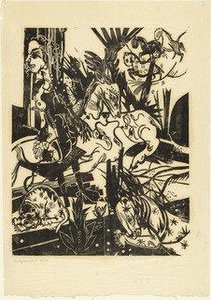
heinrich campendonk
1889 - 1957
Quick Facts
- Artistic Movement Or Style: Der Blaue Reiter
- Artists Or Movements Influenced By This Artist:
- Paul Klee
- Johan Thorn Prikker
- Artists Who Influenced This Artist:
- Franz Marc
- August Macke
- Date Of Birth: November 3, 1889
- Date Of Death: May 9, 1957
- Full Name: Heinrich Mathias Ernst Campendonk
- Nationality: German/Dutch
- Notable Artworks:
- Seated Girl with Stag
- Sturm-Künstler
- Penzberg Pictures
- Place Of Birth: Krefeld, Germany

