 Preview
 Send
Send Share
Share
 Details

 Download
 Similars
 X-Ray
X-Ray Diaporama
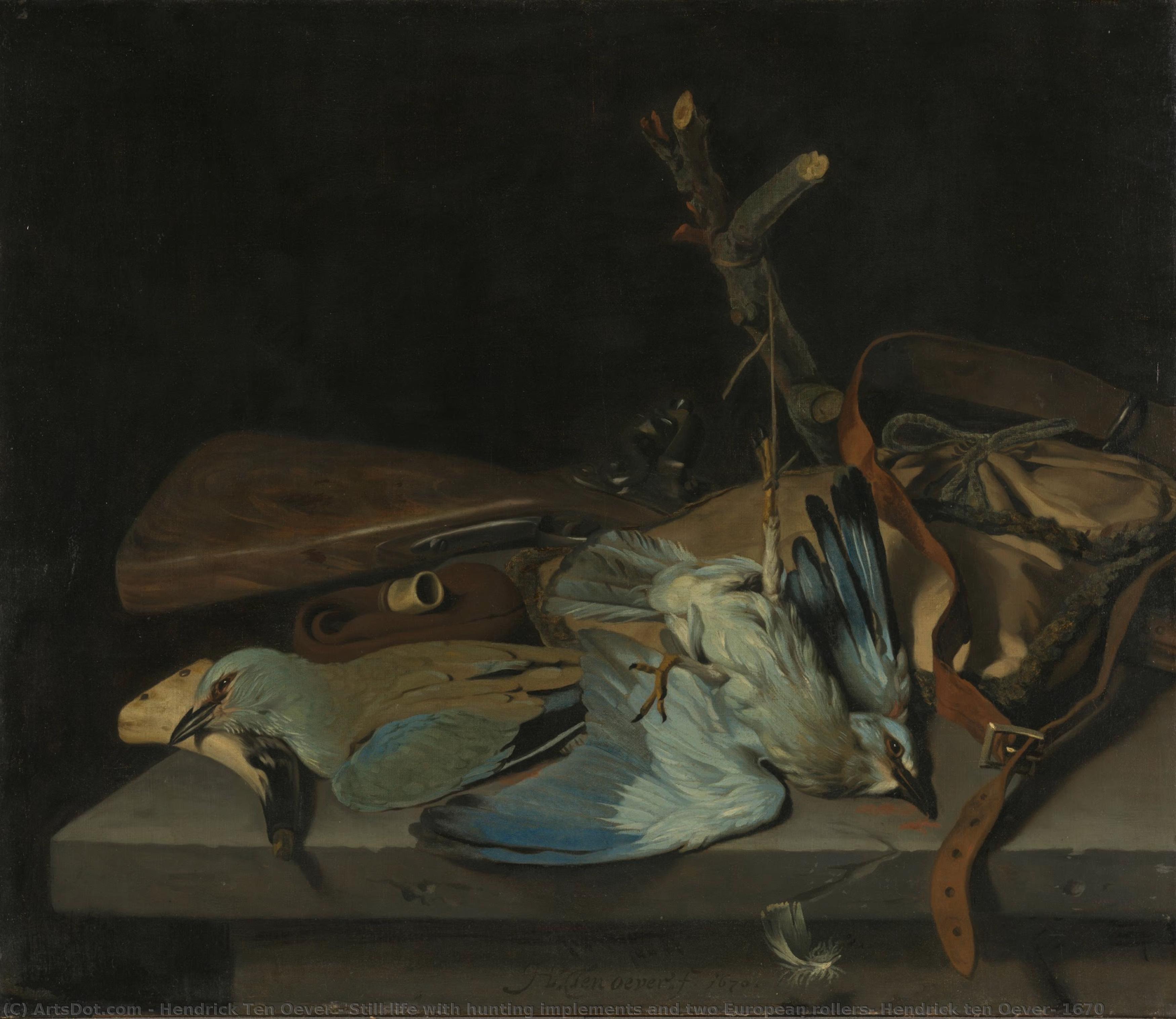
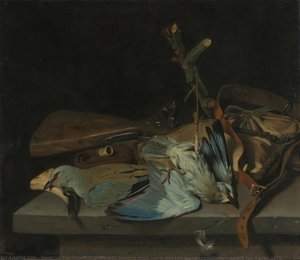
Still life with hunting implements and two European rollers, Hendrick ten Oever, 1670
 1670
1670 61.0 x 71.0 cm
 Read More
Giclée / Art Print
Museum-quality giclée or canvas print with fast production and flexible finish options. ( Buy Hand Made Painting Buy Image)




































Pick from our preset sizes that match the artwork's original proportions.

You may enter your own dimensions to fit a specific frame or space. If your selected size does not match the original image's proportions, we will either crop the artwork or extend the image with a mirrored or solid-fill edge. A digital mockup will be sent for your approval before production begins.
Please note that the on-screen preview does not reflect the actual cropping or extension. Only the mockup will accurately show the final composition.
While custom sizes are available, we recommend selecting a dimension from the predefined list to preserve the original proportions.
Worldwide Delivery () in 2 weeks instead of standard 4/5 weeks. (2 September)

Free Worldwide Express Shipping

High-Quality Linen Canvas

Full Shipping Insurance

Customs Tax Refund Guarantee

True Color Matching Guarantee

60-Day Return Policy (Defects Only)

100% Money-Back Guarantee

Bulk Discount Offer
 Glass option is only available in size under 110 CM

Still life with hunting implements and two European rollers, Hendrick ten Oever, 1670
Giclée / Art Print
Reproduction Size
-


Total Price
$ 63
Related Artworks





Artist Biography
The Luminous Legacy of Hendrick ten Oever
In the golden era of Dutch painting, few artists captured the quiet intimacy of life and the sprawling majesty of the cityscape with as much grace as Hendrick ten Oever. Born in 1639 in the historic city of Zwolle, Ten Oever emerged from a lineage of talent, the son of David ten Oever and Marijke Molkenbuer. His early years were steeped in the artistic traditions of the Netherlands, a period marked by an unparalleled obsession with light, texture, and the profound beauty found in the mundane. As a young man, his brush was guided by the esteemed portraitist Eva van Marle, whose influence instilled in him a lifelong devotion to capturing the subtle nuances of human character and the delicate interplay of shadow and light.
The trajectory of Ten Oever’s career took a transformative turn in 1659 when he migrated to the bustling artistic hub of Amsterdam. This relocation placed him at the heart of a creative revolution, where he sought further refinement under the tutelage of his cousin, Cornelis de Bie, and the talented brothers Johan Heinrich and Theodor Roos. It was during this period that Ten Overs’s style began to coalesce into what scholars now recognize as a prominent branch of the Pieter de Hooch school. His work became a masterful dialogue between the domestic and the expansive, blending the quiet, sun-drenched interiors of genre painting with the atmospheric grandeur of landscapes and cityscapes.
Mastery of Light and Genre
To observe a Ten Oever canvas is to witness a masterclass in chiaroscuro. He possessed a rare ability to manipulate light, allowing it to diffuse through windows or settle softly upon still-life arrangements, creating a sense of depth that pulls the viewer into his worlds. His technique was characterized by a precise yet expressive brushwork that could render the rugged texture of hunting gear or the delicate skin of a bird with equal conviction. This versatility allowed him to move seamlessly between different modes of painting:
- Genre Painting: Capturing the psychological depth and everyday rhythms of Dutch life, often imbued with a sense of quiet contemplation.
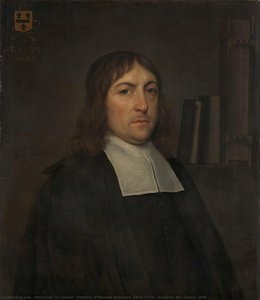
- Portraiture: Creating dignified representations of his contemporaries, such as the Portrait of Barend Hakvoort, where he utilized books and scholarly settings to convey status and intellect.
- Still Life: Demonstrating an incredible eye for detail in works like Still life with Hunting Implements and Two European Rollers, where every object tells a story of the natural world.
- Cityscapes and Landscapes: Documenting the architectural splendor and urban vitality of the Netherlands, notably through his evocative views of Amsterdam’s canals.
A Lasting Impression on Dutch Art
Beyond the technical brilliance of his compositions, Hendrick ten Oever’s significance lies in his ability to act as a bridge between the intimate domesticity of the early Golden Age and the more expansive, atmospheric landscapes that would follow. His life, which saw him return to Zwolle to marry Geertruidt van der Horst and raise a family, remained deeply rooted in the very landscapes he painted. He did not merely observe the world; he translated its fleeting moments into permanent, luminous legacies.
Though the centuries have passed since his death in 1716, the works of Ten Oever continue to resonate with modern audiences. His paintings serve as windows into a vanished era, offering a profound sense of peace and a meticulous celebration of the Dutch spirit. Through his mastery of light and his devotion to the truth of his subjects, he remains an indispensable figure in the pantheon of the great Dutch masters, reminding us that there is extraordinary beauty to be found in the most ordinary of scenes.
Hendrick ten Oever
1639 - 1716 , Netherlands
Quick Facts
- Artistic Movement Or Style: Pieter de Hooch school
- Artists Or Movements Influenced By This Artist: ['Pieter de Hooch']
- Artists Who Influenced This Artist:
- Eva van Marle
- Cornelis de Bie
- Date Of Birth: 1639
- Date Of Death: 1716
- Full Name: Hendrick ten Oever
- Nationality: Dutch
- Notable Artworks:
- Portrait of Barend Hakvoort
- Still life with hunting implements
- Place Of Birth: Zwolle, Netherlands