 Send
Send Share
Share
 Details

 Download
 Similars
 Diaporama
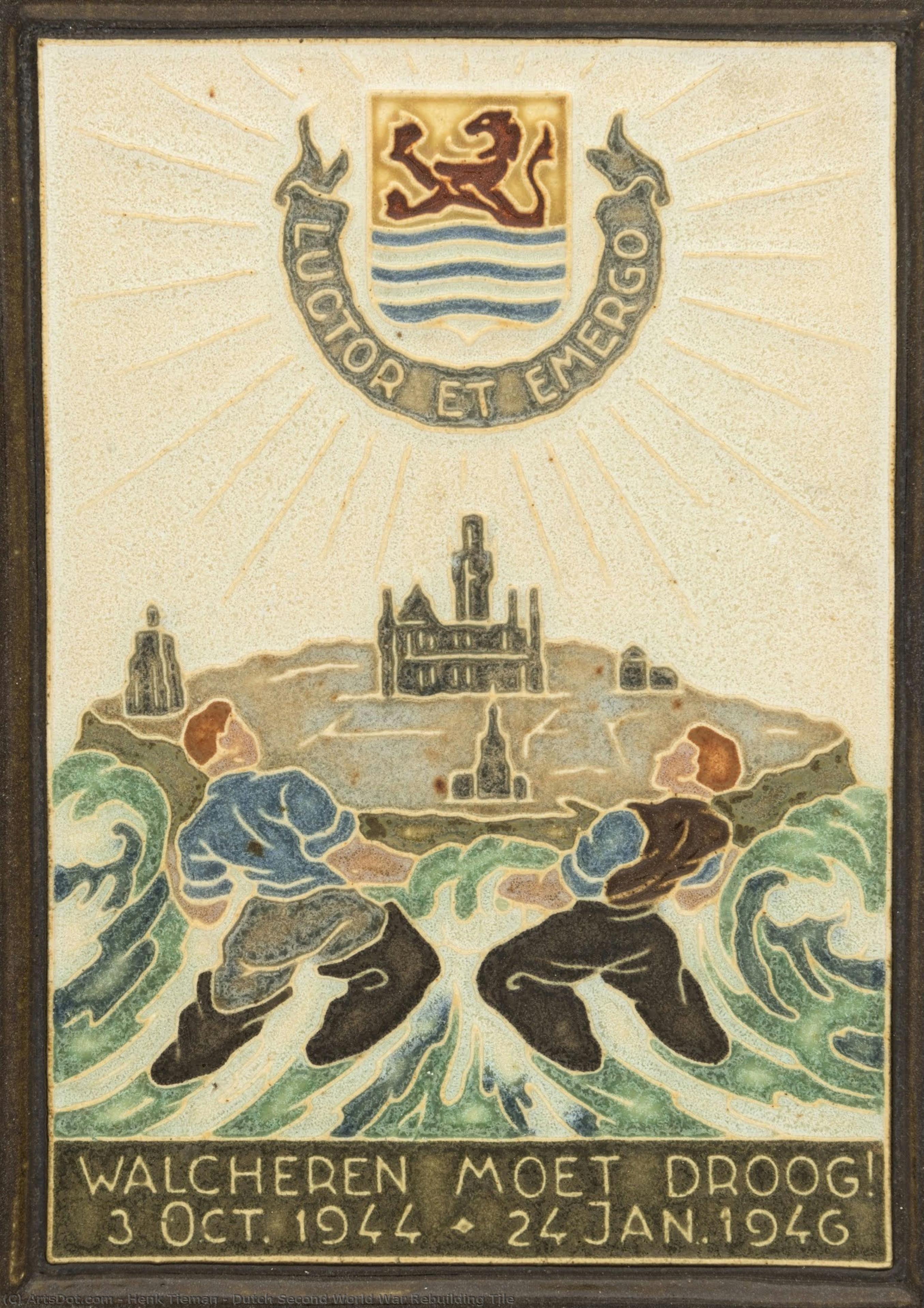
Dutch Second World War Rebuilding Tile
 Ceramic
- Sculpture
 1946
1946- Modern
 19.0 x 14.0 cm
 University of Pretoria Museums
 Read More
Hand Made Oil Reproduction
Hand-painted oil on canvas in your size and frame, made to order by our artists. ( Buy Print Buy Image)




































Pick from our preset sizes that match the artwork's original proportions.

You may enter your own dimensions to fit a specific frame or space. If your selected size does not match the original image's proportions, we will either crop the artwork or extend the painting with additional hand-painted elements. A digital mockup will be sent for your approval before production begins.
Please note that the on-screen preview does not reflect the actual cropping or extension. Only the mockup will accurately show the final composition.
While custom sizes are available, we recommend selecting a dimension from the predefined list to preserve the original proportions.
After order, ArtsDot.com team will email client for instructions and provide a mockup preview
Worldwide Delivery () in 3/4 weeks instead of standard 5 weeks. (17 August). No compromise on quality.

Free Worldwide Express Shipping

High-Quality Linen Canvas

Full Shipping Insurance

Customs Tax Refund Guarantee

True Color Matching Guarantee

60-Day Return Policy (Defects Only)

100% Money-Back Guarantee

Bulk Discount Offer
 Glass option is only available in size under 110 CM

Dutch Second World War Rebuilding Tile
Reproduction Medium
Reproduction Size
-


Total Price
$ 263
Artwork Description
Related Artworks
![Wreath Of Laurel, Palm, And Juniper With A Scroll Inscribed Virtutem Forma Decorat [reverse] — Leonardo Da Vinci, Renaissance](/media/artworks/images/thumbnails/18/50/18509af08154438585390b88707e9b09.jpg)
Artist Biography
A Legacy Etched in Ceramic: The Story of Henk Tieman
Henk Tieman, a Dutch artist whose name may not be widely celebrated but whose work speaks volumes about resilience and remembrance, emerged from the shadows of World War II to create powerfully evocative ceramic tiles. Born in 1921, his life unfolded against a backdrop of immense upheaval and subsequent rebuilding, experiences that profoundly shaped his artistic vision. While biographical details remain scarce—a testament perhaps to the humble nature of the artist himself—the impact of his most recognized work, the ‘Dutch WWII Rebuilding Tiles,’ is undeniable. These are not merely decorative objects; they are poignant historical documents rendered in clay, offering a unique perspective on a nation’s recovery and the often-unsung contributions of its people.Wartime Echoes and Artistic Beginnings
The Netherlands during World War II endured brutal occupation and widespread devastation. It was a period that left an indelible mark on the collective psyche, and for artists like Tieman, it became both a source of trauma and inspiration. The precise details of Tieman’s early life and artistic training remain elusive; however, his choice of medium—ceramic—suggests a connection to traditional Dutch craftsmanship. Ceramic production had deep roots in the Netherlands, particularly in regions like Delft, renowned for its iconic blue-and-white pottery. It is plausible that Tieman drew upon this heritage, adapting it to express the urgent realities of his time. The tiles themselves were created in 1946, immediately following the liberation, indicating a deliberate and timely response to the war’s conclusion. This wasn't art born from detached observation but from lived experience—a visceral need to commemorate and honor those who had suffered and rebuilt.The ‘Dutch WWII Rebuilding Tiles’: A Symbol of Collective Effort
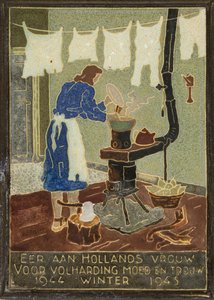
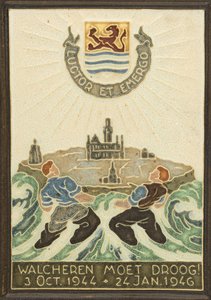
Tieman is best known for a series of ceramic tiles commissioned to depict the arduous process of rebuilding the Netherlands after the war. These weren’t grand monuments or sweeping landscapes, but intimate scenes focusing on the everyday heroes: women clearing rubble, families returning to their homes, and communities working together to restore infrastructure. The tiles are remarkable for their realism—they don't glorify war, nor do they shy away from its harsh consequences. Instead, they present a grounded portrayal of human endurance and collective effort. The ‘Dutch WWII Tile honoring women’, in particular, stands out as a powerful tribute to the often-overlooked contributions of women during wartime and reconstruction. The tiles were intended not for museums or galleries but for inclusion in buildings being rebuilt—a deliberate act of embedding remembrance into the fabric of daily life.Style and Influences
Pinpointing Tieman’s artistic style proves challenging, as his known body of work is relatively limited. However, a sense of social realism permeates his tiles—a focus on depicting ordinary people and their struggles with honesty and empathy. While not overtly aligned with any specific art movement, one can detect echoes of post-war European art that sought to grapple with the trauma of conflict and the need for social renewal. The simplicity of form and directness of expression suggest a rejection of elaborate ornamentation in favor of conveying raw emotion and historical truth. His work shares affinities with documentary photography and neorealist cinema—art forms that prioritized authenticity over aesthetic refinement.Historical Significance and Enduring Legacy
Henk Tieman’s legacy lies not in prolific output but in the profound impact of his ‘Dutch WWII Rebuilding Tiles.’ These tiles serve as a powerful reminder of the human cost of war and the importance of collective memory. They offer a unique counterpoint to more conventional depictions of wartime heroism, focusing instead on the quiet resilience of ordinary citizens. Today, these tiles are increasingly recognized for their historical significance, appearing in auctions and private collections. While Tieman himself remained largely out of the public eye, his work continues to resonate with audiences, offering a poignant glimpse into a pivotal moment in Dutch history—a testament to the enduring power of art to bear witness and inspire hope. His tiles are not just artifacts; they are fragments of a nation’s soul, etched in ceramic for generations to come.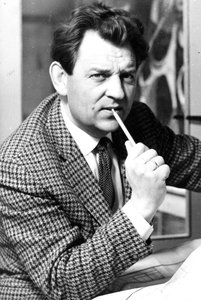
henk tieman
Netherlands
Quick Facts
- Date Of Death: Living
- Full Name: Henk Tieman
- Nationality: Dutch
- Notable Artworks: ['Dutch WWII Tile honoring women']
- Place Of Birth: Netherlands
Related Articles

John Constable's Masterpieces: Explore 25 Iconic Landscapes for Your Home
Journey through John Constable's 25 most celebrated landscapes. Explore Romanticism, Dedham Vale & his masterful use of light in iconic paintings like 'Hay Wain'. Find museum-quality art reproductions and elevate your home decor on ArtsDot.com.
Reclaiming the Canvas: A Journey Through Female Artists' Historical Rise & Contemporary Impact
Explore the rich history & vibrant present of female artists with . Discover iconic works, contemporary voices, & expert art consultation for collectors & enthusiasts.

Reclaiming Ephemeral Moments: AI-Driven Impressionist Transformation for Enduring Emotional Resonance
Transform your cherished photos into stunning Impressionist masterpieces with ArtsDot's AI-powered service. Hand-painted oil reproductions & custom portraits crafted by skilled artists. Preserve memories with enduring emotional resonance – start creating today!

Clarkson Frederick Stanfield: Navigating Romantic Visions of Sea, Land & British Imagination
Explore the dramatic seascapes & landscapes of Clarkson Frederick Stanfield (1793-1867). Discover his life, art, and lasting influence on British Romanticism. Acquire stunning reproductions at ArtsDot.
Dame Laura Knight: Reclaiming the Female Gaze in Modern British Art
Explore the life & work of Dame Laura Knight, a pioneering British artist who challenged conventions with her vibrant depictions of theatre, ballet, and wartime scenes. Discover her feminist legacy & artistic innovations.