 Preview
 Send
Send Share
Share
 Details

 Download
 Similars
 X-Ray
X-Ray Diaporama
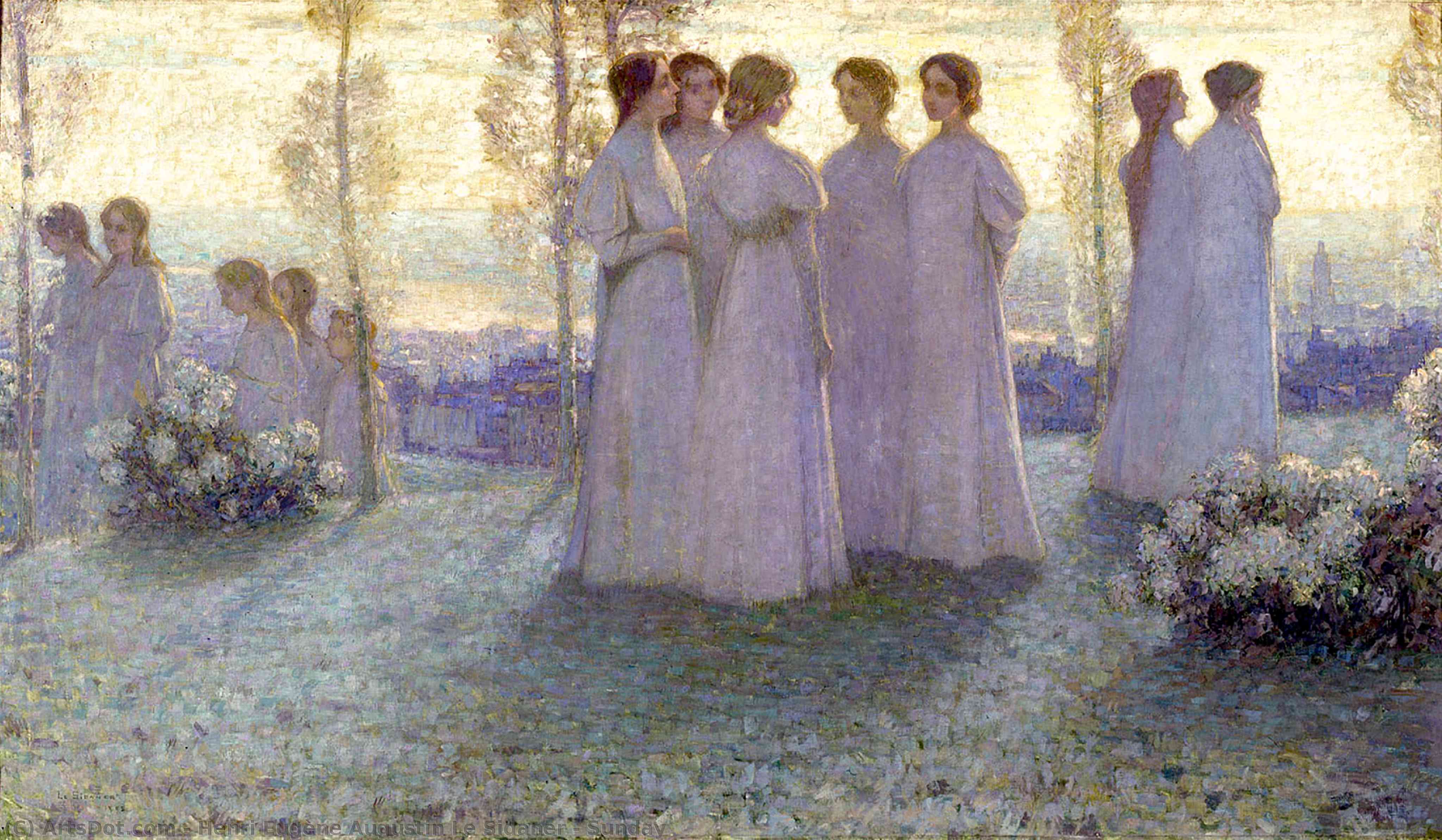
Sunday
 Oil On Canvas
- WallArt
- Impressionism
 1898
1898 113.0 x 192.0 cm
 Musee de la Chartreuse
 Read More
Hand Made Oil Reproduction
Hand-painted oil on canvas in your size and frame, made to order by our artists. ( Buy Print Buy Image)




P118B $10

P118H $10

P118W $10

P438Z $10

P508JH $12

P508YH $12

P805H $10

P805Z $10

P919BZ $10

P919G $10

P919XJ $10

P959ZH $10

P968JZ $12

W106C $8

W218G $10

W218JH $8

W218Y $10

W307PJ $10

W316G $10

W316PJ $8

W316Y $10

W398PJ $8

W4111J $10

W500HY $15

W500JH $15

W692G $12

W849H $8

W940BG $15

W953PJ $8




Pick from our preset sizes that match the artwork's original proportions.

You may enter your own dimensions to fit a specific frame or space. If your selected size does not match the original image's proportions, we will either crop the artwork or extend the painting with additional hand-painted elements. A digital mockup will be sent for your approval before production begins.
Please note that the on-screen preview does not reflect the actual cropping or extension. Only the mockup will accurately show the final composition.
While custom sizes are available, we recommend selecting a dimension from the predefined list to preserve the original proportions.
After order, ArtsDot.com team will email client for instructions and provide a mockup preview
Worldwide Delivery () in 3/4 weeks instead of standard 5 weeks. (17 August). No compromise on quality.

Free Worldwide Express Shipping

High-Quality Linen Canvas

Full Shipping Insurance

Customs Tax Refund Guarantee

True Color Matching Guarantee

60-Day Return Policy (Defects Only)

100% Money-Back Guarantee

Bulk Discount Offer
 Glass option is only available in size under 110 CM

Sunday
Reproduction Medium
Reproduction Size
-


Total Price
$ 413
Artwork Description
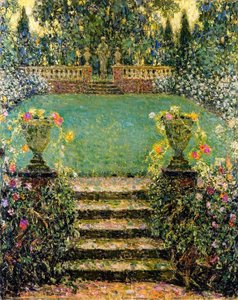
A Moment of Tranquility: Henri Le Sidaner's "Sunday"
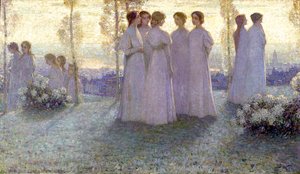
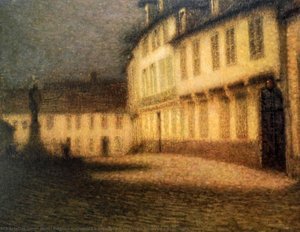
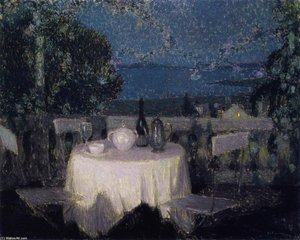
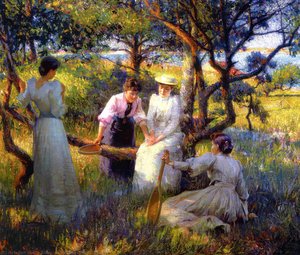
Henri Le Sidaner’s “Sunday,” painted in 1898, is more than just a depiction of women gathered in a park; it’s an invitation to pause and absorb the quiet beauty of a fleeting moment. The canvas breathes with a soft, diffused light that suggests either dawn or dusk, bathing the scene in an ethereal glow. This isn't a bustling social gathering captured mid-conversation, but rather a tableau of contemplative stillness, where figures seem suspended between worlds – perhaps reflecting on the week past or anticipating the one to come. The overall impression is undeniably Impressionistic, characterized by loose brushstrokes and a focus on capturing the ephemeral qualities of light and color, moving beyond strict realism to evoke an emotional response in the viewer.The Essence of Intimism and Light
Le Sidaner was a master of what’s known as “Intimism,” a late 19th-century movement that emphasized intimate scenes and quiet domesticity. Unlike some Impressionists who sought grand landscapes or vibrant cityscapes, Le Sidaner found beauty in the understated – in the gentle play of light on fabric, the subtle shifts in color across a park’s foliage, and the unspoken connections between people. His technique is particularly noteworthy; he employed thin washes of oil paint, layering them meticulously to build up both color and form. This process created a slightly grainy texture, enhancing the sense of atmosphere and lending an almost dreamlike quality to the scene. The horizontal lines dominating the landscape—the ground, the distant trees—create a foundation of stability, while vertical elements in the figures and foliage provide a gentle counterpoint, guiding the eye through the composition. The artist’s deliberate use of pale pinks, whites, and creams contributes significantly to the serene and delicate mood, avoiding harsh contrasts and instead opting for harmonious blends that soothe the senses.A Glimpse into Belle Époque Society
Painted during the Belle Époque—a period often characterized by optimism, peace, and artistic innovation—"Sunday" offers a glimpse into the leisure activities of upper-class women in late 19th-century France. While not overtly narrative, the scene suggests a moment of respite from societal obligations, a chance for quiet reflection amidst nature's beauty. The setting itself – a park-like space with carefully manicured greenery—speaks to the era’s appreciation for cultivated landscapes and refined aesthetics. Le Sidaner wasn't interested in documenting specific events; rather, he aimed to capture a feeling, an atmosphere of tranquility that resonated with the prevailing mood of the time while also hinting at a deeper sense of introspection.Symbolism and Emotional Resonance
Beyond its aesthetic appeal, "Sunday" carries subtle symbolic weight. The soft light could be interpreted as representing hope or spiritual renewal, aligning with the day's traditional association with rest and reflection. The gathering of women suggests themes of community, connection, and shared experience. The overall feeling is one of peaceful contemplation—a moment suspended in time, inviting viewers to shed their own burdens and embrace a sense of calm. Le Sidaner’s genius lies in his ability to evoke such profound emotions through seemingly simple imagery, creating a work that continues to resonate with audiences today. The painting isn't just about what is seen; it's about the feeling it evokes—a quiet longing for beauty, peace, and connection in an increasingly complex world.Related Artworks

Artist Biography
Early Life and Background
- Name: Henri Eugène Augustin Le Sidaner
- Other Names: Henri Eugene Augustin le Sidaner
- Born: August 7, 1862, Port Louis, Mauritius
- Died: July 14, 1939
- Le Sidaner was born in Port Louis, Mauritius, to Jean Marie Le Sidaner and Amélie Henrietta Robberechts. His father worked as a ship inspector for Lloyd's. The family returned to France in 1872, settling in Dunkerque.
- He displayed an early interest in painting and received support from his parents. He attended the Collège et Lycée Notre Dame des Dunes in Dunkerque.
- A scholarship from the city of Dunkerque enabled him to move to Paris and study at the prestigious École nationale supérieure des beaux-arts.
Artistic Training and Influences
- At the École des Beaux-Arts, Le Sidaner studied under Alexandre Cabanel, a prominent figure in Belle Époque French painting. However, he later resigned due to artistic differences.
- Early influences included Édouard Manet and Claude Monet, as well as the Pointillists. He was drawn to their innovative use of color and light.
- He joined the Colonie artistique d'Étaples, a group of artists working together in Étaples, further developing his skills and artistic vision.
Artistic Style and Development
- Le Sidaner’s style is characterized by subdued colors, nuanced greys, and opals applied with uneven, dappled brushstrokes. This technique creates a unique atmosphere and sense of mysticism in his paintings.
- He was particularly skilled at nocturne painting, capturing the subtle nuances of light and shadow during twilight hours.
- His work evolved over time, moving from early influences to a more personal style that blended Impressionistic techniques with Symbolist elements.
- After settling at Gerberoy in the Picardy countryside for over thirty years, he became renowned for his seductive views of the gardens he created within the ruins of a medieval fortress. These paintings often featured dappled sunlight and roses, solidifying his reputation as a unique artist.
Major Works and Recognition
- Notable works include "Still Life and a Window, Gisors," available on ArtsDot.com.
- His paintings are exhibited at the Musée des Beaux-Arts Tournai in Belgium, showcasing an impressive collection of French Post-Impressionism.
- Le Sidaner's work was widely collected throughout his career, demonstrating its popularity and artistic merit.
- He received a bronze medal at the Universal Exposition in Paris in 1891.
- In 1905, he exhibited a series of Venice paintings to great acclaim in London and Paris.
- He was created a Chevalier of the Legion of Honour in 1913.
Historical Significance
- Le Sidaner is often considered "the last of the Impressionists," bridging the gap between Impressionism and Post-Impressionism.
- His unique style, combining elements of various movements while maintaining a distinct personal touch, sets him apart from his contemporaries.
- He captured the essence of domestic interiors and quiet street scenes with remarkable sensitivity and skill, offering viewers glimpses into intimate moments and tranquil landscapes.
- His legacy continues to inspire artists and art enthusiasts alike, as evidenced by the ongoing exhibitions and availability of his works on platforms like ArtsDot.com.
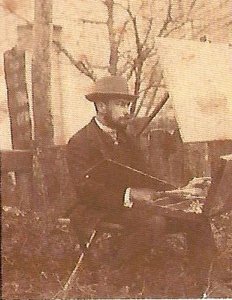
Henri Le Sidaner
1862 - 1939 , Mauritius
Quick Facts
- Artistic Movement Or Style: Intimist, Impressionism
- Artists Who Influenced This Artist:
- Édouard Manet
- Monet
- Pointillists
- Date Of Birth: August 7, 1862
- Date Of Death: July 14, 1939
- Full Name: Henri Eugène Augustin Le Sidaner
- Nationality: French
- Notable Artworks:
- Still life and a window, Gisors
- A Beauvais Square by Moonlight
- Place Of Birth: Port Louis, Mauritius
Related Articles
Henri Matisse's Masterpieces: Explore 25 Iconic Paintings & Art Decor Ideas
Journey through Henri Matisse's 25 most iconic paintings! Explore Fauvism, vibrant colors & the stories behind masterpieces like 'The Dance'. Find museum-quality art reproductions and curated decor ideas to elevate your space. Discover all masterpieces on ArtsDot.com.
Henri Le Sidaner: Evoking Atmosphere & Intimacy in Post-Impressionist Landscapes
Discover the evocative world of Henri Le Sidaner, a master of Intimist painting. Explore his tranquil landscapes & atmospheric interiors – a celebration of light and intimacy. Learn about his life, style, and lasting legacy.
Renoir's Masterpieces: Explore 25 Iconic Paintings & Bring Art Home | ArtsDot
Explore 25 iconic Pierre-Auguste Renoir paintings! Discover the stories behind Impressionist masterpieces like 'Dance at Le Moulin de la Galette' & 'Luncheon of the Boating Party'. Find museum-quality art reproductions and elevate your home decor with ArtsDot.com.
Henri Moret: Capturing the Essence of Brittany's Light – A Study in Post-Impressionist Landscape Painting
Explore the captivating landscapes of Henri Moret, a master of Post-Impressionism. Discover his unique style, key works, and legacy in our expert guide. Learn about collecting Moret's art & its investment potential.
Portrayals of Power & Perception: A Historical Survey of Women in Art
Explore the rich history of women in art – from iconic muses to groundbreaking artists. Discover feminist movements & reclaim female narratives with ArtsDot. Expert insights for discerning collectors.