 Preview
 Send
Send Share
Share
 Details

 Download
 Similars
 X-Ray
X-Ray Diaporama
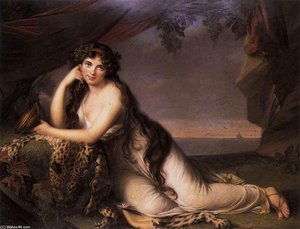
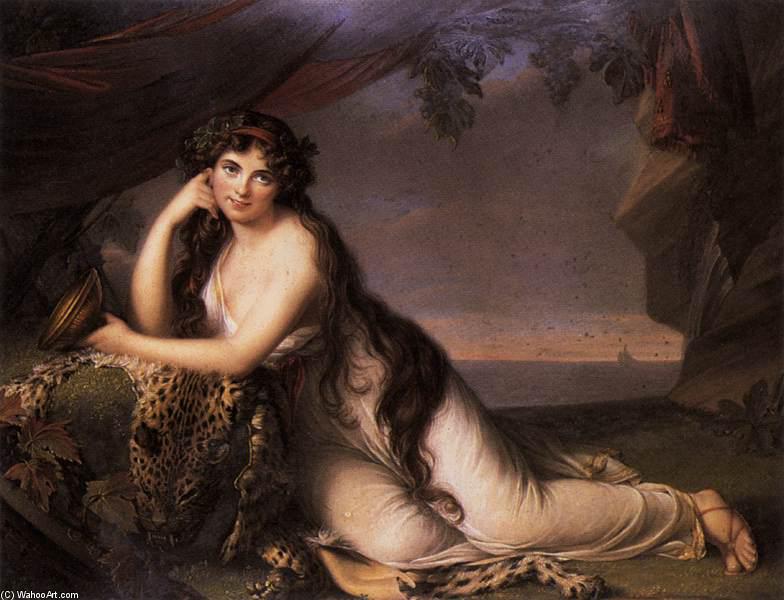
Lady Hamilton as a Bacchante
 Oil On Canvas
- WallArt
- Neoclassicism
 1803
1803 22.0 x 28.0 cm
 Wallace Collection
 Read More
Hand Made Oil Reproduction
Hand-painted oil on canvas in your size and frame, made to order by our artists. ( Buy Print Buy Image)




P118B $10

P118H $10

P118W $10

P438Z $10

P508JH $12

P508YH $12

P805H $10

P805Z $10

P919BZ $10

P919G $10

P919XJ $10

P959ZH $10

P968JZ $12

W106C $8

W218G $10

W218JH $8

W218Y $10

W307PJ $10

W316G $10

W316PJ $8

W316Y $10

W398PJ $8

W4111J $10

W500HY $15

W500JH $15

W692G $12

W849H $8

W940BG $15

W953PJ $8




Pick from our preset sizes that match the artwork's original proportions.

You may enter your own dimensions to fit a specific frame or space. If your selected size does not match the original image's proportions, we will either crop the artwork or extend the painting with additional hand-painted elements. A digital mockup will be sent for your approval before production begins.
Please note that the on-screen preview does not reflect the actual cropping or extension. Only the mockup will accurately show the final composition.
While custom sizes are available, we recommend selecting a dimension from the predefined list to preserve the original proportions.
After order, ArtsDot.com team will email client for instructions and provide a mockup preview
Worldwide Delivery () in 3/4 weeks instead of standard 5 weeks. (16 August). No compromise on quality.

Free Worldwide Express Shipping

High-Quality Linen Canvas

Full Shipping Insurance

Customs Tax Refund Guarantee

True Color Matching Guarantee

60-Day Return Policy (Defects Only)

100% Money-Back Guarantee

Bulk Discount Offer
 Glass option is only available in size under 110 CM

Lady Hamilton as a Bacchante
Reproduction Medium
Reproduction Size
-


Total Price
$ 263
Artwork Description
A Vision of Myth and Sensuality: Henry Bone’s ‘Lady Hamilton as a Bacchante’
Henry Bone's “Lady Hamilton as a Bacchante,” painted in 1803, is more than just a portrait; it’s a carefully constructed tableau vivant – a staged moment plucked from the realm of classical mythology and imbued with the intimate drama of personal relationships. The painting immediately draws the eye to Emma Hamilton, resplendent in a flowing gown of deep crimson and gold, reclining on a luxurious leopard-skin cushion amidst a riotous profusion of foliage and a distant, hazy seascape. This isn’t a simple depiction of a woman at leisure; it's an orchestrated scene brimming with symbolic weight and a palpable sense of restrained passion.
Bone, a Royal Academician renowned for his elaborate enamel paintings commissioned by the British monarchy, expertly blends neoclassical formality with a distinctly Romantic sensibility. The composition is meticulously balanced – the strong verticality of Emma’s figure contrasts beautifully with the undulating curves of the landscape and her own drapery. The use of light is particularly masterful; it pools dramatically across her body, highlighting her graceful form and creating an atmosphere of both intimacy and theatrical grandeur. Notice how the shadows deepen around her face, hinting at a contemplative mood beneath the surface of this seemingly carefree pose.
Technique and Materials: A Masterclass in Neo-Classical Detail
Examining the painting closely reveals Bone’s extraordinary technical skill. He employs a layered glazing technique, building up color gradually through thin washes of oil paint – a hallmark of the Neoclassical style. This method allows for incredible luminosity and depth, particularly evident in the rich textures of the leopard skin and the voluminous folds of Emma's gown. The artist demonstrates an almost obsessive attention to detail; from the individual leaves on the branches to the subtle sheen of the fabric, every element contributes to a sense of realism and luxuriousness.
- Canvas & Pigments: Bone utilized a finely prepared canvas treated with gesso for optimal paint adhesion. His palette consisted primarily of oil paints – ultramarine blue, vermilion red, ivory black, and various shades of green and gold – meticulously blended to achieve the desired effects.
- Glazing Technique: The layering of thin glazes created a remarkable depth and luminosity, capturing the play of light and shadow with exceptional subtlety.
- Brushwork: Bone’s brushstrokes are remarkably controlled and precise, particularly evident in the rendering of drapery and foliage. He demonstrates an understanding of how to create texture through variations in paint application.
Symbolism and Context: Echoes of Mythology and Romantic Intrigue
The title itself – “Bacchante” – immediately anchors the scene within Greek mythology. Bacchantes were female followers of Dionysus, the god of wine, revelry, and ecstasy. Emma Hamilton’s pose—reclining amidst foliage, with a slightly ecstatic expression—evokes this imagery powerfully. However, Bone doesn't simply depict a mythological figure; he subtly infuses the scene with personal meaning. Emma Hamilton was the mistress of Sir William Hamilton, the British Ambassador to Naples, and her affair with Admiral Lord Nelson became one of the most celebrated romances of the late 18th and early 19th centuries.
The leopard skin, a symbol of power and luxury, further emphasizes Emma’s elevated status. The distant seascape hints at both adventure and escape – mirroring the allure of her life with Sir William and Admiral Nelson. The painting can be interpreted as a celebration of beauty, passion, and the intoxicating blend of mythology and reality that defined the Romantic era.
A Timeless Masterpiece: Reproduction and Beyond
“Lady Hamilton as a Bacchante” remains a captivating work of art, offering a glimpse into a world of aristocratic intrigue, mythological romance, and exquisite artistic skill. High-quality reproductions capture much of the original’s luminous quality and intricate detail. This painting is not merely a beautiful image; it's a window into a pivotal moment in British history and a testament to Henry Bone’s mastery as an enamel painter.
Related Artworks
Artist Biography
Henry Bone: A Life in Enamel
- Born: Truro, United Kingdom (1755)
- Died: 1834
Henry Bone RA was a distinguished English enamel painter who served three successive monarchs – George III, George IV, and William IV – in that official capacity. His career spanned porcelain and jewelry painting before he became renowned for his large-scale enamel paintings, earning him recognition as a Royal Academician.
Early Life and Apprenticeship
Born in Truro, Cornwall, Henry Bone’s father was a skilled cabinet maker and carver. In 1767, the family relocated to Plymouth, Devon, where young Henry began his apprenticeship in 1771 under William Cookworthy, the founder of the Plymouth porcelain works – England's first manufacturer of hard-paste porcelain. This early experience proved formative, as he later moved with Cookworthy and Champion to the Bristol China Works for six years. During this time, Bone worked diligently from morning until evening, dedicating his nights to studying drawing. His contributions to the Bristol China Works are considered highly meritorious, potentially marked by a distinctive "1" alongside the factory mark.
Rise as an Enamel Painter
Following the closure of the Bristol works in 1778, Bone moved to London with limited resources. He initially found work enameling watches and fans before transitioning to enamel and watercolor portraits. He cultivated a friendship with John Wolcot, who encouraged his artistic pursuits and advised him on professional tours in Cornwall. In 1780, he married Elizabeth Vandermeulen, whose lineage included the battle painter Adam Frans van der Meulen. Bone’s talent quickly gained recognition; he exhibited his first painting, a portrait of his wife, at the Royal Academy in 1781 – an unusually large enamel for its time.
Royal Patronage and Major Works
Bone dedicated himself entirely to enamel painting, consistently exhibiting at the Royal Academy. A significant milestone was his 1789 exhibition of "A Muse and Cupid," the largest enamel painting produced up to that point. His artistic prowess earned him royal favor; he became enamel painter to the Prince of Wales in 1800, then to George III in 1801, a position he retained throughout the reigns of George IV and William IV. He was elected a Royal Academician (RA) in 1811 and created an even larger enamel, "Bacchus and Ariadne," after Titian’s masterpiece. The immense popularity of this work led to its sale for 2,200 guineas – a sum secured just before the bank holding his payment suspended operations!
Later Years and Legacy
Bone's later works included series of historical portraits depicting figures from the time of Elizabeth I and "Cavaliers distinguished in the Civil War," as well as portraits of the Russell family. While the Elizabethan series did not achieve immediate financial success, it demonstrated his commitment to a lasting artistic legacy. His eyesight began to fail in 1831, leading him to retire and accept a royal academy pension. He died in 1834, remembered as "a man of unaffected modesty and generosity." His collections were sold at auction after his death, dispersing numerous works across various collectors. Henry Bone’s sons, Henry Pierce Bone and Robert Trewick Bone, also became notable enamellists, continuing the family's artistic tradition.
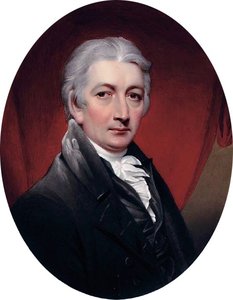
Henry Bone
1755 - 1834 , United Kingdom
Quick Facts
- Artistic Movement Or Style: Enamel painting
- Artists Who Influenced This Artist: ['Adam Frans van der Meulen']
- Date Of Birth: February 6, 1755
- Date Of Death: December 17, 1834
- Full Name: Henry Bone
- Nationality: British
- Notable Artworks:
- A Muse and Cupid
- Bacchus and Ariadne
- Place Of Birth: Truro, United Kingdom
Related Articles
Henri Matisse's Masterpieces: Explore 25 Iconic Paintings & Art Decor Ideas
Journey through Henri Matisse's 25 most iconic paintings! Explore Fauvism, vibrant colors & the stories behind masterpieces like 'The Dance'. Find museum-quality art reproductions and curated decor ideas to elevate your space. Discover all masterpieces on ArtsDot.com.

The Enduring Legacy of Oil on Canvas: Technique, History & Aesthetic Impact
Explore the rich history & techniques of oil painting – from Renaissance masters to Impressionism. Discover pigments, layering methods, and why this timeless medium endures. Expert insights for artists & art enthusiasts.

Oil on Canvas: A Historical & Technical Exploration of a Timeless Artistic Medium
Explore the rich history & enduring techniques of oil painting on canvas. Discover the science behind its longevity, conservation practices, and contemporary relevance. Expert insights for art enthusiasts.

The Enduring Power of Painting: A Historical & Contemporary Exploration of Form and Emotion
Explore the rich history & enduring techniques of oil painting with ArtsDot. Discover masterpieces, learn about art collecting, and find authentic handmade reproductions crafted by skilled artists.

The Enduring Legacy of Oil on Canvas: Technique, History & Contemporary Practice
Explore the rich history & enduring techniques of oil painting on canvas. Discover the science behind its longevity, conservation practices, and contemporary relevance. Expert insights for art enthusiasts.