 Preview
 Send
Send Share
Share
 Details

 Download
 Similars
 X-Ray
X-Ray Diaporama
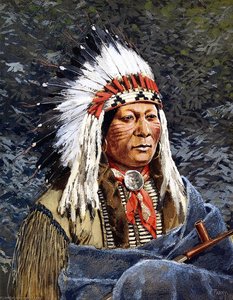
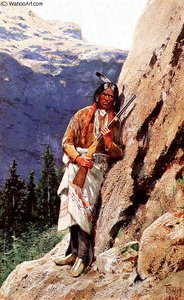
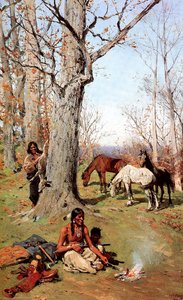
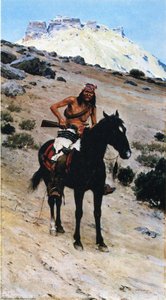
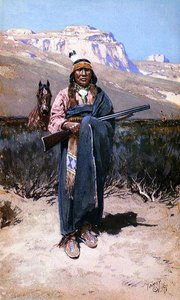
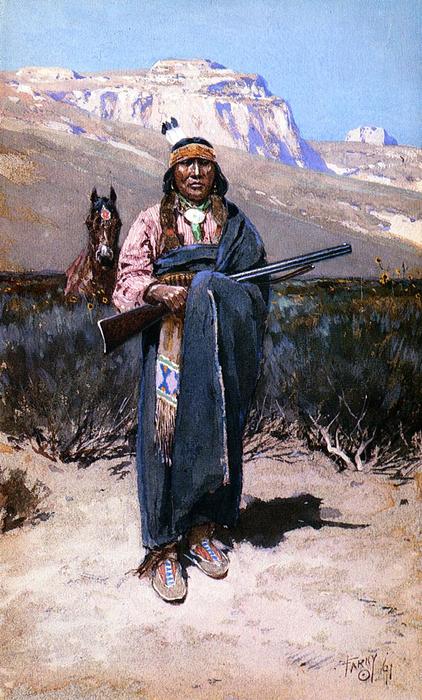
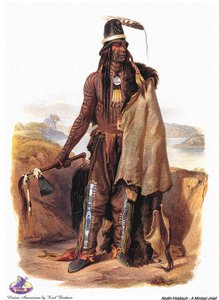
Indian Brave


 Read More
Hand Made Oil Reproduction
Hand-painted oil on canvas in your size and frame, made to order by our artists. ( Buy Print Buy Image)




































Pick from our preset sizes that match the artwork's original proportions.

You may enter your own dimensions to fit a specific frame or space. If your selected size does not match the original image's proportions, we will either crop the artwork or extend the painting with additional hand-painted elements. A digital mockup will be sent for your approval before production begins.
Please note that the on-screen preview does not reflect the actual cropping or extension. Only the mockup will accurately show the final composition.
While custom sizes are available, we recommend selecting a dimension from the predefined list to preserve the original proportions.
After order, ArtsDot.com team will email client for instructions and provide a mockup preview
Worldwide Delivery () in 3/4 weeks instead of standard 5 weeks. (16 August). No compromise on quality.

Free Worldwide Express Shipping

High-Quality Linen Canvas

Full Shipping Insurance

Customs Tax Refund Guarantee

True Color Matching Guarantee

60-Day Return Policy (Defects Only)

100% Money-Back Guarantee

Bulk Discount Offer
 Glass option is only available in size under 110 CM

Indian Brave
Reproduction Medium
Reproduction Size
-


Total Price
$ 263
Related Artworks
Artist Biography
The Painter of the Vanishing Race
Henry François Farny, known to many as H.F. Farny, remains one of the most evocative voices in nineteenth-century American art. Born in 1847 in Ribeauville, France, his journey eventually led him to the heart of the American frontier, where he would develop a style that became synonymous with the "vanishing race" movement. His life was a tapestry woven from European training and an intimate, early connection to the indigenous cultures of the United States. After emigrating to Pennsylvania as a child, Farny found himself near the Seneca Reservation, an experience that planted the seeds of a lifelong fascination with Native American life. As a young boy, he practiced his craft by etching sketches of animals and warriors onto the walls of his father’s boarding house, using nothing more than nails and burnt sticks—a primitive yet profound beginning to a career defined by meticulous observation.
The evolution of Farny’s technique was marked by a sophisticated blend of American subject matter and European academic rigor. Moving to Cincinnati in 1859, he quickly demonstrated a talent for illustration that secured him early professional success. However, it was his pursuit of formal training in Germany that truly refined his hand. Under the influence of the Düsseldorf School of Painting, Farny adopted a realist aesthetic characterized by a subdued palette and an extraordinary attention to texture. This period allowed him to master the ability to render the subtle play of light across a desert landscape or the intricate details of traditional Native American regalia, lending his work a sense of historical weight and dignity.
A Legacy of Realism and Symbolism
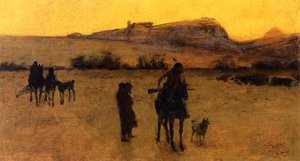
Farny’s body of work serves as a poignant window into a transformative era of American history. His paintings are rarely mere illustrations; they are deeply atmospheric compositions that capture the tension, beauty, and perceived tragedy of the frontier. Through works such as "Sketch for The Challenge", one can witness his ability to use a single figure—a Native American warrior—to represent larger themes of confrontation and cultural shift. His mastery of the landscape allowed him to create settings that were not just backdrops, but active participants in the narrative, often utilizing the vastness of the plains or the starkness of the desert to mirror the emotional gravity of his subjects.
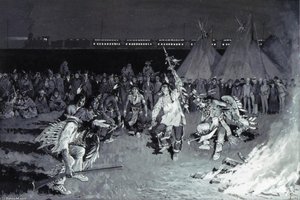
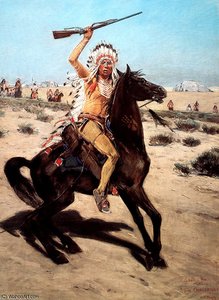
The significance of Farny’s contribution to the Cincinnati School of Painting lies in his ability to balance romanticism with unflinching realism. While his work participated in the era's romanticized vision of the West, his technical precision prevented it from descending into mere caricature. His paintings often explored themes of daily survival and communal life, as seen in pieces like "Toilers of the Plains" and "A Lucky Shot," which highlight the grit and reality of existence on the edge of a changing world. By documenting these scenes with such care, Farny created a visual archive that continues to resonate with historians and art lovers alike, preserving the spirit of a culture and a landscape that were undergoing profound and permanent change.
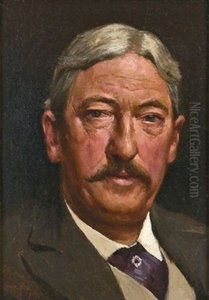
henry f farny
1847 - 1916 , France
Quick Facts
- Artistic Movement Or Style: Realism
- Artists Or Movements Influenced By This Artist: ['Düsseldorf School']
- Artists Who Influenced This Artist: ['Albert Bierstadt']
- Date Of Birth: July 15, 1847
- Date Of Death: December 23, 1916
- Full Name: Henry François Farny
- Nationality: French-American
- Notable Artworks:
- Song of the Talking Wire
- Morning of a New Day
- Place Of Birth: Ribeauvillé, France
Related Articles
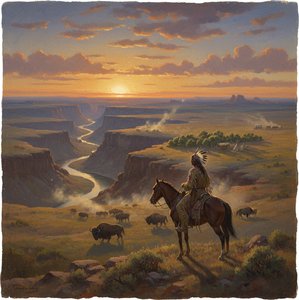
Henry Farny: Romantic Visions of the American West & Indigenous Life
Explore the evocative paintings of Henry Farny, renowned for his romantic realism & depictions of Native American life in the 19th-century West. Discover his legacy and key artworks at ArtsDot.

Watercolor Wonders: 10 Masterpieces That Redefined Art History | ArtsDot
Journey through 10 legendary watercolor masterpieces by Sargent, Turner & Homer! Explore iconic landscapes, portraits & floral art that redefined history. Find museum-quality reproductions and curated decor ideas at ArtsDot.com.

Henri Matisse's Masterpieces: Explore 25 Iconic Paintings & Art Decor Ideas
Journey through Henri Matisse's 25 most iconic paintings! Explore Fauvism, vibrant colors & the stories behind masterpieces like 'The Dance'. Find museum-quality art reproductions and curated decor ideas to elevate your space. Discover all masterpieces on ArtsDot.com.

Ephemeral Visions: Exploring the Artistic Legacy & Contemporary Practice of Watercolor Painting
Explore the captivating world of watercolor painting! Discover its rich history, essential techniques, influential artists & collecting tips. A comprehensive guide for art enthusiasts from ArtsDot.

Ephemeral Visions: Exploring the Artistic Legacy & Nuances of Watercolor Painting
Explore the captivating world of watercolor painting! Discover its rich history, essential techniques, influential artists & collecting tips from art experts. A comprehensive guide for enthusiasts.