

 Preview
 Send
Send Share
Share
 Details

 Download
 Similars
 X-Ray
X-Ray Diaporama
Arvica
 1921
1921 35.0 x 25.0 cm
 Royal Academy of Music
 Read More
Purchase a high-resolution, enhanced digital image, far superior to the online preview.
Each file is meticulously prepared by our in-house specialists using advanced tools and expert manual retouching. We ensure every image has exceptional clarity, precise color accuracy, and fine detail.
The final file is delivered via email within 72 hours, optimized for immediate use in professional, editorial, and print environments. This is the same quality trusted by top-tier design studios, publishers, and galleries.
Digital Image
Download a high-resolution file for personal display, printing, and creative projects. ( Buy Print Buy Hand Made Painting)
Included in Every Digital Image Order
Expert Digital Delivery, Guaranteed
When you choose ArtsDot.com, you're not just getting an image - you're receiving a professionally enhanced digital artwork, crafted with precision and backed by a satisfaction guarantee. Here's everything that comes with your order, automatically:

Fast Email Delivery
Your high-resolution digital image file will be emailed to you within 72 hours of ordering - ready for immediate use.

AI-Enhanced Digital File
Your artwork is professionally optimized using advanced AI tools and manual editing, ensuring maximum detail, clarity, and color accuracy.

Free Lifetime Re-Delivery
Accidentally deleted or lost your file? No worries - we'll resend it to you anytime, free of charge.

No Import Fees - Ever
Enjoy your artwork instantly with zero customs, duties, or delivery fees - digital downloads are always tax-free.

Color Accuracy Guarantee
We ensure your digital image reflects the original colors as closely as possible using professional tools and color management.

60-Day Satisfaction Guarantee
If you're not satisfied with your digital image, we'll revise it or refund 100% within 60 days - no questions asked.

100% Money-Back Guarantee
Not satisfied? Get a full refund within 60 days of receiving your digital file - no questions asked.

Bulk Order Discounts
Buy 3 images, save 10% - Buy 5, save 15% - Buy 10+, save 20%. Great for creative projects, galleries, and agencies.
Collectible Description
A Description of the Painting
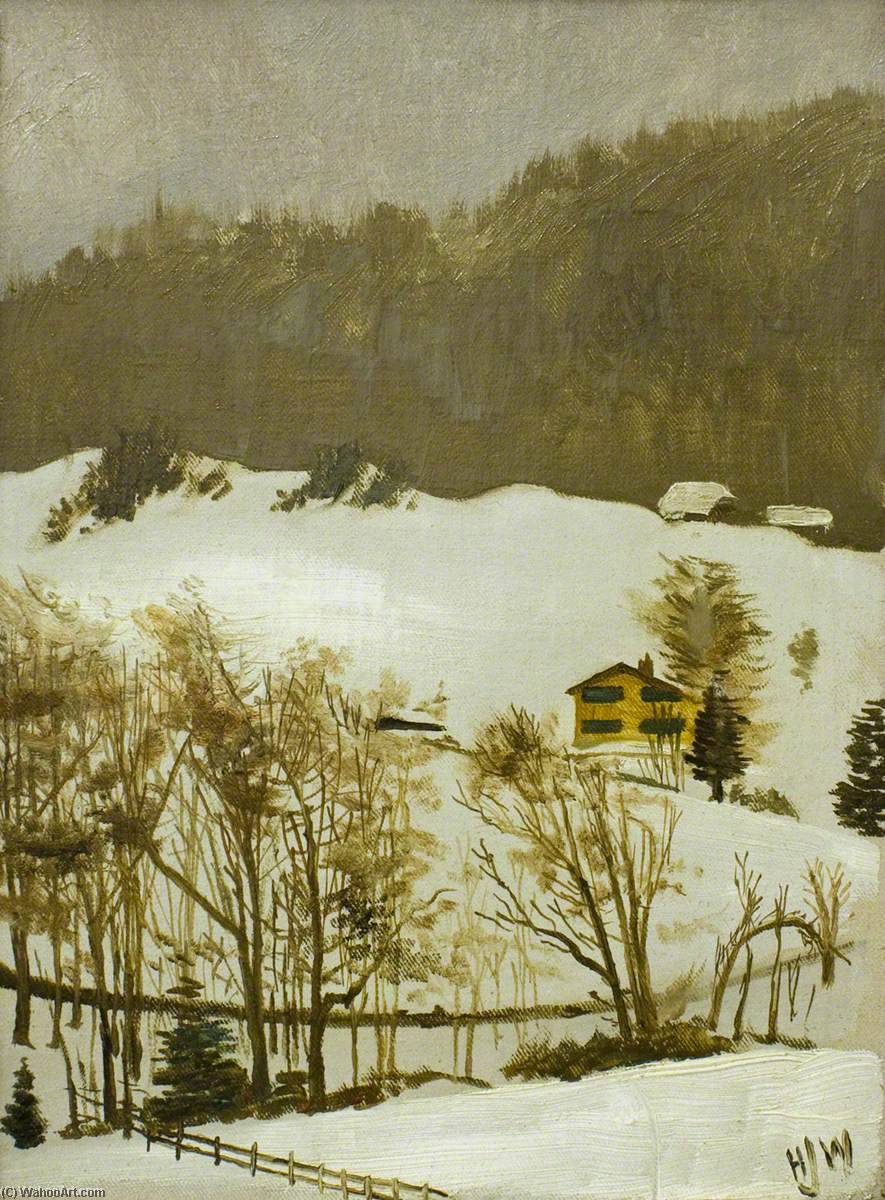
The painting depicts a small house surrounded by trees, with several cars parked near the house. The scene appears to be set during wintertime, as evidenced by the snow-covered ground and the presence of multiple vehicles. The use of oil on canvas gives the painting a sense of depth and texture, drawing the viewer into the serene winter landscape.Similar Works by Other Artists
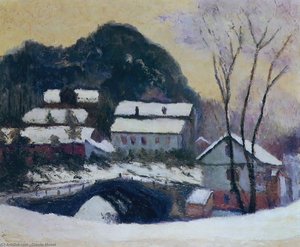
Other artists have also explored the theme of winter landscapes in their work. For example, Claude Monet's Vetheuil, The Church in Winter and Snow Effect at Vetheuil showcase the artist's ability to capture the beauty of snow-covered scenes. These paintings can be found on ArtsDot.com and demonstrate the use of Impressionism in winter landscape painting.- Pyotr Konchalovsky's Winter. Playing children. is another example of a winter landscape, showcasing the artist's use of Fauvism to capture the scene.
- The Gurkha Museum in the United Kingdom also features a collection of artworks that explore the theme of winter landscapes. More information can be found on ArtsDot.com.
The painting Arvica is a must-see for anyone interested in winter landscapes and the work of Henry Joseph Wood. Its serene and tranquil atmosphere makes it a perfect addition to any art collection.
Related Artworks


Artist Biography
Henry Joseph Wood: Bridging the Gap Between Concert Hall and Canvas
Henry Joseph Wood, a name perhaps less familiar to the general public than many of his contemporaries, stands as a pivotal figure in bridging the gap between the burgeoning world of orchestral music and the rise of Impressionist painting. Born in London in 1869, Wood’s life was inextricably linked to both musical innovation and artistic vision, shaping not only the soundscape of British culture but also influencing the aesthetic sensibilities of a generation of artists.
Initially trained as an organist, Wood's early career focused on the sacred music of Bach and Mendelssohn. However, his true passion lay in popularizing orchestral music – a relatively niche pursuit at the time – through innovative concert series. Recognizing that audiences were often intimidated by the formality and perceived complexity of classical performance, he pioneered the “Promenade Concerts” at the Queen’s Hall in 1895. These concerts weren't simply recitals; they were carefully curated experiences designed to introduce a wider range of listeners – from seasoned music lovers to those entirely new to orchestral sound – to the glories of the repertoire. Wood meticulously selected pieces, often incorporating popular tunes and familiar melodies alongside works by composers like Wagner, Brahms, and Dvořák, creating an accessible and engaging listening experience.
Crucially, Wood’s success wasn't solely based on programming; he was a skilled promoter and organizer. He understood the power of visual presentation, collaborating with stage designers to create immersive environments that enhanced the musical performance. This approach mirrored his later artistic pursuits – specifically, his foray into painting. Wood began exhibiting his work in the late 1890s, embracing the tenets of Impressionism, a movement characterized by its focus on capturing fleeting moments and subjective impressions rather than precise representation. His paintings, often depicting coastal scenes, landscapes, and portraits, are imbued with a similar spirit to his musical endeavors – an emphasis on atmosphere, light, and emotion.
The Palette of Light: Wood’s Artistic Style
Wood's artistic style is immediately recognizable for its shimmering surfaces and evocative use of color. He was deeply influenced by the Impressionist masters, particularly Monet and Pissarro, but he developed a distinctive approach rooted in his understanding of light and sound. Like capturing a fleeting musical moment, Wood sought to distill the essence of a scene – not through detailed realism, but through carefully layered brushstrokes and subtle shifts in hue. His paintings are often described as “atmospheric,” conveying a sense of mood and feeling rather than precise visual accuracy.
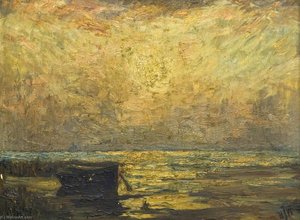
A prime example is "The Sandy Shallows at Parkstone near Bournemouth" (1907), a captivating depiction of the Dorset coastline. The painting isn’t a literal rendering of the beach; instead, it's an exploration of light and shadow, texture and color. Thick impasto – a technique involving applying paint in thick layers – creates a tactile surface that seems to shimmer with reflected sunlight. The colors are muted yet vibrant, evoking the hazy atmosphere of a coastal morning. The composition is deceptively simple, drawing the viewer into the scene’s tranquil beauty.
Musical Legacy and Artistic Connections
Wood's impact on British musical culture is undeniable. He transformed the Promenade Concerts from a niche event into a national institution, establishing them as a cornerstone of orchestral music programming. His championing of contemporary composers like Tchaikovsky – he was instrumental in the premiere of his Sixth Symphony in London – broadened the repertoire available to British audiences and helped to solidify England’s position as a center for musical innovation.
Interestingly, Wood's artistic sensibilities were not entirely isolated from his musical pursuits. He frequently sought inspiration from nature, mirroring the Impressionist painters’ fascination with capturing fleeting moments of beauty. His paintings often reflect the same sense of tranquility and contemplation found in his music. Furthermore, he collaborated with artists like Joseph Henry Sharp, a prominent member of the Taos Society of Artists, exchanging ideas and insights about capturing the essence of their respective subjects – musical sound and visual landscapes.
A Lasting Impression
Henry Joseph Wood died in 1944, leaving behind a legacy that extends far beyond his contributions to orchestral music. His pioneering work in popularizing classical music paved the way for future generations of conductors and music educators. His artistic style, characterized by its atmospheric quality and evocative use of color, continues to resonate with viewers today. Wood’s life serves as a testament to the power of cross-disciplinary inspiration – a reminder that art forms can enrich and inform one another in profound ways.
henry joseph wood
1869 - 1944
Quick Facts
- Artistic Movement Or Style: Promenade Concerts
- Artists Or Movements Influenced By This Artist: ['British Music History']
- Artists Who Influenced This Artist:
- Richard Strauss
- Debussy
- Date Of Birth: March 3, 1869
- Full Name: Henry Joseph Wood
- Nationality: British
- Notable Artworks:
- The Sandy Shallows
- The Two Sisters
- Place Of Birth: London, England

