 Preview
 Send
Send Share
Share
 Details

 Download
 Similars
 X-Ray
X-Ray Diaporama
John Playfair


 Read More
Hand Made Oil Reproduction
Hand-painted oil on canvas in your size and frame, made to order by our artists. ( Buy Print Buy Image)




P118B $10

P118H $10

P118W $10

P438Z $10

P508JH $12

P508YH $12

P805H $10

P805Z $10

P919BZ $10

P919G $10

P919XJ $10

P959ZH $10

P968JZ $12

W106C $8

W218G $10

W218JH $8

W218Y $10

W307PJ $10

W316G $10

W316PJ $8

W316Y $10

W398PJ $8

W4111J $10

W500HY $15

W500JH $15

W692G $12

W849H $8

W940BG $15

W953PJ $8




Pick from our preset sizes that match the artwork's original proportions.

You may enter your own dimensions to fit a specific frame or space. If your selected size does not match the original image's proportions, we will either crop the artwork or extend the painting with additional hand-painted elements. A digital mockup will be sent for your approval before production begins.
Please note that the on-screen preview does not reflect the actual cropping or extension. Only the mockup will accurately show the final composition.
While custom sizes are available, we recommend selecting a dimension from the predefined list to preserve the original proportions.
After order, ArtsDot.com team will email client for instructions and provide a mockup preview
Worldwide Delivery () in 3/4 weeks instead of standard 5 weeks. (16 August). No compromise on quality.

Free Worldwide Express Shipping

High-Quality Linen Canvas

Full Shipping Insurance

Customs Tax Refund Guarantee

True Color Matching Guarantee

60-Day Return Policy (Defects Only)

100% Money-Back Guarantee

Bulk Discount Offer
 Glass option is only available in size under 110 CM

John Playfair
Reproduction Medium
Reproduction Size
-


Total Price
$ 263
Artwork Description
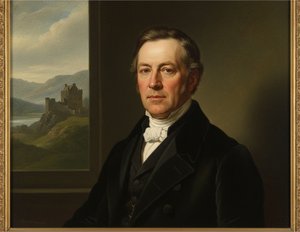
A Portrait of Enlightenment: Henry Raeburn’s John Playfair
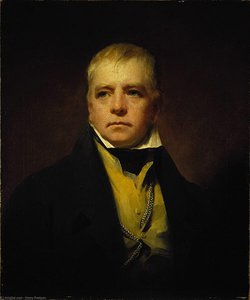
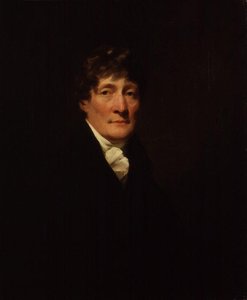
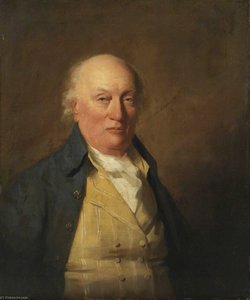
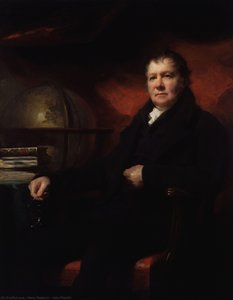
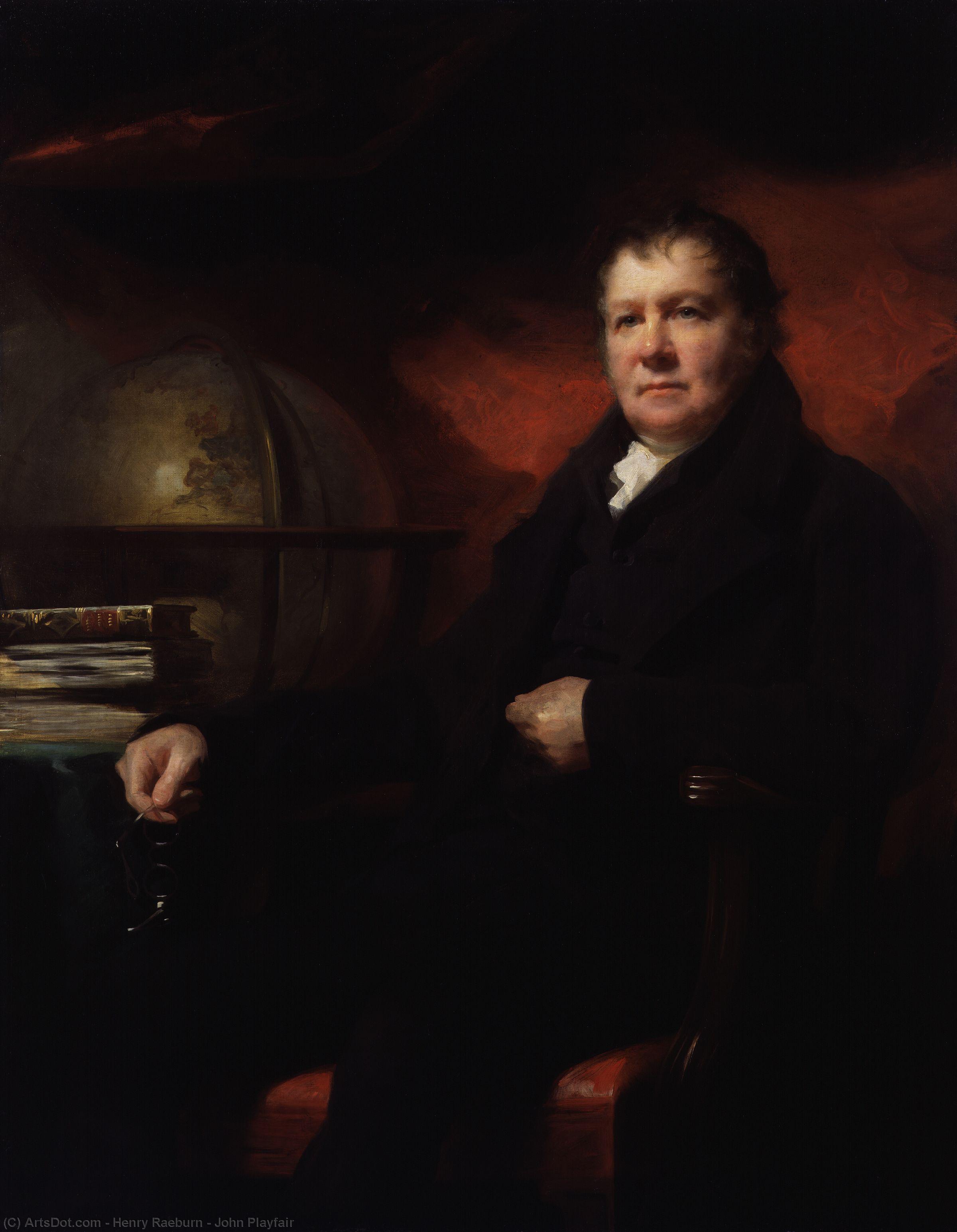
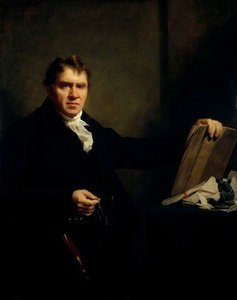
Henry Raeburn's "John Playfair" is more than simply a likeness; it’s a carefully constructed tableau of 18th-century Scottish intellect and social standing. Completed in 1814, this oil on canvas painting, currently residing within the esteemed collection of the National Portrait Gallery in London, offers a captivating glimpse into the life of a prominent figure – John Playfair, a man whose contributions to mathematics, economics, and statistics left an indelible mark on his era. Raeburn’s masterful handling of light and shadow, coupled with his keen eye for capturing character, elevates this portrait beyond a mere representation, transforming it into a powerful statement about the values and aspirations of the Enlightenment.
The Artist's Hand: Technique and Style
Raeburn’s distinctive style is immediately apparent in “John Playfair.” He employs a dramatic use of chiaroscuro – the skillful manipulation of light and dark – to sculpt Playfair’s face and create a sense of depth within the composition. Notice how the strong illumination focuses on his brow and eyes, drawing our attention to his thoughtful expression, while the surrounding areas remain subtly shadowed. This technique isn't merely aesthetic; it serves to emphasize Playfair’s intelligence and seriousness. Raeburn’s meticulous attention to detail is also remarkable – from the texture of his coat to the subtle lines etched on his face, every element contributes to a remarkably realistic portrayal. The painting echoes Raeburn’s earlier works like those of Henry Mackenzie and Hugh William Williams, demonstrating his consistent dedication to capturing both physical likeness and inner personality.
A Man of Many Talents: Context and Significance
John Playfair was a pivotal figure in the intellectual landscape of Scotland during the 18th century. A mathematician, economist, and statistician, he made significant contributions to fields ranging from probability theory to public finance. The portrait itself provides valuable insight into his social standing – the dignified attire, the carefully arranged setting with its books and table, all speak to a man of considerable influence and learning. The inclusion of this painting within the National Portrait Gallery underscores its historical importance, solidifying its place as a vital document in Scottish cultural heritage. The gallery’s mission—to preserve and promote Scotland's artistic legacy—is perfectly embodied by this remarkable work.
Symbolism and Emotional Resonance
Beyond the factual representation of John Playfair, the painting is rich with symbolic meaning. His gaze, directed slightly off-canvas, suggests contemplation and a deep engagement with intellectual pursuits. The books scattered across the table are not merely decorative; they represent knowledge, learning, and the pursuit of understanding – core values associated with the Enlightenment. The muted colors and restrained composition contribute to an atmosphere of quiet dignity and seriousness. Raeburn doesn’t offer a flamboyant display of personality; instead, he presents us with a portrait of a man defined by his intellect and commitment to reason. “John Playfair” is a testament to Raeburn's ability to imbue a simple portrait with profound emotional resonance.
For a truly immersive experience, consider commissioning a hand-painted reproduction from ArtsDot.com – allowing you to bring this masterpiece into your own space and appreciate its beauty and historical significance for generations to come. Further exploration of Henry Raeburn’s life and work can be found on the National Portrait Gallery website (Discovering the Masterpieces of Scottish National Portrait Gallery, Edinburgh, United Kingdom) and through resources like Wikipedia (Henry Raeburn).
Related Artworks
Artist Biography
A Scottish Master of Realism: The Life and Art of Sir Henry Raeburn
Born in 1756 amidst the burgeoning Enlightenment of Scotland, Sir Henry Raeburn emerged as a pivotal figure in British portraiture. His story is one of self-driven artistry, rising from humble beginnings to become the first native Scottish painter to achieve widespread acclaim and royal patronage. Orphaned at a young age, Raeburn’s early life was shaped by the support of his brother William, who secured him an education at Heriot's Hospital in Edinburgh. This foundation proved crucial, though his initial path led not directly to canvas and brush, but to the meticulous craft of goldsmithing under James Gilliland. It was within this world of intricate detail and refined skill that Raeburn honed a precision that would later define his artistic style. He began creating miniature portraits on ivory, demonstrating an innate talent for capturing likenesses with remarkable accuracy. However, it wasn’t long before the allure of larger-scale oil painting beckoned, and he bravely embarked on a self-taught journey to master this more demanding medium.From Miniature Precision to Grand Portraiture
Raeburn's artistic evolution was marked by a relentless pursuit of skill. He absorbed knowledge from David Martin, a leading portraitist in Edinburgh who had been an assistant to Allan Ramsay, but largely relied on his own dedication and observation. His early works reveal a developing talent, yet it was through consistent practice and a keen eye for detail that he began to distinguish himself. A turning point came with his marriage to Ann Edgar, a wealthy widow, in 1778. This union provided financial stability, allowing Raeburn to fully dedicate himself to painting without the constraints of commercial obligations. He immersed himself in studying the works of masters like Joshua Reynolds, whom he met during a brief sojourn in London en route to Italy – though the Italian journey was ultimately abandoned. Raeburn’s style began to coalesce around a powerful realism, characterized by dramatic lighting and an ability to capture not just physical resemblance but also the inner character of his sitters. He moved away from the softer, more idealized portrayals common at the time, opting for a directness and honesty that resonated with Scottish sensibilities.Capturing Character: Raeburn’s Artistic Signature
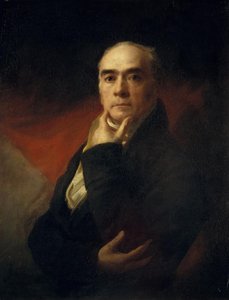
Raeburn's portraits are not merely representations of individuals; they are psychological studies rendered in oil paint. He possessed an extraordinary ability to convey the personality, status, and even the mood of his subjects. His technique was masterful – a combination of meticulous observation, confident brushwork, and a sophisticated understanding of light and shadow. The Young Polo Player, for example, is not simply a depiction of a sporting gentleman; it’s an energetic snapshot of youthful vitality and aristocratic leisure. Similarly, his portrait of Alexander Allan, a prominent figure in Scottish art, reveals a man of intellect and refinement. Raeburn's use of chiaroscuro – the dramatic contrast between light and dark – became a hallmark of his style, lending depth and intensity to his compositions. He often positioned his subjects against dark backgrounds, allowing their faces and figures to emerge with striking clarity. This technique not only enhanced the visual impact of his portraits but also served to focus attention on the individual’s character and presence.Recognition and Legacy: A Scottish Icon
Throughout his career, Raeburn enjoyed considerable success and recognition. He became a leading member of Edinburgh society, attracting commissions from prominent families and individuals. In 1815, he was elected to the Royal Academy in London, solidifying his reputation on a national level. His appointment as Portrait Painter to King George IV in Scotland in 1822 – shortly before his death in 1823 – was the ultimate acknowledgment of his artistic achievements. Raeburn’s influence on Scottish art is immeasurable. He established a standard for portraiture that subsequent generations would strive to emulate, and his work continues to inspire artists today. His paintings are now held in prestigious collections around the world, including the Scottish National Gallery in Edinburgh and The Frick Collection in New York.- His dedication to realism and psychological insight set him apart from many of his contemporaries.
- He helped establish a distinctly Scottish identity within British art.
- His masterful technique continues to be studied and admired by artists and scholars alike.
Henry Raeburn
1756 - 1823 , United Kingdom
Quick Facts
- Artistic Movement Or Style: Portraiture, Realism
- Artists Or Movements Influenced By This Artist: Scottish Art
- Artists Who Influenced This Artist:
- David Martin
- Joshua Reynolds
- Date Of Birth: March 4, 1756
- Date Of Death: July 8, 1823
- Full Name: Henry Raeburn
- Nationality: Scottish
- Notable Artworks:
- The Young Polo Player
- Alexander Allan
- Sir John Hay
- Place Of Birth: Stockbridge, UK
Related Articles
Henri Matisse's Masterpieces: Explore 25 Iconic Paintings & Art Decor Ideas
Journey through Henri Matisse's 25 most iconic paintings! Explore Fauvism, vibrant colors & the stories behind masterpieces like 'The Dance'. Find museum-quality art reproductions and curated decor ideas to elevate your space. Discover all masterpieces on ArtsDot.com.
Henry Raeburn Dobson: A Scottish Colourist Bridging Tradition & Modernity
Explore the life & work of Henry Raeburn Dobson, a key figure bridging Scottish tradition & modern art. Discover his neoclassical portraits, landscapes, and connection to the Colourists. Learn about collecting his works.

John Singer Sargent's 25 Masterpieces: Portraits & Beyond | ArtsDot
Explore 25 iconic John Singer Sargent paintings – from dazzling portraits to Impressionist landscapes. Discover the stories behind Madame X, El Jaleo & more! Find museum-quality art reproductions and elevate your home decor with ArtsDot.com.
Henry Raeburn: A Scottish Portraitist's Mastery of Light, Character & National Identity
Explore the life & work of Henry Raeburn, a master Scottish portraitist. Discover his innovative techniques, captivating portraits of the Enlightenment era, and lasting legacy in art history. Learn more at ArtsDot.

John Constable's Masterpieces: Explore 25 Iconic Landscapes for Your Home
Journey through John Constable's 25 most celebrated landscapes. Explore Romanticism, Dedham Vale & his masterful use of light in iconic paintings like 'Hay Wain'. Find museum-quality art reproductions and elevate your home decor on ArtsDot.com.