 Preview
 Send
Send Share
Share
 Details

 Download
 Similars
 X-Ray
X-Ray Diaporama
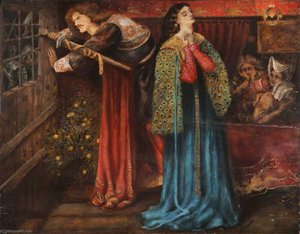
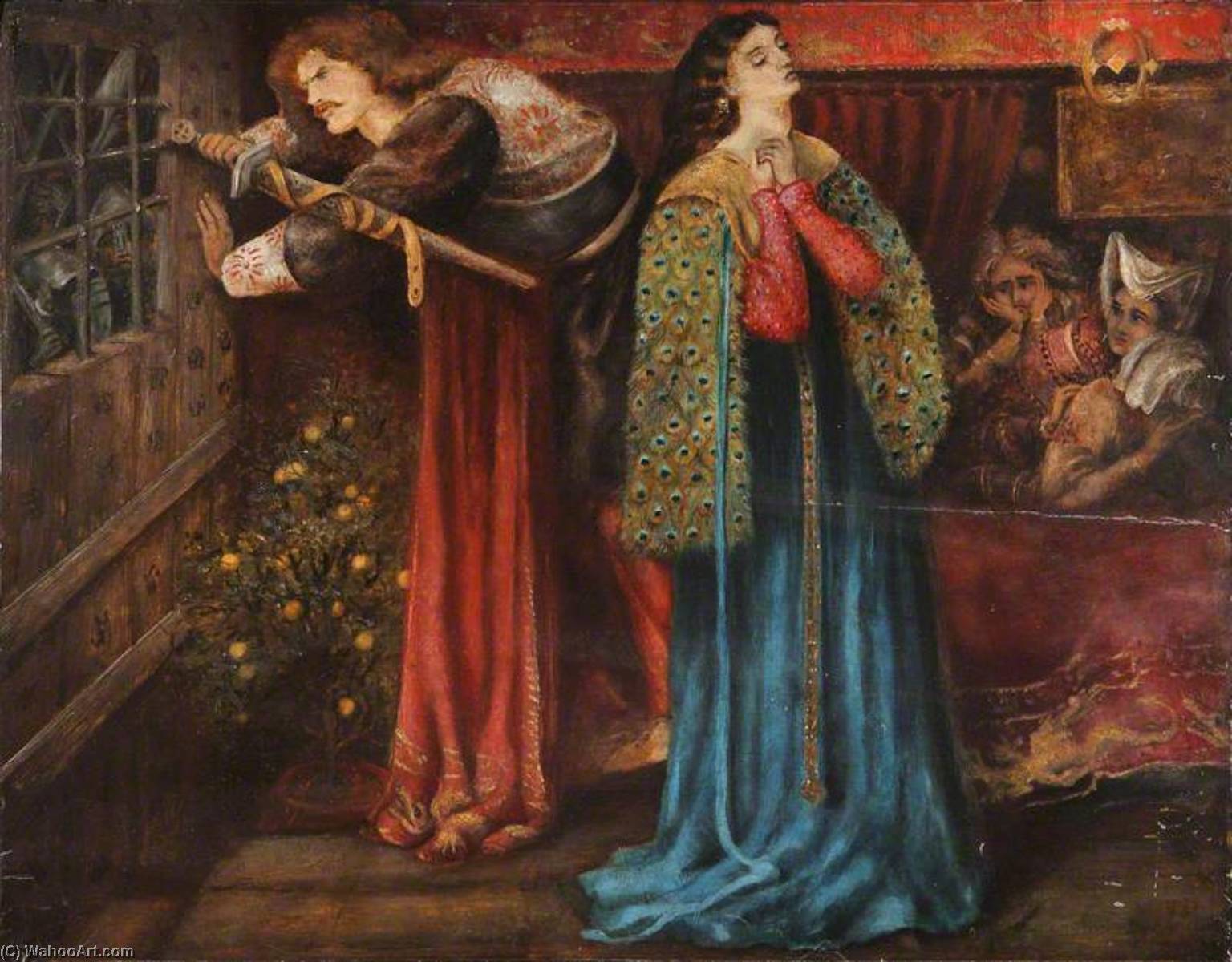
Sir Launcelot in the Queen's Chamber (after Dante Gabriel Rossetti)
 Oil
Oil- WallArt
- Pre-Raphaelite
 1898
1898- 19th Century
 36.0 x 45.0 cm
 National Trust
 Read More
Hand Made Oil Reproduction
Hand-painted oil on canvas in your size and frame, made to order by our artists. ( Buy Print Buy Image)




P118B $10

P118H $10

P118W $10

P438Z $10

P508JH $12

P508YH $12

P805H $10

P805Z $10

P919BZ $10

P919G $10

P919XJ $10

P959ZH $10

P968JZ $12

W106C $8

W218G $10

W218JH $8

W218Y $10

W307PJ $10

W316G $10

W316PJ $8

W316Y $10

W398PJ $8

W4111J $10

W500HY $15

W500JH $15

W692G $12

W849H $8

W940BG $15

W953PJ $8




Pick from our preset sizes that match the artwork's original proportions.

You may enter your own dimensions to fit a specific frame or space. If your selected size does not match the original image's proportions, we will either crop the artwork or extend the painting with additional hand-painted elements. A digital mockup will be sent for your approval before production begins.
Please note that the on-screen preview does not reflect the actual cropping or extension. Only the mockup will accurately show the final composition.
While custom sizes are available, we recommend selecting a dimension from the predefined list to preserve the original proportions.
After order, ArtsDot.com team will email client for instructions and provide a mockup preview
Worldwide Delivery () in 3/4 weeks instead of standard 5 weeks. (26 August). No compromise on quality.

Free Worldwide Express Shipping

High-Quality Linen Canvas

Full Shipping Insurance

Customs Tax Refund Guarantee

True Color Matching Guarantee

60-Day Return Policy (Defects Only)

100% Money-Back Guarantee

Bulk Discount Offer
 Glass option is only available in size under 110 CM

Sir Launcelot in the Queen's Chamber (after Dante Gabriel Rossetti)
Reproduction Medium
Reproduction Size
-


Total Price
$ 263
Artwork Description
A Moment Frozen in Medieval Tension
In the evocative masterpiece Sir Launcelot in the Queen's Chamber, the viewer is transported into a realm of chivalry, secrecy, and profound psychological drama. Painted by Henry Treffry Dunn in 1898, this work serves as a breathtaking homage to the legendary Dante Gabriel Rossetti. The scene captures a pivotal, breathless moment within the Queen’s private quarters, where the air is thick with the weight of unspoken truths. On one side of the frame, Sir Launcelot stands as a figure of martial strength, his hand gripping a sword, yet his presence is tempered by the heavy atmosphere of the chamber. Opposite him, a woman gazes downward, her posture suggesting a complex blend of melancholy and trepidation. The composition is masterfully intricate, drawing the eye through a crowded room filled with onlookers whose silent observations heighten the sense of a scandal unfolding in real-time.
The painting’s atmosphere is further enriched by its meticulous attention to the material world of the late Victorian interpretation of the Middle Ages. A central chair and a richly appointed dining table anchor the space, providing a sense of domestic stability that contrasts sharply with the emotional volatility of the protagonists. The colors are nothing short of luminous; Dunn employs a palette of rich, vibrant hues that breathe life into the heavy fabrics and metallic accents of the period attire. This use of light and color does more than just decorate the scene—it illuminates the psychological depth of the characters, casting shadows that mirror the moral ambiguity inherent in the Arthurian legends.
The Legacy of Pre-Raphaelite Brilliance
To understand the soul of this painting, one must look to its lineage. Henry Treffry Dunn was not merely a painter but an apprentice to the great Dante Gabriel Rossetti, and that intimate connection is palpable in every brushstroke. As a practitioner of the Pre-Raphaelite tradition, Dunn rejected the sterile academicism of his era in favor of a style defined by intense detail, luminous color, and a deep reverence for the natural and the legendary. This specific work, being an "after Rossetti" piece, carries the DNA of the movement’s obsession with Arthurian myth and the ethereal beauty of its subjects. The technique is characterized by a meticulousness that demands close inspection, where every fold of velvet and glint of steel serves to reinforce the narrative's gravity.
For the discerning collector or interior designer, this reproduction offers more than just a visual centerpiece; it offers a window into a lost era of romanticism. The painting functions as a powerful focal point in any sophisticated space, providing a sense of historical weight and narrative complexity. Whether placed in a library filled with classical literature or as a dramatic statement piece in a contemporary dining room, Sir Launcelot in the Queen's Chamber invites conversation and contemplation. It is an invitation to dwell within the tension of the past, making it an exquisite choice for those who seek art that possesses both decorative grandeur and profound emotional resonance.
Related Artworks
Artist Biography
A Shadow Amongst the Masters: The Life of Henry Treffry Dunn
In the grand, luminous tapestry of the Victorian era, certain names shine with an unparalleled brilliance, while others linger like soft shadows in the periphery of greatness. Henry Treffym Dunn (1838–1899) belongs to that evocative second category—a painter whose legacy is inextricably linked to the heartbeat of the Pre-Raphaelite movement. Though history often remembers the titans of the era, such as Dante Gabriel Rossetti, Dunn’s presence in the artistic landscape was far from incidental. He was a practitioner of profound devotion, an artist who found his purpose not merely in original creation, but in the meticulous preservation and soulful reinterpretation of the aesthetic ideals that defined his generation.
Born in England, Dunn’s formative years remain shrouded in much of the mystery that often surrounds the lives of 19th-century artists. However, his professional destiny was irrevocably shaped when he entered the orbit of Rossetti. Under the direct tutelage of this Pre-Raphaelite master, Dunn did more than learn the mechanics of paint and pigment; he absorbed a philosophy of art. He learned to reject the sterile, polished conventions of the academic establishment in favor of a style that championed luminous color palettes, intense psychological depth, and an almost obsessive devotion to the natural world. This apprenticeship transformed him into a vital custodian of the Rossettian vision.
The Art of Devotion: Technique and Theme
Dunn’s artistic output is characterized by a remarkable technical precision that speaks to his disciplined training. He was a master of the impasto technique, utilizing thick, layered brushstrokes to build surfaces that possessed a tactile, sculptural quality. This method allowed him to capture the play of light across fabric and skin, imbuing his canvases with a dramatic intensity and a sense of breathing life. His work often functioned as a bridge between the original inspiration and the viewer, particularly through his celebrated copies of Rossetti’s most iconic works. These were not mere mechanical reproductions; rather, Dunn infused each piece with a palpable atmosphere, capturing the very soul of the movement's emotional resonance.
Beyond his role as an assistant and copyist, Dunn’s own thematic preoccupations revealed a romantic spirit deeply enamored with the medievalism of his age. His canvases frequently wandered through the mist-shrouded realms of Arthurian legend, where chivalry, tragedy, and enchantment intersect. Through his brush, the legends of old were rendered with a startling clarity and a sense of historical weight. Notable examples of his narrative prowess include:
- The Attainment of the Sanc Grael: A work that captures the spiritual yearning and mystical gravity central to the Arthurian mythos.
- Sir Launcelot in the Queen’s Chamber: A painting that demonstrates his ability to weave intimacy with the grand, dramatic tension of legendary figures.
Legacy and Historical Significance
The historical significance of Henry Treffry Dunn lies in his role as a vital link in the continuity of Pre-Raphaelite art. While he may not have commanded the same level of individual fame as the leaders of the movement, his work ensured that the aesthetic and emotional language of Rossetti’s circle was documented and disseminated. He acted as a guardian of beauty, translating the complex symbolism and ethereal moods of the era into enduring visual records.
To study Dunn is to study the very texture of Victorian romanticism. His ability to blend meticulous detail with profound emotion offers a window into a period of intense artistic experimentation and spiritual searching. In the quiet corners of art history, Dunn remains a testament to the power of dedication—an artist who found his greatest glory in honoring the light of others while casting a beautiful, enduring shadow of his own.
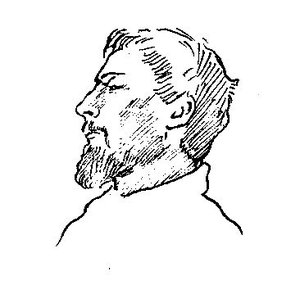
henry treffry dunn
1838 - 1899
Quick Facts
- Artistic Movement Or Style: Pre-Raphaelite
- Artists Or Movements Influenced By This Artist: Rossetti
- Artists Who Influenced This Artist: Dante Gabriel Rossetti
- Date Of Death: 1899
- Full Name: Henry Treffry Dunn
- Nationality: British
- Notable Artworks:
- The Attainment of the Sanc Grael
- Sir Launcelot in the Queen's Chamber
- Place Of Birth: England
Related Articles
Dante Gabriel Rossetti's 25 Masterpieces: A Journey Through Victorian Art & Symbolism | ArtsDot
Explore 25 iconic artworks by Dante Gabriel Rossetti, a leading Pre-Raphaelite artist. Discover the stories behind masterpieces like 'Proserpine' & 'Beata Beatrix'. Find museum-quality art reproductions and elevate your home decor with ArtsDot.com.
Sir Joshua Reynolds' Masterpieces: 25 Portraits of Power & Refinement | ArtsDot
Explore 25 captivating portraits by Sir Joshua Reynolds, a master of British art. Discover stories behind his iconic paintings, elegant style & historical influence. Find museum-quality reproductions and elevate your home decor on ArtsDot.com.

Sir Alfred Munnings' Masterpieces: 25 Paintings That Define Equine Art | ArtsDot
Explore 25 iconic Sir Alfred Munnings paintings! Discover the beauty of British Impressionism, equine art & rural England. Find museum-quality reproductions and elevate your home decor with ArtsDot. Explore the full collection online.
The Pre-Raphaelite Brotherhood: Rebellion, Romance & Medieval Revival
Explore the captivating world of the Pre-Raphaelite Brotherhood! Discover their rebellious spirit, iconic masterpieces & lasting influence on art history. Learn about Rossetti, Millais & more.
Sir John Everett Millais: Pre-Raphaelite Rebellion & Victorian Narrative Detail
Explore the revolutionary art of Sir John Everett Millais & the Pre-Raphaelite Brotherhood. Discover their radical realism, symbolic narratives, and lasting impact on Victorian aesthetics. A deep dive into 19th-century masterpieces.