 Preview
 Send
Send Share
Share
 Details

 Download
 Similars
 X-Ray
X-Ray Diaporama
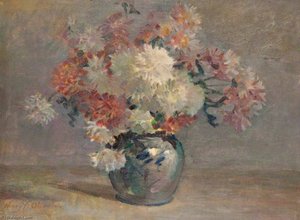
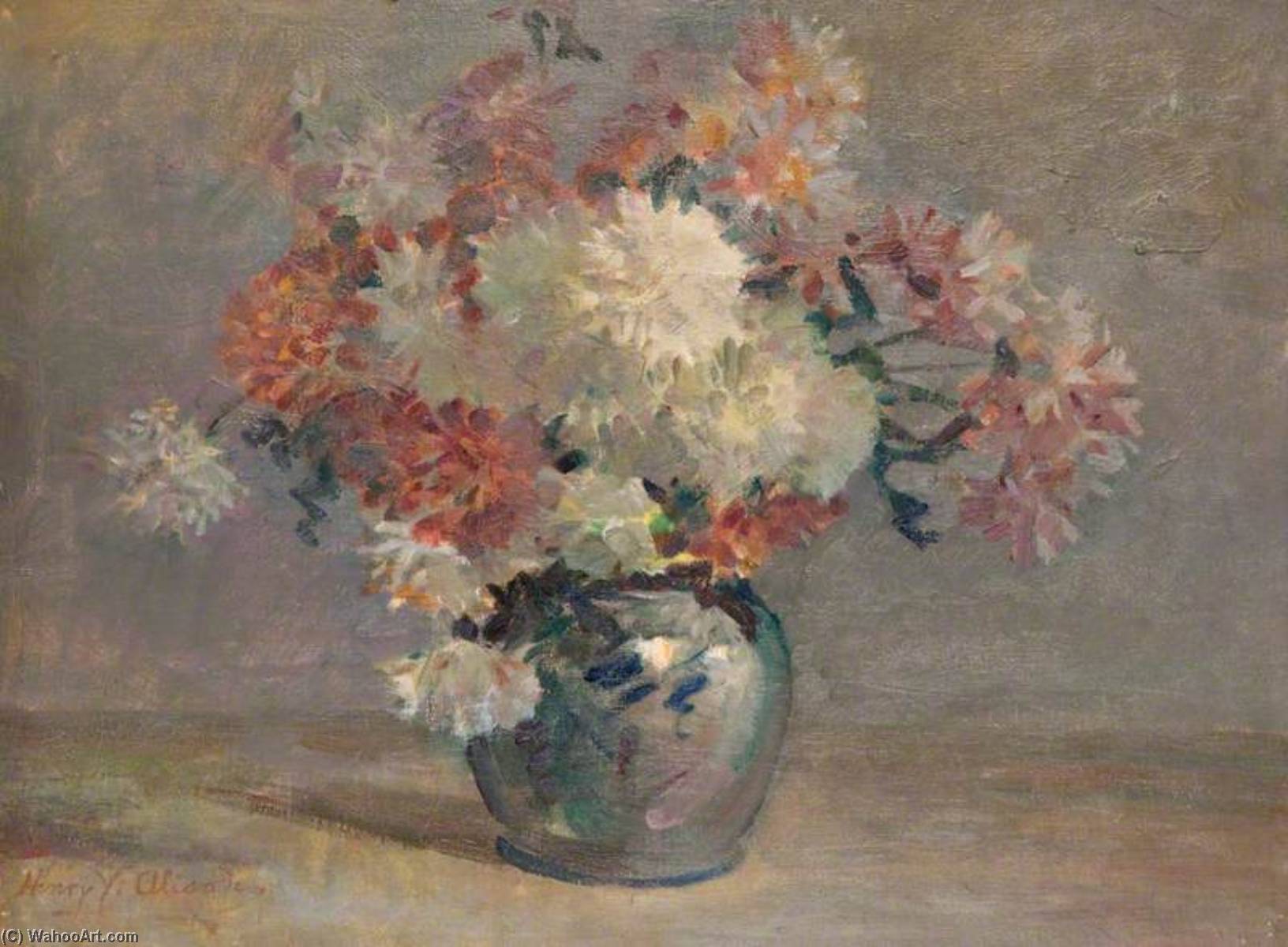
Vase of Flowers
 46.0 x 61.0 cm
 Read More
Giclée / Art Print
Museum-quality giclée or canvas print with fast production and flexible finish options. ( Buy Hand Made Painting Buy Image)




































Pick from our preset sizes that match the artwork's original proportions.

You may enter your own dimensions to fit a specific frame or space. If your selected size does not match the original image's proportions, we will either crop the artwork or extend the image with a mirrored or solid-fill edge. A digital mockup will be sent for your approval before production begins.
Please note that the on-screen preview does not reflect the actual cropping or extension. Only the mockup will accurately show the final composition.
While custom sizes are available, we recommend selecting a dimension from the predefined list to preserve the original proportions.
Worldwide Delivery () in 2 weeks instead of standard 4/5 weeks. (24 August)

Free Worldwide Express Shipping

High-Quality Linen Canvas

Full Shipping Insurance

Customs Tax Refund Guarantee

True Color Matching Guarantee

60-Day Return Policy (Defects Only)

100% Money-Back Guarantee

Bulk Discount Offer
 Glass option is only available in size under 110 CM

Vase of Flowers
Giclée / Art Print
Reproduction Size
-


Total Price
$ 63
Related Artworks










Artist Biography
A Highland Visionary: The Life and Legacy of Henry Young Alison
The story of Henry Young Alison is one of profound connection, where the rhythmic precision of music met the rugged, untamed spirit of the Scottish landscape. Born on September 21, 1889, in Dysart, Fife, Alison’s early years were shaped by a lineage of craftsmanship and artistry. While some accounts suggest a childhood steeped in musical tradition—reflecting his family's deep ties to instrumental performance—it was through the brush and palette that he truly found his voice. His journey from the coastal reaches of Fife to the prestigious halls of London’s art institutions would eventually lead him to become a pivotal figure in the Scottish art scene, serving as a director at the Glasgow School of Art and leaving an indelible mark on the way the Highlands were perceived by the world.
Alison’s formal education provided the technical foundation upon which his emotive style was built. Between 1908 and 1912, he immersed himself in the Slade School of Fine Art in London, a period that proved transformative. Here, he breathed in the atmosphere of Impressionism, drawing inspiration from the light-drenched techniques of masters like Claude Monet and Pierre Renoir. This fascination with the ephemeral nature of light was further refined during his time at the Royal College of Art from 1912 to 1914. Through rigorous study of draughtsmanship and tonal variation, Alison developed a method of layering thin glazes of oil paint onto toned canvases. This meticulous process allowed him to create luminous, shimmering surfaces that could capture the precise moment a sunbeam pierces through a heavy mist or the way shadows deepen in a mountain glen.
The Soul of the Highlands and the Mastery of Light
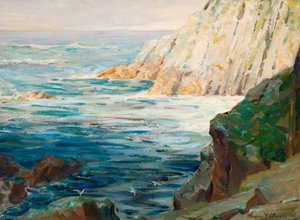
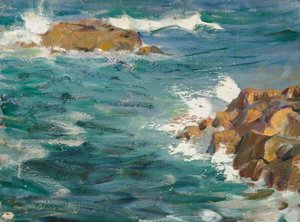
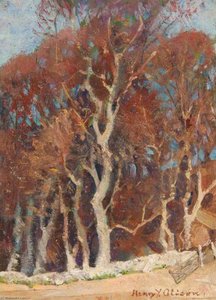
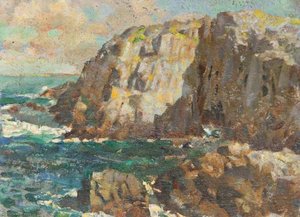
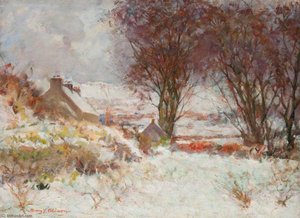
The true heart of Alison’s oeuvre lies in his devotion to the Scottish landscape. He possessed an uncanny, almost spiritual ability to translate the raw power of the Highlands onto canvas. His works are not merely topographical records but emotional landscapes; they pulse with a vibrant palette of deep greens, moody blues, and earthy browns that mirror the dramatic interplay of weather and terrain. Whether depicting the crashing energy of a Seascape with Breaking Waves or the quiet, frozen stillness of Winter at Muckbrig, his paintings evoke the very atmosphere of the land. He sought to capture not just the visual reality of Scotland, but its visceral feeling—the dampness of the air, the scent of peat, and the overwhelming scale of the mountains.
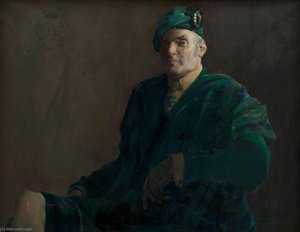
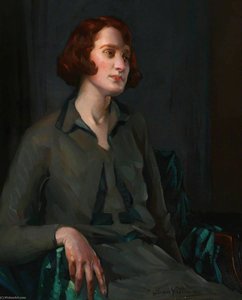
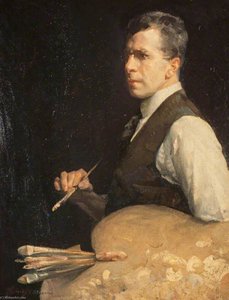
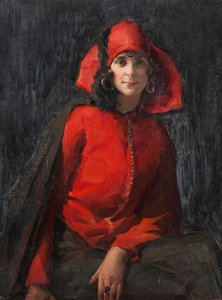
Beyond the vast landscapes, Alison’s artistry extended into the intimate realm of portraiture. His ability to convey the warmth of familial bonds and the dignity of his subjects provided a human counterpoint to his sweeping vistas. This duality—the ability to master both the monumental and the minute—is what defines his greatness. His technique allowed him to imbue skin tones with warmth and eyes with a reflective depth, much like the light he so carefully studied in nature. In his portraits, one finds the same sensitivity to texture and atmosphere that characterizes his landscapes, creating a cohesive artistic language that celebrates the beauty of both the natural world and the human spirit.
A Complex Legacy at the Glasgow School of Art
The later years of Alison’s life were marked by significant professional responsibility and a complex reputation within the academic art community. His tenure at the Glasgow School of Art was characterized by a formidable, often polarizing presence. Having joined the staff in 1928, he eventually stepped into the role of interim Director in 1945. While his leadership was marked by an uncompromising dedication to artistic standards, historical accounts suggest a man of intense and sometimes abrasive temperament. He was known for a brusque, exacting style that could be intimidating to students, yet there was no denying his profound commitment to the institution's excellence.
Despite the complexities of his personality, Alison’s contribution to the history of Scottish art remains undisputed. His life’s work stands as a bridge between the classical traditions of draughtsmanship and the emotive freedom of Impressionism. He leaves behind a legacy of paintings that serve as windows into a vanished era of the Highlands—a period of rugged beauty and quiet strength. Through his mastery of light, color, and texture, Henry Young Alison ensured that the fleeting moments of the Scottish landscape would be preserved in a state of eternal, luminous grace.
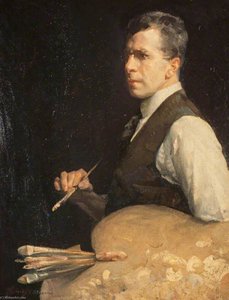
henry young alison
1889 - 1972
Quick Facts
- Artistic Movement Or Style: Impressionism
- Artists Or Movements Influenced By This Artist: ['British Impressionism']
- Artists Who Influenced This Artist: ['Claude Monet']
- Date Of Birth: 1889
- Date Of Death: 1972
- Full Name: Henry Young Alison
- Nationality: British
- Notable Artworks: ['Seascape with Breaking Waves']
- Place Of Birth: Scottish Highlands