 Preview
 Send
Send Share
Share
 Details

 Download
 Similars
 X-Ray
X-Ray Diaporama
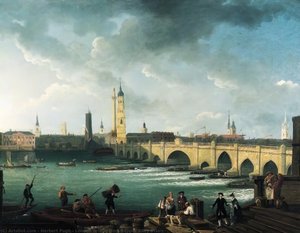
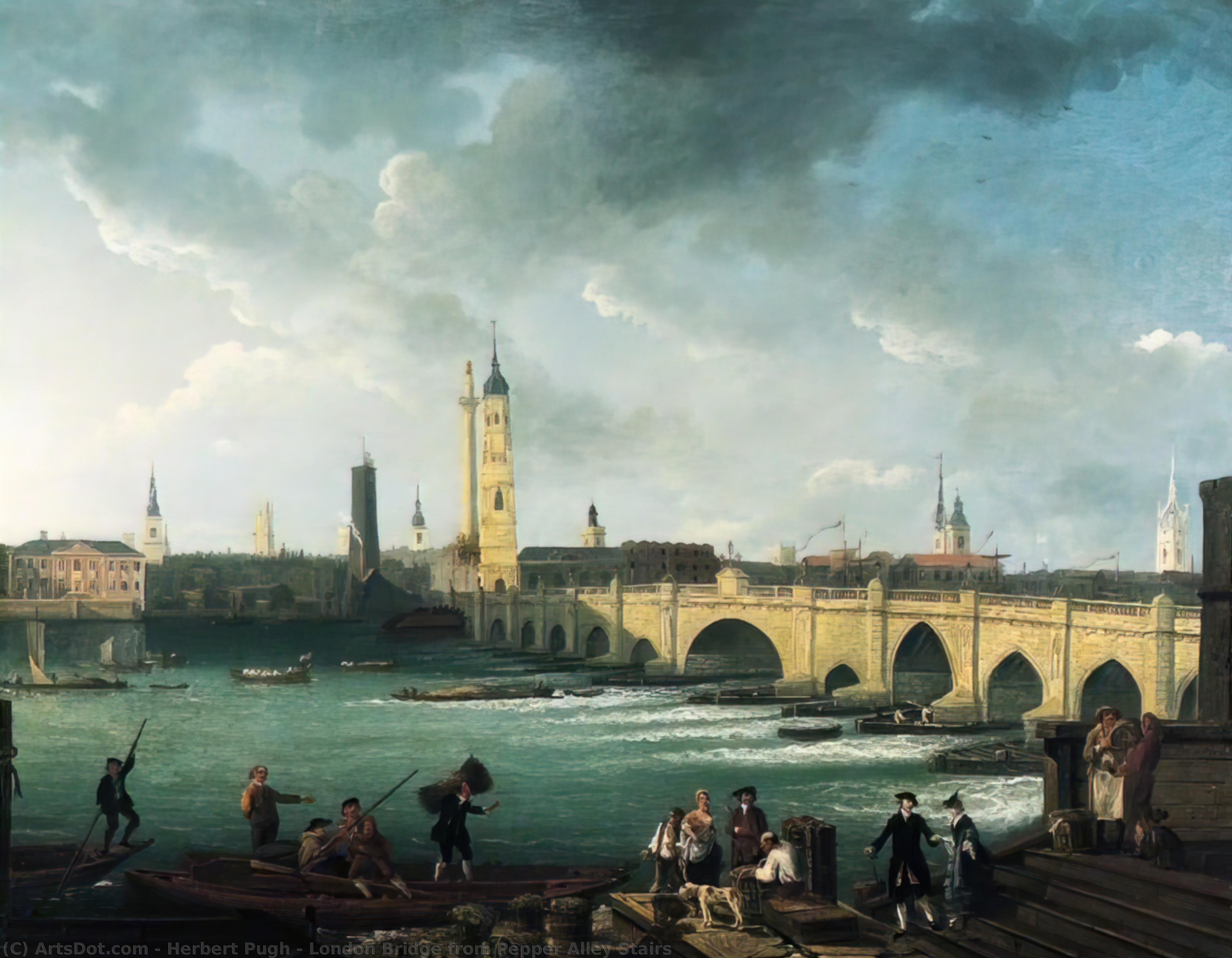
London Bridge from Pepper Alley Stairs
 98.0 x 123.0 cm
 Read More
Hand Made Oil Reproduction
Hand-painted oil on canvas in your size and frame, made to order by our artists. ( Buy Print Buy Image)




































Pick from our preset sizes that match the artwork's original proportions.

You may enter your own dimensions to fit a specific frame or space. If your selected size does not match the original image's proportions, we will either crop the artwork or extend the painting with additional hand-painted elements. A digital mockup will be sent for your approval before production begins.
Please note that the on-screen preview does not reflect the actual cropping or extension. Only the mockup will accurately show the final composition.
While custom sizes are available, we recommend selecting a dimension from the predefined list to preserve the original proportions.
After order, ArtsDot.com team will email client for instructions and provide a mockup preview
Worldwide Delivery () in 3/4 weeks instead of standard 5 weeks. (27 August). No compromise on quality.

Free Worldwide Express Shipping

High-Quality Linen Canvas

Full Shipping Insurance

Customs Tax Refund Guarantee

True Color Matching Guarantee

60-Day Return Policy (Defects Only)

100% Money-Back Guarantee

Bulk Discount Offer
 Glass option is only available in size under 110 CM

London Bridge from Pepper Alley Stairs
Reproduction Medium
Reproduction Size
-


Total Price
$ 263
Related Artworks








Artist Biography
The Atmospheric Legacy of Herbert Pugh
In the vibrant, often turbulent landscape of the mid-18th century, few artists captured the intersection of urban grit and pastoral serenity as poignantly as Herbert Pugh. An Irish painter who navigated the bustling streets of London, Pugh emerged during a transformative era in British art, contributing to the early stirrings of the Romantic movement. His life, though tragically brief, was marked by a profound connection to the environments he depicted, ranging from the rugged, mist-shrouded valleys of Wales to the crowded, atmospheric vistas of the London cityscape. Born in Ireland around 1758, his journey brought him to the heart of the English art world, specifically the lively Piazza in Covent Garden, where he immersed himself in a community of creators and thinkers.
Pugh’s artistic development was deeply intertwined with the prestigious institutions of his time. His early recognition was swift; by 1760, he was already contributing to the inaugural exhibition of the Society of Artists, presenting a captivating Landscape with Cattle that signaled his burgeoning talent for naturalistic detail. His dedication to his craft earned him a prestigious premium from the Society of Arts in 1765, and by 1766, he had secured membership in the newly incorporated Society of Artists, where he continued to exhibit his works through 1776. This period of professional stability allowed him to refine a style that balanced the meticulous observation of nature with an almost theatrical sense of light and shadow.
A Mastery of Light and Landscape
The true essence of Pugh’s artistry lies in his ability to evoke emotion through atmospheric perspective. Drawing inspiration from the classical traditions of masters like Claude Lorrain, Pugh utilized soft, diffused light to create a sense of immense depth and tranquility within his landscapes. His depictions of the Welsh wilderness—particularly scenes reminiscent of the Snowdonia region—are characterized by dramatic skies and rugged terrain that seem to breathe with life. He possessed a unique gift for capturing the "mood" of a place, using subtle gradations of tone to guide the viewer’s eye through tranquil valleys and toward distant, hazy mountains.
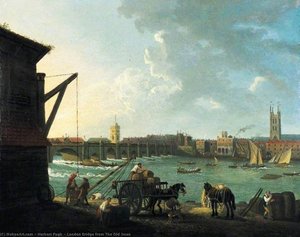
Beyond the pastoral, Pugh also turned his gaze toward the urban complexity of London. His views of London Bridge stand as significant examples of his ability to translate the energy of city life into a painterly format. In these works, one can sense the influence of William Hogarth; while Pugh attempted to emulate Hogarth’s more narrative and social-realist approach, he ultimately found his greatest success in the atmospheric and the scenic. Whether painting the bustling docks or the quietude of a riverside view from The Old Swan, his work remains a testament to the dualities of 18th-century life: the expansion of the modern metropolis and the enduring, untouched beauty of the natural world.
A Tragic End and Lasting Significance
Despite his professional triumphs, Pugh’s personal life was shadowed by hardship. Historical accounts suggest that his health declined due to excessive drinking, a struggle that ultimately led to his premature death shortly after 1788. This loss left the art world deprived of an artist who was just beginning to master the nuances of the Romantic landscape. However, the impact of his work endured long after his passing. His paintings continued to be celebrated in retrospective exhibitions, such as the Century of British Art at the Grosvenor Gallery in 1888, which showcased his views of London Bridge to a new generation of admirers.
Today, the works of Herbert Pugh serve as vital historical windows into the aesthetic sensibilities of the late Georgian era. His ability to blend the following elements makes his oeuvre particularly enduring:
- The interplay of light and shadow to create emotional resonance.
- Topographical accuracy blended with romanticized imagination.
- A bridge between styles, connecting the realism of Hogarth with the atmospheric depth of the classical landscape tradition.
Through his canvases, we encounter a vanished world—a world of mist-covered Welsh peaks and the rhythmic pulse of old London—preserved forever through the sensitive brush of an artist who saw the profound beauty in both the wild and the urban.
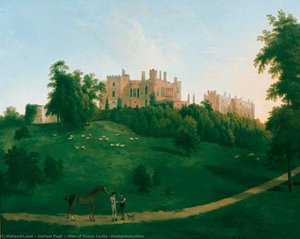
herbert pugh
1758 - 1788
Quick Facts
- Artistic Movement Or Style: Congregational Church Minister
- Date Of Birth: November 2, 1898
- Date Of Death: July 5, 1941
- Full Name: Herbert Cecil Pugh
- Nationality: British
- Notable Artworks: ['Landscape with Cattle']
- Place Of Birth: Johannesburg, South Africa