 Preview
 Send
Send Share
Share
 Details

 Download
 Similars
 X-Ray
X-Ray Diaporama
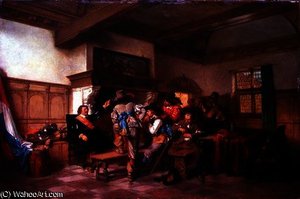
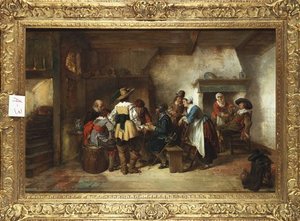
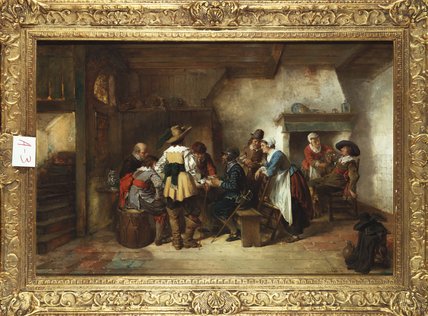
The Card Game

 Read More
Hand Made Oil Reproduction
Hand-painted oil on canvas in your size and frame, made to order by our artists. ( Buy Print Buy Image)




































Pick from our preset sizes that match the artwork's original proportions.

You may enter your own dimensions to fit a specific frame or space. If your selected size does not match the original image's proportions, we will either crop the artwork or extend the painting with additional hand-painted elements. A digital mockup will be sent for your approval before production begins.
Please note that the on-screen preview does not reflect the actual cropping or extension. Only the mockup will accurately show the final composition.
While custom sizes are available, we recommend selecting a dimension from the predefined list to preserve the original proportions.
After order, ArtsDot.com team will email client for instructions and provide a mockup preview
Worldwide Delivery () in 3/4 weeks instead of standard 5 weeks. (17 August). No compromise on quality.

Free Worldwide Express Shipping

High-Quality Linen Canvas

Full Shipping Insurance

Customs Tax Refund Guarantee

True Color Matching Guarantee

60-Day Return Policy (Defects Only)

100% Money-Back Guarantee

Bulk Discount Offer
 Glass option is only available in size under 110 CM

The Card Game
Reproduction Medium
Reproduction Size
-


Total Price
$ 438
Related Artworks
Artist Biography
Maurice Prendergast: A Pioneer of American Color
Born in St. John’s, Newfoundland, in 1858, Maurice Prendergast emerged as a pivotal figure in the development of American landscape painting at the turn of the 20th century. His artistic journey began not with formal training but through practical experience – initially working as a show card designer in Boston, a surprisingly formative period that honed his eye for composition and color. This early work instilled in him a deep appreciation for visual communication and laid the groundwork for his later explorations into vibrant, expressive landscapes. Prendergast’s career was marked by a deliberate rejection of academic traditions, embracing instead a bold, post-impressionist style characterized by flat planes of color, short brushstrokes, and assertive outlines – techniques that would become instantly recognizable as his own.
Prendergast's artistic development can be traced through several key influences. The vibrant colors and atmospheric effects of J.M.W. Turner profoundly impacted his approach to light and landscape. Similarly, the bold brushwork and flattened forms of Paul Gauguin resonated with his desire to capture the essence of a scene rather than its meticulous detail. However, Prendergast’s style was uniquely American, drawing inspiration from the rugged beauty of the New England coast – particularly the landscapes of Maine and Massachusetts – as well as the vibrant hues of the Canadian wilderness. He sought to translate these experiences onto canvas with an immediacy and emotional intensity rarely seen in contemporary art.
His early works, such as “Landscape with Figures” (1921) and “Figures on a Beach” (1910/1915), exemplify this approach. These paintings are not merely depictions of scenery; they are imbued with a palpable sense of atmosphere and mood. The figures within the landscapes are often secondary, serving to anchor the viewer’s eye and heighten the emotional impact of the scene. Prendergast's use of color is particularly striking – he employed a palette of intense blues, greens, yellows, and reds, creating a visual richness that was both captivating and unsettling. His watercolor works, like “Gloucester” (1910), demonstrate his mastery of capturing fleeting moments of light and shadow, imbuing the landscape with an almost ephemeral quality.
The Japanese Influence and a Shift in Style
A transformative experience occurred during Prendergast’s travels to Japan between 1893 and 1895. Accompanied by his friend and fellow artist George Henry, he spent nearly two years immersed in the culture and art of Japan. This journey had a profound effect on his artistic sensibilities, leading to a significant shift in his style. The Japanese prints, with their bold compositions, flattened perspectives, and emphasis on color, exerted a powerful influence on Prendergast’s work. He began to incorporate these elements into his paintings, simplifying forms, reducing detail, and prioritizing the expressive potential of color.
This period saw the emergence of a new phase in Prendergast's career, characterized by looser brushwork, brighter colors, and a greater sense of spontaneity. His landscapes became more dynamic and emotionally charged, reflecting his newfound appreciation for Japanese aesthetics. The influence is evident in works like “A Park Scene with Baby Carriage” (1906) and "The Mall, Central Park" (1900/1903), where the flattened perspective and simplified forms evoke the spirit of Japanese woodblock prints. Despite the loss of some paintings from his Japan trip, the impact on his artistic vision is undeniable.
London Years and Continued Experimentation
In 1903, Prendergast relocated to London, seeking greater opportunities for portrait commissions and a broader audience for his work. He established a studio in Chelsea, joining a vibrant community of artists and writers. During his time in London, he continued to experiment with various techniques and styles, incorporating elements of Impressionism and Post-Impressionism into his practice. His portraits, often characterized by their bold colors and expressive brushwork, gained recognition for their distinctive character.
Despite the challenges of adapting to a new environment, Prendergast remained committed to his artistic vision. He continued to produce landscape paintings that reflected his unique style – characterized by flattened planes of color, short brushstrokes, and an intense emotionality. His later works, such as “Docks, East Boston” (1900/1904), demonstrate a refined mastery of technique and a deep understanding of the interplay between light and color. His final years were marked by continued experimentation and a dedication to capturing the beauty and spirit of the American landscape.
Legacy and Historical Significance
Maurice Prendergast’s contribution to American art is significant for several reasons. He was one of the first American painters to fully embrace a post-impressionist style, paving the way for future generations of artists who sought to break free from academic traditions. His bold use of color, simplified forms, and expressive brushwork established him as a distinctive voice in the early 20th century art world.
Furthermore, his journey to Japan and subsequent incorporation of Japanese aesthetics into his work demonstrated a willingness to engage with diverse cultural influences – a characteristic that was relatively rare among American artists at the time. Prendergast’s legacy endures through his captivating landscapes, vibrant portraits, and his pioneering spirit as an artist who dared to challenge conventions and forge his own unique path.
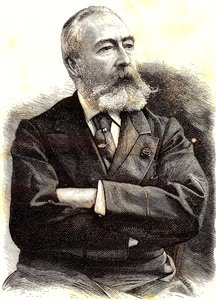
herman frederik carel ten kate
1858 - 1931 , Netherlands
Quick Facts
- Artistic Movement Or Style: Glasgow Boys, Landscape
- Artists Or Movements Influenced By This Artist:
- William-Adolphe Bouguereau
- Tony Robert-Fleury
- Artists Who Influenced This Artist:
- Edward Atkinson Hornel
- Courbet
- Rubens
- Date Of Birth: 1858-03-14
- Date Of Death: 1943-07-14
- Full Name: George Henry
- Nationality: Scottish
- Notable Artworks:
- A Galloway Landscape
- The Druids: bringing home the mistletoe
- Place Of Birth: Irvine, Scotland
Related Articles
Echoes of the Past: Historical Painting from Narrative to Contemporary Interpretation
Explore the captivating world of historical painting! Discover iconic masterpieces, influential movements & expert insights for collectors. Learn about narrative art's evolution and find your perfect artwork at ArtsDot.
18th Century Masters: 10 Artworks That Define an Era | ArtsDot
Journey through 18th century art! Explore 10 iconic paintings – from Rococo elegance to Neoclassical grandeur. Discover Fragonard, David & more. Find museum-quality reproductions and elevate your home decor on ArtsDot.com.
Alonzo Chappel: Historical Narrative & Romantic Vision in 19th-Century American Painting
Explore the captivating world of Alonzo Chappel, a master of 19th-century American historical painting. Discover his iconic works, Romantic style & lasting legacy. Learn about collecting Chappel's art today!
The Dramatic Flourish of Baroque Art: History, Characteristics & Enduring Influence
Explore the dramatic world of Baroque art! Discover its history, defining characteristics, and lasting influence on painting, sculpture & architecture. A comprehensive guide for art lovers.
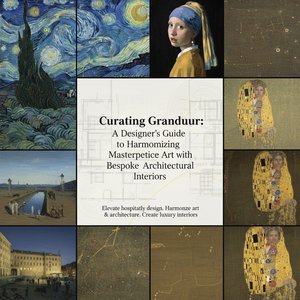
Harmonizing History & Hue: A Guide to Matching Art Styles with Interior Architecture for Balanced Décor
Elevate your interior design with our expert guide to harmonizing art styles & architecture. Discover timeless pieces, color palettes, & custom artwork solutions for balanced, luxury spaces. Expert advice included!