Preview
 Send
Send Share
Share
 Details

 Download
 Similars
 X-Ray
X-Ray Diaporama
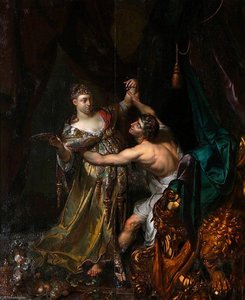
Tamar and Ammon
 Baroque
 70.0 x 60.0 cm
 Read More
Hand Made Oil Reproduction
Hand-painted oil on canvas in your size and frame, made to order by our artists. ( Buy Print Buy Image)




































Pick from our preset sizes that match the artwork's original proportions.

You may enter your own dimensions to fit a specific frame or space. If your selected size does not match the original image's proportions, we will either crop the artwork or extend the painting with additional hand-painted elements. A digital mockup will be sent for your approval before production begins.
Please note that the on-screen preview does not reflect the actual cropping or extension. Only the mockup will accurately show the final composition.
While custom sizes are available, we recommend selecting a dimension from the predefined list to preserve the original proportions.
After order, ArtsDot.com team will email client for instructions and provide a mockup preview
Worldwide Delivery () in 3/4 weeks instead of standard 5 weeks. (25 August). No compromise on quality.

Free Worldwide Express Shipping

High-Quality Linen Canvas

Full Shipping Insurance

Customs Tax Refund Guarantee

True Color Matching Guarantee

60-Day Return Policy (Defects Only)

100% Money-Back Guarantee

Bulk Discount Offer
 Glass option is only available in size under 110 CM

Tamar and Ammon
Reproduction Medium
Reproduction Size
-


Total Price
$ 263
Related Artworks


Artist Biography
The Botanical Elegance of Herman van der Mijn
In the golden age of 18th-century botanical art, few names evoke the delicate precision and courtly splendor of Herman van der Mijn. Born in Amsterdam around 1684, Van der Mijn was a painter whose brush captured not merely the physical form of flora, but the very essence of life and scientific curiosity that defined the Enlightenment. His journey was one of movement and prestige, stretching from the artistic hubs of the Dutch Republic through the vibrant courts of Europe, eventually finding a grand stage in London. As a master of both the intimate botanical still life and the dignified portrait, he bridged the gap between the meticulous observation of nature and the social grandeur of the aristocracy.
The foundations of his extraordinary skill were laid in the studios of influential mentors, most notably Ernst Stuven. It was under such tutelage that Van der der Mijn mastered the subtle textures of petals, the translucency of dew, and the complex architecture of stems—a discipline that would become his lifelong hallmark. His professional ascent was marked by significant milestones, including his admission as a master to the Antwerp Guild of St. Luke in 1712. This period of rigorous training prepared him for the highest levels of patronage, allowing him to transition from a skilled student to a sought-after artist capable of serving the most powerful figures of his era.
A Life of Courtly Patronage and Artistic Legacy
The trajectory of Van der Mijn’s career was profoundly shaped by his ability to navigate the sophisticated circles of European royalty. His appointment as court painter to Johann Wilhelm, Elector Palatine, served as a pivotal moment, elevating his status from a regional talent to an artist of international significance. This role brought him into contact with the intellectual and cultural currents flowing through the courts of Düsseldorf and beyond. His travels were not merely personal journeys but artistic expeditions; his passage through Brussels and Paris eventually led him to London, where he established a lasting presence between 1717 and 1737.
In London, Van der Mijn found a fertile ground for both his botanical studies and his portraiture. He secured prestigious commissions from figures such as Anna van Hannover, further cementing his reputation among the British elite. His work during these years reflected a unique synthesis of Dutch precision and English elegance. Beyond his individual achievements, perhaps his most enduring contribution to the art world was the cultivation of an artistic dynasty. The Van der Mijn name became synonymous with talent, as his children—including George, Robert, Cornelia, Frans, Gerard, and Andreas—all pursued distinguished careers in painting. This familial tradition ensured that his stylistic influence and dedication to botanical accuracy would ripple through the generations.
The historical significance of Herman van der Mijn lies in his role as a conduit for artistic exchange. He did not merely paint; he taught and connected, introducing artists like Jan van Nickelen to new masters and instructing royalty, such as Anne, Princess Royal, in the delicate arts of drawing. His life remains a testament to an era where art, science, and social prestige were inextricably linked, leaving behind a legacy of blossoms captured in eternal, exquisite detail.
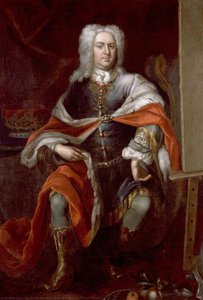
herman van der myn
1684 - 1741
Quick Facts
- Artistic Movement Or Style: Floral Still Life
- Artists Or Movements Influenced By This Artist: ['Rachel Ruysch']
- Artists Who Influenced This Artist: ['Ernst Stuven']
- Date Of Death: 1741
- Full Name: Herman van der Mijn
- Nationality: Dutch
- Notable Artworks: ['Anna van Hannover Portrait']
- Place Of Birth: Amsterdam, Netherlands
Related Articles

Dutch Baroque Masters: 10 Paintings That Shaped an Era | ArtsDot
Journey through the Golden Age with our guide to the Top 10 Dutch Baroque masterpieces! Explore iconic paintings by Rembrandt, Vermeer & Frans Hals. Find museum-quality art reproductions and elevate your home decor at ArtsDot.com.

Golden Age Reflections: Dutch Baroque Painting & Cultural Innovation
Explore the Dutch Golden Age of painting! Discover key artists like Vermeer & ter Borch, their innovative techniques, and the rich cultural context behind these Baroque masterpieces. Learn about collecting & appreciating this iconic art period.

Baroque Masterpieces: 10 Paintings That Defined an Era |
Journey through the drama & grandeur of Baroque art! Explore 10 masterpieces by Caravaggio, Rembrandt, Rubens & more. Discover stunning oil paintings, rich colors & timeless stories. Find museum-quality reproductions at .

Baroque Drama: Bringing Opulence & Emotion into Contemporary Interiors
Explore the opulent world of Baroque interior design! Discover key elements, modern applications & how to bring dramatic elegance into your home with 's authentic reproductions.

The Enduring Power of Painting: A Historical & Contemporary Exploration of Form and Emotion
Explore the rich history & enduring techniques of oil painting with ArtsDot. Discover masterpieces, learn about art collecting, and find authentic handmade reproductions crafted by skilled artists.