 Preview
 Send
Send Share
Share
 Details

 Download
 Similars
 X-Ray
X-Ray Diaporama
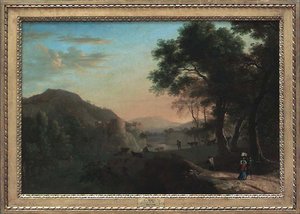
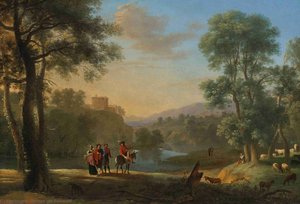
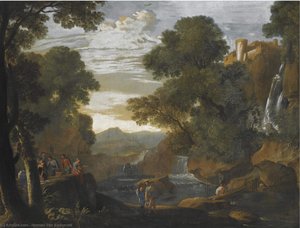
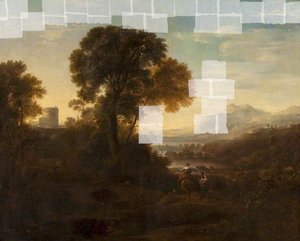
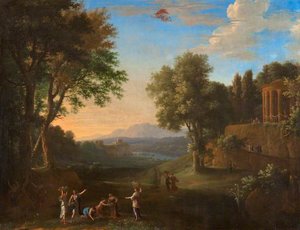
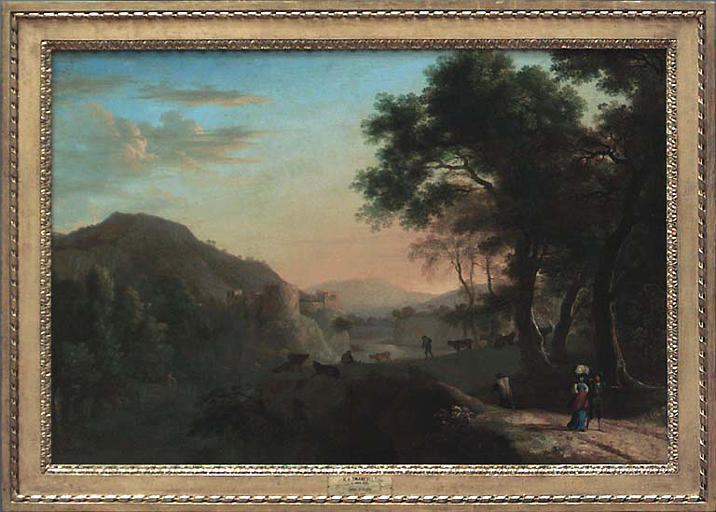
Site d'Italie. Soleil couchant


 Read More
Hand Made Oil Reproduction
Hand-painted oil on canvas in your size and frame, made to order by our artists. ( Buy Print Buy Image)




P118B $10

P118H $10

P118W $10

P438Z $10

P508JH $12

P508YH $12

P805H $10

P805Z $10

P919BZ $10

P919G $10

P919XJ $10

P959ZH $10

P968JZ $12

W106C $8

W218G $10

W218JH $8

W218Y $10

W307PJ $10

W316G $10

W316PJ $8

W316Y $10

W398PJ $8

W4111J $10

W500HY $15

W500JH $15

W692G $12

W849H $8

W940BG $15

W953PJ $8




Pick from our preset sizes that match the artwork's original proportions.

You may enter your own dimensions to fit a specific frame or space. If your selected size does not match the original image's proportions, we will either crop the artwork or extend the painting with additional hand-painted elements. A digital mockup will be sent for your approval before production begins.
Please note that the on-screen preview does not reflect the actual cropping or extension. Only the mockup will accurately show the final composition.
While custom sizes are available, we recommend selecting a dimension from the predefined list to preserve the original proportions.
After order, ArtsDot.com team will email client for instructions and provide a mockup preview
Worldwide Delivery () in 3/4 weeks instead of standard 5 weeks. (17 August). No compromise on quality.

Free Worldwide Express Shipping

High-Quality Linen Canvas

Full Shipping Insurance

Customs Tax Refund Guarantee

True Color Matching Guarantee

60-Day Return Policy (Defects Only)

100% Money-Back Guarantee

Bulk Discount Offer
 Glass option is only available in size under 110 CM

Site d'Italie. Soleil couchant
Reproduction Medium
Reproduction Size
-


Total Price
$ 313
Artwork Description
A Window to the Italian Idyl: Herman van Swanevelt’s “Site d’Italie. Soleil couchant”
Herman van Swanevelt’s “Site d’Italie. Soleil couchant,” a captivating landscape painting, isn't merely a depiction of a picturesque Italian vista; it’s an invitation to step into a realm of serene beauty and contemplative tranquility. Painted in the mid-17th century during the height of the Dutch Golden Age, this work embodies the burgeoning “Italianate Landscape” style – a movement that sought to capture the idealized beauty of Southern Europe, particularly Italy, with a distinctly Dutch sensibility. Van Swanevelt’s skill lies not just in his technical proficiency but in his ability to evoke a profound sense of atmosphere and emotion through light, color, and composition.
The scene unfolds across rolling hills bathed in the warm, golden hues of a setting sun. A meandering stream reflects the fiery sky, while grazing livestock – sheep and cattle – add a touch of pastoral life to the idyllic landscape. The horizon line is subtly placed, drawing the eye upwards into an expansive sky filled with delicate clouds and the promise of twilight. Notice how Van Swanevelt masterfully employs atmospheric perspective; distant elements are rendered in softer tones and less detail, creating a believable sense of depth and recession – a technique borrowed directly from classical landscape painting but executed with a uniquely Dutch subtlety.
The Art of ‘Contre-Jour’: Light and Shadow as Narrative
Van Swanevelt’s signature style is characterized by what art historians call “contre-jour,” or “against the light.” This technique, prevalent in his work, involves painting the illuminated foreground with a vibrant intensity while simultaneously depicting the background in subdued, shadowed tones. This creates a dramatic interplay of light and dark, heightening the sense of depth and adding an almost theatrical quality to the scene. The sunset itself isn’t simply a backdrop; it's a central element, actively shaping the mood and narrative of the painting. It suggests both the end of a day and the beginning of reflection – a moment suspended between activity and rest.
The careful layering of glazes—thin, translucent layers of paint applied over each other—contributes significantly to the luminous quality of the artwork. This technique allows Van Swanevelt to build up rich colors and subtle gradations of tone, mimicking the effects of light filtering through the atmosphere. Observe how the foliage is rendered – dense in the foreground, becoming increasingly diffuse and hazy with distance – a testament to his understanding of atmospheric perspective and his ability to capture the fleeting beauty of nature.
A Legacy of Idyllic Visions
“Site d’Italie. Soleil couchant” stands as a pivotal work in the development of landscape painting, bridging the traditions of early Dutch masters like Buytewech with the more monumental and idealized compositions favored by Claude Lorrain. Van Swanevelt's influence extended far beyond his own time; he became a sought-after painter for European royalty, including the Barberini family in Rome and Philip IV of Spain. His paintings were not merely decorative; they represented a sophisticated understanding of light, color, and composition – qualities that continue to resonate with viewers today.
The painting’s enduring appeal lies in its ability to transport us to a world of serene beauty and timeless tranquility. It's a reminder of the restorative power of nature and the evocative potential of art. Reproductions of “Site d’Italie. Soleil couchant” offer a remarkable opportunity to bring this masterpiece into your home, allowing you to experience its captivating atmosphere and profound emotional impact daily.
Related Artworks
Artist Biography
A Pioneer of Sunlit Landscapes: The Life and Art of Herman van Swanevelt
Born in Woerden, Netherlands, in 1603, Herman van Swanevelt emerged as a pivotal figure in the evolution of landscape painting during the Baroque period. Descended from a family with artistic roots—his ancestor was the renowned Lucas van Leyden—Swanevelt embarked on a journey that would lead him to redefine idyllic landscapes and profoundly influence artists like Claude Lorrain. The identity of his early teacher remains somewhat elusive, though recent scholarship suggests a possible apprenticeship under Willem Buytewech. His initial signed works appeared in Paris by 1623, hinting at an early ambition and willingness to seek artistic opportunities beyond his homeland. However, it was his relocation to Rome in 1629 that truly ignited his creative vision.Rome and the Birth of the Italianate Landscape
The Roman landscape proved transformative for Swanevelt. It was here he pioneered a new style characterized by sunlit ‘contrejours’—scenes bathed in light, often depicting the times of day with remarkable sensitivity. This innovation marked a departure from traditional landscapes laden with biblical or mythological narratives; Swanevelt focused on capturing the inherent beauty and tranquility of nature itself. He quickly became immersed in the vibrant artistic community, joining the ranks of the Bentvueghels—a society of Dutch and Flemish artists working in Rome—adopting the alias “heremiet” (hermit), perhaps reflecting his preference for solitary observation and contemplation. Swanevelt’s work flourished alongside that of Paul Bril, Cornelis van Poelenburch, Pieter van Laer, and ultimately Claude Lorrain, establishing him as a key figure in the classical phase of the "italianate landscape" genre. His talent did not go unnoticed by prominent patrons; he received commissions from the esteemed Barberini family, Pope Urban VIII, and even contributed to projects for Philip IV of Spain’s magnificent Buen Retiro Palace in Madrid, demonstrating his rising reputation and artistic significance.A Bridge Between Generations and Artistic Influences
Swanevelt's artistic development during the 1630s ran parallel to—and at times even anticipated—that of Claude Lorrain. He refined his idyllic landscape style, drawing inspiration from artists like Cornelis van Poelenburgh while forging a unique path. His importance lies not only in his individual achievements but also in his role as a crucial link between the first generation of Dutch Italianate painters – figures such as Bartholomeus Breenbergh and Van Poelenburch – and those who followed, imitating his monumental compositions and masterful treatment of southern sunlight. Even when he later turned to depicting Dutch scenery after returning to Paris in 1641—a move punctuated by occasional visits back to Woerden—he retained the characteristic luminosity that defined his Italian period. His acceptance into the Académie Royale de peinture et de sculpture in 1651 further solidified his standing within the French art world, and he contributed murals to significant locations like the sacristy of Santa Maria sopra Minerva and Palazzo Pamphili.Legacy and Rediscovery
Herman van Swanevelt’s legacy extends beyond his prolific output of paintings and etchings—including “The Birth of Adonis” (1654), now held in the Utah Museum of Fine Arts' permanent collection. He was a true innovator, recognized for pioneering sunlit ‘contrejours’ and establishing a new standard for idyllic landscapes. His influence on Claude Lorrain is undeniable, shaping the direction of landscape painting for generations to come. Though his work experienced a period of relative obscurity in the late 19th century, it has undergone a significant re-evaluation in recent decades, with scholars and art enthusiasts alike appreciating the quality, sensitivity, and enduring impact of his vision. Swanevelt’s contribution lies in bridging early landscape traditions with the classical ideals of the Baroque era, leaving an indelible mark on the history of art and continuing to inspire awe and admiration today.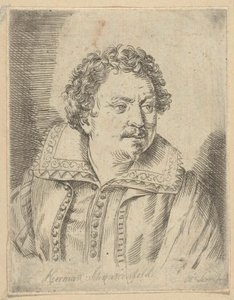
Herman van Swanevelt
1604 - 1655 , Netherlands
Quick Facts
- Artistic Movement Or Style: Baroque, Italianate landscape
- Artists Or Movements Influenced By This Artist: ['Claude Lorrain']
- Artists Who Influenced This Artist:
- Willem Buytewech
- Cornelis van Poelenburgh
- Date Of Birth: 1604
- Date Of Death: 1655
- Full Name: Herman van Swanevelt
- Nationality: Dutch
- Notable Artworks:
- Landscape with Tall Rocks
- Italian Landscape w/ Bridge
- An italianate landscape...
- Place Of Birth: Woerden, Netherlands
Related Articles
Van Gogh's Masterpieces: Explore 25 Iconic Paintings & Art for Your Home
Journey through Vincent van Gogh's 25 most iconic paintings! Explore 'Starry Night', 'Sunflowers,' and more—discover the stories, techniques & emotions behind these Post-Impressionist masterpieces. Find museum-quality art reproductions for your home at ArtsDot.com.
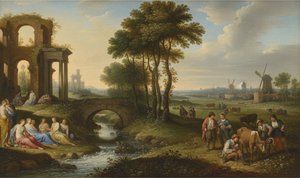
Cornelis van Poelenburch: Bridging Mannerism & the Dutch Baroque Landscape
Discover Cornelis van Poelenburch, a pivotal Dutch Baroque landscape painter bridging Mannerism & Italianate styles. Explore his life, key works, and lasting influence on 17th-century art with ArtsDot.

Rembrandt's Masterpieces: Explore 25 Iconic Paintings & Prints | ArtsDot
Journey through Rembrandt van Rijn's 25 most iconic paintings & etchings. Explore Dutch Golden Age masterpieces, dramatic chiaroscuro, and timeless portraits. Find museum-quality art reproductions to elevate your home decor on ArtsDot.com.
Jan van Goyen: Master of Dutch Landscape & Atmospheric Perspective
Discover Jan van Goyen, the master of Dutch landscape painting. Explore his subtle technique, atmospheric realism & lasting influence on art history. Learn about this 17th-century pioneer at ArtsDot.
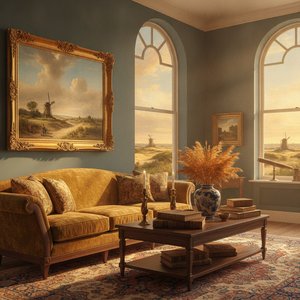
Golden Light & Dutch Skies: Bringing the Magic of Dutch Golden Age Landscapes into Your Home
Transform your home with the breathtaking light of Dutch Golden Age landscapes. Discover how hand-painted oil reproductions of masterworks like Ruisdael and Vermeer bring timeless elegance, atmosphere, and soulful texture to modern interiors. Elevate your space with museum-quality art.