 Preview
 Send
Send Share
Share
 Details

 Download
 Similars
 X-Ray
X-Ray Diaporama
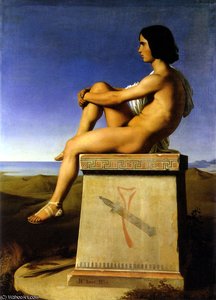
Young Man by the Sea
 Oil On Canvas
- WallArt
- Neoclassicism
 1836
1836- 19th Century
 98.0 x 124.0 cm
 The Louvre
 Read More
Hand Made Oil Reproduction
Hand-painted oil on canvas in your size and frame, made to order by our artists. ( Buy Print Buy Image)




P118B $10

P118H $10

P118W $10

P438Z $10

P508JH $12

P508YH $12

P805H $10

P805Z $10

P919BZ $10

P919G $10

P919XJ $10

P959ZH $10

P968JZ $12

W106C $8

W218G $10

W218JH $8

W218Y $10

W307PJ $10

W316G $10

W316PJ $8

W316Y $10

W398PJ $8

W4111J $10

W500HY $15

W500JH $15

W692G $12

W849H $8

W940BG $15

W953PJ $8




Pick from our preset sizes that match the artwork's original proportions.

You may enter your own dimensions to fit a specific frame or space. If your selected size does not match the original image's proportions, we will either crop the artwork or extend the painting with additional hand-painted elements. A digital mockup will be sent for your approval before production begins.
Please note that the on-screen preview does not reflect the actual cropping or extension. Only the mockup will accurately show the final composition.
While custom sizes are available, we recommend selecting a dimension from the predefined list to preserve the original proportions.
After order, ArtsDot.com team will email client for instructions and provide a mockup preview
Worldwide Delivery () in 3/4 weeks instead of standard 5 weeks. (22 August). No compromise on quality.

Free Worldwide Express Shipping

High-Quality Linen Canvas

Full Shipping Insurance

Customs Tax Refund Guarantee

True Color Matching Guarantee

60-Day Return Policy (Defects Only)

100% Money-Back Guarantee

Bulk Discount Offer
 Glass option is only available in size under 110 CM

Young Man by the Sea
Reproduction Medium
Reproduction Size
-


Total Price
$ 263
Artwork Description
A Moment Suspended Between Man and Sea
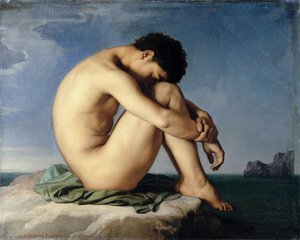
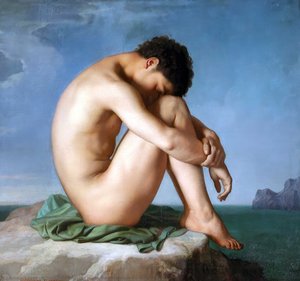
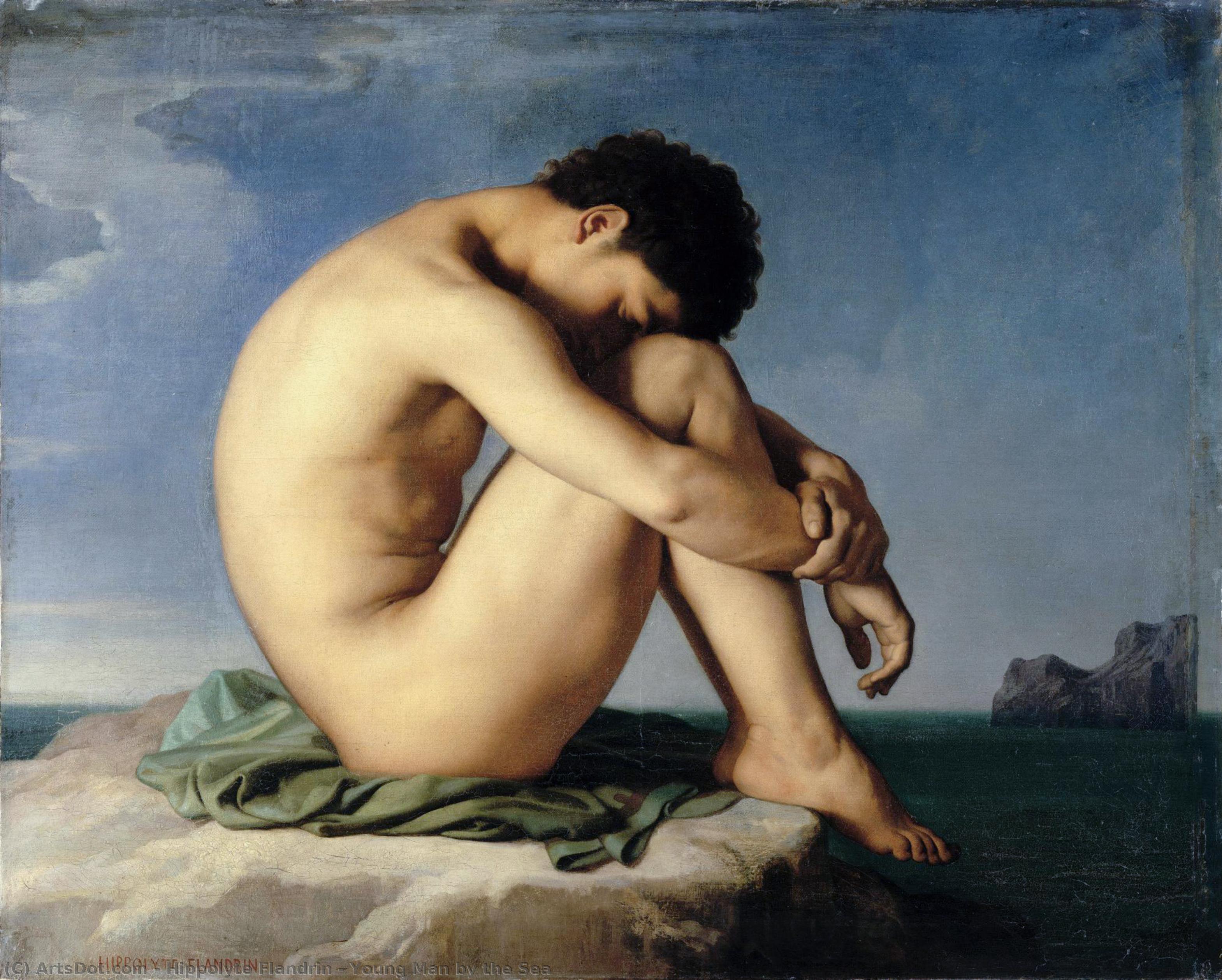
The painting, Young Man by the Sea, captures an instant of profound stillness, inviting the viewer into a private communion between contemplation and nature's vast expanse. Here, a solitary figure sits upon rugged rocks, his nudity suggesting a return to elemental truth—a state stripped bare of societal artifice. His gaze is fixed outward, meeting the endless horizon where the deep blue of the ocean dissolves into the distant haze of mountains. The composition itself is a masterclass in quiet drama; the solid, grounded presence of the man contrasts beautifully with the fluid, unknowable energy of the water and the monumental backdrop.
Neoclassical Echoes in Romantic Subject Matter
Created in 1836, this work sits at an intriguing crossroads within art history. While the subject matter—the pensive figure against a sublime natural setting—leans heavily into the emotional resonance of Romanticism, the underlying structure and idealized form recall the disciplined elegance of Neoclassicism. The artist, Hippolyte Flandrin, known for his adherence to classical ideals, imbues this scene with a sense of timeless dignity. It is not merely a portrait by the water; it is an allegory rendered with academic precision. One senses the influence of the grand traditions that shaped French art, yet applied here to capture a deeply personal, almost melancholic introspection.
Symbolism of Contemplation and Nature's Embrace
The symbolism woven into this canvas is rich for the discerning eye. The sea has always been a potent metaphor—representing the subconscious mind, the passage of time, or the overwhelming mystery of existence. The young man’s clasped hands resting upon his knees suggest deep thought, perhaps wrestling with philosophical questions only the vastness of nature can provoke an answer to. The mountains in the distance serve as silent witnesses, anchoring the scene in a grand, enduring reality against which the fleeting thoughts of humanity are measured. It speaks to that universal human need to seek clarity at the edge of the known world.
Bringing Tranquility Home: Decorating with Art
For the collector or designer seeking to infuse a space with depth and quietude, this reproduction offers an unparalleled focal point. The dimensions of 98 x 124 cm allow it to command attention without overwhelming a room; it possesses the gravitas of a masterwork while maintaining an accessible, serene quality. Imagine this piece anchoring a drawing-room or a study—its cool blues and earthy tones will harmonize beautifully with natural materials like wood and stone. Owning this painting is not just acquiring art; it is curating a moment of profound, contemplative peace for your daily life.
Related Artworks



Artist Biography
The Neoclassical Vision of Jean-Hippolyte Flandrin
Jean-Hippolyte Flandrin (1809–1864) remains a luminous figure in the pantheon of French Neoclassicism, an artist whose brush captured the profound intersection of spiritual devotion and classical grace. Born in Lyon, France, Flandrin’s journey was initially marked by a tension between familial duty and artistic destiny. While his parents envisioned a stable life for him within the realm of commerce, the creative spirit shared by his brothers, Augusto and Paul, proved irresistible. This early immersion in an environment of artistic pursuit laid the foundation for a career that would eventually transcend the boundaries of private studios to adorn the most sacred architectural spaces in France.
The trajectory of Fland_rin’s talent took a decisive turn in 1829 when he arrived in Paris to enter the legendary studio of Jean Auguste Dominique Ingres. Under the tutelage of this master of line and form, Flandrin refined a technique characterized by precision, clarity, and an almost sculptural approach to the human figure. This period of mentorship was transformative, instilling in him the Neoclassical ideals of purity and anatomical perfection that would define his aesthetic language. His ascent within the academic hierarchy was swift, punctuated by the prestigious Prix de Rome in 1832, a milestone that granted him five years of immersive study in Italy. It was amidst the ancient echoes of Rome that Flandrin’s style matured, absorbing the grandeur of classical antiquity and translating it into a modern, emotive vocabulary.
Mastery of Form and Narrative
Flandrin’s oeuvre is a testament to his ability to navigate both the intimate and the monumental. His early works often focused on the delicate nuances of portraiture and the serene beauty of the human form in repose. A notable example, Jeune Homme Nu Assis au Bord de la Mer (1836), showcases his mastery of tonal gradation and light, presenting a scene of profound tranquility that earned him a permanent place within the esteemed collections of the Louvre. In these works, one observes a seamless blend of technical rigor and a soft, poetic atmosphere that invites deep contemplation.
As his career progressed, Flandrin moved toward larger-scale commissions that demanded a different level of narrative complexity. He became a master of the fresco, a medium that allowed him to integrate his art with the very fabric of religious architecture. His most enduring legacy lies in the monumental decorations for the cathedral of Nantes, where his biblical narratives breathe life into the stone. These works are not merely illustrations of scripture but are profound explorations of light, shadow, and divine presence, executed with a rhythmic grace that guides the viewer's eye through sacred history.
Legacy and Artistic Significance
The significance of Hippolyte Flandrin extends far beyond his technical proficiency. He represented a bridge between the rigid traditions of the early 19th century and a more emotive, spiritually resonant form of painting. As a respected member of the Académie des Beaux-Arts, he helped uphold the standards of French excellence while contributing to the evolution of religious art during a period of significant social change.
To study Flandrin is to encounter an artist who found harmony in the balance of opposites:
- Tradition and Innovation: He utilized the disciplined techniques of Ingres to express the profound spiritual depths of his era.
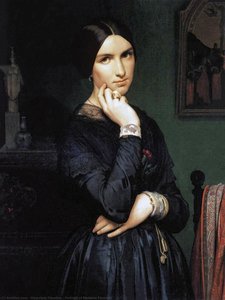
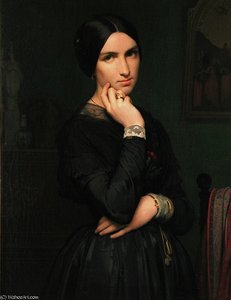
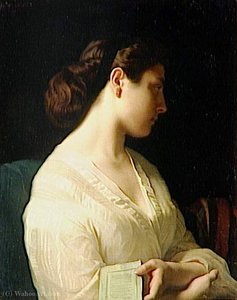
- Intimacy and Grandeur: His ability to move from the delicate Portrait of Madame Flandrin to massive cathedral frescoes demonstrates a versatile mastery of scale.
- Classical Form and Emotional Depth: While his figures possess the idealized perfection of antiquity, they are imbued with a palpable, human vulnerability.
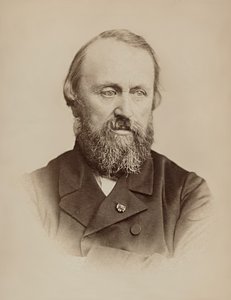
Hippolyte Flandrin
1809 - 1864 , France
Quick Facts
- Artistic Movement Or Style: Neoclassical
- Artists Who Influenced This Artist:
- Louis Hersent
- Jean Auguste Dominique Ingres
- Date Of Birth: March 23, 1809
- Date Of Death: March 21, 1864
- Full Name: Jean-Hippolyte Flandrin
- Nationality: French
- Notable Artworks:
- Jeune Homme Nu Assis au Bord de la Mer
- St. Clair Healing the Blind
- Jesus and the Little Children
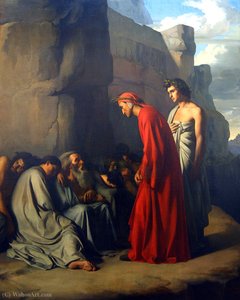
- Dante and Virgil Visiting the Envious Men
- Euripides Writing His Tragedies
- Place Of Birth: Lyon, France
Related Articles

Giclée Prints: Archival Quality & Aesthetic Nuances for the Discerning Collector
Explore the world of giclée prints with ArtsDot. Learn about archival quality, aesthetic nuances & investment potential. Expert guidance for discerning art collectors seeking museum-quality reproductions and lasting value.

The Enduring Legacy of Fine Art Prints: Technique, History & Aesthetic Impact
Explore the rich history & techniques of fine art prints. Discover investment potential, assess authenticity, and learn how to preserve your collection with expert guidance. Trusted insights for discerning collectors.

Echoes of Time: Exploring the Enduring Appeal & Historical Context of Vintage Art Prints
Explore the captivating world of vintage art prints! Discover their history, collecting tips & enduring appeal. Expert insights on chromolithography and building a legacy collection with ArtsDot.

The Enduring Legacy of Printmaking: Techniques, Themes & Artistic Innovation Across Centuries
Explore the rich history of printmaking with ArtsDot. Discover techniques from intaglio to lithography, learn about collecting valuable prints & find museum-quality reproductions. Expert insights for art enthusiasts and collectors.
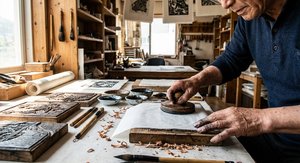
The Enduring Legacy of Woodblock Printmaking: Technique, History & Artistic Expression
Explore the rich history of woodblock printmaking – from ancient techniques to Ukiyo-e masterpieces. Discover expert insights on collecting, preserving & appreciating this enduring art form.