 Send
Send Share
Share
 Details

 Download
 Similars
 Diaporama
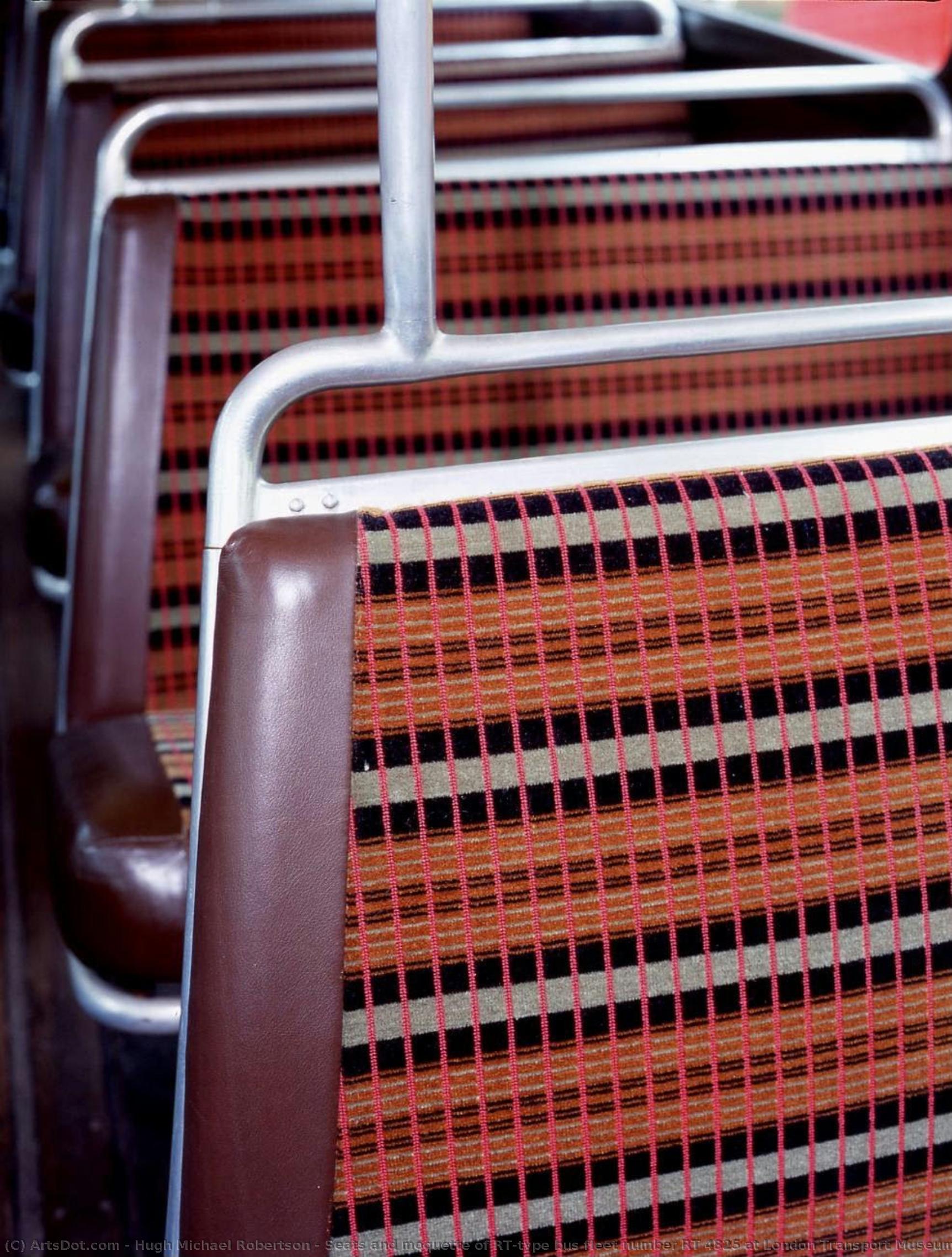
Seats and moquette of RT-type bus fleet number RT 4825 at London Transport Museum


 Read More
Hand Made Oil Reproduction
Hand-painted oil on canvas in your size and frame, made to order by our artists. ( Buy Print Buy Image)




































Pick from our preset sizes that match the artwork's original proportions.

You may enter your own dimensions to fit a specific frame or space. If your selected size does not match the original image's proportions, we will either crop the artwork or extend the painting with additional hand-painted elements. A digital mockup will be sent for your approval before production begins.
Please note that the on-screen preview does not reflect the actual cropping or extension. Only the mockup will accurately show the final composition.
While custom sizes are available, we recommend selecting a dimension from the predefined list to preserve the original proportions.
After order, ArtsDot.com team will email client for instructions and provide a mockup preview
Worldwide Delivery () in 3/4 weeks instead of standard 5 weeks. (22 August). No compromise on quality.

Free Worldwide Express Shipping

High-Quality Linen Canvas

Full Shipping Insurance

Customs Tax Refund Guarantee

True Color Matching Guarantee

60-Day Return Policy (Defects Only)

100% Money-Back Guarantee

Bulk Discount Offer
 Glass option is only available in size under 110 CM

Seats and moquette of RT-type bus fleet number RT 4825 at London Transport Museum
Reproduction Medium
Reproduction Size
-


Total Price
$ 263
Artwork Description
The Quiet Geometry of Transit
This evocative black and white photograph transports us directly into the heart of London's circulatory system—the interior of an RT-type bus. It is not merely a record of public seating; it is a study in patterned repose, a moment suspended between journeys. The composition is dominated by rows upon rows of seats, their forms echoing a structured rhythm that speaks to the daily choreography of urban life. One can almost hear the muffled rumble of the engine and feel the slight vibration through the worn moquette. The artist, Hugh Michael Robertson, has captured something far deeper than mere upholstery; he has documented the very architecture of communal waiting.
A Study in Monochrome Form
Robertson’s masterful use of monochrome strips away the distraction of color, forcing the viewer's eye to engage with texture, shadow, and line. The contrast between the deep shadows pooling beneath the benches and the bright highlights catching the edges of the cushions creates a palpable sense of depth. Notice how the various seating elements—the individual chairs, the central bench—are arranged in varying planes, giving the image a complex, almost architectural quality. It is a visual poem about repetition and variation; the uniformity of the design is constantly interrupted by the slight tilt of one seat or the way light grazes a specific cushion, lending an unexpected vitality to what could otherwise be a static scene.
Echoes of Urban History
Dating from 2001, this photograph serves as a poignant historical artifact. The RT-type bus itself is a tangible piece of London's industrial and social history. To view it through Robertson’s lens is to connect with generations of commuters who have occupied these very seats. It speaks to the enduring nature of public infrastructure—the reliable backbone that has carried countless stories, whispered conversations, and hurried departures across the city's expanse. For the collector or designer, this piece offers a unique dialogue between industrial design history and fine art photography.
Symbolism of Shared Space
Beyond its literal depiction, the image carries potent symbolism regarding community and anonymity. The seats are empty, yet they feel charged with potential—the ghosts of countless passengers past. They represent the temporary nature of human connection in a densely populated environment; moments where individuals share physical proximity without necessarily sharing conversation. It invites contemplation on what it means to be together while remaining profoundly alone, a universal modern experience beautifully framed by the sturdy geometry of the bus interior.
Bringing Transit Home
Reproducing this work allows one to bring the sophisticated melancholy and structural beauty of urban observation into a private setting. For an interior designer, it offers a piece that grounds a space with intellectual depth; for the art lover, it provides a meditation on pattern and passage. It is a quiet masterpiece that rewards prolonged viewing, inviting you to slow down, look closely at the lines, and remember the rhythm of the journey.
Related Artworks

Artist Biography
The Urban Eye: The Photographic Legacy of Hugh Michael Robertson
Born in the historic city of Canterbury, United Kingdom, in 1962, Sir Hugh Michael Robertson possesses a creative vision that finds profound beauty within the mechanical pulse of the metropolis. While his public life has been defined by the rigors of military service and the complexities of high-level political governance, his artistic soul resides in the quiet, often overlooked corners of London’s transit system. Robertson does not merely take photographs; he documents the very rhythm of urban existence, transforming the mundane infrastructure of public transport into a contemplative study of light, texture, and human history.
His journey from the disciplined environment of military service to the corridors of power as Minister of State for Foreign and Commonwealth Affairs provided him with a unique perspective on the world—one characterized by an acute awareness of detail and a deep respect for structure. This sense of order is palpable in his photographic work, where the geometric precision of London’s buses and stations serves as a canvas for exploring the intersection of movement and stillness. Through his lens, the chaotic energy of a city in motion is distilled into moments of serene, architectural grace.
A Symphony of Monochrome and Motion
The cornerstone of Robertson’s artistic contribution lies in his masterful use of monochrome photography to capture the essence of London's transit soul. His most celebrated work, “Seats and moquette of RT-type bus fleet number RT 4825 at London Transport Museum,” serves as a definitive example of his ability to elevate the everyday into the extraordinary. In this evocative piece, Robertson strips away the distractions of color to focus the viewer's attention on the tactile reality of the urban experience. The photograph becomes a study in patterned repose, where the worn textures of the moquette fabric and the rhythmic repetition of seating rows create a visual poem about the shared spaces of a civilization.
In these compositions, one can almost feel the subtle vibration of an idling engine or hear the muffled echoes of a departing journey. Robertson utilizes light and shadow to imbue inanimate objects with a sense of life; deep shadows pool beneath benches while bright highlights catch the edges of cushions, creating a palpable depth that invites the viewer to step into the frame. His work transcends simple documentation, acting instead as an exploration of the architecture of communal waiting—a recognition that the spaces we pass through every day are imbued with the ghosts of countless individual stories.
Historical Resonance and the Art of Observation
Robertson’s photography serves as a vital historical bridge, connecting the contemporary observer to the industrial and social heritage of London. By focusing on specific artifacts like the RT-type bus, he preserves the tangible memory of an era. His work resonates with the spirit of the London Transport Museum, where his images find a natural home alongside the very vehicles they depict. There is a profound sense of continuity in his art; he captures the enduring nature of public infrastructure—the reliable backbone that carries the weight of a city's ambitions and its daily struggles.
The significance of Robertson’s work extends beyond the aesthetic into the realm of cultural preservation. His ability to find grandeur in the fleeting moments of a metropolitan journey offers a poignant reminder of the beauty inherent in our shared urban rituals. Through his meticulous observation, he has established himself as a compelling figure in contemporary art discourse, proving that the most resonant visual statements are often found not in the spectacular, but in the rhythmic, textured, and deeply human details of the world around us.

hugh michael robertson
1962 - , United Kingdom
Quick Facts
- Artistic Movement Or Style: Photography
- Date Of Birth: 1962
- Full Name: Hugh Michael Robertson
- Nationality: British
- Notable Artworks: ['Seats and moquette of RT-type bus fleet number RT 4825 at London Transport Museum']
- Place Of Birth: Canterbury, United Kingdom
Related Articles

Monochrome Visions: Exploring the Aesthetic & Historical Significance of Black & White Photography
Explore the rich history & artistic power of black and white photography. From early techniques to iconic masters like Ansel Adams, discover why monochrome continues to captivate art lovers today. Expert insights for collectors.
Beyond the Lens: Photography's Enduring Influence on Modern & Contemporary Art
Explore photography's pivotal role in shaping modern & contemporary art. Discover key movements, influential artists like Stieglitz, and expert collecting advice from ArtsDot.

Dark Masterpieces: 10 Iconic Paintings Dominated by Black Tones |
Explore 10 iconic paintings dominated by black tones, from Rembrandt’s chiaroscuro to Goya's dark expressions. Discover the stories behind these masterpieces & find museum-quality art reproductions for your home at .
Pictorialism: A Search for Artistic Photography's Soul – Aesthetics, Techniques & Legacy
Explore the captivating world of Pictorialism – a pivotal movement that transformed photography into fine art. Discover key artists like Stieglitz & Käsebier, techniques, and collecting tips from experts.
Witnessing History Through Lens & Light: Documentary Photography's Enduring Legacy
Explore the powerful history of documentary photography – from its origins to contemporary masters like Gordon Parks & W. Eugene Smith. Discover how this art form shapes our understanding of society and witness pivotal moments in time.