 Preview
 Send
Send Share
Share
 Details

 Download
 Similars
 X-Ray
X-Ray Diaporama
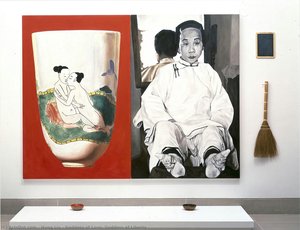
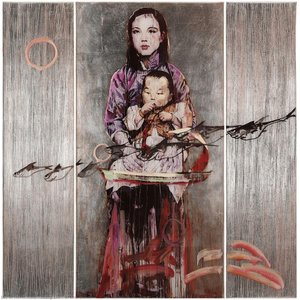
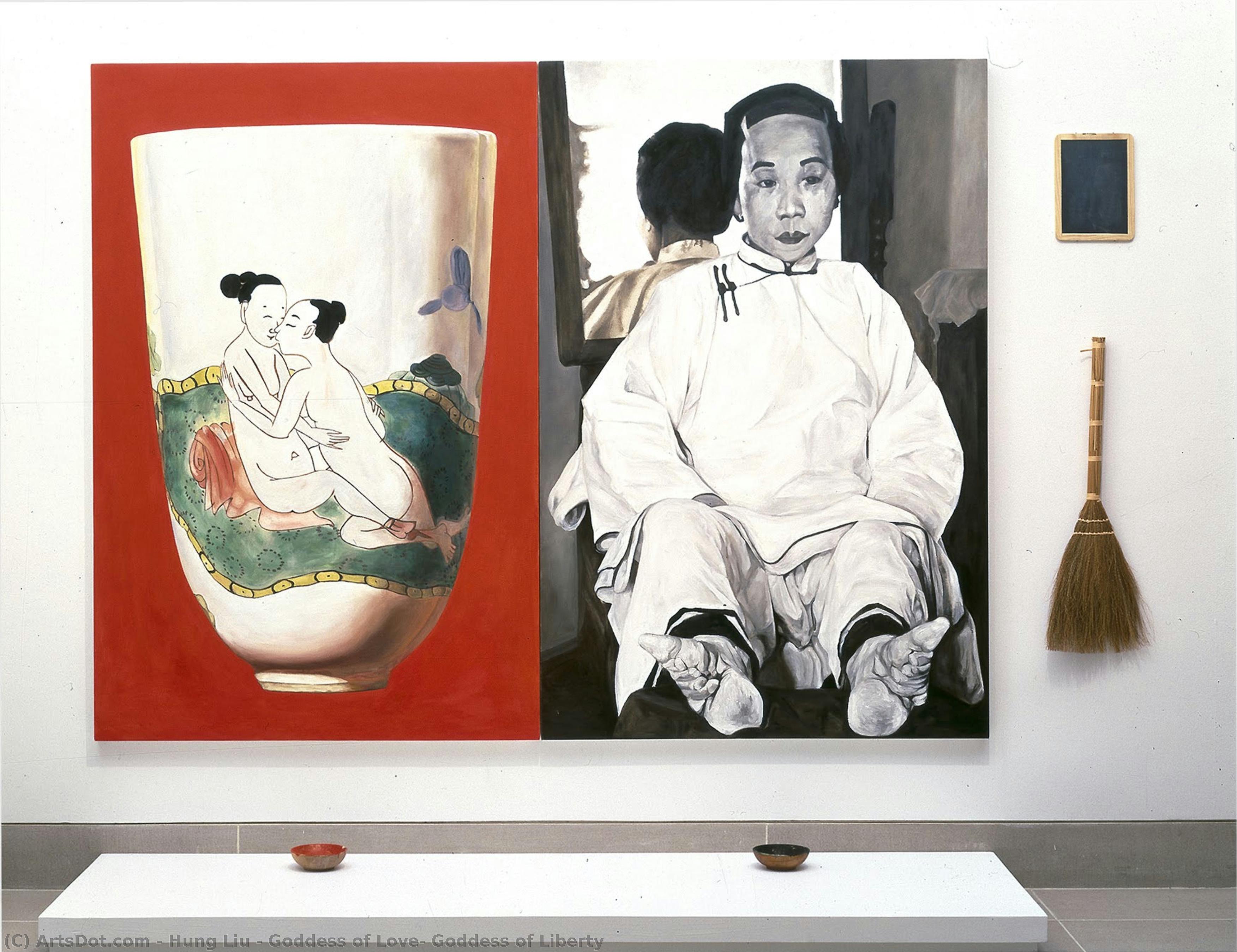
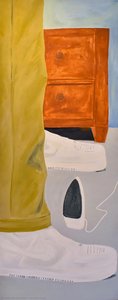
Goddess of Love, Goddess of Liberty
 Acrylic On Canvas
- WallArt
- Contemporary Realism
 1989
1989 182.0 x 243.0 cm
 National Portrait Gallery
 Read More
Giclée / Art Print
Museum-quality giclée or canvas print with fast production and flexible finish options. ( Buy Hand Made Painting Buy Image)




P118B $10

P118H $10

P118W $10

P438Z $10

P508JH $12

P508YH $12

P805H $10

P805Z $10

P919BZ $10

P919G $10

P919XJ $10

P959ZH $10

P968JZ $12

W106C $8

W218G $10

W218JH $8

W218Y $10

W307PJ $10

W316G $10

W316PJ $8

W316Y $10

W398PJ $8

W4111J $10

W500HY $15

W500JH $15

W692G $12

W849H $8

W940BG $15

W953PJ $8




Pick from our preset sizes that match the artwork's original proportions.

You may enter your own dimensions to fit a specific frame or space. If your selected size does not match the original image's proportions, we will either crop the artwork or extend the image with a mirrored or solid-fill edge. A digital mockup will be sent for your approval before production begins.
Please note that the on-screen preview does not reflect the actual cropping or extension. Only the mockup will accurately show the final composition.
While custom sizes are available, we recommend selecting a dimension from the predefined list to preserve the original proportions.
Worldwide Delivery () in 2 weeks instead of standard 4/5 weeks. (28 August)

Free Worldwide Express Shipping

High-Quality Linen Canvas

Full Shipping Insurance

Customs Tax Refund Guarantee

True Color Matching Guarantee

60-Day Return Policy (Defects Only)

100% Money-Back Guarantee

Bulk Discount Offer
 Glass option is only available in size under 110 CM

Goddess of Love, Goddess of Liberty
Giclée / Art Print
Reproduction Size
-


Total Price
$ 63
Hung Liu’s “Goddess of Love, Goddess of Liberty”: A Dialogue Between Tradition and Rebellion
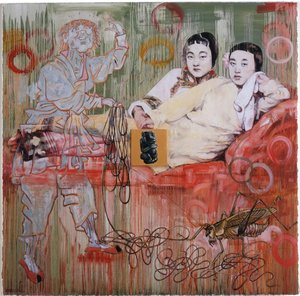
The artwork "Goddess of Love, Goddess of Liberty," by Hung Liu (1948-2021), stands as a poignant testament to the artist's exploration of cultural identity and her confrontation with historical trauma. Created in 1989, this diptych—a pair of canvases joined together—immediately draws attention with its striking juxtaposition of seemingly disparate elements: a porcelain cup bearing an image of a nude male and female entwined, and a photograph depicting a seated Chinese woman whose feet are bound. Liu’s masterful technique blends photorealism with subtle symbolic layering, resulting in an artwork that transcends mere visual representation to convey profound emotional resonance. Liu's artistic journey began amidst the turbulent backdrop of Maoist China, where she experienced firsthand the repressive atmosphere of the Cultural Revolution. This formative period instilled within her a deep sensitivity to injustice and a conviction that art could serve as a vehicle for challenging dominant narratives. Her decision to relocate to Beijing in 1984 marked a pivotal moment—a deliberate embrace of Western artistic traditions while retaining an unwavering connection to her Chinese heritage. The influence of Surrealism, particularly the work of René Magritte, is evident in Liu’s approach to composition and imagery, fostering a contemplative gaze upon the viewer. The porcelain cup serves as a central visual anchor, embodying both erotic desire and societal constraint. The depiction of a nude male and female—a reference to classical mythology—represents idealized beauty and sensual pleasure. However, beneath this surface allure lies a deliberate distortion: the feet of the woman are bound, symbolizing the pervasive practice of foot binding in Chinese history – a tradition aimed at achieving an aesthetically pleasing form while simultaneously restricting mobility and reinforcing patriarchal norms. This visual motif powerfully communicates the artist’s preoccupation with themes of oppression and liberation. Complementing the cup is a photograph capturing a seated Chinese woman whose feet are exposed. Liu's meticulous attention to detail—captured through photorealism—highlights the vulnerability inherent in this posture, emphasizing the physical limitations imposed by foot binding. The inclusion of a low wooden platform and two bowls adds another layer of symbolic significance, referencing traditional Chinese domestic spaces and reinforcing the notion of confinement. Simultaneously, the broom positioned on the right panel represents resilience and resistance – an emblem of feminine strength confronting societal pressures. Liu’s artistic vision is rooted in a desire to confront historical realities while simultaneously celebrating beauty and creativity. The artwork's deliberate blending of photographic realism with symbolic imagery underscores her commitment to conveying complex emotions—rage, sorrow, and hope—without resorting to sentimental clichés. “Goddess of Love, Goddess of Liberty” compels viewers to contemplate the interplay between tradition and rebellion, prompting reflection on issues of gender equality and cultural preservation. It remains a compelling example of Liu’s ability to transform personal experience into universal themes, cementing her legacy as one of China's most important contemporary artists.
Artist Biography
A Life Forged in Revolution: The Early Years and Artistic Awakening of Hung Liu
Hung Liu’s story is inextricably linked to the tumultuous history of 20th-century China. Born in Changchun in 1948, her childhood unfolded under the shadow of a newly established communist regime and the subsequent political upheavals that would define an era. The imprisonment of her father for his past affiliations with the Kuomintang cast a long shadow, instilling within young Hung a sensitivity to injustice and the fragility of truth – themes that would resonate profoundly throughout her artistic career. Her move to Beijing at age ten, attending the prestigious Experimental High School Attached to Beijing Normal University, offered access to education but also immersion in an environment increasingly controlled by Maoist ideology. This period culminated in the Cultural Revolution, a decade of social and political chaos during which Liu was sent, like millions of other young people, for “re-education” through labor. From 1968 to 1972, she lived and worked among villagers in Huairou, experiencing firsthand the hardships and resilience of rural life. This experience wasn’t merely a period of enforced hardship; it was a formative encounter with humanity at its most vulnerable, an encounter that would later fuel her artistic vision. It was during these years, despite restrictions, that she secretly began to sketch and photograph those around her, acts of quiet rebellion and nascent artistic expression. These early experiences instilled in Liu a deep empathy for the marginalized and a critical perspective on official narratives – qualities that became hallmarks of her work.Weeping Realism: A Unique Artistic Language
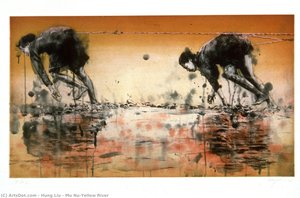
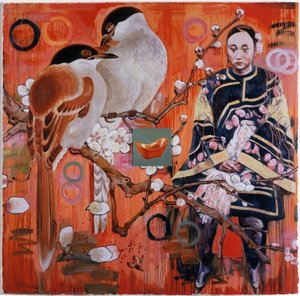
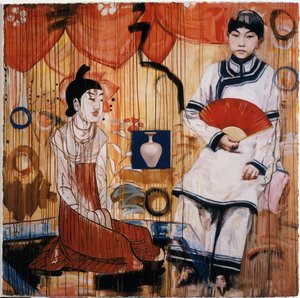
Liu’s artistic style is instantly recognizable, a captivating blend of technical skill and emotional depth. Trained initially in Socialist Realism—a highly controlled and academic approach to art—she consciously rejected its rigid constraints, forging her own path that embraced both the formal rigor of her training and a deeply personal expressive voice. Her paintings are characterized by layered brushstrokes combined with generous washes of linseed oil, creating a distinctive “drippy” effect that lends an ethereal quality to her subjects. This technique isn’t merely aesthetic; it's symbolic. The dissolving forms and blurred edges evoke the passage of time, the erosion of memory, and the inherent instability of historical narratives. Her partner, critic Jeff Kelley, aptly described this style as “weeping realism,” capturing the sense of melancholy and loss that permeates much of her work. From the mid-1980s onward, Liu began incorporating found photographs—primarily 19th and early 20th-century images of Chinese individuals—into her paintings. These weren’t simply reproductions; they were starting points for a process of reimagining and recontextualization. She often focused on marginalized figures – prostitutes, laborers, refugees – those whose stories had been overlooked or silenced by official histories. Liu believed she was “giving a spirit” to these forgotten individuals, imbuing them with dignity and agency through her art.Themes of Memory, Migration, and the Human Condition
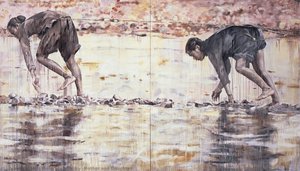
Hung Liu’s work consistently grapples with profound themes of memory, migration, identity, and the human condition. Her exploration of historical photographs wasn't simply an aesthetic choice; it was a deliberate engagement with questions of truth, representation, and power. By appropriating these images, she challenged their original context and invited viewers to reconsider the stories they told. Her *American Exodus* series, inspired by Dorothea Lange’s iconic photographs of the Dust Bowl era, demonstrates her ability to translate her concerns about displacement and hardship to an American context. Similarly, her *Strange Fruit* paintings addressed the horrific experiences of Korean “comfort women” forced into sexual slavery during World War II, a subject rarely acknowledged in mainstream historical narratives. Liu's own experience as an immigrant profoundly shaped her artistic vision. She understood firsthand the complexities of navigating new cultures, the challenges of belonging, and the enduring power of memory. Her work often explores the tension between assimilation and preservation of cultural identity, reflecting her own journey from China to America.Legacy and Lasting Impact
Hung Liu’s contributions to contemporary art are significant and far-reaching. She was a pioneer in bridging Eastern and Western artistic traditions, bringing a unique perspective informed by both Chinese history and American experience. She was among the first artists from China to achieve international recognition, paving the way for future generations of Chinese artists working on the global stage. Her work has been exhibited in major museums across the United States, including the Whitney Museum of American Art and the San Francisco Museum of Modern Art, and is held in numerous prestigious collections. Liu’s legacy extends beyond her individual artworks. She challenged conventional notions of history painting, expanded the possibilities of photographic appropriation, and created a powerful visual language for exploring themes of memory, migration, and social justice. Her art continues to resonate with audiences today, offering a poignant reminder of the importance of remembering the past and honoring the stories of those who have been marginalized or forgotten. Summoning Ghosts: The Art of Hung Liu, a retrospective collection of her work, stands as a testament to her enduring influence and artistic vision.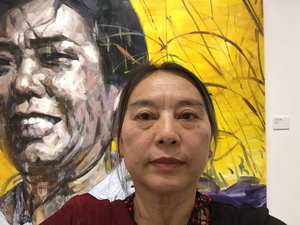
Hung Liu
1948 - 2021 , China
Quick Facts
- Artistic Movement Or Style: Weeping realism
- Date Of Birth: 1948-02-17
- Date Of Death: 2021-08-07
- Full Name: Hung Liu
- Nationality: Chinese-American
- Notable Artworks:
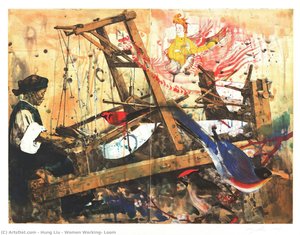
- Women Working: Loom
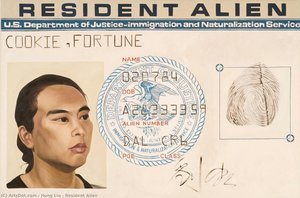
- Resident Alien
- Strange Fruit Paintings
- American Exodus series
- Place Of Birth: Changchun, China
Related Articles
Beyond the Lens: Photography's Enduring Influence on Modern & Contemporary Art
Explore photography's pivotal role in shaping modern & contemporary art. Discover key movements, influential artists like Stieglitz, and expert collecting advice from ArtsDot.

Monochrome Visions: Exploring the Aesthetic & Historical Significance of Black & White Photography
Explore the rich history & artistic power of black and white photography. From early techniques to iconic masters like Ansel Adams, discover why monochrome continues to captivate art lovers today. Expert insights for collectors.
Pictorialism: A Search for Artistic Photography's Soul – Aesthetics, Techniques & Legacy
Explore the captivating world of Pictorialism – a pivotal movement that transformed photography into fine art. Discover key artists like Stieglitz & Käsebier, techniques, and collecting tips from experts.
Witnessing History Through Lens & Light: Documentary Photography's Enduring Legacy
Explore the powerful history of documentary photography – from its origins to contemporary masters like Gordon Parks & W. Eugene Smith. Discover how this art form shapes our understanding of society and witness pivotal moments in time.
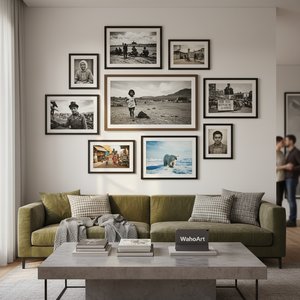
Documentary Photography's Defining Moments: 10 Masterpieces for Your Home |
Explore 10 defining documentary photography masterpieces – from Dorothea Lange to Robert Capa. Discover powerful stories, iconic images & timeless art for your home. Museum-quality prints at .