Preview
 Send
Send Share
Share
 Details

 Download
 Similars
 X-Ray
X-Ray Diaporama
Leo Tolstoy in the forest


 Read More
Hand Made Oil Reproduction
Hand-painted oil on canvas in your size and frame, made to order by our artists. ( Buy Print Buy Image)




































Pick from our preset sizes that match the artwork's original proportions.

You may enter your own dimensions to fit a specific frame or space. If your selected size does not match the original image's proportions, we will either crop the artwork or extend the painting with additional hand-painted elements. A digital mockup will be sent for your approval before production begins.
Please note that the on-screen preview does not reflect the actual cropping or extension. Only the mockup will accurately show the final composition.
While custom sizes are available, we recommend selecting a dimension from the predefined list to preserve the original proportions.
After order, ArtsDot.com team will email client for instructions and provide a mockup preview
Worldwide Delivery () in 3/4 weeks instead of standard 5 weeks. (17 August). No compromise on quality.

Free Worldwide Express Shipping

High-Quality Linen Canvas

Full Shipping Insurance

Customs Tax Refund Guarantee

True Color Matching Guarantee

60-Day Return Policy (Defects Only)

100% Money-Back Guarantee

Bulk Discount Offer
 Glass option is only available in size under 110 CM

Leo Tolstoy in the forest
Reproduction Medium
Reproduction Size
-


Total Price
$ 263
Artwork Description
Leo Tolstoy in the Forest: A Portrait of Contemplation
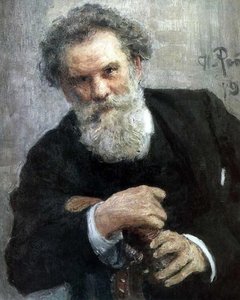
- Subject & Historical Context: Ilya Repin's "Leo Tolstoy in the Forest," painted in 1891, offers a poignant glimpse into the life of one of Russia’s most celebrated literary figures. Tolstoy, nearing the end of his life and grappling with profound philosophical questions, is depicted not in a formal setting but immersed in nature – a deliberate choice reflecting his evolving spiritual beliefs and rejection of societal conventions. The painting captures a moment of quiet introspection during a period marked by Tolstoy's increasing criticism of the Russian Orthodox Church and the Tsarist regime, ultimately leading to his self-imposed exile.
- Style & Technique: Repin, a master of realism with burgeoning Impressionistic tendencies, employs a loose and visible brushstroke technique that moves away from the rigid academic style prevalent earlier in his career. This approach lends a sense of immediacy and naturalism to the scene. The application of paint is textured; evidence of impasto on Tolstoy’s clothing suggests a deliberate effort to capture the fabric's movement and weight. While the composition adheres to realistic proportions, the softened edges and atmospheric perspective hint at an Impressionistic influence, prioritizing the overall mood and light effects over meticulous detail.
- Composition & Symbolism: The painting utilizes a pyramidal structure, with Tolstoy as the apex, drawing the viewer's eye directly to the subject. He is positioned slightly off-center, creating visual dynamism. A large tree trunk anchors the left side of the composition, symbolizing strength and permanence, while the surrounding foliage evokes the restorative power of nature. Tolstoy’s relaxed posture, absorbed in reading, conveys a sense of inner peace and intellectual pursuit. The book he holds represents his lifelong dedication to writing and philosophical exploration. The forest itself serves as a powerful symbol – a retreat from the complexities of life and a connection to something larger than oneself.
- Color Palette & Lighting: The color palette is dominated by muted earth tones—greens, browns, and creams—creating a harmonious and tranquil atmosphere. Highlights of white and cream in Tolstoy’s clothing draw attention to his face and hands, emphasizing the details that reveal his character. The diffused, natural lighting suggests an overcast day or filtered sunlight, contributing to the overall sense of calm and contemplation. The subtle interplay of light and shadow adds depth and dimension to the scene, further enhancing its realism.
- Emotional Impact & Legacy: "Leo Tolstoy in the Forest" is more than just a portrait; it's an exploration of the human condition—a moment captured in time that invites viewers to reflect on themes of solitude, intellectual curiosity, and the search for meaning. Repin’s ability to convey Tolstoy’s inner world through his posture and expression makes this painting a powerful testament to the artist’s skill and sensitivity. The work remains a significant example of late 19th-century Russian realism and continues to resonate with audiences today.
About Ilya Yefimovich Repin
- Early Life & Education: Ilya Yefimovich Repin, born on July 24, 1844, in Chuguev (present-day Ukraine), was a pivotal figure in Russian realist painting. His early artistic training began with icon restoration and portrait commissions under Ivan Bunakov. He later attended the St. Petersburg Academy of Fine Arts where he met influential figures like Ivan Kramskoi.
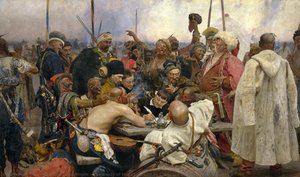
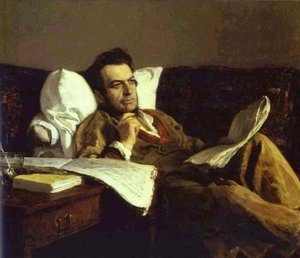
- Artistic Career: Repin’s career flourished as he moved away from strict academic realism, embracing a more expressive style. Notable works include "Barge Haulers on the Volga" (1873), which brought him widespread recognition, and “Reply of the Zaporozhian Cossacks” (1880-1891). He was renowned for his insightful portraits of prominent Russian intellectuals and artists, including Tolstoy, Mussorgsky, and Glinka.
- Later Years & Legacy: Repin established a country estate, Penaty Memorial Estate, which became a hub for Russian artistic society. He remained active until his death on September 29, 1930, leaving behind a legacy as one of Russia’s most important and influential artists.
Related Artworks
Artist Biography
Early Life and the Seeds of Realism
Ilya Yefimovich Repin, a name that resonates with the very soul of Russian art, was born in 1844 in the humble Ukrainian town of Chuguev. His origins were far removed from the aristocratic circles often associated with artistic patronage; his father, a former soldier who traded horses, and his mother, deeply rooted in local traditions, instilled in young Ilya a profound connection to the land and its people. This early immersion into rural life – its hardships, its vibrant spirit, and its unwavering resilience – would become the bedrock of his artistic vision. Formal education began at a local school where his mother taught, but a period at a military cantonist school followed, an experience Repin later recalled with little fondness. Yet, even within the rigid confines of military discipline, his innate talent for drawing blossomed. At sixteen, he apprenticed himself to Ivan Bunakov, an icon painter, embarking on a rigorous training in religious art that honed his skills in meticulous detail and compositional precision. These formative years were not merely technical exercises; they represented a crucial immersion into the visual language of Russian culture, laying the groundwork for his later explorations of national identity and social commentary. Through restoring ancient icons and fulfilling portrait commissions, Repin began to observe and capture the essence of human character – a skill he would master throughout his illustrious career.St. Petersburg and the Embrace of Social Consciousness
Driven by an unwavering ambition, Repin journeyed to St. Petersburg in 1863, seeking admission to the prestigious Imperial Academy of Arts. Initial rejection did not deter him; he audited classes, immersing himself in the city’s vibrant artistic milieu. It was here that he encountered Ivan Kramskoi, a leading figure in the Peredvizhniki movement – a collective of realist artists who boldly rejected academic conventions and sought to depict Russian life with unflinching honesty. Kramskoi became Repin's mentor, guiding him towards a more socially conscious art. The influence of critic Vladimir Stasov was also pivotal, encouraging Repin to focus on contemporary themes and the lives of ordinary people. Repin’s talent quickly flourished, earning recognition and awards, including gold medals for works like “Job and His Friends” in 1869 and "The Raising of Jairus' Daughter" in 1871. These early successes signaled the arrival of a powerful new voice in Russian art – one that would challenge established norms and capture the spirit of a changing nation. A formative experience was his journey along the Volga River in 1870, sketching the arduous lives of barge haulers; this provided the inspiration for what would become his breakthrough masterpiece, a work that would forever cement his reputation as a champion of the downtrodden.Masterpieces of Realism and Historical Drama
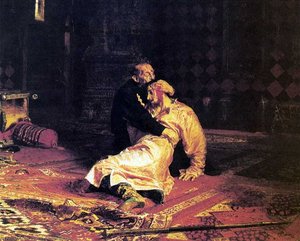
Repin’s name became inextricably linked with realism through works that unflinchingly portrayed the realities of Russian society. "Barge Haulers on the Volga" (1873), a monumental canvas depicting exhausted laborers dragging boats along the river, shocked and captivated audiences. It was not merely a depiction of physical hardship; it was a powerful indictment of social injustice and a testament to human endurance. This painting launched Repin into national prominence and established him as a leading voice for the marginalized. He continued to explore themes of Russian life in works like "Religious Procession in Kursk Province" (1883), which offered a nuanced portrayal of faith, superstition, and social hierarchy. However, Repin’s artistic vision extended beyond contemporary issues; he also tackled historical subjects with dramatic flair. "Ivan the Terrible and His Son Ivan" (1885), depicting a moment of horrific violence and remorse, caused a scandal upon its unveiling but remains one of his most iconic works, a chilling exploration of power and guilt. Perhaps his most celebrated painting is "Reply of the Zaporozhian Cossacks" (1880-91), a vibrant scene capturing the defiant spirit of Ukrainian Cossacks composing a satirical letter to the Ottoman Sultan – a symbol of resistance and national pride. These paintings were not simply historical recreations; they were imbued with psychological depth and emotional intensity, bringing the past vividly to life.Legacy and Enduring Influence
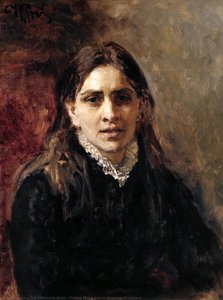
Throughout his long and prolific career, Repin continued to paint portraits of prominent figures – Leo Tolstoy, Modest Mussorgsky, Pavel Tretyakov – capturing their personalities with remarkable insight. He also taught at the Academy of Arts in St. Petersburg, influencing generations of Russian artists. His commitment to realism and social commentary resonated deeply within Russia and beyond, establishing him as a major figure in European art. While he initially embraced the February Revolution of 1917, Repin was disillusioned by the subsequent violence and terror unleashed by the Bolsheviks. He retreated to his estate, Penates, in Kuokkala (now Repino), Finland, where he continued to paint until his death in 1930. Repin’s legacy extends far beyond his individual paintings. He helped define Russian realism, paving the way for Socialist Realism and inspiring countless artists to use their work as a means of social critique. His ability to capture the human condition with both empathy and unflinching honesty continues to resonate with audiences today, ensuring his place among the masters of 19th-century art. Penates, his home, is now a museum, preserving not only his artistic legacy but also offering a glimpse into the life of one of Russia’s most important cultural figures.Key Works and Artistic Style
- "Barge Haulers on the Volga": A monumental depiction of social injustice, showcasing Repin's mastery of realism and his empathy for the working class.
- "Reply of the Zaporozhian Cossacks": A vibrant celebration of Ukrainian spirit and defiance, characterized by dynamic composition and expressive figures.
- "Ivan the Terrible and His Son Ivan": A psychologically intense portrayal of grief and remorse, demonstrating Repin's ability to convey complex emotions through dramatic lighting and gesture.
- "Religious Procession in Kursk Province": A nuanced observation of Russian society, capturing the interplay between faith, superstition, and social hierarchy.
- Portraits of Leo Tolstoy, Modest Mussorgsky, and Pavel Tretyakov: Intimate and insightful portrayals of prominent cultural figures, revealing Repin's skill in capturing personality and character.
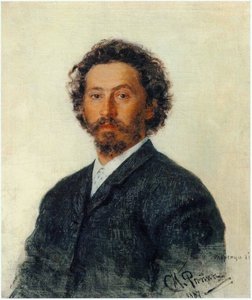
Ilya Yefimovich Repin
1844 - 1930 , Russia
Quick Facts
- Artistic Movement Or Style: Realism
- Artists Or Movements Influenced By This Artist: ['Socialist Realism']
- Artists Who Influenced This Artist:
- Ivan Kramskoi
- Vladimir Stasov
- Date Of Birth: 1844
- Date Of Death: 1930
- Full Name: Ilya Yefimovich Repin
- Nationality: Russian
- Notable Artworks:
- Barge Haulers on Volga
- Reply Zaporozhian Cossacks
- Ivan the Terrible...
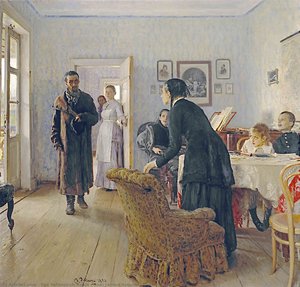
- Unexpected Visitors
- Place Of Birth (City And Country): Chuguev, Russia
Related Articles
Ilya Repin: Realism, Revolution & the Russian Soul – A Comprehensive Exploration of Life and Legacy
Explore the life & legacy of Ilya Repin, Russia's leading realist painter. Discover his iconic works like 'Barge Haulers on the Volga,' social commentary, and profound portraits. A comprehensive guide for art enthusiasts.
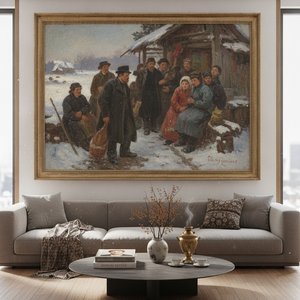
Discover Russian Realism: Soulful Masterpieces and the Timeless Spirit of the Peredvizhniki for Your Modern Home
Elevate your home with the soulful beauty of Russian Realism. Discover exquisite hand-painted reproductions of Peredvizhniki masterpieces, from lyrical landscapes to profound portraits, curated to bring historical depth and timeless elegance to your modern interior design.
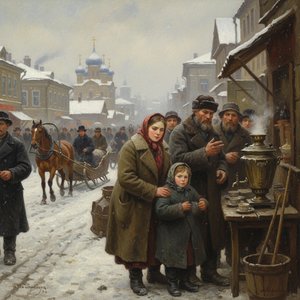
Vladimir Makovsky: Realism, Social Commentary & Russian Life in Late 19th-Century Painting
Explore the captivating world of Vladimir Makovsky, a leading Russian realist painter. Discover his insightful depictions of 19th-century life, social commentary & legacy with ArtsDot.
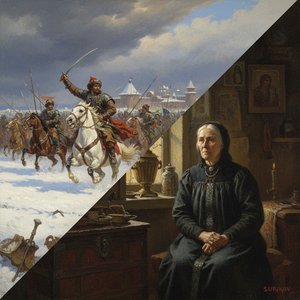
Vasily Surikov: Historical Epic & Psychological Realism in 19th-Century Russian Painting
Explore the powerful historical paintings of Vasily Surikov, a leading figure of Russian Realism. Discover his dramatic compositions, psychological depth & lasting influence on 19th-century art. Learn about collecting Surikov's masterpieces.
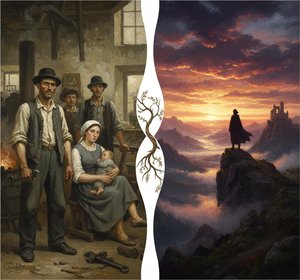
Romantic Realism's Finest: 10 Masterpieces for Your Home | ArtsDot
Explore 10 defining masterpieces of Romantic Realism! Discover Courbet, Millet & Daumier's powerful paintings—capturing emotion and social realities. Find museum-quality reproductions for your home at ArtsDot.com.