 Send
Send Share
Share
 Details

 Download
 Similars
 Diaporama
 Stats
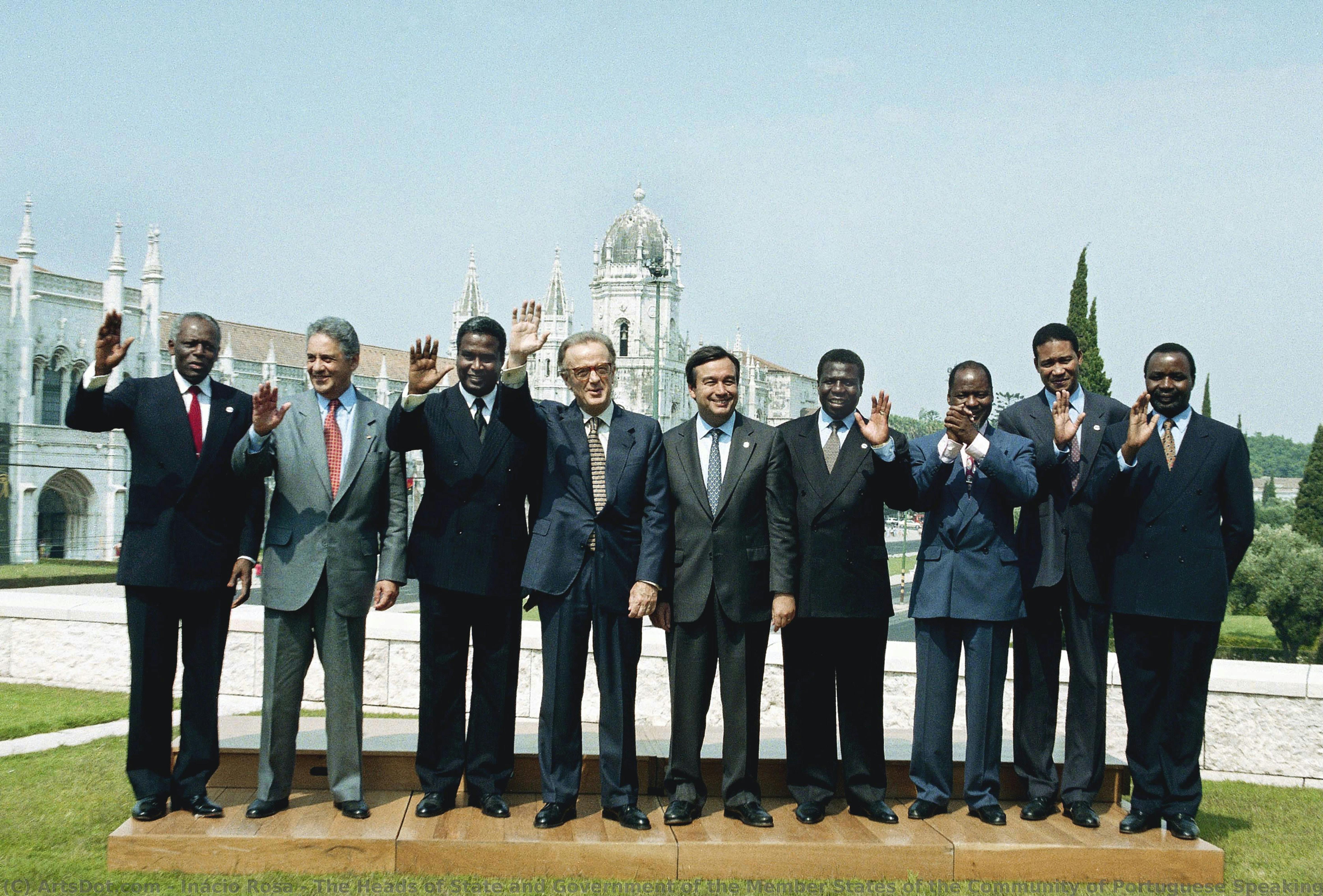
StatsThe Heads of State and Government of the Member States of the Community of Portuguese Speaking Countries


 Read More
Giclée / Art Print
Museum-quality giclée or canvas print with fast production and flexible finish options. ( Buy Hand Made Painting Switch to Digital Image)




































Pick from our preset sizes that match the artwork's original proportions.

You may enter your own dimensions to fit a specific frame or space. If your selected size does not match the original image's proportions, we will either crop the artwork or extend the image with a mirrored or solid-fill edge. A digital mockup will be sent for your approval before production begins.
Please note that the on-screen preview does not reflect the actual cropping or extension. Only the mockup will accurately show the final composition.
While custom sizes are available, we recommend selecting a dimension from the predefined list to preserve the original proportions.
Worldwide Delivery () in 2 weeks instead of standard 4/5 weeks. (10 September)

Free Worldwide Express Shipping

High-Quality Linen Canvas

Full Shipping Insurance

Customs Tax Refund Guarantee

True Color Matching Guarantee

100-Day Return Policy (Defects Only)

100% Money-Back Guarantee

Bulk Discount Offer
 Glass option is only available in size under 110 CM

The Heads of State and Government of the Member States of the Community of Portuguese Speaking Countries
Giclée / Art Print
Reproduction Size
-


Total Price
$ 63
A Moment Frozen in Diplomacy: The Essence of Unity
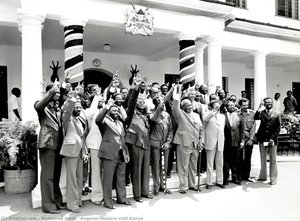
In the silent, monochromatic depths of Inácio Rosa’s 1996 photograph, The Heads of State and Government of the Member States of the Community of Portuguese Speaking Countries, we find more than a mere historical record; we encounter a profound visual poem of solidarity. Captured during the foundational era of the CPLP, this work transcends the boundaries of photojournalism to become a study in human connection and political gravity. The image presents a gathering of leaders from Angola, Brazil, Cabo Verde, Guinea-Bissau, Mozambique, Portugal, and São Tomé and Príncipe, arranged in a composition that speaks of shared destiny and the weight of responsibility. Through the lens of Rosa, the formal attire and poised stances of these men are transformed into symbols of a collective strength, where each figure contributes to a larger tapestry of diplomatic purpose.
The choice of black and white photography is instrumental in elevating this historical moment into the realm of fine art. By stripping away the distractions of color, Rosa directs our gaze toward the interplay of light and shadow, the textures of formal fabrics, and the subtle expressions etched upon the faces of these world leaders. This monochromatic palette lends a timeless, archival quality to the piece, evoking the solemnity of a monumental era. The stark contrasts create a sense of depth and presence, making the figures appear almost sculptural against the backdrop of their surroundings. For the discerning collector or interior designer, this aesthetic provides a sophisticated anchor for any space, offering a window into a moment where history was being actively shaped by the hands of those pictured.
Beyond its historical significance, the photograph resonates with an emotional cadence of camaraderie and professional resolve. There is a palpable sense of rhythm in the way the subjects are positioned—some closer to the viewer, others receding into the background—creating a visual flow that guides the eye through the assembly. This arrangement mimics the very structure of the community itself: a collection of distinct individuals unified by a common language and shared heritage. The architectural elements visible in the periphery suggest stability and permanence, reinforcing the idea that the foundations laid in 1996 were intended to endure. To possess a reproduction of this work is to hold a fragment of a transformative epoch, inviting contemplation on the power of unity and the enduring legacy of diplomatic endeavor.
Related Artworks


Artist Biography
The Crucible of Change: An Exploration of the Art of the 1960s
The decade of the 1960s wasn’t merely a period in history; it was a seismic shift, a crucible forging new artistic languages and challenging established conventions. Emerging from the shadow of post-war austerity and the lingering anxieties of the Cold War, art exploded with a vibrant energy fueled by social upheaval, technological advancements, and a burgeoning counterculture. This wasn’t simply about creating pretty pictures; it was about questioning everything – authorship, representation, the very definition of ‘art’ itself. The artists of this era weren't content to passively reflect reality; they actively sought to engage with it, dissecting its complexities and offering radical new perspectives. The influence of philosophical movements like structuralism and existentialism, coupled with the rise of mass media and consumer culture, provided fertile ground for experimentation and innovation.Roots in Rebellion: Key Movements and Their Pioneers
Several distinct yet interconnected movements defined the artistic landscape of the 1960s. Pop Art, arguably the most visible manifestation of this era’s spirit, emerged as a direct response to the perceived elitism of Abstract Expressionism. Artists like Andy Warhol, Roy Lichtenstein, and Robert Rauschenberg seized imagery from advertising, comic books, and everyday objects – the very fabric of American consumer culture – elevating them to the status of fine art. Warhol’s iconic silkscreen prints of Marilyn Monroe and Campbell's soup cans weren’t simply reproductions; they were meditations on celebrity, mass production, and the blurring lines between high and low culture. Simultaneously, Minimalism arose as a reaction against the emotionalism and gestural qualities of previous movements. Artists like Donald Judd, Sol LeWitt, and Carl Andre stripped art down to its essential components – geometric forms, industrial materials, and often, a deliberate lack of ornamentation. Their works weren’t meant to evoke emotion but to challenge our perceptions of space, form, and the role of the artist. Conceptual Art, closely linked to Minimalism, further pushed the boundaries of artistic expression by prioritizing ideas over traditional mediums. Artists like Joseph Kosuth explored language, perception, and the relationship between art and reality through challenging installations and performances.Beyond the Canvas: Expanding Artistic Boundaries
The 1960s witnessed a significant expansion of artistic practices beyond the confines of painting and sculpture. Happenings, pioneered by artists like Allan Kaprow, blurred the lines between performance art, theatre, and visual art, creating immersive experiences that engaged audiences directly. These events often involved unconventional materials, unpredictable elements, and a collaborative spirit, rejecting the traditional hierarchy of artist and viewer. Fluxus, an international network of artists, further challenged conventional notions of art by embracing humor, absurdity, and everyday objects. Artists like George Maciunas created “events” – small-scale performances or installations – that often incorporated chance, collaboration, and a playful disregard for established artistic norms. Furthermore, the influence of psychedelic culture permeated many aspects of art, particularly in music and visual arts. The use of vibrant colors, distorted imagery, and surreal forms reflected the altered states of consciousness experienced through drug use, creating a distinctly hallucinatory aesthetic.The Legacy of Disruption: Influence and Historical Significance
The artistic innovations of the 1960s had a profound and lasting impact on the art world. The rejection of traditional notions of authorship, the embrace of mass media imagery, and the exploration of conceptual ideas paved the way for subsequent movements like Arte Povera, Conceptual Art, and Neo-Expressionism. Minimalism’s emphasis on simplicity and materiality continues to influence contemporary sculpture and architecture. Pop Art's appropriation of popular culture remains a central theme in contemporary art, while Happenings and performance art have become integral parts of the artistic landscape. The decade’s questioning of established hierarchies and its embrace of experimentation fundamentally altered the relationship between art, society, and the viewer, establishing a precedent for future generations of artists to challenge conventions and push the boundaries of creative expression. The 1960s weren't just about creating new styles; they were about redefining what art could be – and what it could do.Key Figures: A Selective Overview
- Andy Warhol (Pop Art): Known for his silkscreen prints of celebrities and consumer products, challenging notions of beauty and value.
- Roy Lichtenstein (Pop Art): Master of the Ben-Day dot technique, transforming comic book imagery into sophisticated paintings.
- Robert Rauschenberg (Pop Art & Neo-Dada): Pioneered the “combine” technique, integrating painting, sculpture, and collage.
- Donald Judd (Minimalism): Advocated for simple geometric forms and industrial materials, emphasizing the object’s physical presence.
- Sol LeWitt (Minimalism & Conceptual Art): Developed a system of instructions for creating precise geometric artworks, exploring the relationship between idea and execution.
- Joseph Kosuth (Conceptual Art): Explored language, perception, and representation through challenging installations and performances.

inácio rosa
1960 - , Portugal
Quick Facts
- Artistic Movement Or Style: Hand-painted reproductions
- Artists Or Movements Influenced By This Artist: ['']
- Artists Who Influenced This Artist: ['']
- Date Of Birth: 1960
- Full Name: WahooArt
- Notable Artworks: ['Various famous artworks']
- Place Of Birth: WahooArt
Related Articles

Dark Masterpieces: 10 Iconic Paintings Dominated by Black Tones |
Explore 10 iconic paintings dominated by black tones, from Rembrandt’s chiaroscuro to Goya's dark expressions. Discover the stories behind these masterpieces & find museum-quality art reproductions for your home at .

White on Canvas: 10 Masterpieces & Timeless Elegance for Your Home Decor
Explore 10 iconic white paintings by Monet, Whistler & Rothko! Discover the stories behind these serene masterpieces and their impact on art history. Find museum-quality reproductions for your home decor at .

Monochrome Visions: Exploring the Aesthetic & Historical Significance of Black & White Photography
Explore the rich history & artistic power of black and white photography. From early techniques to iconic masters like Ansel Adams, discover why monochrome continues to captivate art lovers today. Expert insights for collectors.
The Subtleties of Shade: Exploring Black, White & Gray Abstraction in Modern Interior Design
Explore the power of black, white & gray abstraction in modern interior design. Discover how minimalist art impacts spatial perception & creates sophisticated hotel spaces. Expert insights for designers.
Chromatic Absence: Exploring the Aesthetic Power of Black & White Art
Explore the captivating world of monochrome art! Discover its rich history, influential artists like Malevich & Klein, and profound emotional impact. Expert insights for collectors & design enthusiasts.