The Pioneering Vision of the Tata Institute of Fundamental Research
The Tata Institute of Fundamental Research (TIFR), established in 1945, isn’t a single artist in the traditional sense, but rather a collective intellectual force – an institution that has profoundly shaped the landscape of Indian science and mathematics. Its story is one of ambitious vision, unwavering dedication to basic research, and a commitment to fostering a uniquely collaborative environment. Founded by J.R.D. Tata with Homi Bhabha as its driving spirit, TIFR emerged from a post-colonial India eager to establish itself on the global stage of scientific innovation. The impetus wasn’t merely national pride; it was a belief that fundamental research – the pursuit of knowledge for its own sake – held the key to long-term societal progress. Bhabha envisioned an institute free from the immediate pressures of practical application, allowing scientists to explore the deepest mysteries of the universe without constraint. This ethos remains central to TIFR’s identity today.
Early Years and the Atomic Age
The initial focus of TIFR was on nuclear physics, a field rapidly gaining prominence in the wake of World War II. Bhabha understood the potential – both peaceful and destructive – of atomic energy, and he strategically positioned TIFR to contribute to India’s burgeoning scientific capabilities. The institute quickly attracted brilliant minds, including C.V. Raman, K.S. Krishnan, and G.N. Ramachandran, laying the foundation for a culture of excellence. The early work at TIFR wasn't solely focused on theoretical pursuits; it involved building India’s first nuclear reactor, APSARA, in 1956 – a landmark achievement that demonstrated the nation’s self-reliance in atomic research. This period was characterized by intense activity and a sense of urgency, fueled by the geopolitical realities of the Cold War and India's desire for technological independence. However, Bhabha consistently emphasized that APSARA was not an end in itself but a tool to advance fundamental understanding of materials science and nuclear processes.
Expanding Horizons: Mathematics, Astrophysics, and Beyond
As TIFR matured, its scope broadened significantly. Recognizing the interconnectedness of scientific disciplines, Bhabha championed the establishment of dedicated schools within the institute for mathematics, astrophysics, chemistry, biology, and geosciences. The School of Mathematics quickly became a world-renowned center for research in areas like topology, algebraic geometry, and number theory. The work of mathematicians like S.S. Abhyankar and C.P. Ramanujam cemented TIFR’s reputation as a hub for cutting-edge mathematical innovation. Similarly, the astrophysics group made significant contributions to cosmology, radio astronomy, and high-energy particle physics. This diversification wasn't accidental; it reflected Bhabha’s belief in the power of interdisciplinary collaboration – that breakthroughs often occur at the intersection of different fields. He actively encouraged scientists from various schools to engage in joint projects, fostering a unique intellectual synergy within the institute.
A Legacy of Scientific Excellence and Mentorship
The impact of TIFR extends far beyond its specific research outputs. The institute has been instrumental in nurturing generations of Indian scientists, many of whom have gone on to become leaders in their respective fields both nationally and internationally. Bhabha himself was a remarkable mentor, known for his ability to identify talent and provide unwavering support to young researchers. This tradition of mentorship continues today, with senior scientists actively involved in guiding the next wave of scientific innovators.
- The development of the Trombay reactor series, building on APSARA, demonstrated India’s growing expertise in nuclear technology.
- Significant contributions to understanding protein structure, particularly through the work of G.N. Ramachandran and his colleagues, revolutionized structural biology.
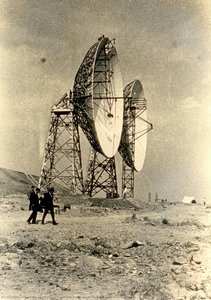
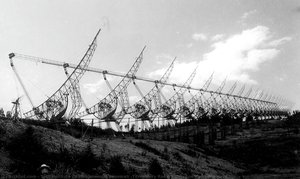
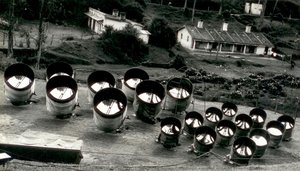
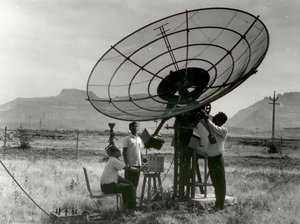
- Pioneering research in cosmology and radio astronomy, leading to a deeper understanding of the universe’s origins and evolution.
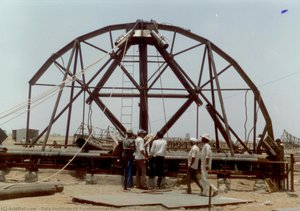
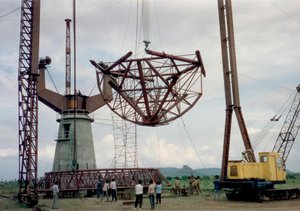
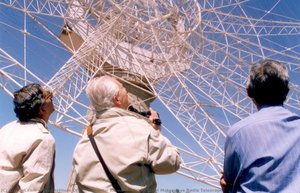
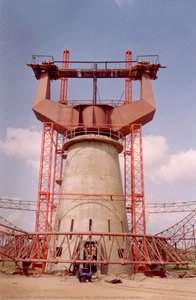
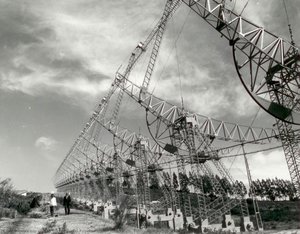
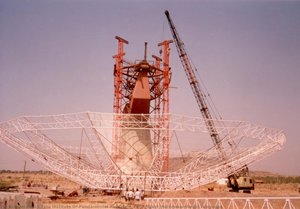
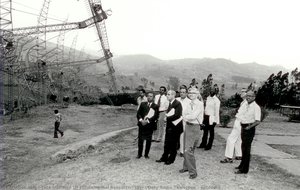
- The establishment of numerous national facilities, such as the National Centre for Radio Astronomy (NCRA), providing state-of-the-art infrastructure for scientific research.
TIFR Today: Continuing a Tradition of Innovation
Today, TIFR remains at the forefront of Indian science. It continues to pursue fundamental research across a wide range of disciplines, tackling some of the most challenging questions in modern science. The institute is actively involved in projects like gravitational wave detection, dark matter research, and climate modeling. While the geopolitical landscape has changed dramatically since its founding, TIFR’s core mission – to advance knowledge through basic research – remains unchanged. It stands as a testament to the power of visionary leadership, unwavering dedication, and a commitment to fostering a collaborative environment where scientific innovation can flourish. The legacy of J.R.D. Tata and Homi Bhabha lives on in the institute’s continued pursuit of excellence and its enduring impact on the world of science.