 Preview
 Send
Send Share
Share
 Details

 Download
 Similars
 X-Ray
X-Ray Diaporama
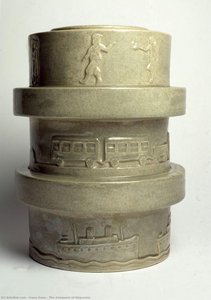
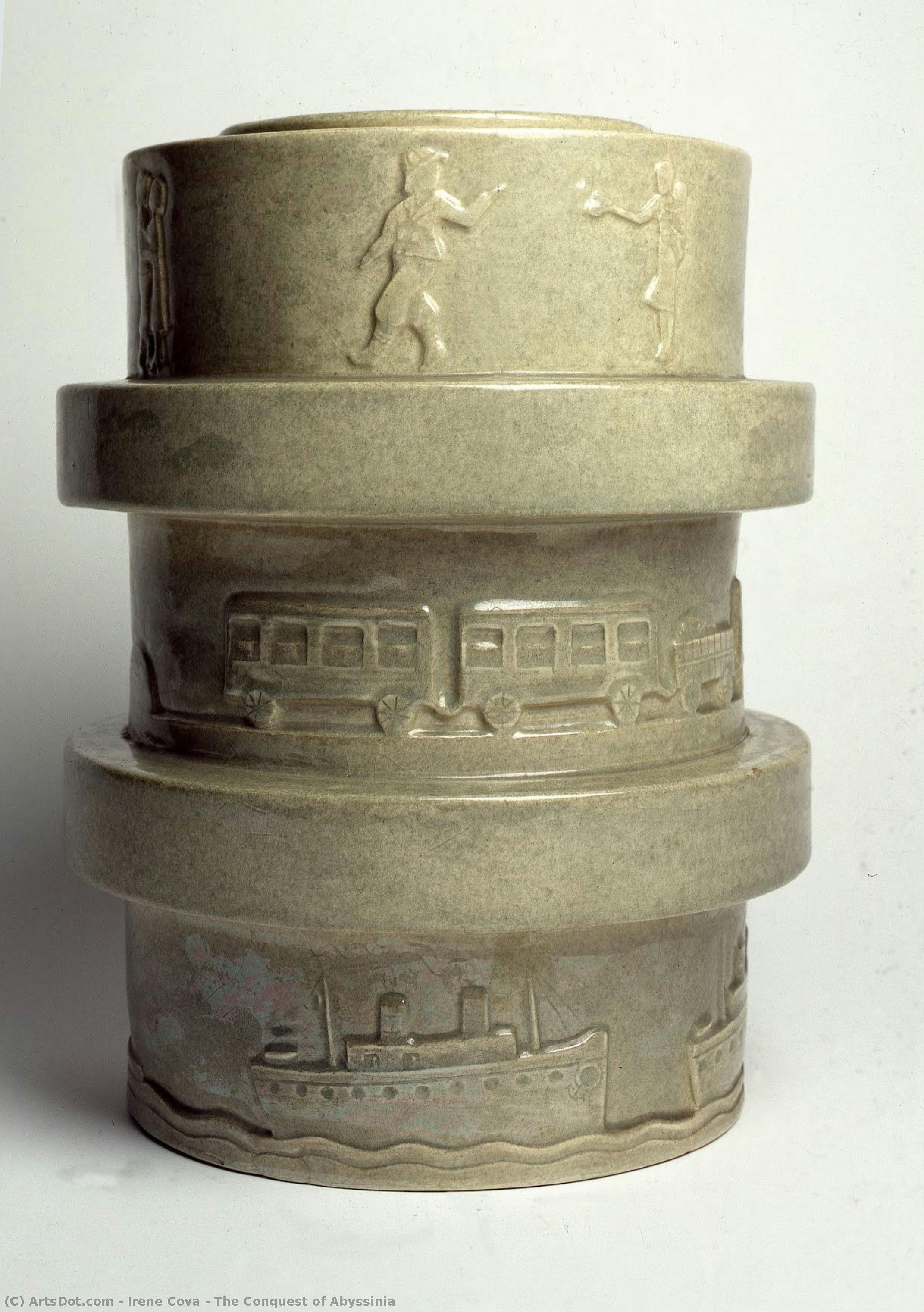
The Conquest of Abyssinia


 Read More
Giclée / Art Print
Museum-quality giclée or canvas print with fast production and flexible finish options. ( Buy Hand Made Painting Buy Image)




































Pick from our preset sizes that match the artwork's original proportions.

You may enter your own dimensions to fit a specific frame or space. If your selected size does not match the original image's proportions, we will either crop the artwork or extend the image with a mirrored or solid-fill edge. A digital mockup will be sent for your approval before production begins.
Please note that the on-screen preview does not reflect the actual cropping or extension. Only the mockup will accurately show the final composition.
While custom sizes are available, we recommend selecting a dimension from the predefined list to preserve the original proportions.
Worldwide Delivery () in 2 weeks instead of standard 4/5 weeks. (22 August)

Free Worldwide Express Shipping

High-Quality Linen Canvas

Full Shipping Insurance

Customs Tax Refund Guarantee

True Color Matching Guarantee

60-Day Return Policy (Defects Only)

100% Money-Back Guarantee

Bulk Discount Offer
 Glass option is only available in size under 110 CM

The Conquest of Abyssinia
Giclée / Art Print
Reproduction Size
-


Total Price
$ 63
Related Artworks

Artist Biography
Albert Bierstadt: The Grand Visionary of the American West
Albert Bierstadt, born in Düsseldorf, Germany, in 1830, wasn’t simply a landscape painter; he was a conduit to the vastness and untamed beauty of the American West. His career, spanning nearly half a century, coincided with a period of intense westward expansion, and Bierstadt played a crucial role in shaping how Easterners envisioned this new frontier. Initially trained within the rigorous traditions of the Düsseldorf School – characterized by meticulous detail, dramatic atmospheric effects, and heroic compositions – Bierstadt’s artistic journey took him from Europe to the burgeoning landscapes of New England before ultimately leading him to the monumental vistas of the Rocky Mountains and Sierra Nevada. This evolution reflects a deliberate attempt to synthesize European Romanticism with the raw, compelling energy of the American West. Bierstadt's early years were marked by a deep appreciation for meticulous observation and technical skill. His training under Andreas Aschenbach and Karl Friedman Lessing instilled in him a dedication to capturing the nuances of light and shadow, mirroring the techniques employed by German Romantic painters like Caspar David Friedrich. However, it was his experiences accompanying military expeditions into the West that truly ignited his artistic passion. These journeys weren’t merely observational; they were immersive explorations, demanding detailed sketches, artifact collection, and even the pioneering use of stereoscopic photography – a technique he embraced to accurately represent the immense scale and intricate details of the landscapes. This commitment to realism, combined with an inherent sense of drama, distinguished his work from earlier landscape painters who often idealized nature. The mid-1860s proved to be Bierstadt’s golden age. His paintings of Yosemite Valley, particularly *Yosemite – The Fallen Monarch*, became instant sensations, captivating the public and solidifying his reputation as the foremost painter of the American West. These canvases weren't simply depictions of scenery; they were carefully constructed narratives, often incorporating Native Americans and explorers into the scene to convey a sense of human interaction with the wilderness. The US Congress even appropriated $20,000 for a single canvas – a testament to the immense impact his work had on public perception. This period also saw him commissioned by the Capitol Building to create two monumental murals, further cementing his status as a national artist. The demand for his Western landscapes was so great that he returned to California multiple times, meticulously documenting the Sierra Nevada, Tahoe, and Yosemite’s ever-changing light. Despite achieving immense commercial success during his lifetime, Bierstadt's style eventually fell out of favor by the 1880s. The dramatic Romanticism of the Düsseldorf School was eclipsed by the softer, more atmospheric Barbizon school and then by the burgeoning influence of French Impressionism. His work, once commanding exorbitant prices, began to be viewed as overly sentimental and detailed. Yet, despite this waning popularity, Bierstadt remained a significant figure in American art history, his monumental landscapes continuing to inspire awe and wonder. His legacy lies not just in the breathtaking beauty of his paintings but also in his pivotal role in introducing the grandeur of the American West to a nation eager to explore its vast territories.Carl E. Woolsey: A Regionalist Master of the Pennsylvania Landscape
Born in Danville, Illinois, in 1902, Carl E. Woolsey’s artistic journey began with self-directed study and was profoundly shaped by his family's relocation to Indianapolis and later to East Stroudsburg, Pennsylvania. His early exposure to art came through informal instruction from Henry Richter in Long Beach, California, a pivotal moment that ignited his passion for painting. Woolsey’s artistic development was further influenced by the presence of his brothers, Wood and Jean, who were also pursuing careers as artists, creating a supportive and collaborative environment. The allure of the American West, particularly the landscapes of Taos, New Mexico, proved irresistible to Woolsey. Inspired by Walter Ufer's exhibitions in Indianapolis, he embarked on a transformative journey to Taos in 1927, where he spent several years honing his skills under Ufer’s guidance. This period marked a significant shift in his artistic style, moving away from the more rigid conventions of European Romanticism and embracing a distinctly regionalist approach. Woolsey's paintings during this time were characterized by their meticulous detail, vibrant colors, and a focus on capturing the essence of the Pennsylvania landscape – rolling hills, dense forests, and the subtle shifts in light and shadow. Throughout his career, Woolsey’s work remained firmly rooted in the traditions of American landscape painting. He eschewed abstraction and focused on creating realistic depictions of nature, often incorporating elements of human presence—a solitary figure or a small dwelling—to convey a sense of scale and connection to the environment. His technical skill was evident in his masterful use of dappled brushwork, which created a shimmering effect that enhanced the depth and texture of his paintings. Despite facing economic challenges during the Great Depression, Woolsey continued to paint prolifically, eventually returning to East Stroudsburg where he shared a studio with his brother, Wood. In the later years of his life, Woolsey shifted his focus from grand landscapes to smaller, more intimate scenes, including portraits and genre paintings. This transition reflected a desire to explore new subjects while retaining his signature style. Carl E. Woolsey died in East Stroudsburg in 1965, leaving behind a rich body of work that continues to be appreciated for its beauty, technical skill, and evocative portrayal of the Pennsylvania landscape. His legacy as a regionalist master is firmly established, reminding us of the power of art to capture the essence of place and time.
irene cova
1902 - 1992 , Russia
Quick Facts
- Artistic Movement Or Style: Hudson River School
- Date Of Birth: January 7, 1830
- Date Of Death: February 18, 1902
- Full Name: Albert Bierstadt
- Nationality: American
- Notable Artworks:
- The Rocky Mountains
- Yosemite Valley
- Among the Sierra Nevada”, “Last of the Buffalo” ], "Artists who influenced this artist": [ "Andreas Aschenbach", "Karl Friedman Lessing" ], "Artists or movements influenced by this artist": [ "Düsseldorf School", "Romanticism"
- Place Of Birth: Prussia (Germany)
Related Articles

Bronze Sculptures That Defined Art History | ArtsDot
Journey through art history with our Top 10 bronze sculptures! Explore masterpieces by Rodin, Michelangelo & more. Discover stories behind iconic statues and find museum-quality reproductions for your home decor at ArtsDot.com.

The Enduring Form: Exploring Themes & Techniques in Sculpture Across Historical Periods
Explore the rich history of sculpture from ancient masterpieces to contemporary innovations. Discover key techniques, influential artists & investment potential for discerning art collectors.

Bronze Age to Modern Masters: 10 Sculptures That Redefined Art | ArtsDot
Journey through art history with 10 legendary bronze sculptures – from Michelangelo's David to Rodin’s Thinker. Explore the stories, techniques & timeless beauty of these masterpieces. Find museum-quality reproductions & elevate your home decor on ArtsDot.com.
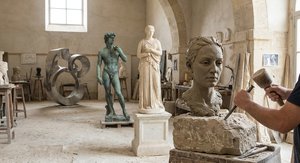
The Enduring Form: Sculpture Across History, Technique & Emotional Resonance
Explore the rich history of sculpture with ArtsDot. Discover key techniques, influential artists & investment potential for discerning collectors. Expert insights into valuing and collecting timeless masterpieces.

The Alchemy of Clay: A Collector's Guide to the Mastery, Texture, and Timeless Form of Ceramic Art
Discover the profound beauty of ceramic art. Our expert guide explores the alchemy of clay, texture, and glaze, offering collectors deep insights into mastering earth and fire to create timeless, sculptural masterpieces for any curated collection.