

 Preview
 Send
Send Share
Share
 Details

 Download
 Similars
 X-Ray
X-Ray Diaporama
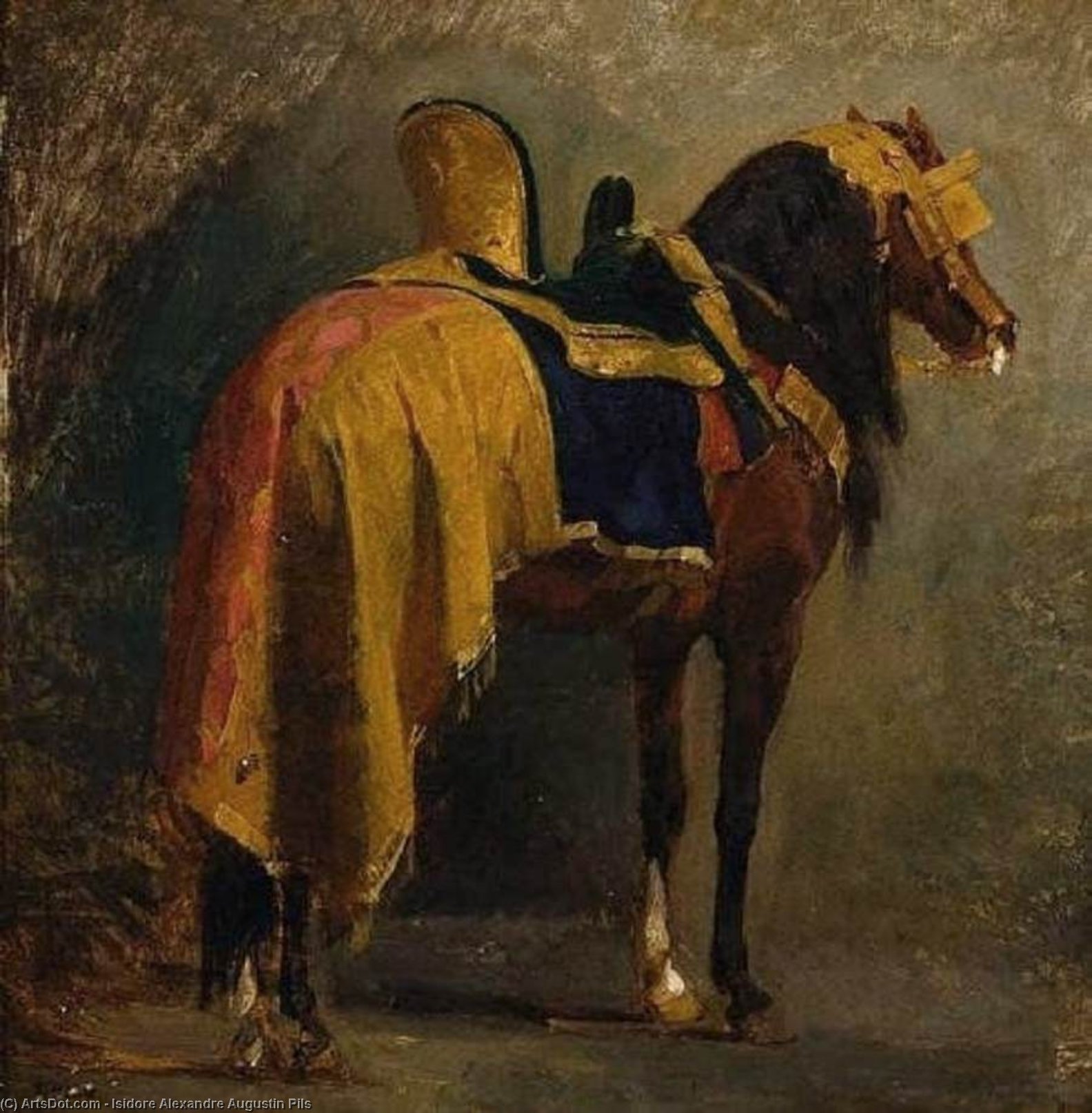
Horse Caparisoned
 Acrylic On Canvas
- WallArt
- Academic Romanticism
 1860
1860 64.0 x 63.0 cm
 Gallery of New South Wales
 Read More
Purchase a high-resolution, enhanced digital image, far superior to the online preview.
Each file is meticulously prepared by our in-house specialists using advanced tools and expert manual retouching. We ensure every image has exceptional clarity, precise color accuracy, and fine detail.
The final file is delivered via email within 72 hours, optimized for immediate use in professional, editorial, and print environments. This is the same quality trusted by top-tier design studios, publishers, and galleries.
Digital Image
Download a high-resolution file for personal display, printing, and creative projects. ( Buy Print Buy Hand Made Painting)
Included in Every Digital Image Order
Expert Digital Delivery, Guaranteed
When you choose ArtsDot.com, you're not just getting an image - you're receiving a professionally enhanced digital artwork, crafted with precision and backed by a satisfaction guarantee. Here's everything that comes with your order, automatically:

Fast Email Delivery
Your high-resolution digital image file will be emailed to you within 72 hours of ordering - ready for immediate use.

AI-Enhanced Digital File
Your artwork is professionally optimized using advanced AI tools and manual editing, ensuring maximum detail, clarity, and color accuracy.

Free Lifetime Re-Delivery
Accidentally deleted or lost your file? No worries - we'll resend it to you anytime, free of charge.

No Import Fees - Ever
Enjoy your artwork instantly with zero customs, duties, or delivery fees - digital downloads are always tax-free.

Color Accuracy Guarantee
We ensure your digital image reflects the original colors as closely as possible using professional tools and color management.

60-Day Satisfaction Guarantee
If you're not satisfied with your digital image, we'll revise it or refund 100% within 60 days - no questions asked.

100% Money-Back Guarantee
Not satisfied? Get a full refund within 60 days of receiving your digital file - no questions asked.

Bulk Order Discounts
Buy 3 images, save 10% - Buy 5, save 15% - Buy 10+, save 20%. Great for creative projects, galleries, and agencies.
Collectible Description
A Moment of Noble Grace: Isidore Pils’s “Horse Caparisoned”
Isidore Alexandre Augustin Pils's "Horse Caparisoned," painted in 1860, is more than a simple portrait; it’s a carefully constructed tableau brimming with historical resonance and evocative symbolism. This oil-on-canvas work, measuring a modest 64 x 63 cm, captures a pivotal scene – a riderless horse, draped in rich fabrics, following a funeral procession. Pils, a prominent figure within the French academic art world, masterfully blends Romanticism’s emphasis on emotion and grandeur with a keen awareness of contemporary military and societal values.
The painting immediately draws the eye to the magnificent horse itself – a powerful creature rendered with meticulous detail, its musculature taut beneath the flowing folds of a vibrant yellow blanket. This isn't merely decorative; the caparison speaks volumes about status and respect. The rider, partially obscured by the horse’s form, is clad in a striking blue and gold outfit, suggesting nobility or perhaps even military rank – a subtle nod to the era’s fascination with heroic figures and national pride. Pils’s brushwork is remarkably controlled, creating a sense of both movement and stillness; the horse appears poised, ready to continue its solemn journey, while the overall composition exudes an aura of quiet dignity.
The Weight of History: Contextualizing the Scene
To fully appreciate “Horse Caparisoned,” it’s crucial to understand the historical context in which it was created. The mid-19th century witnessed a surge in nationalistic fervor across Europe, fueled by military victories and a desire for stability following decades of upheaval. Pils, deeply influenced by this climate, frequently depicted scenes of war and heroism – subjects that resonated powerfully with the public imagination. The painting’s subject matter directly reflects this trend; the riderless horse is a traditional symbol of mourning and respect, particularly within military circles, signifying the loss of a distinguished officer or soldier.
Furthermore, the inclusion of the riderless horse harkens back to ancient Roman traditions, where similar processions were used to honor fallen heroes. This connection imbues the painting with layers of historical significance, elevating it beyond a simple portrait and transforming it into a meditation on mortality, duty, and remembrance. The choice of a horse as the vehicle for mourning is particularly poignant – representing strength, loyalty, and the enduring spirit of those who have served their nation.
Technique and Artistic Style: A Masterful Blend
Pils’s artistic style is firmly rooted in the academic tradition, yet he demonstrates a remarkable sensitivity to light and color. He employs a rich palette – dominated by warm yellows, deep blues, and shimmering golds – to create a visually arresting image. The use of chiaroscuro (the contrast between light and dark) adds depth and drama, highlighting the horse’s form and emphasizing the solemnity of the occasion. His brushstrokes are generally smooth and blended, contributing to the painting's polished appearance, but he also incorporates subtle textural variations to suggest the weight of the blanket and the texture of the horse’s coat.
Notably, Pils was a student of John Singleton Copley, whose influence is evident in the artist’s meticulous attention to detail and his ability to capture the likenesses of his subjects. However, Pils distinguishes himself through his own unique vision – a willingness to infuse historical scenes with emotional intensity and a sophisticated understanding of symbolism.
Symbolism and Emotional Resonance: A Legacy of Remembrance
Beyond its historical context and artistic merits, “Horse Caparisoned” possesses a profound emotional resonance. The image evokes feelings of sadness, respect, and perhaps even a touch of melancholy. The riderless horse embodies the loss of leadership, the sacrifice of duty, and the enduring power of remembrance. It’s a poignant reminder of the human cost of war and the importance of honoring those who have served their country.
Reproductions of this captivating artwork offer a valuable opportunity to bring its timeless beauty and profound symbolism into any setting. Whether adorning a formal study or a more casual living space, “Horse Caparisoned” serves as a powerful testament to the enduring legacy of Isidore Pils and his masterful ability to capture the essence of human experience.
Related Artworks
Artist Biography
John Singleton Copley: A Bostonian Pioneer of Portraiture
John Singleton Copley, born in Boston in 1738, stands as a pivotal figure in the history of American art – a painter who bridged the gap between the nascent colonial spirit and the established traditions of European portraiture. His life was one of constant movement, beginning in his native Massachusetts and culminating in a distinguished career in London, yet it’s his early work capturing the essence of New England society that remains most enduringly captivating. Copley's journey reflects not just artistic evolution but also the shifting dynamics between America and Europe during the late 18th century. He was the son of Richard Copley, an Anglo-Irish tobacco merchant, and Mary Singleton Copley Pelham, a woman of considerable social standing. This lineage provided him with access to both wealth and cultural connections, elements that would profoundly shape his artistic trajectory.Early Life and Artistic Training
Copley’s childhood was marked by the loss of his father at a young age, an event which significantly impacted his family's fortunes. His mother remarried, bringing into the household her second husband, William Pelham, a prominent politician. Despite these familial shifts, Copley received a solid education, attending the prestigious Boston Latin School and later studying under Charles Bell, a Scottish artist who had recently arrived in America. Bell’s influence instilled in Copley a deep appreciation for classical forms and techniques, laying the groundwork for his future success as a portraitist. Crucially, Copley also benefited from exposure to the work of John Adams, then a young lawyer and later president of the United States, who commissioned several portraits from him early in his career. These commissions provided invaluable experience and established Copley’s reputation within Boston's elite circles.The Rise of a Colonial Portraitist
Copley quickly distinguished himself as a portrait painter of exceptional skill and sensitivity. He possessed an uncanny ability to capture not just the physical likeness of his subjects but also their personalities, social standing, and inner lives. His portraits of prominent Bostonians – including John Adams, Samuel Adams, Paul Revere, and Governor Thomas Hutchinson – became iconic representations of colonial society. These works were characterized by a remarkable realism, achieved through meticulous observation and a masterful command of light and shadow. Copley’s use of color was particularly noteworthy, employing subtle gradations to create a sense of depth and atmosphere. His portraits weren't merely likenesses; they were carefully constructed narratives, reflecting the social and political realities of the time.A Move to London and Expanding Horizons
In 1774, seeking greater opportunities and influenced by the growing political unrest in America, Copley relocated to London. This move marked a significant turning point in his career, exposing him to a wider range of artistic influences and patrons. In London, he quickly established himself as one of the most sought-after portraitists of the era, catering to a clientele that included members of the British aristocracy and royal family. However, Copley’s ambitions extended beyond mere portraiture. He also embraced historical painting, producing large-scale works depicting scenes from classical mythology and biblical narratives. These ambitious projects demonstrated his willingness to experiment with new styles and techniques, albeit with varying degrees of success. His later historical paintings often reflected a more dramatic and theatrical sensibility than his earlier portraits, showcasing a shift in artistic focus.Legacy and Influence
John Singleton Copley’s legacy is complex yet undeniably significant. He remains one of the most important figures in American art history, representing a crucial bridge between colonial realism and European artistic traditions. His portraits of Bostonians offer invaluable insights into the social, political, and cultural landscape of 18th-century New England. While his later historical paintings are often considered less successful than his portraiture, they nonetheless demonstrate his versatility as an artist. Copley’s influence can be seen in the work of subsequent generations of American painters, who continued to draw inspiration from his masterful technique and his ability to capture the essence of human character. His dedication to realism and his keen eye for detail cemented his place as a pioneer of American portraiture, ensuring that his art continues to resonate with audiences today.
isidore alexandre augustin pils
1815 - 1875 , France
Quick Facts
- Artistic Movement Or Style: Portrait painting
- Artists Or Movements Influenced By This Artist: ['']
- Artists Who Influenced This Artist: ['Richard Copley']
- Date Of Birth: July 3, 1738
- Date Of Death: September 9, 1815
- Full Name: John Singleton Copley
- Nationality: American
- Notable Artworks:
- Watson and the Shark
- John Copley, 1st Baron Lyndhurst
- Place Of Birth: Boston, Massachusetts Bay

