 Preview
 Send
Send Share
Share
 Details

 Download
 Similars
 X-Ray
X-Ray Diaporama
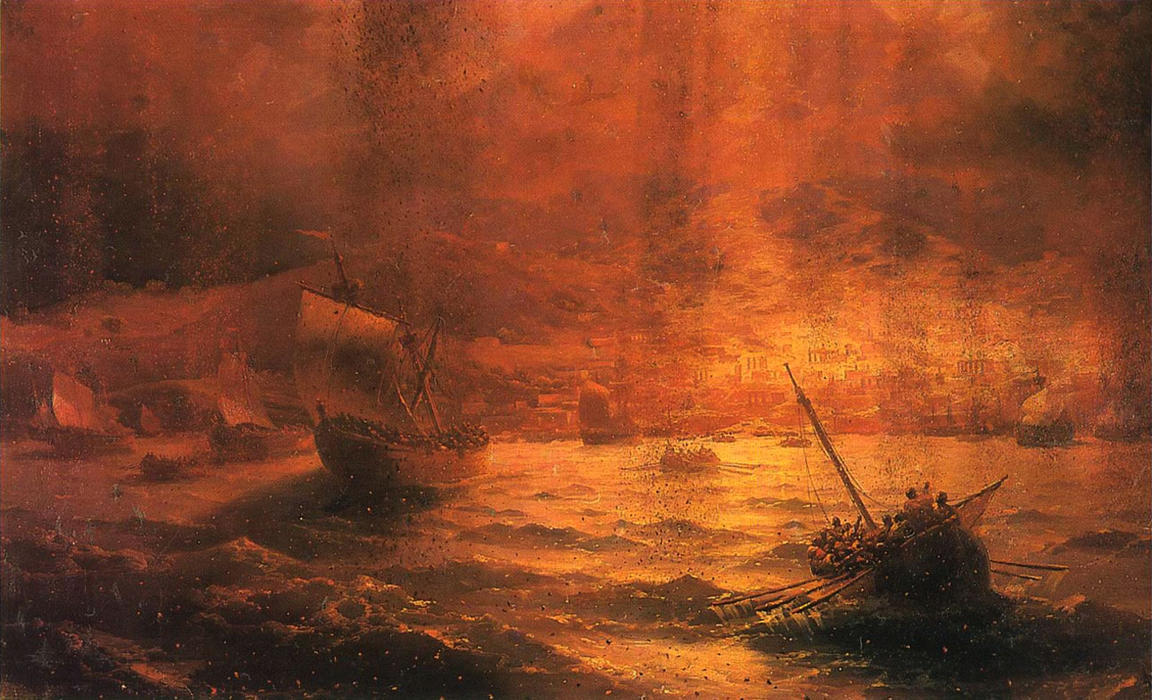
The Ruins of Pompeii
 Oil On Canvas
- WallArt
- Romanticism
 1889
1889- 19th Century
 128.0 x 218.0 cm
 Read More
Hand Made Oil Reproduction
Hand-painted oil on canvas in your size and frame, made to order by our artists. ( Buy Print Buy Image)




P118B $10

P118H $10

P118W $10

P438Z $10

P508JH $12

P508YH $12

P805H $10

P805Z $10

P919BZ $10

P919G $10

P919XJ $10

P959ZH $10

P968JZ $12

W106C $8

W218G $10

W218JH $8

W218Y $10

W307PJ $10

W316G $10

W316PJ $8

W316Y $10

W398PJ $8

W4111J $10

W500HY $15

W500JH $15

W692G $12

W849H $8

W940BG $15

W953PJ $8




Pick from our preset sizes that match the artwork's original proportions.

You may enter your own dimensions to fit a specific frame or space. If your selected size does not match the original image's proportions, we will either crop the artwork or extend the painting with additional hand-painted elements. A digital mockup will be sent for your approval before production begins.
Please note that the on-screen preview does not reflect the actual cropping or extension. Only the mockup will accurately show the final composition.
While custom sizes are available, we recommend selecting a dimension from the predefined list to preserve the original proportions.
After order, ArtsDot.com team will email client for instructions and provide a mockup preview
Worldwide Delivery () in 3/4 weeks instead of standard 5 weeks. (16 August). No compromise on quality.

Free Worldwide Express Shipping

High-Quality Linen Canvas

Full Shipping Insurance

Customs Tax Refund Guarantee

True Color Matching Guarantee

60-Day Return Policy (Defects Only)

100% Money-Back Guarantee

Bulk Discount Offer
 Glass option is only available in size under 110 CM

The Ruins of Pompeii
Reproduction Medium
Reproduction Size
-


Total Price
$ 263
Artwork Description
A Cataclysm Frozen in Time: The Tragedy of Pompeii
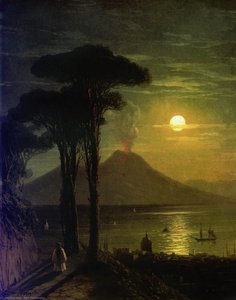
To gaze upon Ivan Konstantinovich Aivazovsky’s depiction of The Ruins of Pompeii is not merely to observe a painting; it is to stand at the precipice of history, witnessing a moment when civilization collided violently with nature's raw, untamed power. This canvas transports us directly into the suffocating aftermath of Vesuvius’s devastating eruption in 79 AD. The air itself seems thick with ash and despair. Aivazovsky masterfully captures the sheer scale of the catastrophe—the juxtaposition of once-vibrant life against overwhelming desolation.
The scene is a haunting tableau of chaos. Buildings, monuments to human endeavor, are shown partially consumed by creeping lava and blanketed under drifts of volcanic ash. On the water, several boats drift like forgotten toys amidst the wreckage, their occupants—if visible at all—are swallowed by the overwhelming narrative of panic. It speaks volumes about fragility; how quickly the grandest structures and most bustling lives can be reduced to silent, tragic remnants.
The Master's Eye: Technique and Emotional Resonance
Aivazovsky, renowned for his profound connection to the sea, applies his signature dramatic flair here to a terrestrial disaster. While his genius is often associated with the boundless expanse of the Black Sea, in this work, that same sense of overwhelming natural force is channeled into the depiction of volcanic ruin. His technique allows the viewer’s eye to wander across the composition, from the foreground boats caught in the murky water to the distant, smoke-stained skyline. The handling of light and shadow is breathtaking; pockets of relative calm exist against a backdrop of suffocating gloom, lending an almost unbearable tension to every square inch.
The emotional impact is immediate and profound. It is a meditation on loss, survival, and the relentless march of geological time against human memory. For collectors and designers alike, this piece offers more than mere decoration; it provides a powerful focal point for contemplation—a dramatic anchor that speaks to the sublime terror inherent in existence.
Symbolism of Ruin and Resilience
The symbolism woven into The Ruins of Pompeii is rich and multilayered. The city itself represents the ephemeral nature of human achievement, a potent memento mori rendered with breathtaking beauty. Yet, within this desolation lies an undercurrent of resilience. The very act of painting such a scene—preserving the memory of the disaster—is an act of defiance against oblivion. The scattered figures, whether fleeing or simply witnessing, embody the enduring spirit that refuses to be entirely extinguished by catastrophe.
For those seeking art with narrative depth, this work resonates deeply. It invites dialogue about what we build, what we cherish, and how we endure when the foundations beneath us begin to shake. The drama is palpable, making it a centerpiece worthy of grand halls or contemplative studies.
A Statement for the Modern Collector
Reproducing such an iconic piece allows one to bring this monumental sense of history and dramatic flair into a contemporary setting. Whether adorning a formal drawing-room where conversation is paramount, or lending moody gravitas to a study, Aivazovsky’s vision commands attention. The scale (128 x 218 cm) ensures that the narrative unfolds grandly, enveloping the viewer in its tragic majesty. Owning this reproduction is acquiring not just an image of Pompeii, but a tangible piece of Romantic-era artistic interpretation concerning humanity's place beneath the vast indifference of nature.
Related Artworks


Artist Biography
A Life Embraced by the Waves
Ivan Konstantinovich Aivazovsky, born Hovhannes Aivazian in 1817, was more than a painter of seascapes; he was a conduit to the ocean’s soul. His very existence seemed inextricably linked to the Black Sea—a vast, unpredictable expanse that would forever dominate his artistic vision and fuel an extraordinary career spanning nearly six decades. Born in the Crimean port city of Feodosia, Aivazovsky didn't merely observe the sea; he felt it – its raw energy, sublime beauty, and inherent danger becoming the very essence of his art. From a young age, this connection was nurtured, initially by local architect Jacob Koch who recognized the boy’s talent, then blossoming within the rigorous academic environment of the Imperial Academy of Arts in Saint Petersburg. Yet, formal training alone couldn't account for the depth of Aivazovsky’s understanding; it was the constant presence of salt-laced air and the cries of gulls that truly shaped his artistic sensibility. His Armenian heritage also played a significant role, as he was baptized at the St. Sargis Armenian Church in Feodosia and maintained strong cultural ties throughout his life, occasionally incorporating Armenian themes into his expansive body of work.The Rise of a Marine Master
Aivazovsky’s artistic journey extended beyond Russia, taking him across Europe in the early 1840s. Italy proved particularly formative, immersing him in new landscapes and light, refining his skills and developing a distinctive style characterized by dramatic compositions and masterful use of color. Upon returning to Russia, a pivotal moment arrived: his appointment as the main painter of the Russian Navy. This wasn’t merely a prestigious title; it was access—access to ships, sailors, naval battles, and firsthand observation that profoundly influenced his work. He became intimately acquainted with maritime life, lending an authenticity to his depictions that resonated deeply with both military officials and art enthusiasts alike. His prolific output – around 6,000 paintings throughout his career – testifies to his relentless dedication and extraordinary talent. Aivazovsky didn’t simply replicate scenes; he sought to evoke emotion, to transport the viewer into the heart of a storm or onto the deck of a ship battling towering waves. He wasn't interested in merely recording what was seen, but rather conveying what was felt. The artist’s ability to capture not just the visual spectacle of the sea, but its very essence—its moods, its power, and its mystery—quickly established him as a leading figure in Russian Romanticism.Capturing the Sublime: Style and Key Works
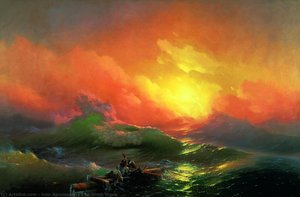
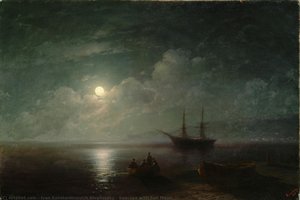
Aivazovsky’s paintings are instantly recognizable for their romantic sensibility and technical brilliance. Seascape with Full Moon, exemplifies his mastery of atmospheric perspective, creating an ethereal glow that bathes the sea in silvery light. The power of nature is palpable in works like A Ship in a Stormy Sea, where turbulent waters and dark skies convey a sense of impending doom and the fragility of human existence. He wasn’t afraid to depict chaos and destruction, but even within these dramatic scenes, there was always an underlying sense of beauty and awe. The Gondolier on Sea at Night, showcases his skill in capturing nocturnal scenes with remarkable detail and a hauntingly beautiful atmosphere. Early works like Chaos (The Creation), which garnered attention from Pope Gregory XVI, reveal a willingness to tackle ambitious themes and demonstrate his technical prowess. However, it is arguably The Ninth Wave that remains his most iconic masterpiece—a harrowing depiction of shipwreck survivors clinging desperately to wreckage, facing the relentless power of the ocean. The painting embodies Aivazovsky’s ability to blend realism with romanticism, creating a scene that is both terrifying and profoundly moving. He often worked en plein air, directly from nature, capturing fleeting light effects, and developed a unique technique of applying paint in thin layers to create luminous textures.Legacy and Enduring Influence
Ivan Konstantinovich Aivazovsky stands as one of the greatest masters of marine art in Russian history—a legacy cemented by his technical skill, emotional depth, and prolific output. His paintings are celebrated not only for their aesthetic beauty but also for their ability to evoke powerful emotions and capture the essence of the sea. He significantly contributed to the development of Russian landscape painting, influencing generations of artists with his innovative techniques and dramatic compositions. Aivazovsky’s work continues to resonate with audiences worldwide, exhibited in museums and galleries across the globe. His paintings are a testament to the enduring power of nature and the human spirit—a reminder of our vulnerability in the face of the elements and our capacity for resilience and hope. He wasn't simply a painter of seascapes; he was a poet of the ocean, translating its moods, mysteries, and majesty onto canvas with unparalleled skill and passion.- Technical Innovation: Aivazovsky often worked en plein air, directly from nature, capturing fleeting light effects. He also developed a unique technique of applying paint in thin layers to create luminous textures.
- Romantic Sensibility: His work embodies the Romantic movement’s emphasis on emotion, imagination, and the sublime power of nature.
- National Pride: Aivazovsky's paintings often celebrated Russian naval victories and maritime prowess, contributing to a sense of national identity.
- Prolific Output: The sheer volume of his work—approximately 6,000 paintings—is remarkable and demonstrates his unwavering dedication to his craft.

Ivan Konstantinovich Aivazovsky
1817 - 1900 , Russia
Quick Facts
- Artistic Movement Or Style: Romanticism, Marine art
- Artists Or Movements Influenced By This Artist: Russian landscape painting
- Date Of Birth: 1817
- Date Of Death: 1900
- Full Name: Ivan Konstantinovich Aivazovsky
- Nationality: Russian-Armenian
- Notable Artworks:
- The Ninth Wave
- Ship in a Stormy Sea
- Seascape with Full Moon
- Place Of Birth: Feodosia, Russia
Related Articles
Ivan Aivazovsky: Mastering Light & Emotion in 19th-Century Marine Painting
Explore the captivating world of Ivan Aivazovsky, a master of 19th-century marine painting. Discover his techniques, iconic artworks & lasting legacy in this expert guide.
The Allure of the Horizon: A Comprehensive Exploration of Seascape Art Through History & Emotion
Explore the captivating world of seascape art! Discover its history, key artists & movements – from Dutch Masters to Impressionism. Expert insights for collectors and enthusiasts at ArtsDot.
19th Century Masterpieces: 10 Paintings That Defined an Era | ArtsDot
Journey through 19th century art with ArtsDot! Explore 10 iconic paintings – from Monet & Renoir to Courbet – and discover the stories behind Romanticism, Realism & Impressionism. Find museum-quality reproductions for your home decor. Explore the full collection online!
Hubert Robert: Picturing Ruins, Preserving Memory – A Study of Romantic Antiquarianism & Artistic Innovation
Explore the captivating world of Hubert Robert, master of Romantic landscape painting & 'capriccio' ruins. Discover his historical context, artistic innovations, and collecting insights with ArtsDot.
The Azure Depths: Exploring Representations of the Ocean in Art History
Explore the rich history of ocean art! Discover Romantic seascapes, renowned artists like Aivazovsky & Harris, and expert guidance for collectors at ArtsDot.com.