 Preview
 Send
Send Share
Share
 Details

 Download
 Similars
 X-Ray
X-Ray Diaporama
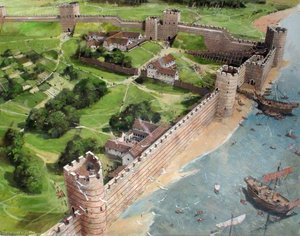
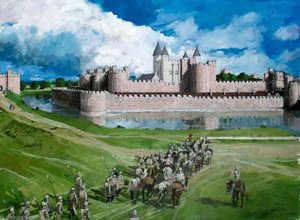
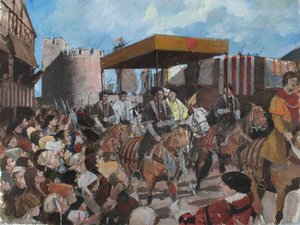
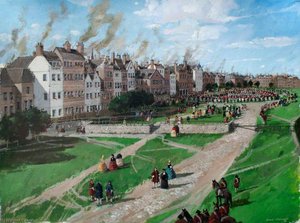
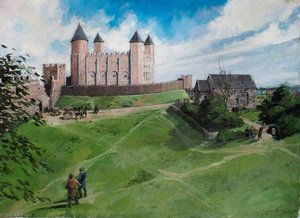
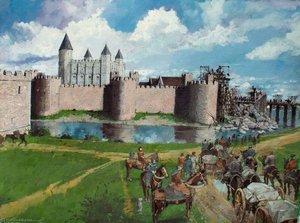
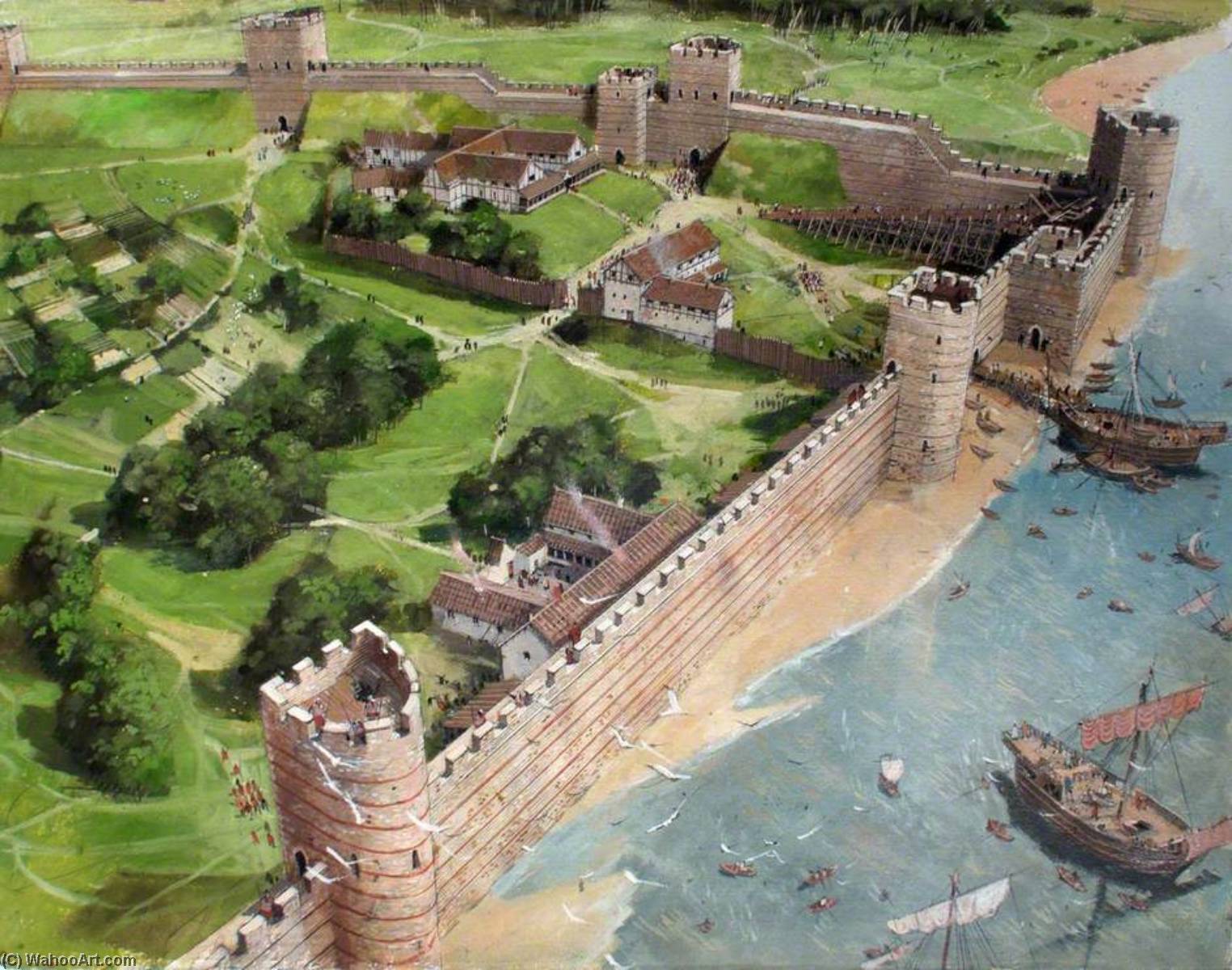
Reconstructed View Showing Origins of the Tower at the South East Corner of Roman London, 400 AD
 Watercolor
- WallArt
- Contemporary Realism
 2000
2000- Early Medieval
 71.0 x 100.0 cm
 Tower of London
 Read More
Giclée / Art Print
Museum-quality giclée or canvas print with fast production and flexible finish options. ( Buy Hand Made Painting Buy Image)




P118B $10

P118H $10

P118W $10

P438Z $10

P508JH $12

P508YH $12

P805H $10

P805Z $10

P919BZ $10

P919G $10

P919XJ $10

P959ZH $10

P968JZ $12

W106C $8

W218G $10

W218JH $8

W218Y $10

W307PJ $10

W316G $10

W316PJ $8

W316Y $10

W398PJ $8

W4111J $10

W500HY $15

W500JH $15

W692G $12

W849H $8

W940BG $15

W953PJ $8




Pick from our preset sizes that match the artwork's original proportions.

You may enter your own dimensions to fit a specific frame or space. If your selected size does not match the original image's proportions, we will either crop the artwork or extend the image with a mirrored or solid-fill edge. A digital mockup will be sent for your approval before production begins.
Please note that the on-screen preview does not reflect the actual cropping or extension. Only the mockup will accurately show the final composition.
While custom sizes are available, we recommend selecting a dimension from the predefined list to preserve the original proportions.
Worldwide Delivery () in 2 weeks instead of standard 4/5 weeks. (23 August)

Free Worldwide Express Shipping

High-Quality Linen Canvas

Full Shipping Insurance

Customs Tax Refund Guarantee

True Color Matching Guarantee

60-Day Return Policy (Defects Only)

100% Money-Back Guarantee

Bulk Discount Offer
 Glass option is only available in size under 110 CM

Reconstructed View Showing Origins of the Tower at the South East Corner of Roman London, 400 AD
Giclée / Art Print
Reproduction Size
-


Total Price
$ 63
Collectible Description
A Window into Roman London
In his evocative masterpiece, Reconstructed View Showing Origins of the Tower at the South East Corner of Roman London, 400 AD, artist Ivan Lapper invites us to step through a portal across sixteen centuries. This breathtaking reconstruction does more than merely depict a landscape; it breathes life into the very foundations of a city. The painting captures a pivotal moment in time, where the rugged, defensive structures of the Roman era begin to take shape against the backdrop of a sprawling, watery horizon. Through Lapper’s meticulous eye, we witness the intersection of military necessity and early urban development, as the primitive precursors to the iconic Tower of London emerge from the mist of history.
The composition is masterfully orchestrated to evoke a profound sense of depth and discovery. A formidable brick wall, weathered by time and purpose, anchors the scene, acting as a boundary between the known world and the untamed waters beyond. As the eye wanders across the canvas, it encounters the gentle movement of life: figures scattered throughout the landscape, some engaged in the quiet rhythms of daily existence, others perhaps standing in silent contemplation of the rising fortifications. A solitary boat glides upon the water, a delicate symbol of commerce and connection, adding a layer of narrative intrigue that suggests a world in constant motion, even at its very inception.
Technically, Lapper utilizes a style that marries historical accuracy with an atmospheric, painterly grace. His ability to render textures—the rough grain of ancient brickwork, the shimmering surface of the Thames, and the soft light of a bygone era—creates a sensory experience that is both immersive and intellectually stimulating. For the discerning collector or interior designer, this piece serves as more than just decoration; it is a conversational centerpiece. It brings an air of scholarly elegance and historical weight to any space, offering a contemplative focal point that rewards repeated viewing with new details and deeper emotional resonances.
To possess a reproduction of this work is to hold a fragment of London's soul. The painting resonates with themes of endurance, transformation, and the cyclical nature of civilization. It reminds us that every great monument began as a humble construction, a seed planted in the earth by those who came before us. Whether placed in a private library, a sophisticated study, or a grand living area, Lapper’s vision provides an enduring sense of continuity, connecting the modern observer to the ancient roots of one of the world's most legendary cities.
Related Artworks
Artist Biography
A Vision of the Past: The Historical Impressions of Ivan Lapper
Ivan Lapper, born in Bilston, Staffordshire, England in 1939, is an artist whose work offers a compelling and meticulously researched glimpse into bygone eras. While not a household name, his dedication to recreating historical scenes with remarkable detail has earned him recognition among collectors and art enthusiasts fascinated by the past. Lapper’s journey began with formal training at Wolverhampton College of Art from 1954-1959, followed by studies at the prestigious Royal College of Art between 1959 and 1962. This foundation in traditional artistic techniques would prove crucial to his later development as a historical illustrator and painter. His early work hinted at an interest in architecture and detailed observation, but it was his fascination with London’s rich history that truly defined his career path.The Tower of London: A Recurring Motif
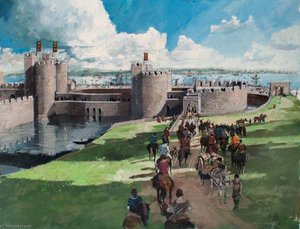
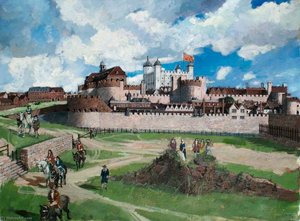
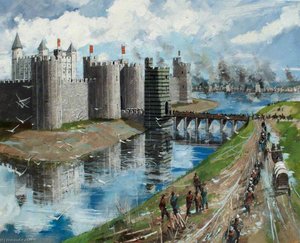
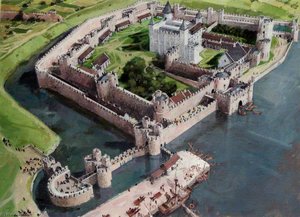
Lapper is perhaps best known for his series of watercolor paintings depicting the Tower of London at various points throughout its long and storied existence. These are not simply picturesque representations; they are painstakingly reconstructed views, born from extensive research into historical documents, archaeological findings, and architectural plans. He doesn’t merely *show* us the Tower—he invites us to step back in time, experiencing it as it might have been during different periods of its development. His 2000 watercolor, “Reconstructed View of the Tower of London with the Great Hall, 1300,” exemplifies this approach. The image is not a romanticized fantasy but a carefully considered attempt to visualize the fortress in all its medieval grandeur. Similarly, his depictions from 1200 and 1547 offer contrasting perspectives on the evolving structure and its role within English society. These works are particularly notable for their warm tones and precise geometric lines, creating a sense of solidity and authenticity.Technique and Influences
Lapper’s technique is rooted in traditional watercolor methods, emphasizing accuracy and detail. He builds up layers of translucent washes to create depth and atmosphere, paying close attention to the play of light and shadow on architectural surfaces. While he doesn't explicitly identify a single artistic movement as a primary influence, his work resonates with elements of Historical Impressionism, seeking to capture not just the appearance but also the *feeling* of a particular time and place. One can detect echoes of Romanticism in his approach—a fascination with the past and a desire to evoke a sense of awe and wonder. His meticulous research suggests an affinity for artists who prioritized historical accuracy, though he distinguishes himself through the unique focus on architectural reconstruction.Beyond London: Ancient Sites and Medieval Life
While the Tower of London remains a central subject in his oeuvre, Lapper’s artistic vision extends beyond this iconic landmark. He has also created impressions of other ancient sites, demonstrating a broader interest in historical landscapes and civilizations. His work often focuses on scenes of medieval life—digging moats, constructing fortifications, or simply depicting the daily routines of people who inhabited these spaces centuries ago. These paintings are not grand narratives but intimate glimpses into the past, offering a sense of connection to those who came before us. The attention to detail extends beyond architecture to include clothing, tools, and everyday objects, creating a richly textured and believable world.Legacy and Historical Significance
Ivan Lapper’s work occupies a unique niche within the art world. He is not an artist seeking to shock or challenge conventions but rather one dedicated to preserving and interpreting history through meticulous visual reconstruction. His paintings serve as valuable resources for historians, archaeologists, and anyone interested in visualizing the past. While his output may be relatively small compared to some of his contemporaries, the quality and depth of his work have earned him a devoted following. He provides a rare opportunity to experience historical sites not as ruins or museum exhibits but as living, breathing spaces—a testament to the enduring power of art to connect us with our shared heritage. His dedication to accuracy and evocative detail ensures that his impressions will continue to captivate and inform audiences for generations to come.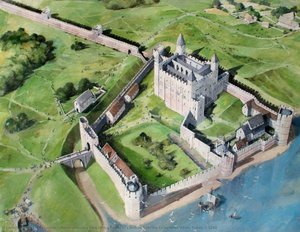
ivan lapper
1939 -
Quick Facts
- Artistic Movement Or Style: Historical Impressionism
- Artists Or Movements Influenced By This Artist: ['Medieval Art']
- Artists Who Influenced This Artist: ['Romanticism']
- Date Of Birth: 1939
- Full Name: Ivan Lapper
- Nationality: Russian
- Notable Artworks:
- Tower of London (1200)
- Great Hall (1300)
- London Site (1547)
- Place Of Birth: Russia
Related Articles
National Gallery London's Masterpieces: 25 Iconic Paintings for Your Home Decor
Journey through the National Gallery London's 25 most iconic paintings! Explore Van Gogh, Monet, Rembrandt & more. Discover art history, techniques & find museum-quality reproductions for your home decor on ArtsDot.com.

Bartolomeo Pinelli: Neoclassical Linearity & Roman Topography of Memory
Explore the captivating world of Bartolomeo Pinelli, a master Italian engraver renowned for his evocative Roman scenes & historical narratives. Discover his art and legacy with ArtsDot.
Echoes of Antiquity: Enduring Themes & Techniques in Classic Art
Explore the enduring legacy of classical art! Discover ancient Greek & Roman influences, Renaissance masterpieces, and timeless techniques. Expert insights for collectors & enthusiasts at ArtsDot.
Echoes of Antiquity: Exploring Themes & Techniques in Classical Art Masterpieces
Explore the timeless beauty & profound themes of Classical art! Discover Greek & Roman masterpieces, Neoclassical revivals, and the enduring influence on artistic movements. Expert insights & high-quality reproductions at ArtsDot.

Thomas H. Shepherd: Capturing Victorian London's Essence Through Topographical Precision
Explore the exquisite topographical paintings of Thomas H. Shepherd, renowned for his detailed depictions of Victorian London and beyond. Discover his legacy & artistic techniques.