 Preview
 Send
Send Share
Share
 Details

 Download
 Similars
 X-Ray
X-Ray Diaporama
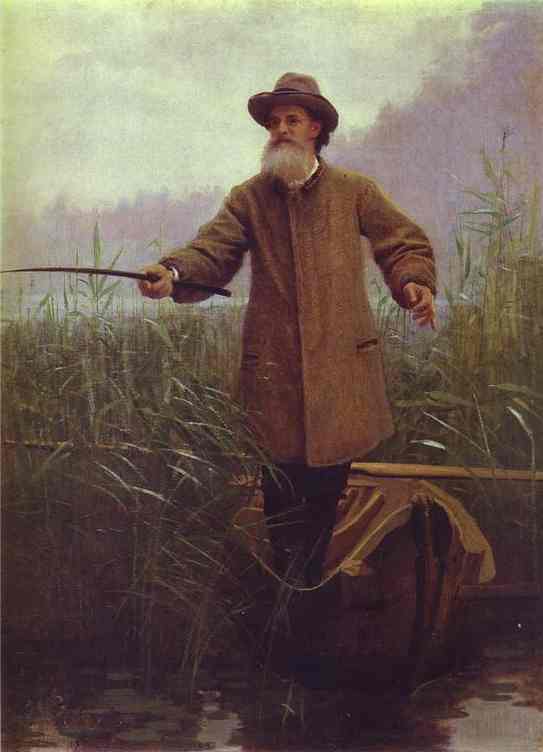
Poet Apollon Maikov Fishing


 Read More
Giclée / Art Print
Museum-quality giclée or canvas print with fast production and flexible finish options. ( Buy Hand Made Painting Buy Image)




P118B $10

P118H $10

P118W $10

P438Z $10

P508JH $12

P508YH $12

P805H $10

P805Z $10

P919BZ $10

P919G $10

P919XJ $10

P959ZH $10

P968JZ $12

W106C $8

W218G $10

W218JH $8

W218Y $10

W307PJ $10

W316G $10

W316PJ $8

W316Y $10

W398PJ $8

W4111J $10

W500HY $15

W500JH $15

W692G $12

W849H $8

W940BG $15

W953PJ $8




Pick from our preset sizes that match the artwork's original proportions.

You may enter your own dimensions to fit a specific frame or space. If your selected size does not match the original image's proportions, we will either crop the artwork or extend the image with a mirrored or solid-fill edge. A digital mockup will be sent for your approval before production begins.
Please note that the on-screen preview does not reflect the actual cropping or extension. Only the mockup will accurately show the final composition.
While custom sizes are available, we recommend selecting a dimension from the predefined list to preserve the original proportions.
Worldwide Delivery () in 2 weeks instead of standard 4/5 weeks. (1 September)

Free Worldwide Express Shipping

High-Quality Linen Canvas

Full Shipping Insurance

Customs Tax Refund Guarantee

True Color Matching Guarantee

60-Day Return Policy (Defects Only)

100% Money-Back Guarantee

Bulk Discount Offer
 Glass option is only available in size under 110 CM

Poet Apollon Maikov Fishing
Giclée / Art Print
Reproduction Size
-


Total Price
$ 63
A Moment of Quietude: The Soul of Russian Realism
In the quiet intersection of nature and intellect, Ivan Nikolaevich Kramskoy’s Poet Apollon Maikov Fishing offers a profound window into the contemplative spirit of the nineteenth century. This evocative oil on canvas transcends a mere depiction of a recreational activity, presenting instead a deeply psychological portrait of one of Russia's most celebrated poets. As Maikov stands waist-deep in the shallow, reed-fringed waters, the viewer is invited into a sanctuary of solitude. Kramskoy, a titan of the Peredvizhniki movement, masterfully employs the tenets of Realism to strip away the superficial, focusing instead on the dignified presence of his subject and his seamless integration with the natural world.
The composition is anchored by the commanding figure of Maikov, whose stature dominates the frame. There is a palpable sense of weight and permanence in his form, achieved through Kramskoy’s expert use of light and shadow. The lighting is soft, diffused, and almost atmospheric, casting a gentle glow that blurs the boundaries between the man and his environment. This technique creates an emotional resonance of peace and introspection, suggesting that the act of fishing is not merely a pastime, but a meditative ritual—a way for the poet to commune with the rhythms of the earth and find clarity amidst the complexities of human thought.
Mastery of Texture and Tonal Harmony
Technically, the painting is a triumph of tonal control and textural nuance. Kramskoy utilizes a muted, earthy palette dominated by deep browns, mossy greens, and somber grays, which serves to ground the artwork in a palpable sense of reality. Every element of the landscape is rendered with a meticulous eye for detail: the rough, organic textures of the surrounding reeds, the shimmering, wet surface of the water, and the heavy, tactile quality of Maivok’s clothing. These details are not merely decorative; they build a sensory experience that allows the viewer to almost feel the dampness of the air and the stillness of the marsh.
The artist employs a sophisticated use of atmospheric perspective to create an illusion of immense depth. While the foreground elements like the reeds and Maikov’s form are sharp and defined, the distant scenery recedes into a soft, pale haze, pulling the eye deeper into the landscape. This layering of detail creates a sense of vastness, emphasizing the solitary nature of the figure within the grander scale of the Russian wilderness. For the discerning collector or interior designer, this painting offers a sophisticated balance of complexity and calm, making it an ideal centerpiece for spaces designed for reflection and intellectual engagement.
A Legacy of Connection and Contemplation
Beyond its aesthetic brilliance, Poet Apollon Maikov Fishing carries significant historical and symbolic weight. As a key figure in the movement to bring art closer to the people, Kramskoy’s choice of subject matter reflects a deep respect for the dignity of the individual and the sanctity of the natural landscape. The painting symbolizes the profound connection between the creative process and the natural world—the idea that true inspiration is often found in moments of stillness and isolation. It captures the essence of the Russian Realist tradition, where art serves as a mirror to both the external environment and the internal human condition.
Owning a high-quality reproduction of this masterpiece allows one to bring this sense of historical gravity and tranquil beauty into a modern setting. Whether placed in a library, a study, or a curated living space, the painting acts as an emotional anchor, evoking themes of peace, resilience, and the enduring power of the human spirit. It is more than a portrait; it is an invitation to pause, to breathe, and to reconnect with the quietude that exists within us all.
Related Artworks
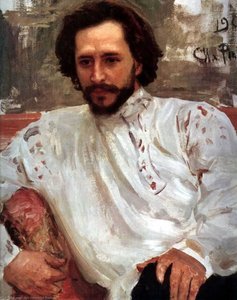
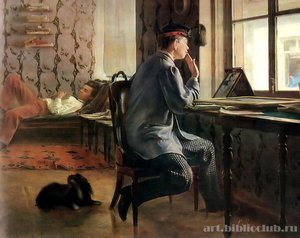
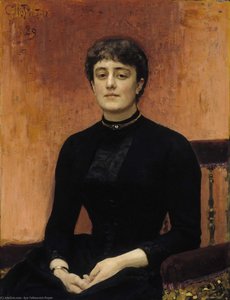
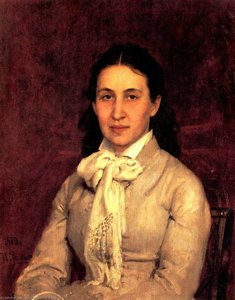
Artist Biography
The Soul of Russian Realism: The Life and Legacy of Ivan Kramskoy
Ivan Nikolaevich Kramskoy, born on May 27, 1837, in the quiet town of Ostrogozhsk, stands as a monumental figure within the landscape of Russian art history. His life was defined by an intellectual fervor and an unwavering dedication to artistic principles rooted in social realism, leaving an indelible imprint on both his contemporaries and subsequent generations. Growing up in Voronezh Province, Kramskoy’s early years were shaped by an upbringing steeped in intellectual curiosity and a profound engagement with the burgeoning ideas of Russian revolutionary democracy. Influenced by the radical thinkers of his era, such as Chernyshevsky and Herzen, he embraced the conviction that art possessed a moral obligation—a duty to reflect truthfully upon society and champion its betterment.
This deep-seated belief in the transformative power of art propelled him toward the St. Petersburg Academy of Arts, yet it was there that his rebellious spirit truly ignited. Kramskoy famously spearheaded the “Revolt of Fourteen,” a historic student uprising against the academy’s restrictive and outdated artistic standards. This act of defiance led to his expulsion, but rather than stifling his talent, it solidified his commitment to independent expression. Under the guidance of mentors like Mikhail Borisovich Tulinov, who recognized his burgeoning genius, Kramskoy began to forge a path that would eventually lead him to become a cornerstone of the Peredvizhniki, or the Wanderers movement.
A Visionary of the Peredvizhniki Movement
The formation of the Peredvizhniki movement marked a decisive intersection in Kramskoy’s artistic trajectory. Alongside luminaries like Ilya Repin, he sought to reject official patronage and the didacticism of the Imperial Academy in favor of a more democratic and socially conscious approach to painting. His work became a vessel for social commentary, capturing the psychological depth of the Russian people and the stark realities of their existence. Kramsk_oy was not merely a painter but a profound art critic and leader, shaping the aesthetic discourse of his time through his ability to blend technical mastery with intense emotional resonance.
His repertoire is characterized by a remarkable versatility that ranges from the deeply introspective to the symbolically grand:
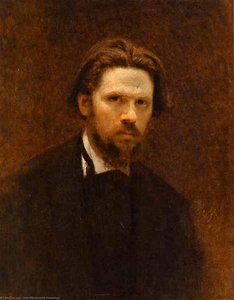
- Self-Portraiture: In works such as Self-Portrait 1, Kramskoy utilizes a somber and introspective Realist style. The profound depth of his gaze invites viewers into a soulful encounter with the artist's own psyche, capturing the weight of his intellectual burdens.
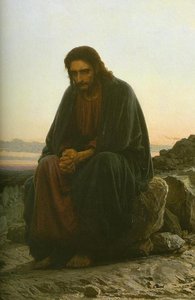
- Religious and Symbolic Mastery: His masterpiece, Christ in the Desert (1872), serves as a poignant exploration of solitude and faith. Through dramatic lighting and profound symbolism, he depicts the spiritual struggle of Jesus, creating a work that remains a cornerstone of Russian art.
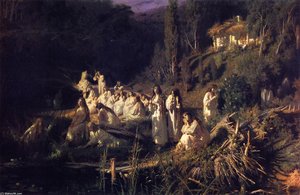
- Romantic Realism: In Water Nymphs (1871), Kramskoy demonstrates his ability to capture serene figures and nature through rich colors and a softer, more romanticized lens of realism, proving that his social consciousness could coexist with aesthetic beauty.
Historical Significance and Enduring Impact
Kramskoy’s contribution to art extends far beyond the canvas. As an organizer and critic, he provided the intellectual scaffolding upon which Russian Realism was built. He believed that the artist must be a witness to their time, a role he fulfilled with unparalleled integrity. His ability to navigate the complexities of political upheaval while maintaining a focus on the human condition allowed his work to transcend the immediate politics of the 19th century.
The legacy of Ivan Nikolaevich Kramskoy is found in the very fabric of Russian identity. By championing the truth of the common experience and challenging the elitism of academic institutions, he helped democratize art, making it a tool for national reflection. Today, his works continue to captivate audiences worldwide, offering a window into a period of intense spiritual and social transformation. His life remains a testament to the idea that art, when wielded with courage and truth, can serve as a powerful catalyst for change.
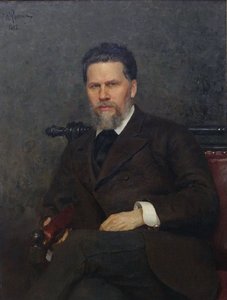
ivan nikolaevich kramskoy
1837 - 1887 , Russia
Quick Facts
- Artistic Movement Or Style: Realism
- Artists Or Movements Influenced By This Artist: ['Peredvizhniki']
- Artists Who Influenced This Artist: ['Alexander Ivanov']
- Date Of Birth: May 27, 1837
- Date Of Death: April 5, 1887
- Full Name: Ivan Nikolaevich Kramskoy
- Nationality: Russian
- Notable Artworks:
- Christ in the Desert
- In the Grove of Medon near Paris
- Place Of Birth: Ostrogozhsk, Russia
Related Articles
Ivan Bilibin: A Synthesis of Folklore, Modernism & National Identity in Russian Illustration
Explore the enchanting world of Ivan Bilibin, a master Russian illustrator who synthesized folklore, Art Nouveau & national identity. Discover his iconic fairy tale illustrations and legacy with ArtsDot.
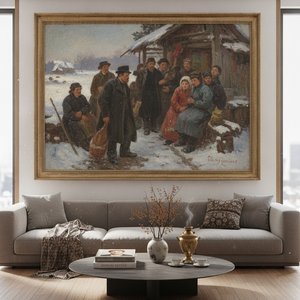
Discover Russian Realism: Soulful Masterpieces and the Timeless Spirit of the Peredvizhniki for Your Modern Home
Elevate your home with the soulful beauty of Russian Realism. Discover exquisite hand-painted reproductions of Peredvizhniki masterpieces, from lyrical landscapes to profound portraits, curated to bring historical depth and timeless elegance to your modern interior design.
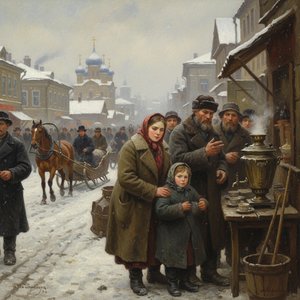
Vladimir Makovsky: Realism, Social Commentary & Russian Life in Late 19th-Century Painting
Explore the captivating world of Vladimir Makovsky, a leading Russian realist painter. Discover his insightful depictions of 19th-century life, social commentary & legacy with ArtsDot.
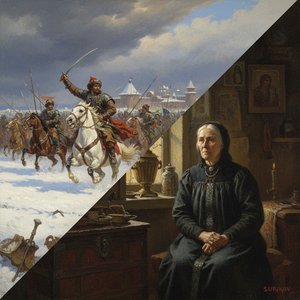
Vasily Surikov: Historical Epic & Psychological Realism in 19th-Century Russian Painting
Explore the powerful historical paintings of Vasily Surikov, a leading figure of Russian Realism. Discover his dramatic compositions, psychological depth & lasting influence on 19th-century art. Learn about collecting Surikov's masterpieces.
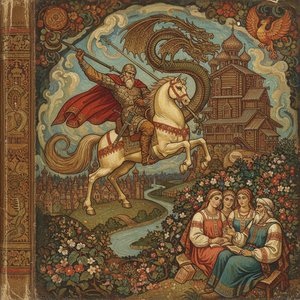
Victor Vasnetsov: Myth, Nationalism & the Revival of Russian Fairy Tale Painting
Explore the captivating world of Victor Vasnetsov, a co-founder of Russian folklorist painting. Discover his iconic works, influence on national identity, and lasting legacy in this expert guide.