

 Preview
 Send
Send Share
Share
 Details

 Download
 Similars
 X-Ray
X-Ray Diaporama
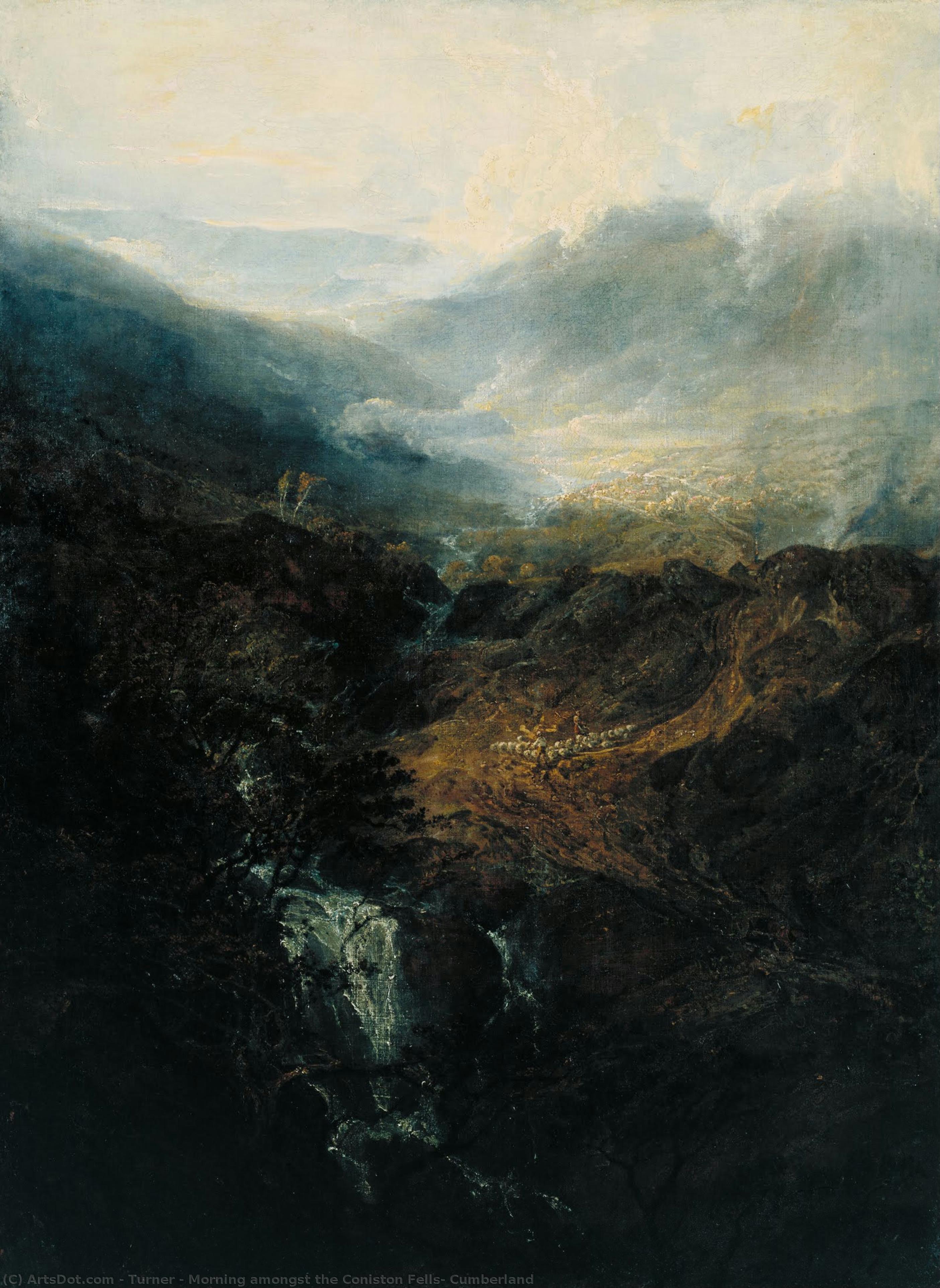
Morning amongst the Coniston Fells, Cumberland
 Oil On Canvas
- WallArt
- Romanticism
 1798
1798- 19th Century
 89.0 x 122.0 cm
 Tate Britain
 Read More
Purchase a high-resolution, enhanced digital image, far superior to the online preview.
Each file is meticulously prepared by our in-house specialists using advanced tools and expert manual retouching. We ensure every image has exceptional clarity, precise color accuracy, and fine detail.
The final file is delivered via email within 72 hours, optimized for immediate use in professional, editorial, and print environments. This is the same quality trusted by top-tier design studios, publishers, and galleries.
Digital Image
Download a high-resolution file for personal display, printing, and creative projects. ( Buy Print Buy Hand Made Painting)
Included in Every Digital Image Order
Expert Digital Delivery, Guaranteed
When you choose ArtsDot.com, you're not just getting an image - you're receiving a professionally enhanced digital artwork, crafted with precision and backed by a satisfaction guarantee. Here's everything that comes with your order, automatically:

Fast Email Delivery
Your high-resolution digital image file will be emailed to you within 72 hours of ordering - ready for immediate use.

AI-Enhanced Digital File
Your artwork is professionally optimized using advanced AI tools and manual editing, ensuring maximum detail, clarity, and color accuracy.

Free Lifetime Re-Delivery
Accidentally deleted or lost your file? No worries - we'll resend it to you anytime, free of charge.

No Import Fees - Ever
Enjoy your artwork instantly with zero customs, duties, or delivery fees - digital downloads are always tax-free.

Color Accuracy Guarantee
We ensure your digital image reflects the original colors as closely as possible using professional tools and color management.

60-Day Satisfaction Guarantee
If you're not satisfied with your digital image, we'll revise it or refund 100% within 60 days - no questions asked.

100% Money-Back Guarantee
Not satisfied? Get a full refund within 60 days of receiving your digital file - no questions asked.

Bulk Order Discounts
Buy 3 images, save 10% - Buy 5, save 15% - Buy 10+, save 20%. Great for creative projects, galleries, and agencies.
Collectible Description
Morning Amongst the Coniston Fells, Cumberland – A Vision of Sublime Beauty
J.M.W. Turner’s “Morning amongst the Coniston Fells, Cumberland” isn't merely a landscape painting; it’s an immersive experience, a fleeting moment captured in oil and pigment that speaks to the very heart of Romanticism. Completed around 1798, this work transcends simple representation, offering instead a profound meditation on light, atmosphere, and the awe-inspiring power of nature. The scene unfolds within the dramatic embrace of the Coniston Fells in Cumbria, England – a location Turner revisited repeatedly, drawn to its rugged beauty and the ethereal quality of the mist that perpetually clings to the mountains.
The painting immediately draws the viewer into a world of hazy luminosity. Towering peaks, dominated by the iconic Old Man of Coniston, rise from a swirling sea of grey and blue – not rendered with sharp detail but rather suggested through delicate gradations of tone and subtle shifts in color. Turner masterfully employs atmospheric perspective; distant elements fade into an almost dreamlike obscurity, while the foreground is imbued with a tactile sense of texture and solidity. The cascading waterfall, a vital element of the composition, isn’t depicted as a forceful torrent but rather as a shimmering ribbon of light and shadow, contributing to the overall feeling of ethereal beauty.
A Painterly Embrace: Technique and Style
Turner's technique is characterized by its loose, expressive brushwork – a deliberate departure from the meticulous detail favored by earlier generations. He utilizes glazing and scumbling, layering thin washes of color upon one another to build up depth and luminosity. This approach creates a remarkable sense of movement and dynamism, as if the very air itself is swirling around the mountains. The absence of hard outlines further enhances this effect, allowing forms to blend seamlessly into one another, mirroring the way light and atmosphere interact in nature.
The painting firmly resides within the Romantic tradition, exemplified by Turner’s profound engagement with emotion and imagination. Unlike the Neoclassical emphasis on reason and order, Romanticism celebrated the sublime – that feeling of awe and terror inspired by confronting the vastness and power of the natural world. “Morning amongst the Coniston Fells” perfectly embodies this spirit, inviting the viewer to lose themselves in the grandeur of the landscape and contemplate their own place within it.
Symbolic Resonance: Milton and the Sublime
Turner’s choice to include lines from John Milton's *Paradise Lost* – specifically, “Ye mists and exhalations that now rise / From hill or streaming lake, dusky or gray…” – is deeply significant. This wasn’t merely a decorative flourish; it was a deliberate attempt to elevate the painting beyond a simple depiction of scenery. By invoking Milton’s poetic language, Turner imbues the landscape with spiritual resonance, suggesting a connection between the earthly realm and the divine.
The mist itself is laden with symbolic weight. It obscures details, creating an atmosphere of mystery and uncertainty, while simultaneously revealing glimpses of light and beauty. This ambiguity mirrors the Romantic fascination with the unknown – the idea that true understanding can only be achieved through intuition and imagination. The inclusion of sheep, a common motif in Turner’s work, further reinforces this connection to nature, representing humanity's humble place within its vastness.
A Legacy of Light: Historical Context
Created during a period of significant artistic and intellectual ferment, “Morning amongst the Coniston Fells” reflects the broader trends of the late 18th century. The rise of scientific inquiry, coupled with a growing interest in emotion and subjective experience, fueled a shift away from traditional academic art. Turner’s work exemplifies this transition, prioritizing atmosphere and feeling over precise representation.
Turner's fascination with light is central to his artistic vision. He meticulously studied the effects of sunlight on various surfaces, striving to capture its fleeting beauty in paint. “Morning amongst the Coniston Fells” showcases his mastery of this technique, transforming a simple landscape into a vibrant tapestry of color and light. The painting’s enduring appeal lies not only in its aesthetic qualities but also in its ability to evoke a profound sense of wonder and connection with the natural world – a sentiment that continues to resonate with viewers today.
Related Artworks

Artist Biography
A Life Painted in Light: The World of J.M.W. Turner
Joseph Mallord William Turner, known to the world as J.M.W. Turner, was more than just a painter; he was a visionary who redefined landscape art and paved the way for modern abstraction. Born in Maiden Lane, Covent Garden, London, in 1775, his beginnings were humble – the son of a barber and wig maker. Yet, even as a child, a remarkable talent blossomed within him. By age fourteen, he was enrolled at the Royal Academy, exhibiting his first work just a year later. This early promise wasn’t merely technical skill; it hinted at an innate understanding of light, color, and atmosphere that would become the hallmarks of his extraordinary career. He supplemented his artistic education with practical experience as an architectural draftsman, honing his perspective and compositional abilities – skills that would prove invaluable in rendering both detailed topographical views and vast, emotive landscapes. Turner’s early life was marked by a dedication to his craft, fueled by a natural aptitude and a relentless pursuit of artistic excellence.The Romantic Tempest: Style and Influences
Turner emerged during the height of the Romantic era, but he wasn't simply a follower of its conventions. He absorbed influences from various sources – the Dutch masters like Claude Lorrain and Aelbert Cuyp for their luminous landscapes, and artists such as Richard Wilson for his poetic approach to nature. However, Turner didn’t merely imitate; he synthesized these influences into something entirely new. His work is characterized by an expressive use of color, often employing bold contrasts and vibrant hues to convey emotion and atmosphere. He was fascinated by the power and drama of nature – turbulent seascapes, fiery sunsets, and swirling storms became recurring motifs in his paintings. He wasn’t interested in simply depicting what he saw; he sought to capture the *feeling* of a place, the sublime awe inspired by the natural world. This pursuit led him to experiment with increasingly loose brushwork, dissolving forms into washes of color and light – techniques that would anticipate the Impressionist movement decades later. From 1840, his work gained significant recognition thanks to the championing of John Ruskin, who elevated landscape painting to a new level of critical acclaim.A Prolific Legacy: The Scope of Turner’s Output
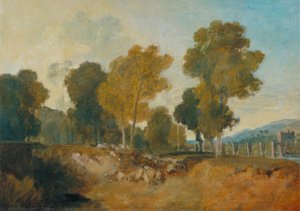
The sheer volume of Turner's artistic output is astonishing. He created over 550 oil paintings, nearly 2,000 watercolors, and an astounding 30,000 works on paper. This prolificacy wasn’t simply a matter of quantity; it reflected his tireless exploration of different subjects, techniques, and styles. His paintings range from detailed topographical views of British landscapes to dramatic historical scenes and evocative maritime paintings. He was equally adept at capturing the tranquility of a pastoral scene and the terrifying power of a raging storm. Works like “Fort Vimieux” exemplify his mastery of depicting atmospheric effects – the swirling clouds, the crashing waves, and the intense light all contribute to a sense of drama and sublime beauty. Similarly, "Scene in the Campagna" showcases his ability to capture the warmth and serenity of the Italian countryside with delicate brushwork and luminous colors. Beyond painting, Turner was also a skilled printmaker, further disseminating his artistic vision through engravings and lithographs.Eccentricity and Remembrance: The Man Behind the Masterpieces
Turner’s personal life was as complex and enigmatic as his art. He remained intensely private and reclusive, often shunning social gatherings and preferring the solitude of his studio or the open road. He fathered two daughters, Evelina and Georgiana, with Sarah Danby, the wife of a fellow artist, but maintained a distant relationship with them. His later years were marked by increasing eccentricity and declining health. After his father’s death in 1829, he became increasingly morose and withdrawn, living in squalor and neglecting his appearance. He adopted the pseudonym “Mr. Booth” to avoid recognition and even rowed his boat into the Thames during a census to remain untraceable. Despite his eccentricities, or perhaps because of them, Turner remains one of Britain’s most beloved artists. His final years were spent in Chelsea where he passed away on December 19, 1851, at the age of 76. In a fitting tribute to his enduring legacy, he is buried in St Paul's Cathedral, alongside other British luminaries – a testament to his profound impact on art and culture. His work continues to inspire artists and captivate audiences worldwide, ensuring that the light of J.M.W. Turner will continue to shine for generations to come.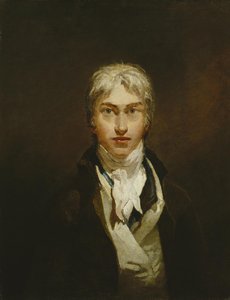
J.M.W. Turner
1775 - 1851 , United Kingdom
Quick Facts
- Artistic Movement Or Style: Romanticism
- Artists Or Movements Influenced By This Artist:
- Impressionism
- Abstract Art
- Artists Who Influenced This Artist:
- John Robert Cozens
- Richard Wilson
- Date Of Birth: April 23, 1775
- Date Of Death: December 19, 1851
- Full Name: Joseph Mallord William Turner
- Nationality: British
- Notable Artworks:
- Fort Vimieux
- Scene in the Campagna
- Place Of Birth: London, United Kingdom

