 Preview
 Send
Send Share
Share
 Details

 Download
 Similars
 X-Ray
X-Ray Diaporama
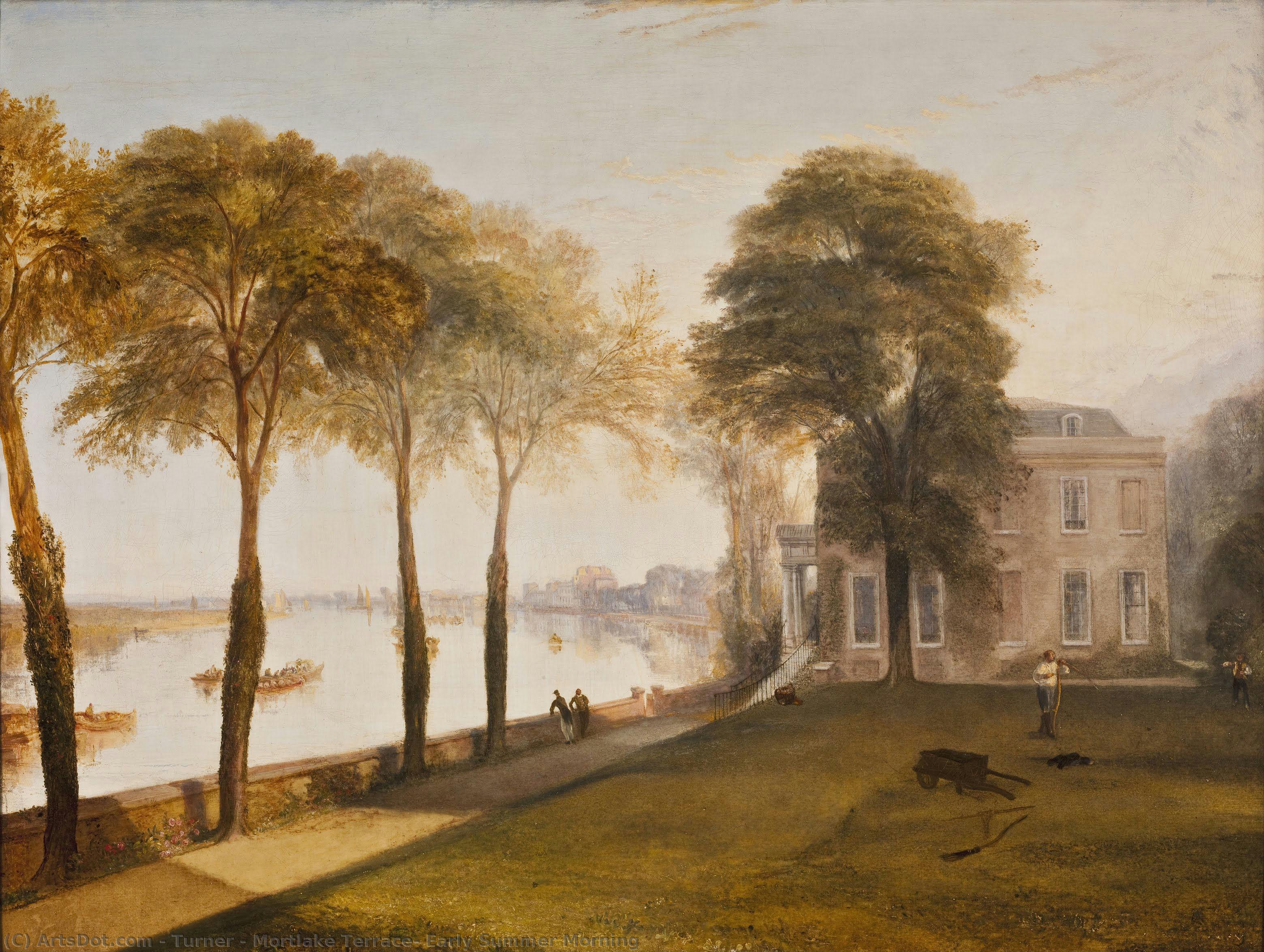
Mortlake Terrace: Early Summer Morning
 Oil On Canvas
- WallArt
- Romanticism
 1826
1826- 19th Century
 93.0 x 123.0 cm
 The Frick Collection
 Read More
Hand Made Oil Reproduction
Hand-painted oil on canvas in your size and frame, made to order by our artists. ( Buy Print Buy Image)




P118B $10

P118H $10

P118W $10

P438Z $10

P508JH $12

P508YH $12

P805H $10

P805Z $10

P919BZ $10

P919G $10

P919XJ $10

P959ZH $10

P968JZ $12

W106C $8

W218G $10

W218JH $8

W218Y $10

W307PJ $10

W316G $10

W316PJ $8

W316Y $10

W398PJ $8

W4111J $10

W500HY $15

W500JH $15

W692G $12

W849H $8

W940BG $15

W953PJ $8




Pick from our preset sizes that match the artwork's original proportions.

You may enter your own dimensions to fit a specific frame or space. If your selected size does not match the original image's proportions, we will either crop the artwork or extend the painting with additional hand-painted elements. A digital mockup will be sent for your approval before production begins.
Please note that the on-screen preview does not reflect the actual cropping or extension. Only the mockup will accurately show the final composition.
While custom sizes are available, we recommend selecting a dimension from the predefined list to preserve the original proportions.
After order, ArtsDot.com team will email client for instructions and provide a mockup preview
Worldwide Delivery () in 3/4 weeks instead of standard 5 weeks. (16 August). No compromise on quality.

Free Worldwide Express Shipping

High-Quality Linen Canvas

Full Shipping Insurance

Customs Tax Refund Guarantee

True Color Matching Guarantee

60-Day Return Policy (Defects Only)

100% Money-Back Guarantee

Bulk Discount Offer
 Glass option is only available in size under 110 CM

Mortlake Terrace: Early Summer Morning
Reproduction Medium
Reproduction Size
-


Total Price
$ 263
Artwork Description
The Luminous Embrace of an Early Summer Morning
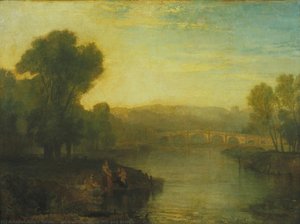
To gaze upon Mortlake Terrace: Early Summer Morning is to step directly into a moment suspended by the ethereal hand of light. This magnificent canvas, painted in 1826 for William Moffatt, does more than merely depict a view; it captures the very breath of an early summer day along the Thames. J.M.W. Turner, the master who seemed to paint with atmosphere itself, has rendered this scene not with photographic precision, but with a sublime sensitivity that speaks directly to the soul. The composition is a masterful dialogue between the permanence of human dwelling—the stately house positioned gracefully on the right—and the ceaseless, breathing energy of nature embodied by the river and the expansive sky. It is a vision steeped in tranquility, inviting the viewer to slow their pace and simply absorb the gentle rhythm of life unfolding at the water's edge.
A Study in Light and Atmosphere
Turner’s technical brilliance here is breathtakingly apparent. He eschews hard lines for luminous washes, allowing light itself to become the primary subject matter. The palette sings with soft yellows, those signature tones that catch the nascent sunbeams reflecting off the water's surface, mingling with deep, restful blues and vibrant, yet muted, greens of the foliage. Notice how the edges blur; this is not a flaw in execution but a deliberate artistic choice, an embrace of the ephemeral. The technique employed suggests loose, visible brushwork—a painterly freedom that allows the viewer’s eye to wander across the canvas as if catching stray beams of sunlight. This atmospheric quality, characteristic of his mature style, transforms what might be a simple landscape into a profound meditation on perception itself.
Historical Context and Enduring Appeal
Painted during a period when Romanticism championed emotion over Enlightenment rationality, this work perfectly encapsulates the era's fascination with the sublime—the overwhelming beauty found in nature. The fact that it was exhibited alongside his ambitious painting of Cologne speaks to Turner’s consistent exploration of grand scale and emotional resonance within landscape settings. For the modern collector or designer, this piece offers a connection to history while providing unparalleled decorative depth. Imagine this scene gracing a drawing-room wall; its soft grandeur complements both classical elegance and contemporary serenity, acting as an instant focal point that whispers tales of Georgian refinement.
Symbolism of Peace and Domesticity
Beyond the visual splendor lies a deeper emotional resonance. The subject matter—a private estate viewed at dawn—evokes potent feelings of peace, nostalgia, and sheltered domestic bliss. The river itself often symbolizes the passage of time, yet here, it is rendered so calm that time seems to pause entirely. The interplay between the solid architecture and the fluid water suggests a harmonious balance in life: the grounding comfort of home set against the beautiful, unstoppable flow of existence. It is an artwork that promises contemplation, offering respite from the clamor of the everyday world.
Bringing Turner Home
Owning a reproduction of Mortlake Terrace allows one to curate not just a wall hanging, but an entire mood. The soft focus and luminous quality mean that even in reproductions, the sense of diffused light remains palpable. It is art designed to be lived with—a constant, gentle reminder of nature’s quiet majesty. Whether placed above a console table or anchoring a gallery wall, this piece promises to infuse any space with the golden, tranquil glow of an early summer morning at Mortlake Terrace.
Related Artworks
Artist Biography
A Life Painted in Light: The World of J.M.W. Turner
Joseph Mallord William Turner, known to the world as J.M.W. Turner, was more than just a painter; he was a visionary who redefined landscape art and paved the way for modern abstraction. Born in Maiden Lane, Covent Garden, London, in 1775, his beginnings were humble – the son of a barber and wig maker. Yet, even as a child, a remarkable talent blossomed within him. By age fourteen, he was enrolled at the Royal Academy, exhibiting his first work just a year later. This early promise wasn’t merely technical skill; it hinted at an innate understanding of light, color, and atmosphere that would become the hallmarks of his extraordinary career. He supplemented his artistic education with practical experience as an architectural draftsman, honing his perspective and compositional abilities – skills that would prove invaluable in rendering both detailed topographical views and vast, emotive landscapes. Turner’s early life was marked by a dedication to his craft, fueled by a natural aptitude and a relentless pursuit of artistic excellence.The Romantic Tempest: Style and Influences
Turner emerged during the height of the Romantic era, but he wasn't simply a follower of its conventions. He absorbed influences from various sources – the Dutch masters like Claude Lorrain and Aelbert Cuyp for their luminous landscapes, and artists such as Richard Wilson for his poetic approach to nature. However, Turner didn’t merely imitate; he synthesized these influences into something entirely new. His work is characterized by an expressive use of color, often employing bold contrasts and vibrant hues to convey emotion and atmosphere. He was fascinated by the power and drama of nature – turbulent seascapes, fiery sunsets, and swirling storms became recurring motifs in his paintings. He wasn’t interested in simply depicting what he saw; he sought to capture the *feeling* of a place, the sublime awe inspired by the natural world. This pursuit led him to experiment with increasingly loose brushwork, dissolving forms into washes of color and light – techniques that would anticipate the Impressionist movement decades later. From 1840, his work gained significant recognition thanks to the championing of John Ruskin, who elevated landscape painting to a new level of critical acclaim.A Prolific Legacy: The Scope of Turner’s Output
The sheer volume of Turner's artistic output is astonishing. He created over 550 oil paintings, nearly 2,000 watercolors, and an astounding 30,000 works on paper. This prolificacy wasn’t simply a matter of quantity; it reflected his tireless exploration of different subjects, techniques, and styles. His paintings range from detailed topographical views of British landscapes to dramatic historical scenes and evocative maritime paintings. He was equally adept at capturing the tranquility of a pastoral scene and the terrifying power of a raging storm. Works like “Fort Vimieux” exemplify his mastery of depicting atmospheric effects – the swirling clouds, the crashing waves, and the intense light all contribute to a sense of drama and sublime beauty. Similarly, "Scene in the Campagna" showcases his ability to capture the warmth and serenity of the Italian countryside with delicate brushwork and luminous colors. Beyond painting, Turner was also a skilled printmaker, further disseminating his artistic vision through engravings and lithographs.Eccentricity and Remembrance: The Man Behind the Masterpieces
Turner’s personal life was as complex and enigmatic as his art. He remained intensely private and reclusive, often shunning social gatherings and preferring the solitude of his studio or the open road. He fathered two daughters, Evelina and Georgiana, with Sarah Danby, the wife of a fellow artist, but maintained a distant relationship with them. His later years were marked by increasing eccentricity and declining health. After his father’s death in 1829, he became increasingly morose and withdrawn, living in squalor and neglecting his appearance. He adopted the pseudonym “Mr. Booth” to avoid recognition and even rowed his boat into the Thames during a census to remain untraceable. Despite his eccentricities, or perhaps because of them, Turner remains one of Britain’s most beloved artists. His final years were spent in Chelsea where he passed away on December 19, 1851, at the age of 76. In a fitting tribute to his enduring legacy, he is buried in St Paul's Cathedral, alongside other British luminaries – a testament to his profound impact on art and culture. His work continues to inspire artists and captivate audiences worldwide, ensuring that the light of J.M.W. Turner will continue to shine for generations to come.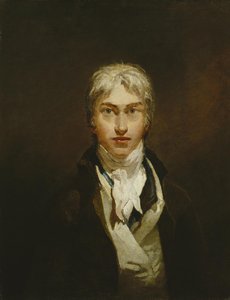
J.M.W. Turner
1775 - 1851 , United Kingdom
Quick Facts
- Artistic Movement Or Style: Romanticism
- Artists Or Movements Influenced By This Artist:
- Impressionism
- Abstract Art
- Artists Who Influenced This Artist:
- John Robert Cozens
- Richard Wilson
- Date Of Birth: April 23, 1775
- Date Of Death: December 19, 1851
- Full Name: Joseph Mallord William Turner
- Nationality: British
- Notable Artworks:
- Fort Vimieux
- Scene in the Campagna
- Place Of Birth: London, United Kingdom
Related Articles
Slate Blue Masterpieces: 10 Iconic Paintings & Timeless Home Decor Ideas
Immerse yourself in the captivating world of slate blue! Explore 10 iconic paintings by Monet, Van Gogh & Renoir. Discover their stories, techniques & find museum-quality art reproductions for your home at .

Beyond the Horizon: 10 Landscape Masterpieces for Your Home Decor
Journey through 10 breathtaking landscape paintings by Monet, Van Gogh & more! Explore iconic artworks, artistic techniques & find inspiration for your home decor. Museum-quality reproductions at ArtsDot.com. Discover all masterpieces on ArtsDot.com

Romantic Landscapes: 10 Masterpieces for Your Home | ArtsDot
Journey through 10 Romantic landscape masterpieces by Friedrich, Turner & Cole. Explore emotional art, sublime nature scenes & iconic 19th-century paintings. Find museum-quality reproductions for your home at ArtsDot.com – discover the full collection online!

John Constable's Masterpieces: Explore 25 Iconic Landscapes for Your Home
Journey through John Constable's 25 most celebrated landscapes. Explore Romanticism, Dedham Vale & his masterful use of light in iconic paintings like 'Hay Wain'. Find museum-quality art reproductions and elevate your home decor on ArtsDot.com.

The Sublime Landscape: Exploring the Hudson River School Movement
Explore the captivating world of the Hudson River School! Discover the history, artists, and defining characteristics of this iconic American art movement. Learn about Romanticism's influence & find inspiration for your collection.