

 Preview
 Send
Send Share
Share
 Details

 Download
 Similars
 X-Ray
X-Ray Diaporama
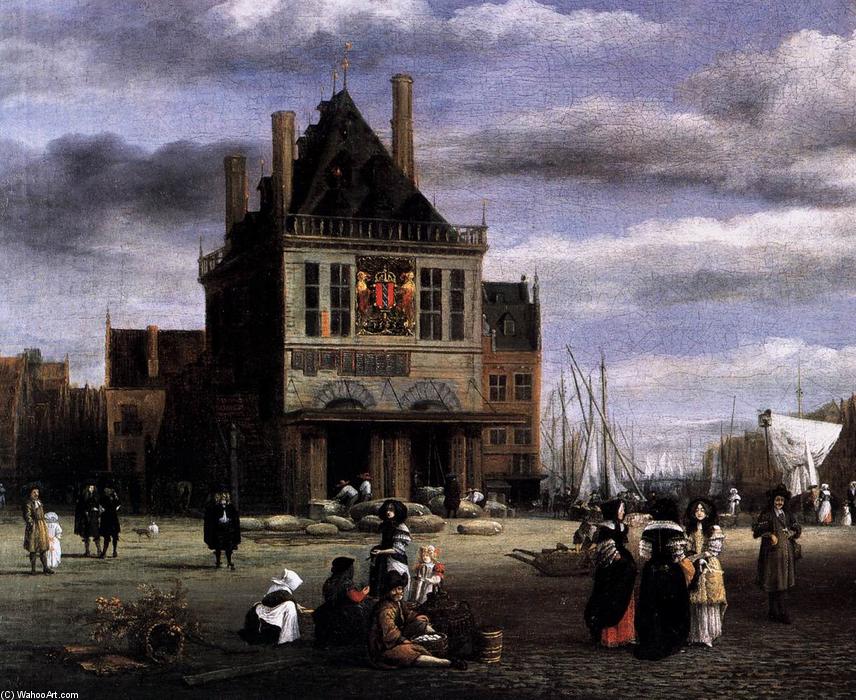
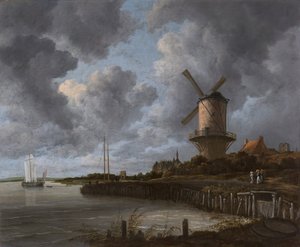
The Dam Square in Amsterdam (detail)


 Read More
Purchase a high-resolution, enhanced digital image, far superior to the online preview.
Each file is meticulously prepared by our in-house specialists using advanced tools and expert manual retouching. We ensure every image has exceptional clarity, precise color accuracy, and fine detail.
The final file is delivered via email within 72 hours, optimized for immediate use in professional, editorial, and print environments. This is the same quality trusted by top-tier design studios, publishers, and galleries.
Digital Image
Download a high-resolution file for personal display, printing, and creative projects. ( Buy Print Buy Hand Made Painting)
Included in Every Digital Image Order
Expert Digital Delivery, Guaranteed
When you choose ArtsDot.com, you're not just getting an image - you're receiving a professionally enhanced digital artwork, crafted with precision and backed by a satisfaction guarantee. Here's everything that comes with your order, automatically:

Fast Email Delivery
Your high-resolution digital image file will be emailed to you within 72 hours of ordering - ready for immediate use.

AI-Enhanced Digital File
Your artwork is professionally optimized using advanced AI tools and manual editing, ensuring maximum detail, clarity, and color accuracy.

Free Lifetime Re-Delivery
Accidentally deleted or lost your file? No worries - we'll resend it to you anytime, free of charge.

No Import Fees - Ever
Enjoy your artwork instantly with zero customs, duties, or delivery fees - digital downloads are always tax-free.

Color Accuracy Guarantee
We ensure your digital image reflects the original colors as closely as possible using professional tools and color management.

60-Day Satisfaction Guarantee
If you're not satisfied with your digital image, we'll revise it or refund 100% within 60 days - no questions asked.

100% Money-Back Guarantee
Not satisfied? Get a full refund within 60 days of receiving your digital file - no questions asked.

Bulk Order Discounts
Buy 3 images, save 10% - Buy 5, save 15% - Buy 10+, save 20%. Great for creative projects, galleries, and agencies.
Collectible Description
A Window into the Golden Age: The Soul of Amsterdam
In the heart of the Dutch Golden Age, few images capture the rhythmic pulse of urban life as profoundly as Jacob Isaackszoon van Ruisdael’s The Dam Square in Amsterdam. Painted around 1670, this masterful work is far more than a mere topographical record of a city square; it is a living, breathing meditation on the grandeur and the quiet gravity of 17th-century Dutch civilization. As the eye wanders across the canvas, one is immediately struck by the monumental presence of the guildhall—likely the Sint Jacobskerk—which anchors the composition with an architectural stability that seems to defy time itself. Ruisdael does not simply present a scene; he invites the viewer to step into a moment frozen in history, where the bustling commerce of a global maritime power meets the contemplative stillness of an overcast afternoon.
The square serves as a stage for a meticulously choreographed ballet of everyday existence. Within this frame, we witness the vibrant energy of Amsterdam’s commercial heart: merchants engaged in the serious business of trade, citizens strolling through the plaza, and the humble presence of livestock tending to the needs of the city. There is a palpable sense of purpose in every figure, yet Ruisdael balances this activity with a profound atmospheric depth. The sky, which commands nearly two-thirds of the canvas, is rendered in a sophisticated palette of muted greys and ochres. This expansive, heavy atmosphere imbues the entire work with a certain melancholic beauty, suggesting that even amidst the height of prosperity, there exists a reflective, almost spiritual, layer to the human experience.
Mastery of Light and Texture
Technically, this piece stands as a testament to Ruisdael’s unparalleled command over the medium of oil on canvas. The artist employs a sophisticated layering technique, utilizing glazes to achieve a remarkable luminosity that makes the architectural details appear almost tactile. One can sense the weight of the stone and the rough texture of the building's facade through his expert use of hatching and cross-hatching. This precision allows the light—diffused and soft, as if filtered through a typical North Sea mist—to dance across the surfaces, creating a sense of three-dimensional reality that is both breathtaking and incredibly lifelike.
For the discerning collector or interior designer, the painting offers a masterclass in tonal harmony. The color palette, rooted in earthy, organic tones, provides a sophisticated foundation that complements a wide variety of high-end decor styles, from classical European aesthetics to more contemporary, minimalist settings. The way Ruisdael manipulates light and shadow creates a natural focal point that draws the eye inward, making it an ideal centerpiece for a room designed for contemplation or intellectual engagement.
Symbolism and Lasting Legacy
Beyond its aesthetic brilliance, The Dam Square in Amsterdam is rich with the symbolic language of the Dutch Republic. The imposing guildhall and the inclusion of heraldic emblems are not merely decorative; they are potent symbols of civic authority, stability, and the immense wealth that defined Amsterdam during this era. Ruisdael captures a period when the city was the epicenter of global trade, and every element of the painting—from the sturdy architecture to the industrious figures—reinforces the narrative of a society built on tradition, resilience, and prosperity.
To possess a reproduction of such a work is to bring a piece of history into the modern home. It offers more than just visual beauty; it provides an emotional connection to a vanished world of maritime glory and civic pride. Whether viewed as a historical document or a triumph of Baroque realism, Ruisdael’s vision continues to inspire awe, offering a timeless window into the spirit of one of history's most remarkable urban landscapes.
Related Artworks



Artist Biography
early life and career
jacob isaackszoon van ruisdael, a prominent dutch painter, draughtsman, and etcher, was born in 1628 in the netherlands. he is widely regarded as the pre-eminent landscape painter of the dutch golden age, a period marked by great wealth and cultural achievement.
artistic style and contributions
van ruisdael's work is characterized by its versatility and prolific nature, depicting a wide variety of landscape subjects. from 1646, he painted remarkable dutch countryside scenes, which later took on a more heroic character after his trip to germany in 1650. his late work, produced while living and working in amsterdam, featured city panoramas and seascapes, often with the sky occupying two-thirds of the canvas.
- waterfall in a rocky and mountainous landscape, showcasing his mastery of light and composition.
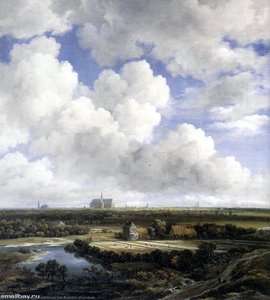
- view of haarlem with bleaching grounds, exemplifying his ability to capture the essence of the dutch landscape.
- view of the dam and the damrak in amsterdam, highlighting his skill in cityscape painting.
museums and collections
van ruisdael's work is spread across private and institutional collections worldwide, with notable holdings at:
- the national gallery in london
- the rijksmuseum in amsterdam
- the hermitage museum in st. petersburg
influence and legacy
van ruisdael's influence on landscape painting traditions is profound, shaping the english romantics, the barbizon school in france, and the hudson river school in the us. he also inspired generations of dutch landscape artists. notable works:
- view of haarlem with bleaching grounds
- waterfall in a rocky and mountainous landscape
- view of the dam and the damrak in amsterdam
artist's profile on ArtsDot: jacob isaackszoon van ruisdael
jacob isaackszoon van ruisdael
1628 - 1682 , Netherlands
Quick Facts
- Artistic Movement Or Style: Dutch Golden Age, Baroque
- Artists Or Movements Influenced By This Artist:
- English Romantics
- Barbizon School
- Artists Who Influenced This Artist: ['Hendrick Vroom']
- Date Of Birth: 1628/1629, Haarlem
- Date Of Death: 1682, Amsterdam
- Full Name: Jacob Isaackszoon van Ruisdael
- Nationality: Dutch
- Notable Artworks:
- View of Haarlem
- Waterfall landscape
- Amsterdam cityscape
- Place Of Birth: Haarlem, Netherlands

