 Preview
 Send
Send Share
Share
 Details

 Download
 Similars
 X-Ray
X-Ray Diaporama
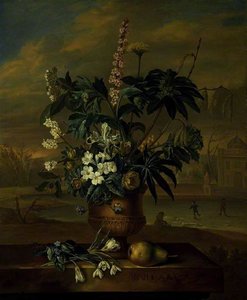
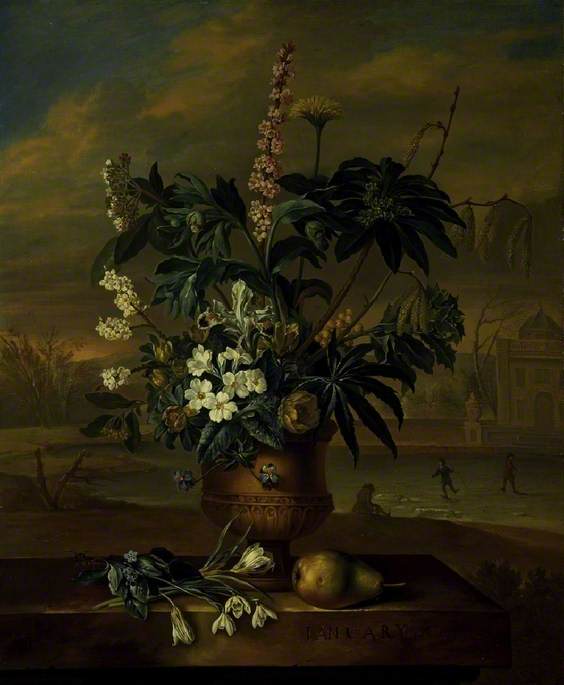
Twelve Months of Flowers January
 Acrylic On Canvas
- WallArt
- Baroque
 77.0 x 64.0 cm
 Fitzwilliam College
 Read More
Giclée / Art Print
Museum-quality giclée or canvas print with fast production and flexible finish options. ( Buy Hand Made Painting Buy Image)




P118B $10

P118H $10

P118W $10

P438Z $10

P508JH $12

P508YH $12

P805H $10

P805Z $10

P919BZ $10

P919G $10

P919XJ $10

P959ZH $10

P968JZ $12

W106C $8

W218G $10

W218JH $8

W218Y $10

W307PJ $10

W316G $10

W316PJ $8

W316Y $10

W398PJ $8

W4111J $10

W500HY $15

W500JH $15

W692G $12

W849H $8

W940BG $15

W953PJ $8




Pick from our preset sizes that match the artwork's original proportions.

You may enter your own dimensions to fit a specific frame or space. If your selected size does not match the original image's proportions, we will either crop the artwork or extend the image with a mirrored or solid-fill edge. A digital mockup will be sent for your approval before production begins.
Please note that the on-screen preview does not reflect the actual cropping or extension. Only the mockup will accurately show the final composition.
While custom sizes are available, we recommend selecting a dimension from the predefined list to preserve the original proportions.
Worldwide Delivery () in 2 weeks instead of standard 4/5 weeks. (27 August)

Free Worldwide Express Shipping

High-Quality Linen Canvas

Full Shipping Insurance

Customs Tax Refund Guarantee

True Color Matching Guarantee

60-Day Return Policy (Defects Only)

100% Money-Back Guarantee

Bulk Discount Offer
 Glass option is only available in size under 110 CM

Twelve Months of Flowers January
Giclée / Art Print
Reproduction Size
-


Total Price
$ 63
Collectible Description
A Window into Delft’s Botanical Renaissance
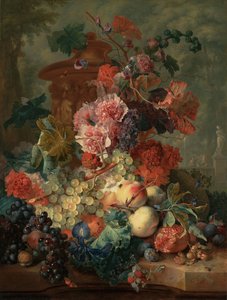
Jacob van Huysum's “Twelve Months of Flowers January” stands as a quintessential example of Dutch Golden Age botanical painting—a genre that flourished during the 18th century and cemented Holland’s reputation as Europe’s epicenter for scientific observation and artistic excellence. Executed sometime around 1730, this meticulously rendered depiction captures not merely the visual splendor of winter blossoms but also embodies a broader cultural preoccupation with capturing the natural world in exquisite detail.
- Subject Matter: The centerpiece is undeniably a vase brimming with an assortment of flowers—primarily chrysanthemums and anemones—representing January’s floral offerings. These blooms are presented with remarkable realism, showcasing their delicate petals and intricate textures.
- Style & Technique: Huysum's signature style is characterized by painstaking observation and masterful execution. He employed a technique known as ‘trompe l’œil,’ subtly manipulating perspective to create an illusion of depth—a hallmark of the Baroque tradition that sought to transport viewers into the scene itself.
- Color Palette: The artist skillfully utilized a restrained yet impactful color palette dominated by muted yellows and whites, punctuated by splashes of crimson red. This tonal harmony underscores the beauty of winter flowers while aligning with prevailing aesthetic sensibilities of the time.
The Legacy of Jan Huysum & Delft’s Artistic Tradition
Jacob van Huysum's artistic journey was inextricably linked to that of his brother, Jan Huysum—a fellow prodigy who established a formidable reputation as a botanical illustrator. Together, they formed an influential duo whose collaborative efforts propelled Delft’s artistic tradition to unparalleled heights. Their shared dedication to scientific accuracy combined with their artistic flair resulted in images that transcended mere decoration; they served as invaluable tools for botanists and contributed significantly to the advancement of knowledge.
Symbolism & Emotional Resonance
Beyond its technical brilliance, “Twelve Months of Flowers January” resonates deeply with symbolic meaning. Chrysanthemums, traditionally associated with longevity and purity, symbolize resilience amidst winter’s dormancy—a poignant reminder of beauty persisting even in periods of hardship. The vase itself serves as a vessel for contemplation, inviting viewers to appreciate the transient elegance of nature's cycle.
A Timeless Masterpiece: Reproduction Considerations
Today, a high-quality reproduction of “Twelve Months of Flowers January” offers an opportunity to bring this captivating artwork into any interior space. ArtsDot’s meticulous printing process ensures that the vibrant colors and nuanced details of Huysum's original painting are faithfully reproduced—allowing admirers worldwide to experience the enduring beauty and intellectual richness of Delft’s botanical renaissance.
Related Artworks
Artist Biography
The Painter of Flowers: The Life and Legacy of Jacob van Huysum
In the grand tapestry of the Dutch Golden Age, few threads shine with as much delicate brilliance as the botanical works of Jacob van Huysim. A master of the ephemeral, he possessed an uncanny ability to freeze the fleeting vitality of a blossom within the permanence of oil on canvas. Born around 1688 in Amsterdam, Jacob was not merely an artist but a scion of a profound artistic dynasty. He descended from a lineage deeply rooted in the Leiden tradition, receiving his formative training under the watchful eye of his father, Justus van Huysum. This early immersion in the meticulous study of nature provided him with more than just technical skill; it instilled a scientific reverence for the natural world that would define his entire professional trajectory.
While his brother, Jan van Huysum, would also achieve immense fame, Jacob carved out a distinctive niche by blending the decorative elegance of still life with the rigorous precision of scientific illustration. His development was marked by an extraordinary command over texture and light, allowing him to render the velvety petal of a rose or the translucent dewdrop on a leaf with startling realism. This mastery was not confined to the borders of the Netherlands. Around 1721, Jacob’s journey took him to London, where his talent caught the attention of the British elite. Under the patronage of influential figures such as Sir Robert Walpole and Mr. Lockyear, he contributed to the opulent decorative schemes of legendary estates like Houghton Hall, bringing a touch of Dutch botanical splendor to the heart of English aristocracy.
A Monumental Contribution to Botanical Science
Beyond the singular beauty of his standalone canvases, Jacob van Huysum’s most enduring historical significance lies in his role as a bridge between art and science. He was a pivotal figure in shaping the visual language used to document the natural world during an era of global exploration. This is most vibrantly realized in his monumental collaboration with John Martyn on the Historia Plantarum Rariorum. This ambitious undertaking, supported by the artistry of Elisha Kirkall, produced fifty meticulously engraved plates that captured exotic flora from distant lands, including the Cape of Good Hope, North America, and Mexico.
Through this work, Jacob’s art transcended mere decoration to become a vital tool for botanical discovery. His ability to translate the complex structures of rare plants into accessible, breathtaking imagery helped fuel the scientific curiosity of the 18th century. The following elements characterize his most celebrated contributions:
- Scientific Precision: An unwavering commitment to anatomical accuracy in every stem, stamen, and leaf.
- Global Perspective: The introduction of exotic, non-European species into the European artistic consciousness.
- Technical Innovation: A sophisticated use of light and shadow that gave three-dimensional life to two-dimensional engravings.
The Eternal Bloom: Artistic Mastery and Enduring Influence
The works of Jacob van Huysum, such as his evocative Twelve Months of Flowers series, continue to captivate audiences with their rhythmic composition and vibrant palettes. Whether depicting the crisp chill of a January frost or the sun-drenched abundance of May, his paintings evoke a sense of seasonal continuity and the inexorable cycle of life. His technique—characterized by fine brushwork and an almost microscopic attention to detail—ensured that each piece functioned as both a feast for the eyes and a record of biological wonder.
Though he passed away in 1740, leaving behind a legacy intertwined with his father and brother, Jacob van Huysum remains a singular figure. He did not merely paint flowers; he celebrated the very essence of life itself. His ability to marry the aesthetic demands of the Baroque period with the burgeoning empirical spirit of the Enlightenment ensures that his work remains a cornerstone of botanical art history, inviting every viewer to pause and admire the intricate, fleeting miracles of the natural world.
Jacob van Huysum
1687 - 1740
Quick Facts
- Artistic Movement Or Style: Botanical painting
- Artists Or Movements Influenced By This Artist: ['William Houstoun']
- Artists Who Influenced This Artist:
- Jan van Huysum
- Georg Dionysius Ehret
- Date Of Birth: 1687
- Date Of Death: 1740
- Full Name: Jacob van Huysum
- Nationality: Dutch
- Notable Artworks:
- Virga aurea
- Abrikozen en pruimen
- Place Of Birth: Amsterdam, Netherlands
Related Articles

Dutch Masters: 10 Golden Age Paintings That Still Inspire |
Journey into the Dutch Golden Age! Explore 10 iconic paintings by Rembrandt, Vermeer & Hals. Discover the stories behind these Baroque masterpieces and find museum-quality art reproductions to elevate your home decor on .

Rembrandt's Masterpieces: Explore 25 Iconic Paintings & Prints | ArtsDot
Journey through Rembrandt van Rijn's 25 most iconic paintings & etchings. Explore Dutch Golden Age masterpieces, dramatic chiaroscuro, and timeless portraits. Find museum-quality art reproductions to elevate your home decor on ArtsDot.com.

Golden Age Reflections: Dutch Baroque Painting & Cultural Innovation
Explore the Dutch Golden Age of painting! Discover key artists like Vermeer & ter Borch, their innovative techniques, and the rich cultural context behind these Baroque masterpieces. Learn about collecting & appreciating this iconic art period.
Willem van de Velde the Elder: Master of Maritime Painting & Chronicler of the Dutch Golden Age
Discover the captivating maritime paintings of Willem van de Velde the Elder, a master chronicler of the Dutch Golden Age. Explore his unparalleled realism and lasting influence on naval art history.

Illuminating Innovation: Exploring the Dutch Golden Age of Painting
Explore the Dutch Golden Age of painting with ArtsDot. Discover Rembrandt, Vermeer & other Masters. Learn about key characteristics, iconic artworks, and lasting influence. Expert insights for collectors & enthusiasts.