 Preview
 Send
Send Share
Share
 Details

 Download
 Similars
 X-Ray
X-Ray Diaporama
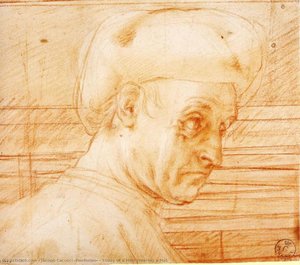
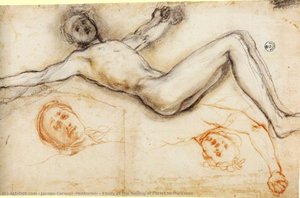
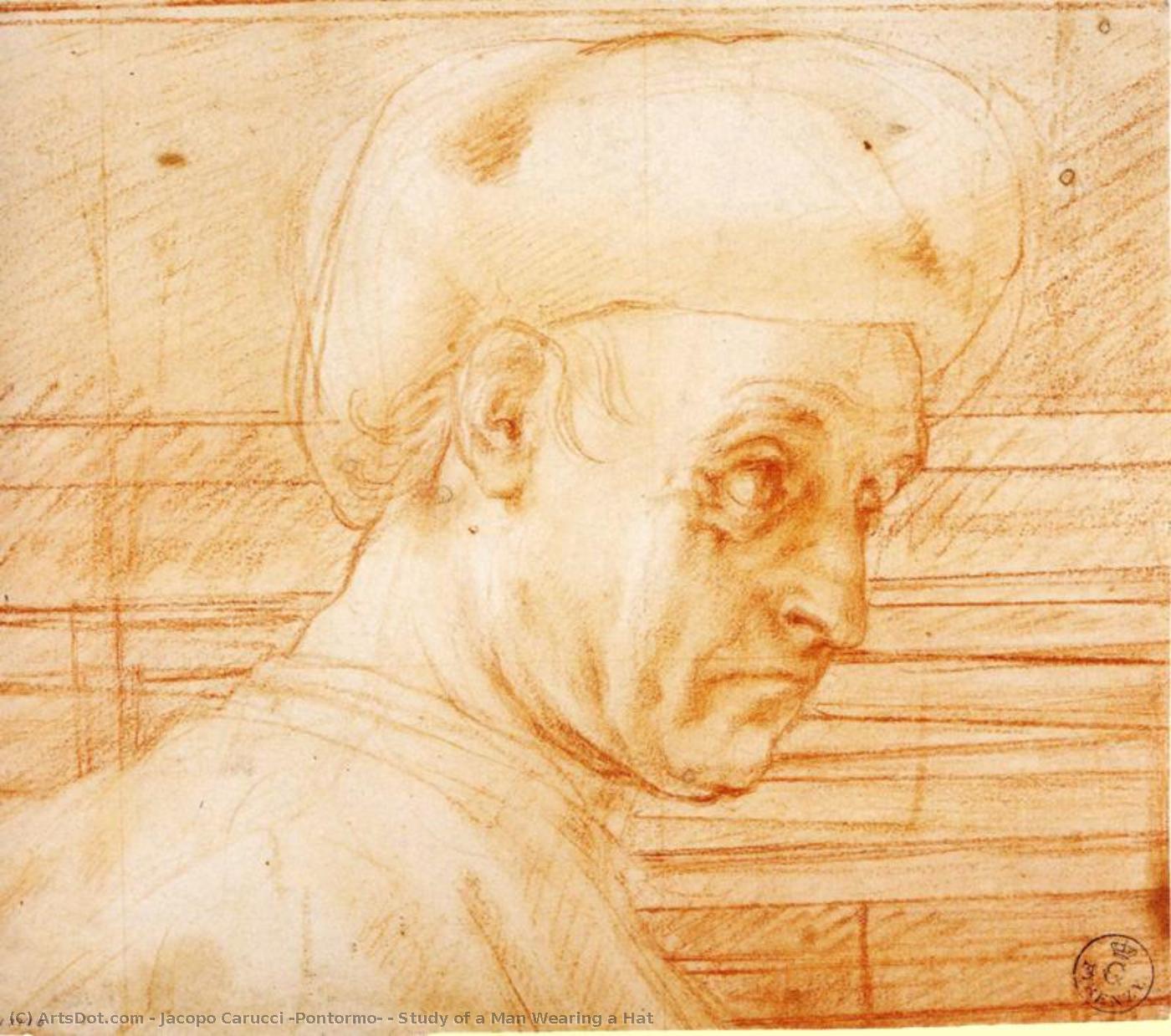
Study of a Man Wearing a Hat
 Acrylic On Canvas
- WallArt
- Italian Mannerism
 1519
1519 16.0 x 20.0 cm
 Galleria degli Uffizi
 Read More
Hand Made Oil Reproduction
Hand-painted oil on canvas in your size and frame, made to order by our artists. ( Buy Print Buy Image)




P118B $10

P118H $10

P118W $10

P438Z $10

P508JH $12

P508YH $12

P805H $10

P805Z $10

P919BZ $10

P919G $10

P919XJ $10

P959ZH $10

P968JZ $12

W106C $8

W218G $10

W218JH $8

W218Y $10

W307PJ $10

W316G $10

W316PJ $8

W316Y $10

W398PJ $8

W4111J $10

W500HY $15

W500JH $15

W692G $12

W849H $8

W940BG $15

W953PJ $8




Pick from our preset sizes that match the artwork's original proportions.

You may enter your own dimensions to fit a specific frame or space. If your selected size does not match the original image's proportions, we will either crop the artwork or extend the painting with additional hand-painted elements. A digital mockup will be sent for your approval before production begins.
Please note that the on-screen preview does not reflect the actual cropping or extension. Only the mockup will accurately show the final composition.
While custom sizes are available, we recommend selecting a dimension from the predefined list to preserve the original proportions.
After order, ArtsDot.com team will email client for instructions and provide a mockup preview
Worldwide Delivery () in 3/4 weeks instead of standard 5 weeks. (16 August). No compromise on quality.

Free Worldwide Express Shipping

High-Quality Linen Canvas

Full Shipping Insurance

Customs Tax Refund Guarantee

True Color Matching Guarantee

60-Day Return Policy (Defects Only)

100% Money-Back Guarantee

Bulk Discount Offer
 Glass option is only available in size under 110 CM

Study of a Man Wearing a Hat
Reproduction Medium
Reproduction Size
-


Total Price
$ 263
Artwork Description
Study of a Man Wearing a Hat – A Renaissance Echo in Florentine Mannerism
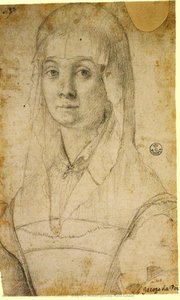
Jacopo Pontormo’s “Study of a Man Wearing a Hat,” executed in 1519, transcends mere portraiture; it embodies the spirit of Florentine Mannerism—a movement that deliberately rejected the idealized beauty championed by its predecessor, the High Renaissance. This intimate chalk drawing offers a glimpse into the artistic sensibilities of Pontormo himself and speaks volumes about the broader cultural landscape of Renaissance Italy. Held at the Uffizi Gallery in Florence, it stands as a testament to Pontormo’s singular vision and his masterful manipulation of technique.A Portrait Steeped in Emotion
The subject is presented with remarkable psychological depth—a man whose gaze descends downwards, conveying an aura of contemplation or perhaps melancholy. Pontormo skillfully captures the nuances of facial expression through precise chalk strokes, prioritizing emotional resonance over anatomical accuracy. The artist’s decision to depict the figure in profile contributes to this sense of solemnity and invites viewers to engage with the sitter's inner world. Unlike the polished surfaces favored by Raphael and Michelangelo, Pontormo deliberately employs a technique that emphasizes texture and tonal variation—a hallmark of Mannerist style.Technique and Material Considerations
Pontormo’s choice of chalk as his medium is significant. Chalk allowed for unparalleled subtlety in shading and blending, enabling him to achieve luminous effects that would have been impossible with oil paint. The artist meticulously applied stumping – tapping the chalk onto the paper – to create a velvety surface and intensify the tonal range. This technique lends an ethereal quality to the drawing, mirroring the movement’s fascination with illusionistic depth and atmospheric perspective—though in miniature scale. The verso of the sheet reveals another inscription by Pontormo himself, reinforcing the artist's personal involvement in this contemplative piece.Historical Context: Bridging Eras
“Study of a Man Wearing a Hat” emerged during a period of artistic ferment as Renaissance ideals began to yield to Baroque sensibilities. Pontormo’s work exemplifies the Mannerist preoccupation with distorted perspective and flattened planes—a deliberate departure from classical conventions. The drawing reflects the humanist interest in exploring human psychology alongside intellectual pursuits, mirroring the broader cultural currents of the time. Furthermore, Pontormo's subject matter – a solitary figure contemplating existence – aligns with the spiritual anxieties prevalent during the Reformation, hinting at deeper thematic concerns beyond mere visual representation.Symbolism and Artistic Legacy
The hat itself serves as a subtle symbol of authority—perhaps representing ecclesiastical status or royal patronage. However, its downward gaze transcends literal symbolism, inviting viewers to ponder questions of introspection and inner reflection. Pontormo’s influence extended far beyond his immediate contemporaries; he paved the way for subsequent generations of artists who embraced expressive distortion and psychological complexity. “Study of a Man Wearing a Hat” remains an enduring emblem of Mannerist artistry—a captivating exploration of form, emotion, and artistic innovation that continues to inspire admiration centuries later.- Artist: Jacopo Pontormo (1494 – 1557/7)
- Medium: Chalk
- Size: 16 x 20 cm
- Location: Uffizi Gallery, Florence
Related Artworks

Artist Biography
The Melancholy Visionary: The Life and Legacy of Jacopo Pontormo
Jacopo Carucci, known to history by the evocative moniker Pontormo, was an artist whose brush captured the very essence of transition. Born in the small Tuscan village of Pontorme around 1494, his early life was marked by a profound sense of solitude and melancholy, qualities that would later infuse his canvases with an unparalleled psychological depth. As a young apprentice in Florence, he moved through a world of shifting artistic paradigms, eventually emerging as a central figure of the Florentine Mannerist movement. Unlike the masters of the High Renaissance who sought perfection through balance and mathematical harmony, Pontormo looked inward, seeking to express the turbulent, often unsettling complexities of the human soul. His formative years were shaped by the shadows of giants. Under the tutelage of Domenico del Pollaiuolo and the monumental influence of Michelangelo Buonarroti, he mastered the anatomical precision required of a Renaissance master, yet he possessed an irrepressible urge to distort that very reality for emotional effect. He drew inspiration not only from the sculptural weight of Michelangelo but also from the intricate, emotive engravings of Albrecht Dürer. This unique synthesis of Italian form and Northern European expressive detail allowed him to pioneer a style where figures seemed to lose their tether to gravity, drifting through ambiguous, dreamlike spaces.The Architecture of Mannerism: Style and Innovation
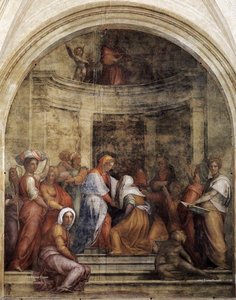
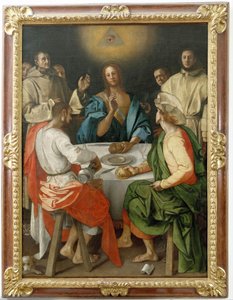
To witness a Pontormo painting is to enter a realm where the familiar laws of physics and perspective are suspended. His work represents a deliberate departure from the serene, perspectival regularity of his predecessors. In masterpieces such as his "Visitation" or the haunting "Deposition," one observes the hallmarks of his revolutionary Mannerist aesthetic: elongated limbs, twining and unnatural poses, and a palette of vibrant, almost acidic colors that clash and shimmer with an otherworldly light. He replaced the stable, triangular compositions of the Renaissance with swirling, crowded arrangements that evoke a sense of restless energy and spiritual unrest. The technical brilliance of Pontormo lay in his ability to use color and form as psychological tools. His figures often appear to float within uncertain environments, unhampered by weight, creating a sense of profound instability. This was not mere artifice; it was a deliberate attempt to convey the spiritual anxieties of an era caught between the certainties of the Renaissance and the looming drama of the Baroque. Whether through the dramatic light in his "Supper at Emmaus" or the stark, emotive intensity found in his studies of Christ, Pontormo utilized every brushstroke to explore themes of grief, devotion, and the divine.A Lasting Impression on Art History
The historical significance of Jacopo Pontormo cannot be overstated. He served as a vital bridge, translating the classical ideals of the 15th century into the expressive, theatrical language that would define much of the 16th-century art. His influence rippled through the Florentine School, shaping the works of successors like Bronzino and ensuring that the tension between beauty and artifice remained a central dialogue in European painting. His oeuvre remains a testament to the power of individual vision over tradition. Through his portraits, such as the regal "Cosimo I de' Medici," and his deeply symbolic religious works, he demonstrated that art could be more than a mirror of reality; it could be a window into the subconscious. Though his life was often shadowed by personal sorrow, the brilliance of his color and the complexity of his compositions continue to captivate, inviting every viewer to lose themselves in the beautiful, distorted, and deeply human world of the Florentine master.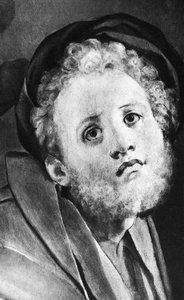
jacopo carucci
1494 - 1557 , Italy
Quick Facts
- Artistic Movement Or Style: Mannerism
- Artists Or Movements Influenced By This Artist:
- Michelangelo
- Rosso Fiorentino
- Artists Who Influenced This Artist:
- Leonardo da Vinci
- Andrea del Sarto
- Date Of Birth: 1494
- Full Name: Jacopo Pontormo
- Nationality: Italian
- Notable Artworks:
- Visitation
- Deposition
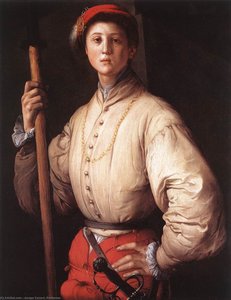
- Halberdier
- Place Of Birth: Pontorme, Italy
Related Articles
Jacopo Pontormo: A Bridge Between Renaissance Tradition & Mannerist Emotion
Explore the captivating world of Jacopo Pontormo, a pivotal Italian Mannerist painter. Discover his unique style, influences & masterpieces – and find museum-quality reproductions at ArtsDot.

Academic Portraiture: Tradition, Technique & the Evolution of Representational Art
Explore the rich history & masterful techniques of academic portraiture. Discover iconic artists, learn about collecting, and commission a bespoke oil painting reproduction with ArtsDot.
The Patron's Gaze: Art Collectors in Western Painting – A Renaissance to Modern History
Explore the fascinating history of art collectors in Western painting, from Renaissance patrons to modern museum founders. Discover how portraits revealed status, shaped artistic movements & built lasting legacies. Expert insights at ArtsDot.
Early Renaissance Masters: 10 Paintings That Changed Art History |
Journey through the Early Renaissance! Explore 10 iconic paintings by Botticelli, Leonardo da Vinci & Michelangelo. Discover their stories, techniques & lasting impact. Find museum-quality art reproductions and elevate your home decor with .

Raphael's Masterpieces: 25 Iconic Paintings & Renaissance Art for Your Home
Explore 25 breathtaking Raphael paintings! Journey through the Italian Renaissance with masterpieces like 'School of Athens' & iconic Madonnas. Find museum-quality art reproductions and elevate your home decor on ArtsDot.com.